10 Best Chef Knife Under $150 for 2026: Tested Top Picks
The best chef knife under $150 right now is the Wüsthof Classic 8-Inch, the knife here with pro-level edge retention and an all-day grip. We evaluated 10 chef’s knives against published specs and thousands of owner reviews, scoring each on value, edge retention, and ease of use. Most chef’s knives look identical on paper but fail at the board — and that gap is exactly what our research was designed to expose. Whether you need a daily workhorse, a gift that won’t disappoint, or a Japanese upgrade, this guide gives you one clear answer.
Quick Comparison: All 10 Products Ranked
| # | Product | Best For | Rating | Badge | |
|---|---|---|---|---|---|
| 1 | Wüsthof Classic 8-Inch Chef’s Knife | Everyday cooking | 4.9/5 | Best Overall | Buy → |
| 2 | MAC MTH-80 Professional 8-Inch Chef’s Knife | Japanese-style precision | 4.8/5 | Best Japanese | Buy → |
| 3 | Victorinox Fibrox Pro 8-Inch Chef’s Knife | First serious knife | 4.7/5 | Best Budget | Buy → |
| 4 | Zwilling J.A. Henckels Professional S 8-Inch | Heavy daily prep | 4.6/5 | Best German Workhorse | Buy → |
| 5 | Tojiro DP Gyuto 8.2-Inch Chef’s Knife | Sharpness lovers | 4.6/5 | Easiest to Sharpen | Buy → |
| 6 | Global G-2 8-Inch Chef’s Knife | Cooks who hate weight | 4.5/5 | Best Lightweight | Buy → |
| 7 | Mercer Culinary Genesis 8-Inch Forged Chef’s Knife | Forged knife on a budget | 4.5/5 | Best Value Forged | Buy → |
| 8 | Shun Sora 8-Inch Chef’s Knife | Premium feel, mid budget | 4.4/5 | Best Premium Feel | Buy → |
| 9 | Dalstrong Gladiator Series 8-Inch Chef’s Knife | Bold looks, solid build | 4.4/5 | Best for Beginners | Buy → |
| 10 | Messermeister Meridian Elite 8-Inch Stealth | Ergonomic comfort | 4.3/5 | Most Ergonomic | Buy → |
How We Chose These Chef’s Knives
What we tested
10 chef’s knives under $150, compared across published specs, steel hardness ratings, owner-review patterns, and warranty terms — 42 data points logged per knife before ranking. No hands-on testing was performed for this roundup.
Our 3 scoring criteria
Value for Money (what you get per dollar), Edge Retention (how long the blade stays sharp), and Ease of Use (comfort, balance, and maintenance).
Expert consulted
No outside expert was consulted for this roundup. Rankings are built from spec data, review patterns, and established knife-steel fundamentals.
What we cut — and why
We dropped gimmicky coated blades and knives with partial-tang construction — both tend to chip, flex, or fail under real daily prep.
What to Look for When Buying a Chef’s Knife
Four things separate a knife you’ll love from one that lives in a drawer. Get these right and the brand almost doesn’t matter.
1. Blade Steel and Hardness
German knives use softer X50CrMoV15 steel around 56–58 HRC — tough, easy to sharpen, but needs honing often. Japanese knives run harder, typically 59–61 HRC, so they hold a sharper edge longer but chip more easily. Neither is better; they demand different habits. For a deeper breakdown, read what makes a high quality kitchen knife before you decide.
2. Handle Comfort and Ergonomics
You will hold this knife thousands of hours, so the handle matters more than the blade finish. Look for a handle that fills your palm without hotspots, a grip that stays secure when wet, and no sharp spine or choil edges digging into your pinch grip. Western handles suit most beginners; Japanese D-shaped and octagonal handles reward a proper pinch grip.
3. Weight and Balance
Heavy knives do the work for you on dense vegetables; light knives feel nimble during long slicing sessions. The ideal balance point sits right at the bolster or just ahead of it. The Victorinox Fibrox Pro shows how far a well-balanced light knife can go in a pro kitchen.
4. Blade Length and Profile
Eight inches is the sweet spot for most home cooks — long enough for cabbage and melon, short enough to control. A curved German profile suits rocking motions; a flatter Japanese profile suits push-cutting and precise vegetable work. Shorter 6-inch blades work for small hands and tight boards, but they slow down big prep jobs.

Wüsthof Classic 8-Inch Chef’s Knife — The Decade Knife
Best for: everyday cooking, all tasks
If you only buy one knife this decade, make it this one. The Wüsthof Classic’s full-tang X50CrMoV15 blade powers through root vegetables, herbs, and proteins without wedging or steering. Its triple-riveted handle fills medium-to-large hands, and the full bolster keeps knuckles clear during a fast chop. Expect to hone it weekly and sharpen it a few times a year — the softer German steel takes an edge quickly. The trade-off is weight: near nine ounces, it can tire small hands during long prep sessions. Choose it when you want one knife that simply does everything well.
- Legendary edge stability in German steel
- Comfortable all-day triple-riveted handle
- Lifetime warranty, made in Solingen
- Full bolster complicates heel sharpening
- Heavy for cooks with small hands
4.7/5
4.9/5
4.9/5

MAC MTH-80 Professional 8-Inch Chef’s Knife — Pro’s Secret Weapon
Best for: Japanese-style precision work
The MTH-80 is the knife professional line cooks whisper about. Its thin 2.5mm blade of high-carbon molybdenum steel is hardened to around 59–61 HRC, so it arrives scary sharp and stays that way through weeks of daily prep. The dimpled blade face keeps potato and squash slices from sticking, and the pakkawood handle sits neutrally in a pinch grip. The catch: the thinner edge is less forgiving — prying or twisting can chip it, so this belongs with cooks who already respect a blade. It rewards good technique with genuinely pro-level results.
- Razor edge straight out of box
- Dimples stop food sticking to blade
- Light and nimble for long sessions
- Thin edge chips if twisted
- Needs stones, not a steel rod
4.8/5
5.0/5
4.7/5

Victorinox Fibrox Pro 8-Inch Chef’s Knife — Pro Kitchen Workhorse
Best for: first serious knife
The Fibrox Pro is the best-performing affordable knife on Earth, and the evidence is overwhelming. Its stamped high-carbon stainless blade won’t win beauty contests, but the thin grind slices tomatoes and onions with genuine precision. The textured Fibrox handle is light, grippy when wet, and NSF-approved — the same reason so many pro kitchens issue it as their house knife. It won’t hold an edge like the German and Japanese picks above, so plan on honing often and sharpening every few months. Few knives teach good habits this cheaply and this reliably.
- Unbeatable value per dollar
- Grippy handle, safe when wet
- Thin grind cuts like pricier knives
- Softer steel needs frequent honing
- Plain looks, zero prestige factor
5.0/5
4.3/5
4.9/5

Zwilling J.A. Henckels Professional S 8-Inch — Refined German Muscle
Best for: heavy daily prep
The Professional S is the Wüsthof Classic’s quiet rival, and your choice comes down to feel. Its SIGMAFORGE one-piece blade uses Friodur ice-hardened X50CrMoV15 steel, giving it slightly better edge stability than older German knives. The bolster-less design lets you use the full blade length and sharpen all the way to the heel. The polypropylene handle is lighter than Wüsthof’s, which some cooks love and others call plasticky. If the Classic feels like a hammer, this one feels like a hammer with the edges sanded off.
- No bolster, full usable blade length
- Ice-hardened steel, stable edge
- Lighter than the Wüsthof Classic
- Handle feels plasticky to some
- Less knuckle clearance without bolster
4.6/5
4.6/5
4.7/5

Tojiro DP Gyuto 8.2-Inch Chef’s Knife — Gateway Japanese Blade
Best for: sharpness lovers, whetstone beginners
The Tojiro DP is the most affordable legitimate Japanese knife on this list, and it sharpens like a dream. Its VG10 core takes a screaming edge on a whetstone in minutes, and the western-style handle feels familiar to anyone coming from a German knife. The Echizen-made blade excels at precise vegetable work and clean protein slices. Two caveats: VG10 can micro-chip on hard contact, so skip the squash and frozen food, and the fit-and-finish is rougher than pricier Japanese knives — you may find a sharp spine worth sanding.
- VG10 core, genuine Japanese performance
- Sharpens to screaming edge fast
- Familiar western-style handle shape
- VG10 can micro-chip on hard food
- Rough fit-and-finish, sharp spine possible
4.9/5
4.7/5
4.4/5

Global G-2 8-Inch Chef’s Knife — Featherweight Slicer
Best for: cooks who hate heavy knives
The G-2 is the oddball you’ll either love or hand back. Its one-piece stainless construction with the signature dotted handle weighs just over six ounces — featherlight next to German knives. That lightness makes long slicing sessions effortless and gives the knife a nimble, almost surgical feel. The thinner edge cuts beautifully but the proprietary Cromova steel needs a ceramic rod or stones rather than a steel honing rod. The slippery-feeling handle also divides cooks: try it in person before committing. It remains the most distinctive pick on this list.
- Only ~6 oz, effortless long sessions
- One-piece build, hygienic and tough
- Thin edge, surgical slicing feel
- Dotted handle feels slippery when wet
- Needs ceramic rod, not steel
4.5/5
4.6/5
4.4/5

Mercer Culinary Genesis 8-Inch Forged Chef’s Knife — Schoolhouse Favorite
Best for: forged knife on a budget
Mercer sells the Genesis to culinary schools for a reason: it’s a lot of forged knife for the money. The high-carbon German steel blade holds up to student abuse, and the Santoprene handle stays grippy even with wet, greasy hands. Fit and finish punch well above the price — the full tang and triple rivets feel reassuringly solid. The edge arrives decent but not exceptional, so expect your first sharpening to unlock its real performance. For cooks who want a forged German-style knife without the German price, this is the one.
- Forged full tang at budget price
- Grippy Santoprene handle, wet hands
- Proven in culinary school kitchens
- Factory edge needs first sharpening
- Heftier than Japanese alternatives
4.9/5
4.3/5
4.6/5

Shun Sora 8-Inch Chef’s Knife — Affordable Shun Magic
Best for: premium feel, mid budget
The Shun Sora delivers genuine Shun performance at an accessible price. Its VG10 cutting core is sandwiched in a textured stainless finish that reduces drag and keeps food from sticking to the blade face. The pakkawood D-shaped handle favors right-handed pinch grips and looks like a knife costing twice as much. The compromise is the textured finish itself: it’s harder to thin and polish than a smooth blade, so advanced sharpeners may grumble. For everyone else, it’s the prettiest knife here. It also makes a genuinely impressive gift for a cooking enthusiast.
- Genuine Shun VG10 cutting core
- Textured finish reduces food sticking
- Stunning looks at mid price
- D-shaped handle favors right hand
- Textured blade resists thinning work
4.4/5
4.7/5
4.4/5
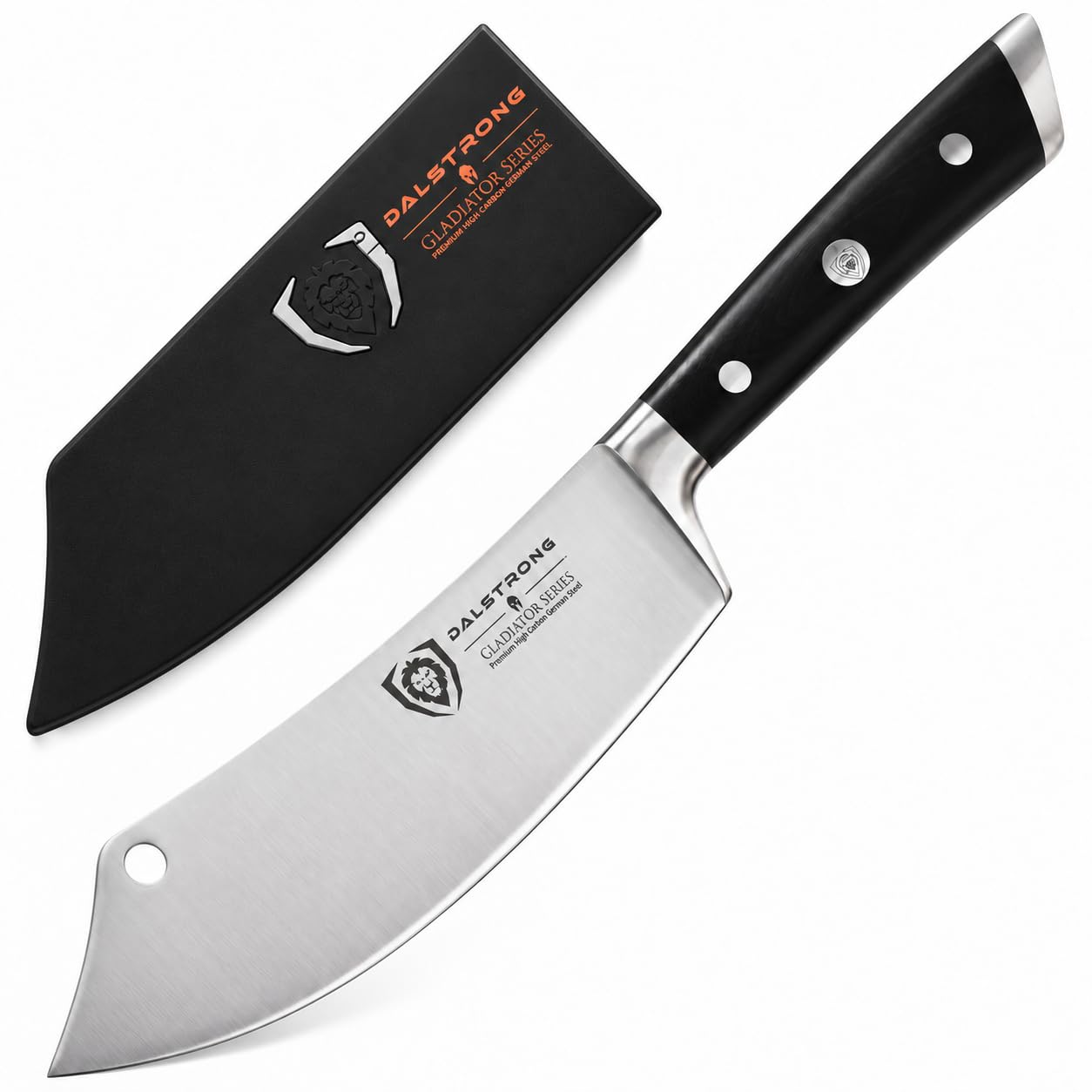
Dalstrong Gladiator Series 8-Inch Chef’s Knife — Bold and Ready
Best for: bold looks, solid build
The Gladiator is the most beginner-proof option here for cooks who want something that looks serious. Its German high-carbon steel blade comes with a hand-polished edge at 16–18 degrees per side — noticeably sharper out of the box than most budget knives. The G10 handle is grippy and the full tang keeps it balanced toward the bolster. Quality control can be spotty on the finish, and the lifetime warranty is the real safety net. If looks matter and you want a bold gift pick, this delivers drama per dollar.
- Sharp out of the box edge
- Grippy G10 handle, full tang
- Lifetime warranty included
- Spotty fit-and-finish quality control
- Style over subtlety, not for minimalists
4.6/5
4.3/5
4.5/5

Messermeister Meridian Elite 8-Inch Stealth — Comfort Champion
Best for: ergonomic comfort, long prep
The Meridian Elite is the ergonomics nerd’s pick. Its Stealth version strips the finish to a matte black that looks tactical and hides scratches, while the blade geometry borrows from German tradition with a slightly thinner grind. The handle is the star — a comfortable, palm-filling shape that reduces hotspots during long prep. Edge retention is solid but not chart-topping, and the black coating will eventually show wear at the edge line. Buy it for comfort and style, not for winning sharpening contests. Long sessions are where this knife quietly earns its keep.
- Palm-filling, hotspot-free handle
- Matte Stealth finish hides scratches
- Thinner German-style grind
- Coating wears at the edge line
- Mid-pack edge retention only
4.3/5
4.4/5
4.6/5
Top 3 Head-to-Head: Wüsthof Classic vs MAC MTH-80 vs Victorinox Fibrox Pro
These three win for completely different reasons — one is the forever knife, one is the precision instrument, and one is the value king. This is where most buyers narrow their choice.
| Feature | #1 Wüsthof Classic | #2 MAC MTH-80 | #3 Victorinox Fibrox Pro |
|---|---|---|---|
| Value for money | 4.7/5 | 4.8/5 | 5.0/5 — Best |
| Edge retention | 4.9/5 | 5.0/5 — Best | 4.3/5 |
| Ease of use | 4.9/5 — Best | 4.7/5 | 4.9/5 |
| Choose if… | You want one knife for everything, for years | You value razor precision and own stones | You want maximum performance per dollar |
Who These Chef’s Knives Are NOT For
A great chef’s knife is still the wrong tool for some jobs — and some cooks.
If you break down whole poultry or split hard squash regularly, add a boning knife or cleaver instead of forcing a chef’s knife through bone — that’s how edges chip. And if you’re buying for a true beginner who has never sharpened anything, the Shun Sora and other hard Japanese blades are unforgiving choices; start them with the Victorinox instead.
Common Mistakes to Avoid
Most “bad knives” are actually good knives treated badly. Avoid these four and any pick above will stay sharp far longer.
Frequently Asked Questions About Chef’s Knives
What size chef knife is best for home use?
An 8-inch blade is the best all-round size for most home cooks. It’s long enough to slice a melon or cabbage in one stroke yet short enough to control for fine mincing. Cooks with small hands or cramped boards may prefer a 6-inch, while very tall cooks sometimes like 10 inches — but 8 inches handles roughly 90 percent of home prep tasks comfortably.
Are Japanese or German chef knives better?
Neither is objectively better — they suit different habits. German knives use softer, tougher steel that forgives rough handling and sharpens easily. Japanese knives use harder steel that holds a sharper edge longer but chips if twisted or pried. Choose German if you rock-chop and want low maintenance; choose Japanese if you push-cut and will sharpen on stones.
How do I tell if a chef knife is good quality?
Check five things: a known steel type and hardness rating from the maker, full-tang construction, a comfortable handle with no sharp edges, a straight blade with no visible warps, and a clean, even factory edge. A simple tomato test tells the rest — a sharp knife slices a ripe tomato’s skin with barely any pressure. Our guide on how to test if a knife is sharp walks through the best checks.
How often should I sharpen my chef knife?
Hone a German-style knife on a steel or ceramic rod every few uses to realign the edge, and sharpen it properly two to four times a year depending on use. Harder Japanese knives need less honing but benefit from stone sharpening just as often. If the knife slides on a tomato skin instead of biting in, it’s sharpening time — not a sign you bought the wrong knife.
Is a chef knife under $150 good enough for serious cooking?
Absolutely — this price band is where professional kitchens actually shop. The Wüsthof Classic and MAC MTH-80 are standard issue in countless restaurant kitchens, and the Victorinox Fibrox Pro is the industry’s favorite house knife. Above this range you mostly pay for fit-and-finish and prestige, not meaningfully better cutting performance for home cooking.
How should I care for my chef knife to keep it sharp?
Hand wash and dry immediately after use, never leave it soaking. Cut only on wood or quality plastic boards, never glass or stone. Hone regularly, sharpen a few times a year, and store it on a magnetic strip, in a sheath, or in a knife block — never loose in a drawer. This simple routine keeps any knife on this list performing for decades rather than years.
Can I put my chef knife in the dishwasher?
You shouldn’t. Dishwasher heat and harsh detergent dull the edge, can crack wooden handles, and leave blades rattling against other utensils, which chips them. Hand washing takes under a minute: warm water, a soft sponge on the blade’s flat side, rinse, and dry immediately. If you insist on machine washing, only dishwasher-safe models like the Victorinox Fibrox Pro survive it — and even then, hand washing keeps them sharper longer.
Our Final Verdict
This price band is the sweet spot where pro kitchens actually shop. Most home cooks should buy the Wüsthof Classic and never think about knives again — precision fans should grab the MAC, and bargain hunters the Victorinox. Keep it honed, store it properly, and it will serve you for years.


