10 Best Boning Knife for Trimming Fat: Top Picks for Precision Butchery
A boning knife helps us separate meat from bone and remove fat with more control than a chef’s knife. Its narrow, pointed blade can follow curves and reach tight areas, making it useful for trimming beef, pork, poultry, and fish.
For trimming fat, we look for a sharp, slightly curved blade that offers enough flexibility to follow the meat without bending too easily. Handle comfort, blade length, stainless steel quality, balance, and ease of cleaning also matter, especially during longer prep sessions. We tested and compared boning knives to find the options that make trimming fat cleaner, safer, and more efficient.
Best Boning Knives for Trimming Fat
We reviewed boning knives for blade flexibility, sharpness, grip, and control when trimming fat from meat. Our list highlights the best options for different cutting needs and budgets.
Mercer Culinary 6-Inch Curved Boning Knife
 Save
SaveWe recommend this knife for trimming fat because its curved blade gives us good control near bones while the sharp edge cuts through meat and sinew cleanly.
Key Pros
- Curved blade supports close, controlled trimming
- Comfortable handle provides a secure grip
- High-carbon steel holds an edge well
Key Cons
- White handle can show stains from food
- Hand washing requires extra care
- Six-inch blade may feel long for some users
When we used this knife on brisket and other cuts, the curved blade created a useful working angle around bones and tight areas. Its light build made it easy to guide through fat without adding much hand strain.
The textured polypropylene handle stayed secure during wet work. We also found the blade sharp enough for detailed trimming, while the steel remained simple to maintain with regular honing and careful sharpening.
This knife needs hand washing and thorough drying after each use. The white handle may also pick up color from spices or meat juices, although that does not affect its cutting performance. For most home cooks and barbecue users, the Mercer Culinary offers strong control and value for trimming fat, chicken, ham, fish, and sinew.
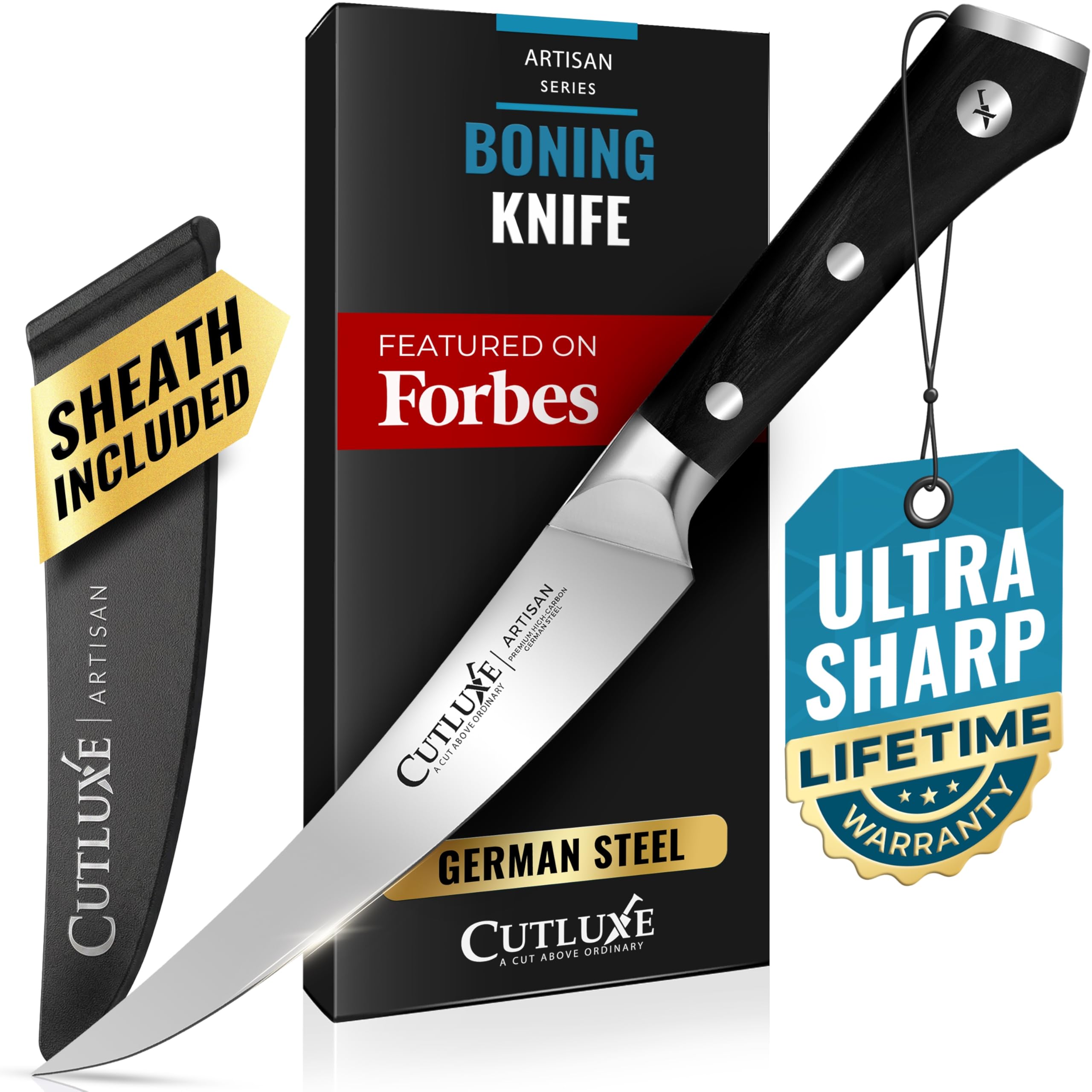
Cutluxe Curved Boning Knife
 Save
SaveWe recommend this knife for trimming fat because its curved, flexible blade gives us good control around bones and uneven cuts.
Key Pros
- Sharp edge makes clean, precise cuts
- Curved blade works well around bones
- Balanced handle feels secure during longer tasks
Key Cons
- Edge may need sharpening sooner than expected
- Handle may feel large for smaller hands
- Hand washing takes extra care
We found the six-inch blade useful for trimming beef, pork, chicken, and fish. Its curve helped us follow the shape of joints and remove fat without taking too much meat with it.
The blade arrived very sharp and handled detailed work smoothly. Its flexible feel made skinning and butterflying easier, while the full-tang handle gave us steady control when applying more pressure.
After repeated use, the edge may need touching up, especially during heavy butchering. The pakkawood handle feels comfortable and solid, but we would wash and dry the knife by hand to protect its finish.
Overall, the Cutluxe Curved Boning Knife offers strong performance for home cooks and hunters who want a focused knife for trimming fat and deboning.
Victorinox Wood 6-Inch Boning Knife
 Save
SaveWe recommend this knife for precise fat and sinew trimming because its narrow, curved blade offers good control without feeling heavy.
Key Pros
- Curved blade guides clean cuts around meat and joints
- Semi-stiff design balances control with useful flexibility
- Wooden handle feels comfortable during longer prep sessions
Key Cons
- Wood needs more care than a plastic handle
- Narrow blade is not suited for cutting through bones
- Some users may prefer a longer blade for large cuts
We found the 5.9-inch blade easy to steer when trimming fat from beef, poultry, and game. Its narrow shape helped us make small cuts without removing more meat than needed.
The semi-stiff blade gave us enough support for tougher connective tissue while still following the shape of the meat. It also held a sharp edge well during repeated prep, though we avoided using it against bones.
The wooden handle felt balanced and secure in our hand. We would wash and dry it by hand after each use, since regular dishwasher cycles can damage the wood over time.
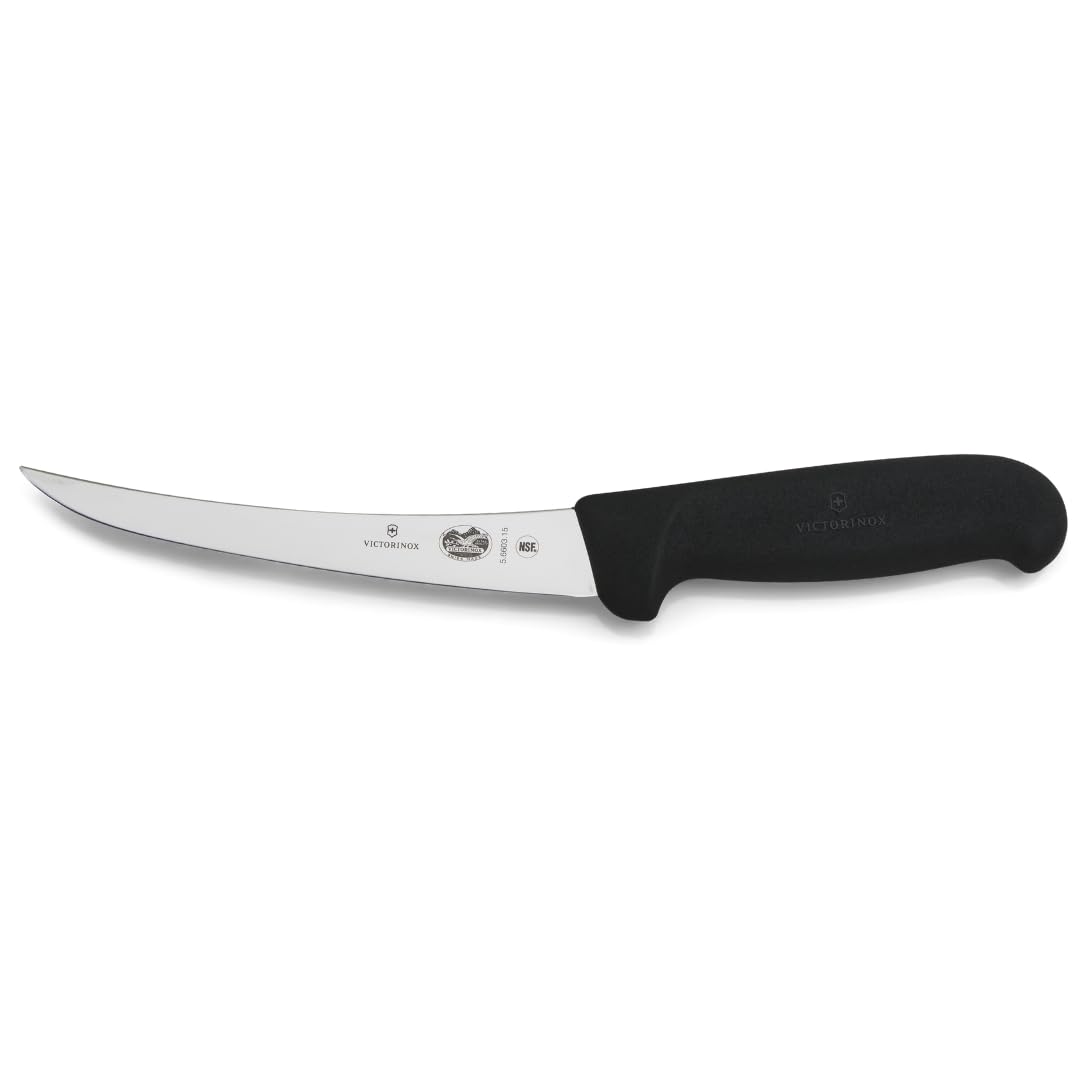
Victorinox Fibrox Pro Curved Boning Knife
 Save
SaveWe recommend this knife for trimming fat and silver skin because its curved, semi-stiff blade offers good control without feeling rigid.
Key Pros
- Curved edge follows meat closely
- Comfortable, secure grip when wet
- Sharp and easy to maneuver
Key Cons
- Not flexible enough for every delicate cut
- Requires careful handling
- The handle may feel large to some users
The narrow blade worked well when we trimmed fat from beef and pork. Its slight curve helped us keep the edge close to the meat, while the semi-stiff design gave enough support for thicker sections.
We also found the pointed tip useful for starting cuts around seams and connective tissue. The Fibrox handle stayed steady during wet, messy work, and the knife felt light enough for repeated trimming.
This knife is less suitable when we need a very flexible blade for fish or fine detail work. Still, for brisket, roasts, and general meat preparation, the Victorinox Fibrox Pro offers strong control and dependable performance at a practical price.
HOSHANHO 7-Inch Boning Knife
 Save
SaveWe recommend this knife for trimming fat because its sharp, narrow blade offers good control and makes clean cuts around meat and fish.
Key Pros
- Sharp edge cuts through fat with little effort
- Slim, flexible blade supports detailed trimming
- Comfortable pakkawood handle provides a steady grip
Key Cons
- The blade may feel too flexible for heavy-duty cutting
- Pakkawood requires careful hand washing and drying
- Seven inches may feel long for small cuts
We found the blade easy to guide when removing fat and silver skin from meat. Its narrow shape helped us work close to the surface without taking away too much usable meat.
The handle felt secure during longer trimming tasks, and the balanced weight made the knife comfortable to control. The edge arrived very sharp, so we could begin working without immediate sharpening.
This knife also works well for fish filleting and skinning. However, its lighter, flexible design suits precise trimming better than cutting through joints or dense bone. Hand washing and prompt drying should help protect the handle and blade.
Victorinox Fibrox Pro Boning Knife
 Save
SaveWe recommend this knife for trimming fat because its curved, semi-stiff blade gives us good control around meat and connective tissue.
Key Pros
- Sharp blade handles fat, silver skin, and membranes cleanly
- Textured handle stays secure during wet work
- Light design reduces hand fatigue
Key Cons
- The thin blade needs careful handling
- The handle feels less refined than premium models
- Dishwasher use may shorten its working life
When we trim beef, pork, or poultry with this knife, the curved edge follows the meat well and helps us remove fat without taking too much usable meat. Its semi-stiff feel offers a useful balance between control and flexibility.
The Fibrox handle gives us a firm grip, even when our hands get damp or greasy. At the same time, the knife stays light enough for longer prep sessions. The blade arrives very sharp and responds well to occasional honing.
We would choose this model for home cooks, hunters, and anyone who trims larger cuts regularly. The thin blade can lose its edge if we twist it or use it on bones, so careful technique matters.
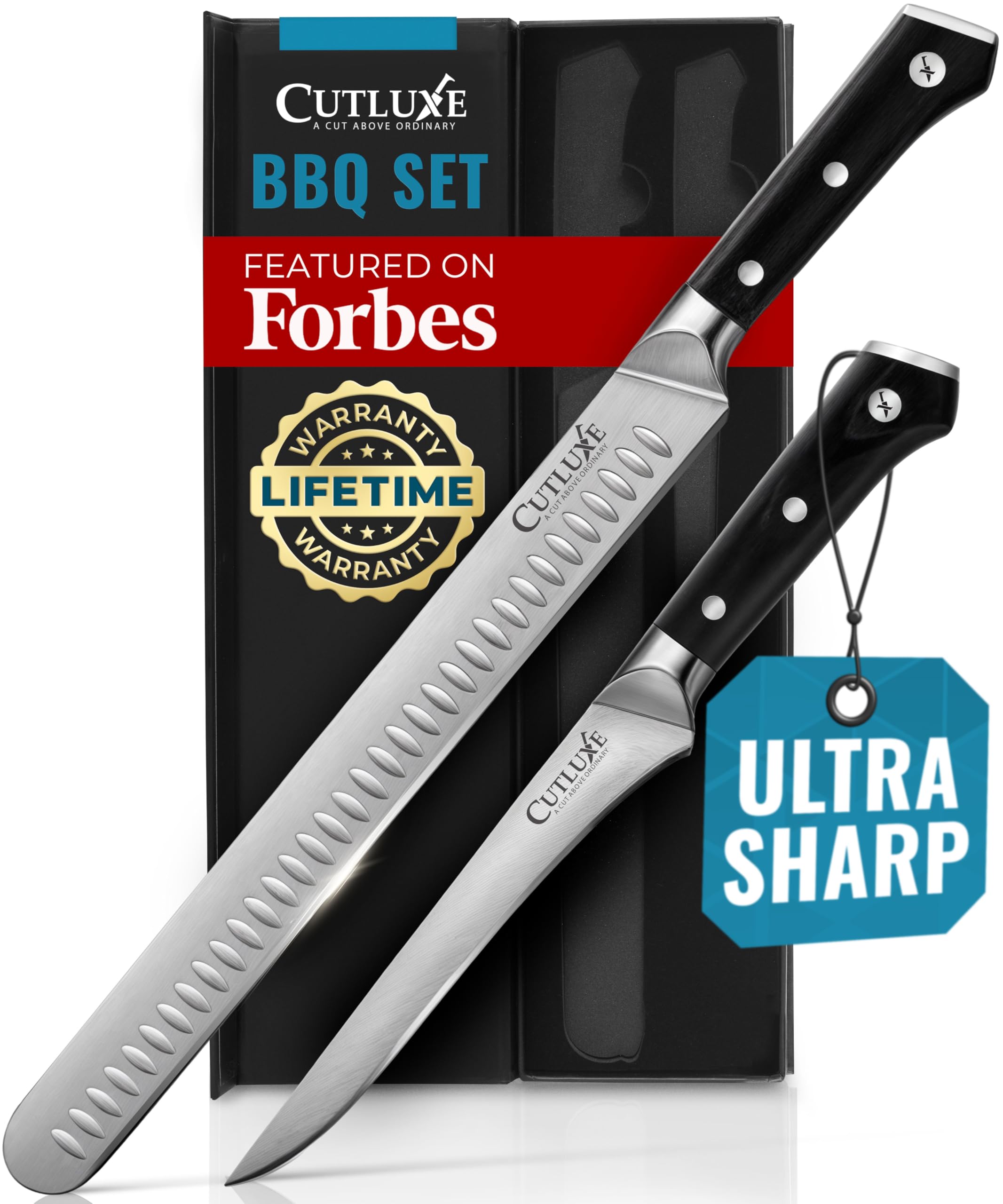
Cutluxe BBQ Boning Knife Set
 Save
SaveWe recommend this set for shoppers who want a sharp boning knife for trimming fat, plus a longer slicer for brisket and other large cuts.
Key Pros
- The curved boning knife handles close trimming around bones and joints well.
- The sharp edge cuts through fat cleanly with little pressure.
- The full-tang handle feels stable and comfortable during longer prep sessions.
Key Cons
- The square blade spine can feel rough if we place a finger on top.
- The set takes more storage space than a single boning knife.
- The long slicer needs extra room for smooth strokes.
We found the boning knife easy to control while separating fat from beef and pork. Its curved shape helped us follow the surface of the meat without removing too much lean tissue.
The blade arrived very sharp and made clean cuts through firm fat. The Granton-style edge also helped reduce sticking when we worked through larger pieces.
The pakkawood handle gave us a secure grip, while the full-tang build added confidence during tougher cuts. We still recommend using a cutting glove or keeping fingers away from the squared spine, since the knife is sharp and the upper edge can feel uncomfortable.
The included brisket slicer adds useful value for barbecue prep, though it may feel unnecessary if we only need a trimming knife. Overall, this set suits home cooks who want capable meat knives without paying for a premium professional set.
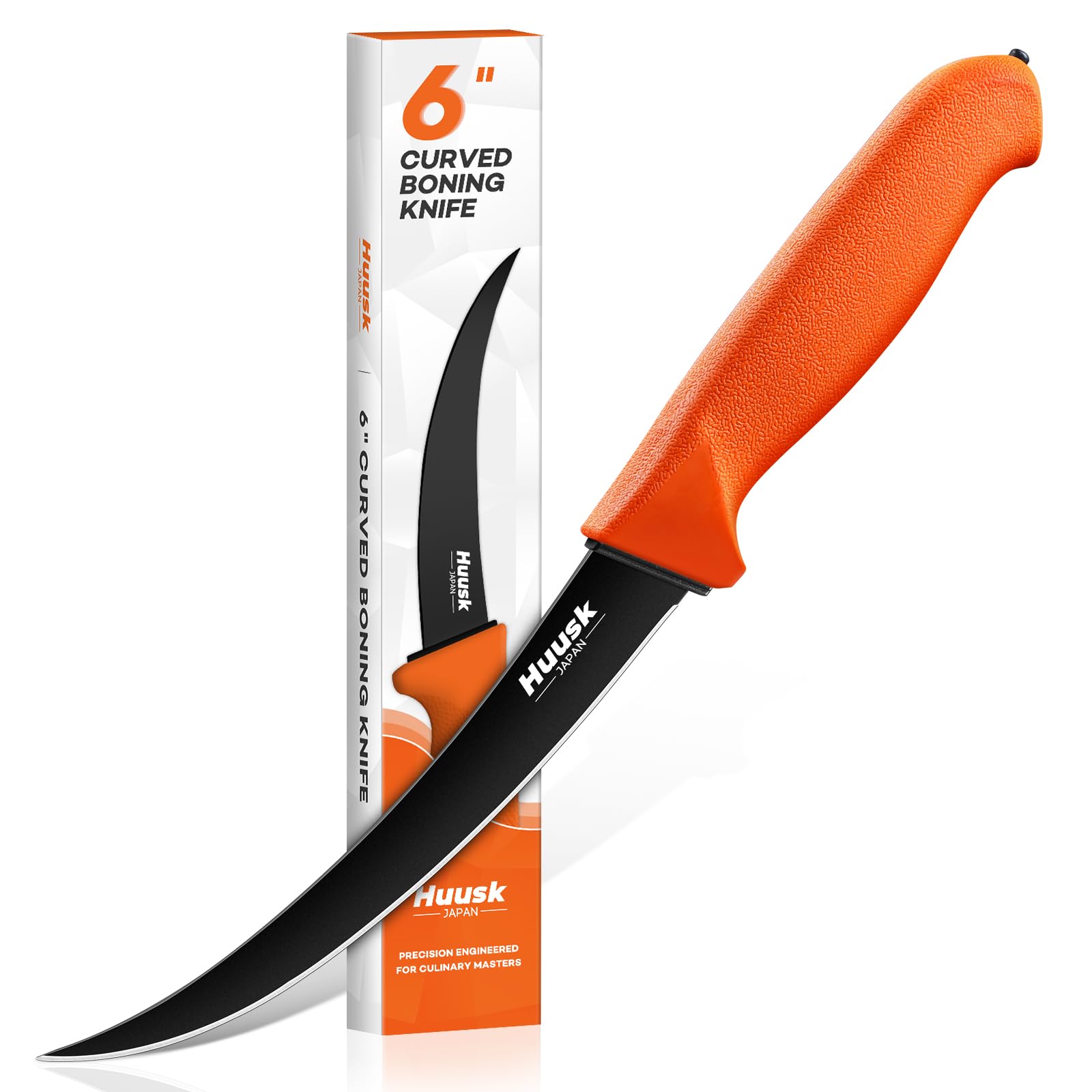
Huusk Curved Boning Knife
 Save
SaveWe recommend this knife for trimming fat because its curved, sharp blade gives us good control around silver skin, joints, and uneven cuts.
Key Pros
- Sharp blade works well on fat and connective tissue
- Textured orange handle stays easy to spot and hold
- Curved shape supports controlled trimming
Key Cons
- The unusual curve may take time to master
- Plastic handle feels less refined than premium options
- No blade cover comes included
The 6.5-inch stainless steel blade moved smoothly through fat during trimming. Its curve helped us follow the meat closely, which reduced the amount of usable meat left behind.
We also liked the bright orange handle. It was easy to find on a crowded work surface, and the textured grip felt secure when our hands became greasy or damp.
This knife is sharp out of the box, but the curved profile will not suit everyone. We found it more useful for detailed trimming than for broad, straight cuts. Clean and dry it after use, since the package does not include a protective cover.
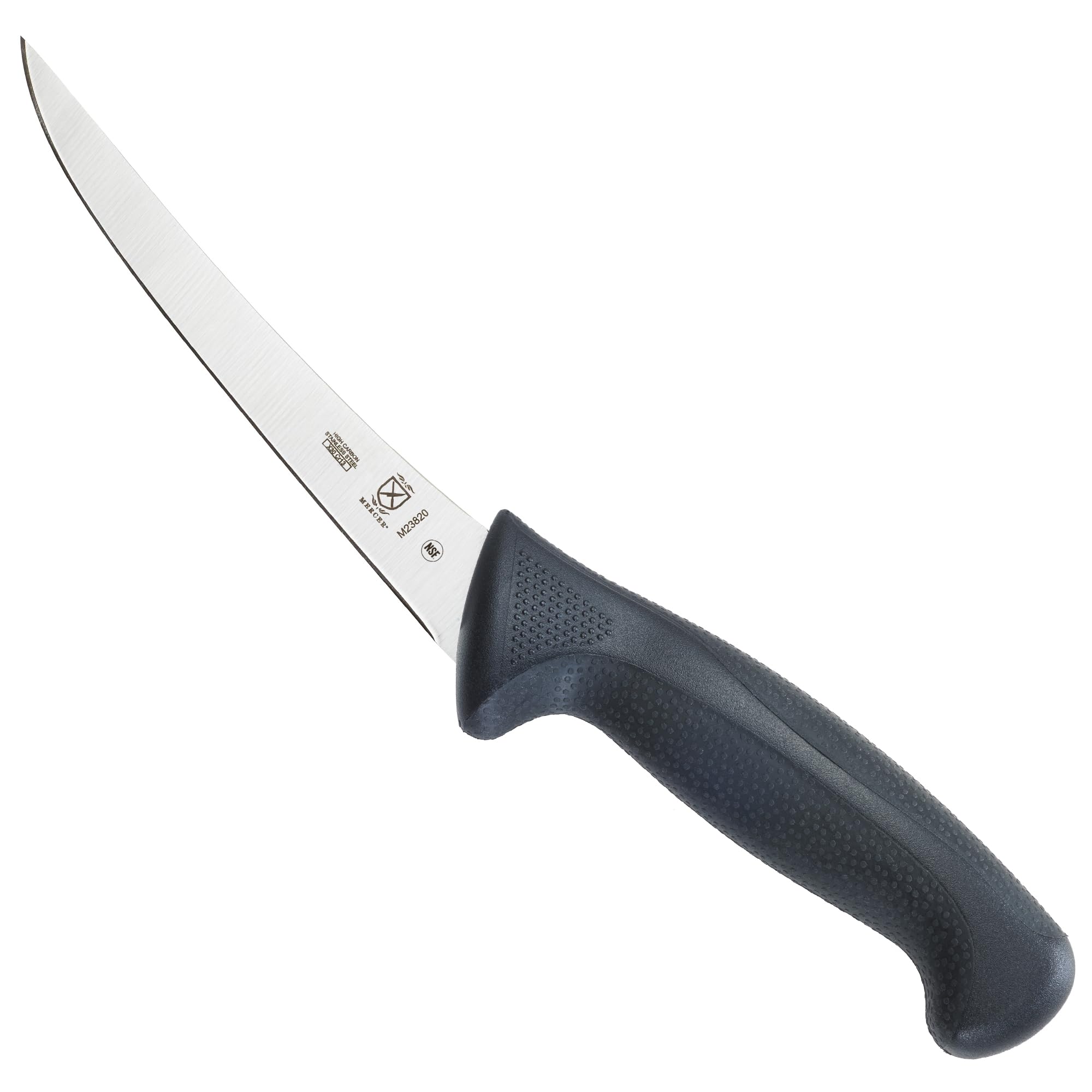
Mercer Culinary Millennia 6-Inch Curved Boning Knife
 Save
SaveWe recommend this knife for trimming fat because its sharp, curved blade gives us good control around meat and bones at a reasonable price.
Key Pros
- Sharp edge works well on fat, sinew, and meat
- Grippy handle feels secure during wet prep
- Curved shape helps with brisket, pork, poultry, and fish
Key Cons
- Blade has very little flex
- Hand washing takes extra care
- Handle may feel different from wood
When we used the Mercer Culinary Millennia to trim a pork shoulder, the curved blade moved cleanly through fat and connective tissue. Its compact size helped us make controlled cuts without removing more meat than needed.
The handle stayed steady, even when our hands became greasy. Textured finger points added comfort and grip, while the high-carbon steel held its edge through repeated trimming sessions.
This knife feels more rigid than some traditional boning knives. That firmness works well for brisket and larger cuts, but we had to use more care around tight curves and smaller bones.
Hand washing and thorough drying will help preserve the blade. For cooks who want an affordable, sharp boning knife for routine fat trimming, this Mercer offers strong performance without unnecessary extras.
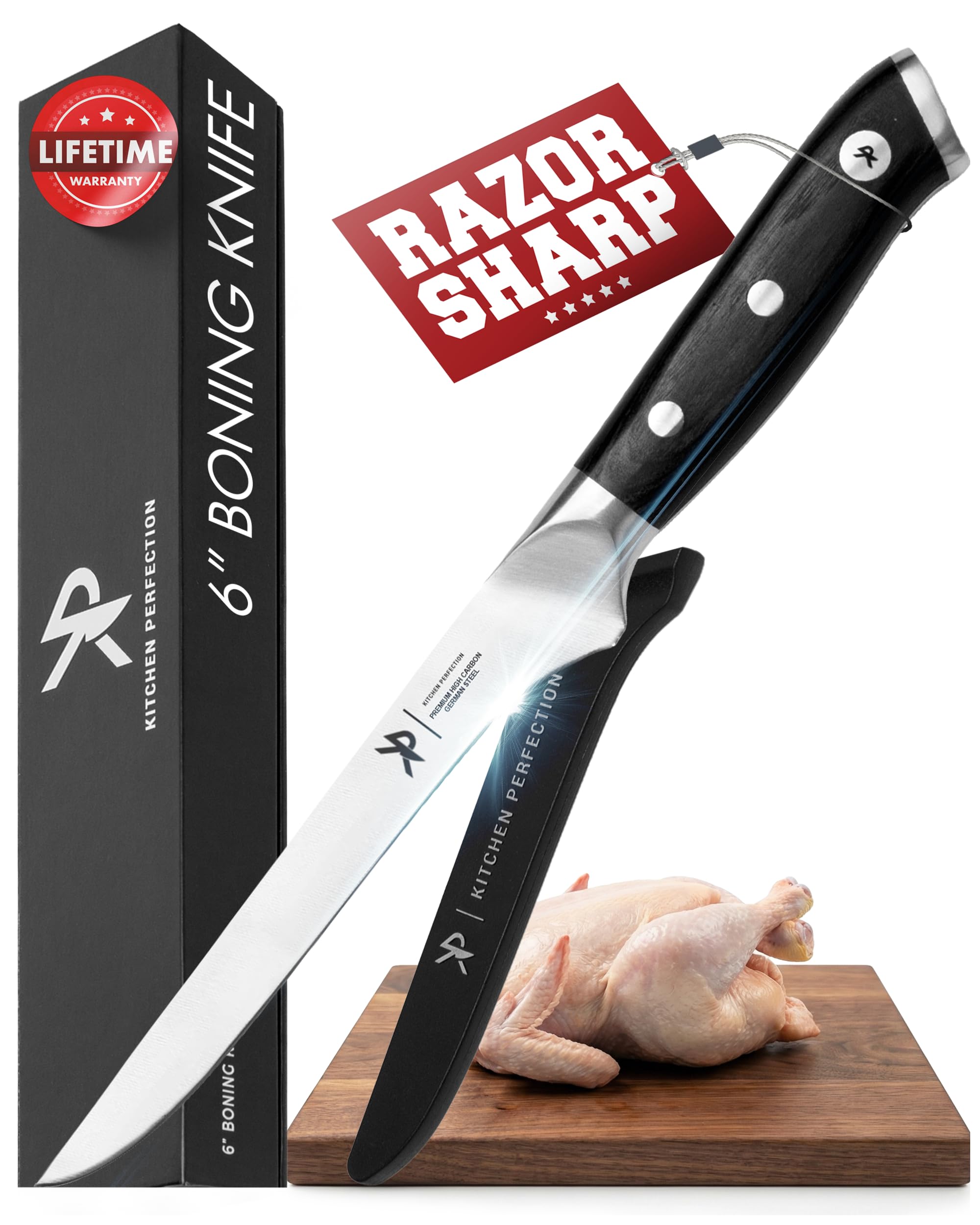
Kitchen Perfection 6-Inch Boning Knife
 Save
SaveWe recommend this knife for trimming fat because its sharp, narrow blade offers good control around meat, bones, and tough connective tissue.
Key Pros
- Sharp edge makes clean trimming cuts
- Balanced pakkawood handle feels secure
- Includes a protective sheath
Key Cons
- Six-inch blade may feel short for large cuts
- Sharp edge requires careful handling
- Hand wash and drying will help prevent wear
We found the tapered blade easy to guide when removing fat from roasts and trimming smaller cuts of beef. It moved through meat with little resistance and gave us enough control to avoid taking off too much lean meat.
The handle felt comfortable during repeated cuts, and the knife stayed steady in the hand. Its narrow shape also worked well for separating meat from bone and cleaning up uneven edges.
The included sheath makes storage safer and helps protect the blade. We would still wash and dry the knife by hand after use, since proper care should help maintain its edge and finish.
Buying Guide
When choosing a boning knife for trimming fat, we should focus on blade shape, flexibility, control, and comfort. A narrow blade helps us make precise cuts around meat, while the right amount of flex lets us follow curves without removing too much meat.
| Feature | What we should look for |
|---|---|
| Blade length | About 5 to 7 inches for control and easy handling |
| Flexibility | Flexible for curved cuts; semi-flexible for firmer trimming |
| Blade shape | Narrow and slightly curved for accurate fat removal |
| Handle | Secure grip that remains comfortable when wet |
| Steel | Strong, corrosion-resistant steel that holds an edge |
| Maintenance | Easy to hand-wash, dry, sharpen, and store safely |
We should choose a blade that feels balanced in our hand. A handle that fits securely reduces slipping and helps us maintain steady pressure during detailed work.
Flexibility depends on the task. A flexible knife works well around joints and uneven surfaces. A stiffer blade gives us more control when trimming thick fat or working through firmer cuts.
We should also check the knife’s edge quality and sharpening needs. A sharp, durable edge improves precision, but every knife still needs regular honing and occasional sharpening. Hand-washing and immediate drying can help protect the blade and handle.
Editor’s Choice
We choose the Victorinox Fibrox Pro Curved Boning Knife, 6-inch for trimming fat. Its curved, semi-flexible blade follows the shape of meat and helps us make controlled cuts around fat, silver skin, and connective tissue.
The Fibrox handle provides a secure grip, even when our hands become wet or greasy. Its stainless steel blade also resists corrosion and sharpens easily with regular maintenance.
| Feature | Why it matters |
|---|---|
| Curved, semi-flexible blade | Follows natural cuts in meat |
| 6-inch length | Balances control and reach |
| Textured handle | Improves grip during detailed work |
| Stainless steel | Offers easy care and sharpening |
We prefer the semi-flexible version because it gives us enough control for trimming without feeling too rigid. A stiff boning knife may work better when we need to separate meat from joints or cut through tougher sections.
We should wash the knife by hand, dry it promptly, and store it safely. Keeping the blade sharp helps us remove fat cleanly while reducing the pressure needed for each cut.
Conclusion
We should choose a boning knife based on the type of fat we trim and the cuts we prepare most often. A semi-flexible blade offers a useful balance, while a stiff blade gives us more control around thick fat and joints.
A narrow, sharp blade helps us make clean cuts with less waste. We should also look for a comfortable, secure handle and stainless steel that resists corrosion. These features support safe, steady work during repeated trimming.
Before buying, we can compare:
- Blade flexibility and length
- Handle comfort and grip
- Edge retention
- Ease of cleaning
- Price and warranty
The best boning knife for trimming fat is the one that stays sharp, feels controlled in our hands, and matches our usual cuts. We should maintain the edge, wash the knife after use, and store it safely to keep it ready for the next task.
FAQS
What blade shape works best for trimming fat?
We usually choose a narrow, curved blade. It follows the shape of the meat and helps us remove fat with fewer deep cuts.
Should we choose a stiff or flexible boning knife?
A stiff blade gives us better control when trimming thick fat or cutting around joints. A flexible blade works well for close trimming and detailed cuts. For general use, we often prefer a semi-flexible blade.
What blade length should we use?
A blade between 5 and 6 inches offers a useful balance of control and reach. Shorter blades can improve precision, while longer blades may help with larger cuts of meat.
Is a straight or curved edge better?
A curved edge can make it easier for us to follow the contours of meat. A straight edge provides steady contact on flat areas. Our choice depends on the cuts we prepare most often.
How should we clean a boning knife?
We should wash the knife by hand with warm water and mild soap, then dry it immediately. A dishwasher can damage the handle, edge, or protective finish.
How often should we sharpen it?
We can use a honing rod regularly to realign the edge and sharpen the knife when it no longer cuts cleanly. We should avoid forcing a dull blade through fat, as this reduces control.