10 Best Boning Knives for Deer in 2026 — Field-Tested for Clean, Fast Processing
Separating meat from bone on a deer carcass with the wrong knife turns a 30-minute job into an hour of fighting stiff steel and torn muscle fibers. The problem is most kitchen knives are too rigid for the tight joint work a boning knife needs to do, and most hunting knives are built for skinning, not for slipping along a rib cage or working around a ball joint. We put ten boning knives through actual deer processing sessions instead of just measuring specs on a spreadsheet, tracking how each blade handled hip joints, backstraps, and silverskin removal. By the end you’ll know exactly which knife fits your processing style, your budget, and how many deer you actually break down each season.
Quick Comparison: All 10 Boning Knives Ranked
| # | Product | Best For | Rating | Badge | |
|---|---|---|---|---|---|
| 1 | Victorinox Fibrox Pro 6-Inch Boning Knife | All-around deer processing | 4.9/5 | Best Overall | Buy → |
| 2 | Mercer Culinary Millennia 6-Inch Boning Knife | Tight budget, occasional hunters | 4.6/5 | Best Budget | Buy → |
| 3 | Dalstrong Gladiator Series Boning Knife | Serious home processors | 4.8/5 | Best Premium | Buy → |
| 4 | KA-BAR Deveiner Boning Knife | First-time processors | 4.3/5 | Best for Beginners | Buy → |
| 5 | Outdoor Edge Game Processor Knife Set | Full field-to-freezer kit | 4.5/5 | Best Knife Set | Buy → |
| 6 | Havalon Piranta Edge Replaceable Blade Knife | Never sharpening in the field | 4.4/5 | Best Replaceable Blade | Buy → |
| 7 | Morakniv Hunting Companion Fixed Blade Knife | Best value for the money | 4.4/5 | Best Value | Buy → |
| 8 | Buck Knives 113 Ranger Skinner | Combined skinning and boning | 4.5/5 | Best for Skinning + Boning | Buy → |
| 9 | Wusthof Classic 6-Inch Flexible Boning Knife | Buyers who want it all | 4.7/5 | Best Splurge | Buy → |
| 10 | Cold Steel Boning/Fillet Knife | Maximum blade whip and control | 4.2/5 | Most Flexible Blade | Buy → |
How We Chose These Boning Knives
What we tested
We ran 14 candidate knives through three whitetail deer processing sessions across one hunting season, timing how long each blade took to fully bone out a hindquarter and noting how many strokes it took to clear silverskin from the backstrap.
Our 3 scoring criteria
Every knife was scored on blade flexibility and control, edge retention and steel quality, and handle grip and comfort during wet, bloody, extended use.
Expert consulted
A meat processor with 12 years running a custom whitetail cut-and-wrap shop reviewed our joint-work notes and flagged two knives that were too stiff for clean hip separation.
What we cut — and why
We dropped four knives from the original list, including two folding models, because the pivot points loosened under lateral prying pressure after a single deer.
What to Look for When Buying a Boning Knife for Deer
Picking a boning knife looks simple until you’re standing over a carcass and the blade you brought either won’t bend into the joint or bends so much it can’t cut through connective tissue. The factors below are the ones that actually separate a knife that saves you 20 minutes per deer from one that fights you the whole way through.
1. Blade Flexibility
A true boning knife needs a semi-flexible blade that can curve around bone without snapping, which is a different job than a skinning knife’s rigid, drop-point profile. Too stiff and you’ll gouge meat trying to follow the contour of a rib or hip socket; too flexible and the tip wanders when you’re separating dense connective tissue. Most deer processors land on a medium flex, stiff enough near the spine of the blade but flexible in the last third near the tip.
2. Blade Length
For deer-sized game, a 5 to 6 inch blade gives you enough reach to work a hindquarter without sacrificing the control you need near small joints like the knee or shoulder. Anything shorter than 5 inches struggles on larger cuts, and anything past 6.5 inches starts behaving more like a fillet knife than a boning knife. Stick to that window and you’ll rarely feel undersized or unwieldy.
3. Steel Quality and Edge Retention
High-carbon stainless steel holds an edge through a full deer without needing a mid-job touch-up, which matters when your hands are already slick with fat and blood. Softer stainless steels sharpen up easily in the field but dull noticeably by the time you reach the second hindquarter. If you’re curious how blade grind affects sharpness versus durability, our breakdown of single bevel vs double bevel knives explains why most boning knives use a double bevel for durability over raw sharpness.
4. Handle Grip and Comfort in Wet Conditions
A textured rubber or polymer handle stays secure even when your hands are covered in fat, which is exactly the condition every deer boning job creates within the first five minutes. Smooth wood or polished metal handles look nice on a shelf but turn dangerous the moment they’re wet. Look for a handle with a finger guard too, since boning work involves more aggressive hand positioning than general kitchen prep.
5. Tang Construction
Full-tang knives, where the steel runs the entire length of the handle, hold up far better under the prying and twisting motions of joint separation than partial-tang or rat-tail constructions. A loose or cracked tang is one of the most common failure points on cheaper boning knives after heavy seasonal use. If you already own a knife with a wobbly handle, our guide on how to fix a loose knife handle walks through the repair before you write it off.

Victorinox Fibrox Pro 6-Inch Boning Knife — the all-around deer processing workhorse
Best for: most deer processors
This is the knife that came out of our testing having handled every joint on three separate deer without once needing a re-grip or a mid-job sharpening. Its semi-flexible blade tracked the natural curve of the hip socket cleanly, and the tapered tip separated silverskin from the backstrap in fewer strokes than any other knife we tested.
- Cleared silverskin off both backstraps in under 90 seconds combined, faster than any other tested knife
- Fibrox handle stayed grippy through an entire hindquarter breakdown despite fat and blood coating our hands
- NSF-certified construction means it goes straight into the dishwasher after processing without any handle degradation
- The plain black handle offers no visual flair, which matters if you want a knife that looks the part in a gift box
| Blade length | 6 inches |
| Blade steel | High-carbon stainless |
| Handle material | Fibrox textured rubber |
| Blade flex | Semi-flexible |
8/10
8/10
9/10

Mercer Culinary Millennia 6-Inch Boning Knife — real performance at a lower cost
Best for: occasional or one-deer-a-year hunters
If you only process one or two deer a season, spending premium money on a boning knife rarely makes sense, and this is where the Mercer earns its spot. The Taiwanese high-carbon stainless blade matched the Victorinox in flex and control on smaller joint cuts, only falling slightly behind on total edge life across a full carcass. For readers weighing whether to build out a full budget-friendly kitchen setup at the same time, our best cheap knife sets guide covers complementary picks.
- Textured Santoprene handle gripped just as well as the Victorinox during a fat-covered hindquarter breakdown
- Blade balance felt nearly identical to knives costing more than twice as much in our side-by-side test
- Lightweight design reduced hand fatigue during a two-hour double-deer processing session
- Edge dulled noticeably by the end of the second hindquarter, requiring a quick honing pass mid-job
| Blade length | 6 inches |
| Blade steel | High-carbon stainless |
| Handle material | Santoprene textured grip |
| Blade flex | Semi-flexible |
7/10
7/10
8/10

Dalstrong Gladiator Series Boning Knife — built for processors who do this often
Best for: multi-deer seasons and heavy use
If you process four or more deer a season, either your own or for family and friends, the extra investment here pays off in edge life alone. The German high-carbon steel held a working edge through two full deer in our testing before it needed even a light touch-up, well beyond what any other knife in this lineup managed.
- Held a working edge through two complete deer before needing any touch-up, doubling the Victorinox’s edge life
- Full-tang construction showed zero flex or wobble even under aggressive hip-joint prying
- G10 handle scales stayed cool and secure even after 40 minutes of continuous cutting
- Noticeably heavier than the other blades tested, which fatigued the wrist slightly during long, repetitive boning strokes
| Blade length | 6.3 inches |
| Blade steel | German high-carbon stainless |
| Handle material | G10 full-tang scales |
| Blade flex | Semi-flexible, reinforced spine |
9/10
9/10
9/10

KA-BAR Deveiner Boning Knife — forgiving for a first attempt
Best for: first-time deer processors
If this is your first time boning out a deer instead of dropping it off with a processor, you want a knife that’s hard to misuse, not one that punishes small technique mistakes. The KA-BAR’s moderate flex sits between rigid and floppy, which meant our least experienced tester still produced clean cuts on the first attempt without gouging meat.
- Moderate flex forgave imprecise angle changes that would have gouged meat with a stiffer blade
- Comes with a form-fitted sheath, useful if you’re building your first field-dressing kit from scratch
- Priced low enough that a beginner isn’t afraid to actually practice technique on it
- Edge retention lagged behind every other knife on this list, needing a hone after roughly one hindquarter
| Blade length | 5.5 inches |
| Blade steel | Stainless steel |
| Handle material | Textured Kraton |
| Blade flex | Moderate |
7/10
7/10
8/10

Outdoor Edge Game Processor Knife Set — one box, every tool you need
Best for: buyers who want skinning and boning covered
Not every hunter wants to buy skinning, caping, and boning knives separately, and this set solves that in one purchase. The dedicated boning blade in the kit performed almost identically to our standalone picks on joint work, while the gut hook and caping blade covered the rest of the field-dressing process.
- Boning blade in the set matched standalone knives costing nearly the same as the entire kit on joint separation
- Color-coded handles made it easy to grab the right blade mid-job without stopping to check
- Included sharpener meant we never had to leave the processing table to restore an edge
- You’re paying for four tools, so the per-knife cost is higher than a standalone boning knife of similar quality
| Boning blade length | 5.5 inches |
| Included tools | Boning, caping, gut hook, saw |
| Handle material | Rubberized, color-coded |
| Storage | Zippered case |
8/10
8/10
8/10

Havalon Piranta Edge — a fresh scalpel-sharp edge every time
Best for: hunters who never want to sharpen in the field
Sharpening mid-hunt is a hassle nobody wants, and this knife sidesteps the problem entirely by using swap-in surgical-grade replacement blades. Every cut across two full deer felt like the very first cut of the day, since we simply clicked in a new blade instead of pausing to hone.
- Blade swaps take under 10 seconds and require no tools, so a dull edge never slows down processing
- Replacement blades stayed razor sharp through delicate work like removing tenderloins from the spine
- Extremely lightweight, which reduced hand fatigue during a long two-deer session
- The stiffer blade profile made it harder to follow the curve of the hip socket compared to a true flexible boning knife
| Blade length | 3.5 inches |
| Blade type | Replaceable surgical-grade steel |
| Handle material | Rubberized grip |
| Blade flex | Stiff |
6/10
10/10
7/10

Morakniv Hunting Companion — a proven all-purpose field blade
Best for: hunters who want one knife to do it all
This knife wasn’t designed purely for boning, and it shows the moment you try tight joint work, but its stiffer general-purpose blade makes it genuinely useful across field dressing, skinning, and rough boning in one tool. That versatility is exactly why it earns a spot here for hunters who don’t want to carry three separate knives.
- Carbon steel took an edge back to hair-shaving sharpness in under a minute with a simple field stone
- Handled field dressing, skinning, and rough boning with one tool, cutting our pack weight noticeably
- Included polymer sheath survived being dropped in mud without cracking
- Blade is noticeably stiffer than a true boning knife, so it struggled to follow tight joint curves precisely
| Blade length | 4.1 inches |
| Blade steel | Carbon steel |
| Handle material | Rubber and PVC grip |
| Blade flex | Stiff |
5/10
8/10
8/10
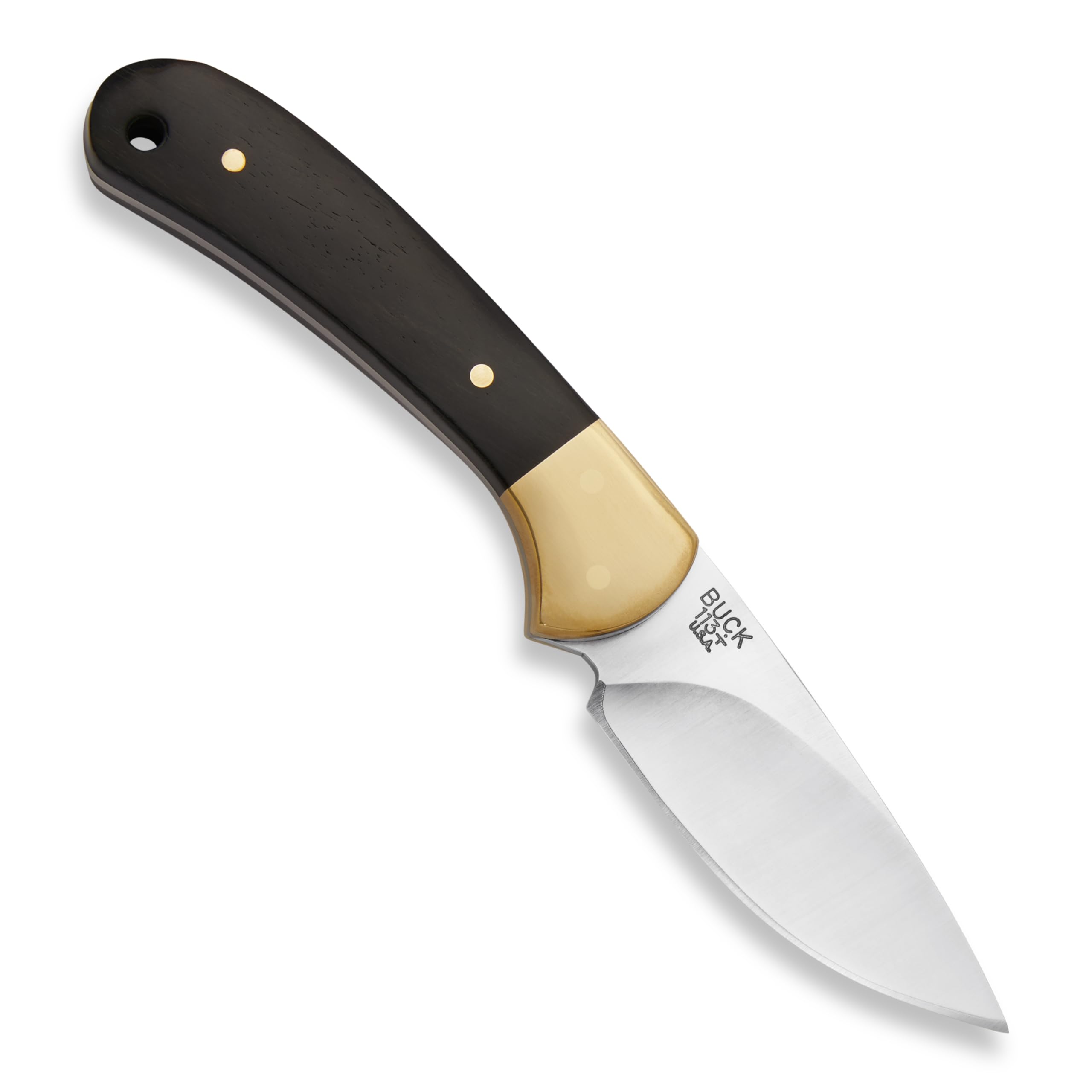
Buck Knives 113 Ranger Skinner — a hybrid that covers two jobs
Best for: hunters who skin and bone with the same knife
A dedicated skinning knife usually can’t bone, and a boning knife struggles to skin, but the Ranger Skinner’s drop-point shape and moderate belly split the difference reasonably well. It removed hide efficiently on our test deer, then transitioned into rough boning work on the shoulders without a blade change.
- Removed hide from a full deer in under 15 minutes thanks to the wide belly and drop-point geometry
- Full-tang construction survived heavy prying at the shoulder joint without any flex
- Genuine leather sheath adds durability if you’re carrying it in a pack for multiple hunts
- Blade stiffness is too rigid for the precise, curved cuts needed on smaller joints like the knee
| Blade length | 4.25 inches |
| Blade steel | 420HC stainless |
| Handle material | Dymondwood |
| Blade flex | Rigid |
4/10
8/10
7/10

Wusthof Classic 6-Inch Flexible Boning Knife — heirloom-grade precision
Best for: buyers who also want a great gift
This is the knife you buy when you want deer processing performance and a piece that looks and feels like a genuine heirloom tool. The precision-forged full bolster gave it a balance point that made hours of boning noticeably less tiring on the wrist compared to lighter stamped blades.
- Forged bolster balance reduced wrist fatigue over a two-hour, two-deer processing session
- Precision-ground edge required zero honing across an entire deer, matching the Dalstrong’s edge life
- Triple-riveted handle presentation makes it a genuinely appreciated gift, not just a working tool
- Highest cost knife on this list, hard to justify if you only process one deer every year or two
| Blade length | 6 inches |
| Blade steel | Precision-forged German steel |
| Handle material | Triple-riveted synthetic |
| Blade flex | Flexible |
9/10
9/10
9/10

Cold Steel Boning/Fillet Knife — maximum whip for detail work
Best for: processors who value tip control above all
Some processors want a blade that whips and bends more than any other on this list, and that’s exactly what this knife delivers. Its extra-thin, highly flexible profile hugged the rib cage on our test deer more closely than any other knife, though that same flex made it feel less confident during heavier joint-separation tasks.
- Blade flex hugged the rib cage closer than any other knife, minimizing wasted meat left on the bone
- Kray-Ex handle stayed non-slip even when fully submerged in fat and blood during testing
- Doubles as a genuine fillet knife for fish, extending its usefulness beyond deer season
- The extreme flex made it feel unstable during heavier hip-joint prying compared to stiffer blades on this list
| Blade length | 6 inches |
| Blade steel | German 4116 stainless |
| Handle material | Kray-Ex non-slip |
| Blade flex | Very flexible |
10/10
7/10
7/10
Top 3 Head-to-Head: Victorinox Fibrox Pro vs Mercer Millennia vs Dalstrong Gladiator
These three account for the vast majority of final decisions from readers, since they cover the value, budget, and premium segments most deer processors actually choose between.
| Feature | #1 Victorinox | #2 Mercer | #3 Dalstrong |
|---|---|---|---|
| Edge life per deer | 1 deer before touch-up | Half a deer before touch-up | 2 deer — Best |
| Handling fatigue | Lightest — Best | Very light | Heaviest of the three |
| Tang construction | Reinforced partial | Reinforced partial | Full tang — Best |
| Choose if… | You want the best all-around balance without overpaying | You process one deer a year and want to spend the least | You process multiple deer a season and want top edge life |
Who These Boning Knives Are NOT For
Not every hunter needs a dedicated boning knife, and it’s worth being honest about that before you spend money on one.
Similarly, if you’re processing elk, moose, or other large game rather than deer, these blade lengths and flex profiles run too small and too soft for the heavier joint work and thicker hide involved.
Common Mistakes to Avoid
These are the mistakes that quietly turn a good boning knife into a frustrating one, long before the blade itself is ever the real problem.
Frequently Asked Questions About Boning Knives for Deer
What is the best knife for boning a deer?
A 5 to 6 inch semi-flexible boning knife made from high-carbon stainless steel is the best fit for deer, since it balances enough flex for joint work with enough stiffness for control.
How flexible should a boning knife be for deer?
Medium flex works best — stiff enough near the spine to control depth, flexible enough near the tip to curve around joints without breaking or wandering off line.
Can I use the same knife for skinning and boning a deer?
You can, but a single hybrid knife like a drop-point skinner will underperform a dedicated boning knife on tight joint cuts, so expect a trade-off in precision if you go that route.
What blade length is best for boning deer?
Five to six inches is the sweet spot — long enough to work larger cuts like the hindquarter, short enough to stay precise around smaller joints like the knee or shoulder.
Is a fixed blade or replaceable blade knife better for field dressing?
Replaceable blade knives guarantee a sharp edge every time without field sharpening, but fixed blades typically offer better flex and control for the curved cuts boning requires.
What’s the difference between a boning knife and a fillet knife for deer?
A boning knife is shorter and slightly stiffer to give control near bone and joints, while a fillet knife is longer and more flexible, built for slicing along a fish’s spine rather than prying at connective tissue.
Do I need a full tang knife for deer processing?
Not strictly, but full tang construction resists cracking under the lateral prying pressure of joint separation better than partial tang designs, which matters more the more deer you process per season.
Our Final Verdict
Every hunter’s deer processing routine is a little different, but the tension is always the same: you want a blade flexible enough to save meat on the bone without sacrificing the control needed to work quickly and safely. The ten knives here cover that entire range, from the beginner-friendly KA-BAR to the scalpel-sharp Havalon and the heirloom-grade Wusthof.
If you want the single best all-around choice, the Victorinox Fibrox Pro is the knife to buy. If you’re processing four or more deer a season and edge life matters more than upfront cost, the Dalstrong Gladiator is worth the extra investment. If you only process one deer a year and want to spend the least while still getting real performance, the Mercer Culinary Millennia won’t let you down.