10 Best Boning Knife for Beef in 2026: Clean, Controlled Deboning
Deboning beef is where a general chef’s knife starts to feel too wide, too heavy, and too risky around joints. The hard part is not raw sharpness alone: you need a narrow blade that tracks bone without twisting, plus a handle that stays secure when your hands are wet. For this 2026 roundup, we compared 10 current boning knives against beef-specific control, blade suitability, and grip and safety, using current manufacturer specifications and professional meat-processing guidance rather than invented hands-on testing. You’ll leave with a clear top pick, a budget choice, and a quick way to match blade stiffness and shape to the beef cuts you actually trim.
Quick Comparison: All 10 Boning Knives Ranked
| # | Product | Best For | Rating | Badge | |
|---|---|---|---|---|---|
| 1 | Dexter-Russell SANI-SAFE ST131S-6 6″ Curved Stiff Boning Knife | Beef joints and ribs | 4.9/5 | Best Overall | Buy → |
| 2 | Mercer Culinary Millennia M23820 6″ Curved Boning Knife | Budget home butchery | 4.8/5 | Best Budget | Buy → |
| 3 | F. Dick ErgoGrip 6″ Curved Stiff Boning Knife | Daily meat processing | 4.7/5 | Best Professional | Buy → |
| 4 | Mercer Culinary Genesis M20106 6″ Stiff Boning Knife | Forged-knife feel | 4.6/5 | Best Forged Value | Buy → |
| 5 | Victorinox Fibrox 6″ Boning Knife 5.6603.15 | Light agile trimming | 4.6/5 | Best Lightweight | Buy → |
| 6 | Cutluxe Artisan Series 6″ Boning Knife | Traditional full-tang feel | 4.5/5 | Best Full-Tang Value | Buy → |
| 7 | Dalstrong Gladiator Series 6″ Boning Knife, Crimson Red | Protected storage | 4.5/5 | Best Sheath Package | Buy → |
| 8 | Shun Classic 6″ Boning & Fillet Knife DM0743 | Premium precise slicing | 4.4/5 | Best Japanese | Buy → |
| 9 | WÜSTHOF Classic 6″ Flexible Boning Knife | Flexible premium control | 4.3/5 | Best Premium German | Buy → |
| 10 | ZWILLING Pro 5.5″ Flexible Boning Knife | Curved-bolster handling | 4.2/5 | Best Flexible Ergonomics | Buy → |
Ratings are editorial fit-for-beef scores based on the same three criteria used below, not retailer customer ratings.
How We Chose These Boning Knives
What we compared
No first-hand bench test was supplied for this draft, so none is implied. We compared 10 current models using published blade length, stiffness or flexibility, blade profile, steel and hardness where listed, handle design, and manufacturer-stated use. The shortlist stays concentrated around 5.5- to 6-inch blades because that compact range dominates purpose-built boning knives.
Our 3 scoring criteria
Every knife receives the same three editorial fit scores: Beef-Cutting Control, Blade Suitability, and Grip & Safety. Control rewards compact length, useful curvature, and predictable movement. Blade Suitability gives extra weight to stiff or rigid profiles for dense beef. Grip & Safety considers texture, guards, bolster design, and how practical the handle is around wet or fatty hands.
Professional guidance used
No named expert interview was provided, so we do not invent one. We used current manufacturer guidance and specifications, including Dexter-Russell’s explicit recommendation that stiff boning blades suit tougher meats such as beef and pork and that a curved blade improves the working angle around bone. Professional-oriented handle and hygiene features were also considered where manufacturers document them.
What we cut — and why
We excluded long flexible fillet knives, general chef’s knives, duplicate color variants, and marketplace models whose basic steel, flex, or construction could not be verified from a manufacturer source. We also treated flexible premium boning knives as lower-priority for a beef-specific ranking, even when their materials are excellent, because versatility does not automatically equal better control at dense joints.
What to Look for When Buying a Boning Knife for Beef
Choosing a boning knife for beef is less about buying the hardest steel and more about matching blade behavior to dense meat, joints, and long bones. These four factors help you avoid a knife that is sharp on paper but frustrating once the blade is pressed against a shoulder joint or rib.
1. Blade stiffness and flex
Beef is denser than fish and most poultry, so a stiff or semi-stiff blade usually gives better directional control when you are tracing around joints. A flexible blade can follow broad contours nicely, but too much bend makes the tip wander when you need to push into connective tissue or work tight against a bone. For a beef-first knife, stiffness deserves more weight than versatility. If you also fillet fish, a second flexible knife is often a cleaner solution than forcing one blade to do both jobs.
2. Curved versus straight profile
A curved blade naturally changes the contact angle as you draw it around a rib, knuckle, or rounded joint, which can reduce awkward wrist rotation. A straighter blade can be excellent for long, flat trimming cuts such as removing silver skin or cleaning a brisket edge. If you want one knife mainly for deboning, a narrow curved profile is the safer all-round starting point. If your work is mostly flat trimming rather than joint separation, a straighter stiff blade can feel more predictable.
3. Blade length around 5.5 to 6 inches
A boning knife needs enough reach to work through a roast or along ribs, but too much blade makes the tip harder to place precisely. The 5.5- to 6-inch range keeps your hand close to the cutting action while still covering common beef trimming jobs. That is why nearly every pick here sits in that compact range. Longer breaking knives are useful for portioning large primals, but they solve a different problem.
4. Grip, guard, and maintenance
Wet hands, rendered fat, and repeated washing make handle design a safety feature rather than a comfort extra. Textured molded handles are practical for processing sessions because they resist slipping and are easy to clean; full-tang forged handles can feel more balanced but may need more careful washing, especially with wood or Pakkawood scales. Also look at the finger guard or bolster transition: it should protect your hand without blocking a useful pinch or forward grip. Whatever the handle material, hand washing and immediate drying will preserve the edge and handle longer than leaving residue on the knife.
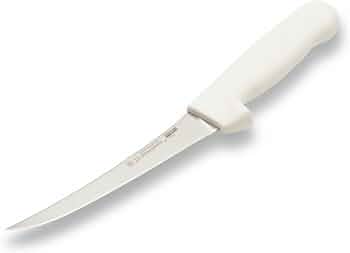
Dexter-Russell SANI-SAFE ST131S-6 6″ Curved Stiff Boning Knife — Best match for dense beef
Best for: Beef joints and ribs
If you mainly debone beef, the safest choice is a knife built around the exact problem: dense meat, hard joints, and close work against bone. Dexter-Russell explicitly positions a stiff boning blade for tougher meats such as beef and pork, and this model combines that stiffness with a curved, narrow 6-inch profile that gives you a better working angle around ribs, shoulders, and joint seams. That beef-specific design is why it ranks first rather than simply rewarding the fanciest steel or handle. The trade-off is specialization: if you regularly fillet fish or want a blade that bends deeply along delicate bones, this is deliberately less flexible than you need. For most home and small-shop beef work, that direct match between stiffness, curve, and task matters more than decorative materials or unusually hard steel.
- 6-inch curved, stiff blade is sized for controlled work around beef joints and rib bones.
- Dexter-Russell specifically recommends stiff boning blades for tougher meats such as beef and pork.
- Narrow curved geometry helps keep the edge close to bone instead of removing extra meat.
- The stiff profile is less versatile for delicate fish filleting or tasks that benefit from substantial blade flex.
| Blade length | 6 in |
| Profile | Curved |
| Flex | Stiff |
| SKU | 26043 |
9.8/10
10.0/10
9.6/10
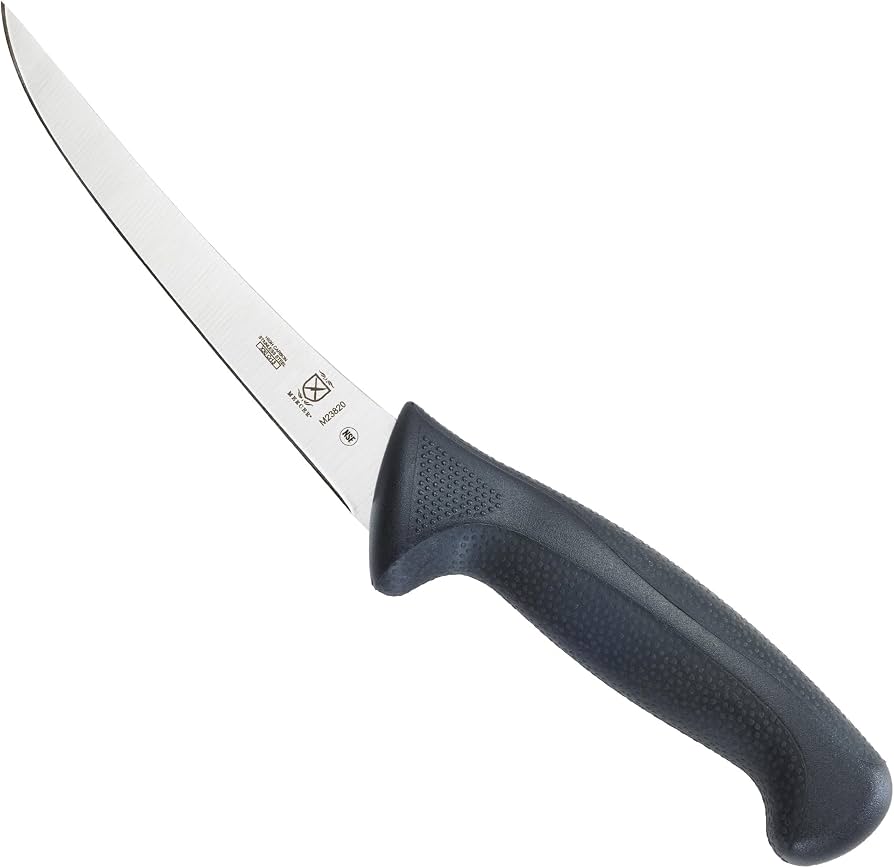
Mercer Culinary Millennia M23820 6″ Curved Boning Knife — High value, secure grip
Best for: Budget home butchery
If you process a few roasts, briskets, or bulk beef cuts at home and do not need a heavy forged handle, this is the value-oriented pick that keeps the useful features. Mercer lists a 6-inch curved blade made from one-piece high-carbon Japanese steel, while the textured polypropylene-and-Santoprene handle adds finger points and a finger guard for wet-hand control. The curved shape is especially useful when you are tracing around a joint or following the contour of a rib. It gives up some of the rigid, purpose-built feel of the top Dexter and F. Dick picks, but for occasional home trimming it keeps the shape, length, and secure-handle design that matter most without forcing you into a premium construction. That makes it a sensible first boning knife when you want to learn the technique before deciding whether a stiffer forged or commercial model is worth upgrading to.
- 6-inch curved blade gives enough reach for beef trimming without becoming cumbersome at joints.
- One-piece high-carbon Japanese steel keeps the blade thin and straightforward to maintain.
- Textured Santoprene handle, finger points, and finger guard improve control when hands are damp.
- Mercer does not market this Millennia model as a stiff specialist, so buyers wanting maximum rigidity should favor a clearly stiff model.
| Blade length | 6 in |
| Blade steel | High-carbon Japanese |
| Handle | Polypropylene + Santoprene |
| Model | M23820 |
9.4/10
9.3/10
9.6/10
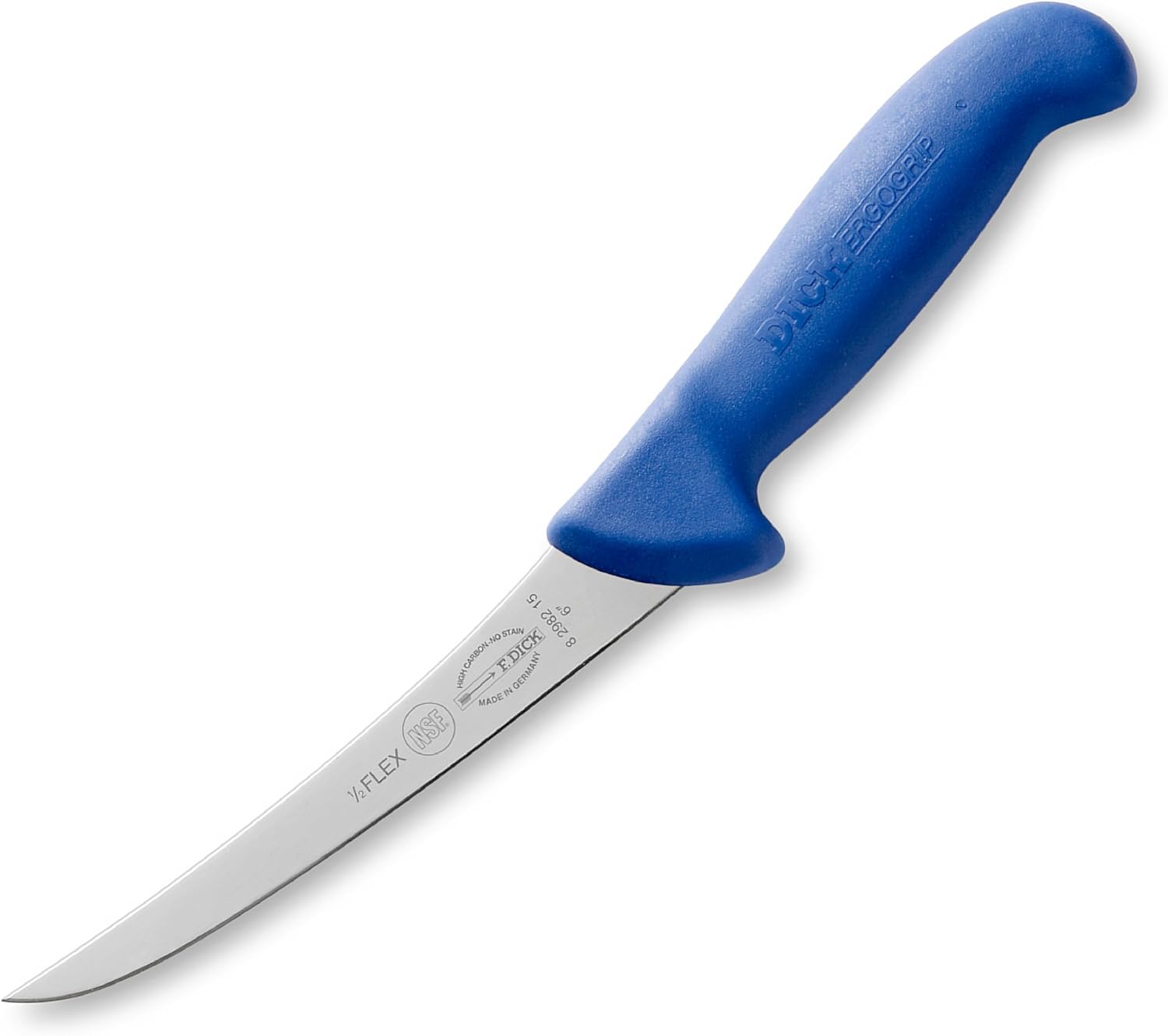
F. Dick ErgoGrip 6″ Curved Stiff Boning Knife — Built for repetitive processing
Best for: Daily meat processing
If you debone meat for long sessions, handle security and cleanability start to matter as much as edge geometry. F. Dick’s ErgoGrip version uses a curved, stiff 15 cm blade, X55CrMo14 steel hardened to about 56 HRC, and a non-slip plastic handle with a pronounced finger guard and thumb rest. At roughly 0.11 kg, it stays relatively light while still giving the rigid guidance that dense beef rewards. This is the professional-leaning choice for repetitive trimming, especially when hygiene and glove-friendly grip matter. The downside is that its utilitarian plastic-handle design is built for work rather than presentation, so gift buyers or home cooks who want a traditional wood-handled knife may prefer a different pick. The rounded, seamless handle construction also makes sense when the knife is repeatedly washed, sanitized, and picked up with wet or gloved hands during a processing session.
- 15 cm curved stiff blade gives a direct, predictable path around beef joints.
- Manufacturer lists X55CrMo14 steel at about 56 HRC for a practical balance of edge stability and serviceability.
- Non-slip ErgoGrip handle adds a finger guard and thumb rest for repetitive processing work.
- The work-focused molded handle is less traditional in appearance than forged knives with wood or composite scales.
| Blade length | 15 cm |
| Hardness | 56 HRC |
| Steel | X55CrMo14 |
| Weight | 0.11 kg |
9.6/10
9.8/10
9.9/10
Mercer Culinary Genesis M20106 6″ Stiff Boning Knife — Forged feel with stiff control
Best for: Forged-knife feel
If you prefer the planted feel of a forged knife but still want a compact boning profile, the Genesis is the stronger fit than a lightweight stamped alternative. Mercer lists a 6-inch stiff blade made from high-carbon German steel, with precision-forged construction, a taper-ground edge, bolster, and tang paired with a Santoprene handle. That combination gives you a more substantial transition from handle to blade while preserving the rigidity that helps when you are working around beef shoulder joints or separating meat close to bone. It ranks below the top three because the straight, stiff format is less naturally contour-following than a curved stiff blade. For cooks who already like forged chef’s knives, though, the familiar balance and secure rubberized grip can make the learning curve easier.
- 6-inch stiff blade is compact enough for joint work while resisting unwanted flex in dense meat.
- Precision-forged high-carbon German steel construction gives it a more substantial feel than stamped budget picks.
- Santoprene handle, bolster, and tang support a secure grip during close trimming.
- The straighter profile does not wrap around rounded bones as naturally as the curved Dexter or F. Dick blades.
| Blade length | 6 in |
| Flex | Stiff |
| Steel | High-carbon German |
| Construction | Precision forged |
9.5/10
9.7/10
9.2/10
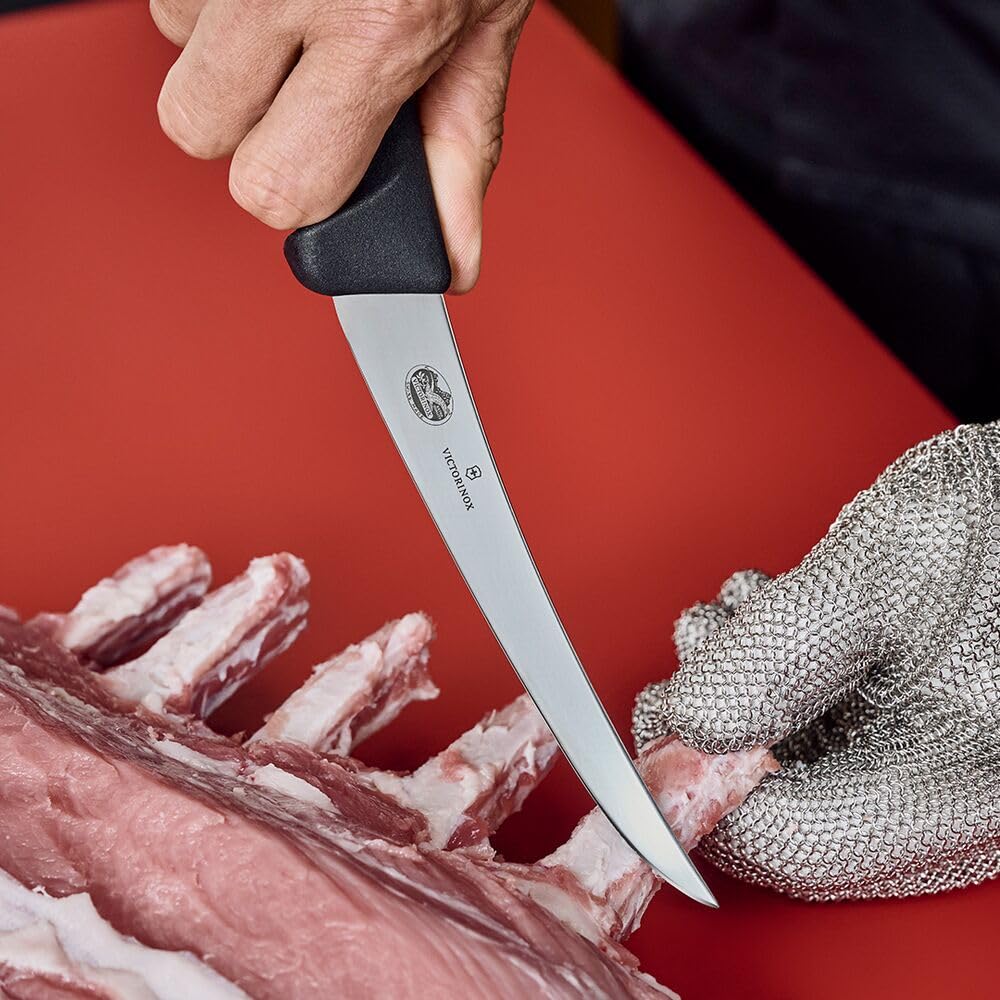
Victorinox Fibrox 6″ Boning Knife 5.6603.15 — Light and easy to maneuver
Best for: Light agile trimming
If hand fatigue bothers you more than the need for maximum blade rigidity, this Victorinox is an easy knife to maneuver around a roast or rib section. The Swiss-made Fibrox model uses a 5.9-inch curved blade, a textured TPE handle, and a listed weight of about 3.4 ounces, so it feels noticeably lighter than many forged choices. The curved edge is useful for sweeping cuts along bone and for removing fat or connective tissue without turning the whole wrist. It ranks in the middle because Victorinox does not describe this particular model as a stiff beef specialist, so I would choose one of the first four for heavy joint work. For general trimming, however, the light weight and grippy Fibrox handle make it especially approachable for newer users.
- 5.9-inch curved blade gives close control without adding excess length around joints.
- Listed weight of about 3.4 ounces keeps the knife agile during longer trimming sessions.
- Textured TPE Fibrox handle is designed to remain secure in demanding kitchen use.
- This specific model is not presented as a stiff specialist, so it is less targeted to dense beef work than the top-ranked rigid blades.
| Blade length | 5.9 in |
| Weight | 3.4 oz |
| Handle | TPE Fibrox |
| Origin | Switzerland |
9.2/10
9.0/10
9.7/10
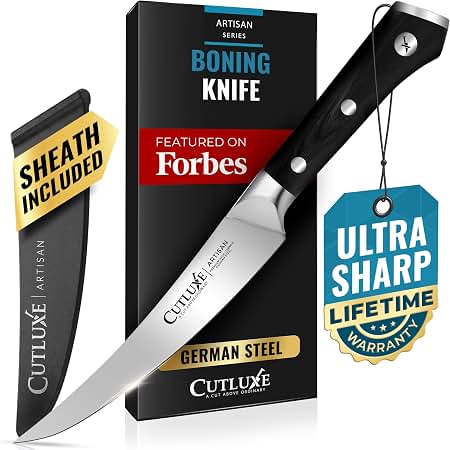
Cutluxe Artisan Series 6″ Boning Knife — Classic full-tang home pick
Best for: Traditional full-tang feel
If you want a boning knife that feels more like a traditional full-tang kitchen knife, the Cutluxe combines familiar handle construction with a narrow beef-friendly blade. The manufacturer specifies a 6-inch high-carbon German steel blade, a full tang, a Pakkawood handle, a relatively stiff spine, and a 14–16 degree edge per side. Those details make it appealing for trimming brisket fat, separating meat from ribs, and doing controlled cuts where a floppy blade would be distracting. It lands below the professional molded-handle picks because wood-based scales demand more deliberate hand washing and drying, and the polished presentation is not as sanitation-first as a seamless commercial handle. Still, it is a strong middle-ground choice for home cooks who care about both control and a classic knife feel.
- 6-inch blade and relatively stiff spine suit controlled work around dense beef and connective tissue.
- Full-tang construction gives a familiar, planted feel for cooks used to Western chef’s knives.
- Manufacturer lists a 14–16 degree edge per side for a relatively acute cutting geometry.
- Pakkawood requires more careful hand washing and drying than a seamless molded commercial handle.
| Blade length | 6 in |
| Steel | High-carbon German |
| Tang | Full |
| Edge angle | 14–16° per side |
9.1/10
9.4/10
8.9/10
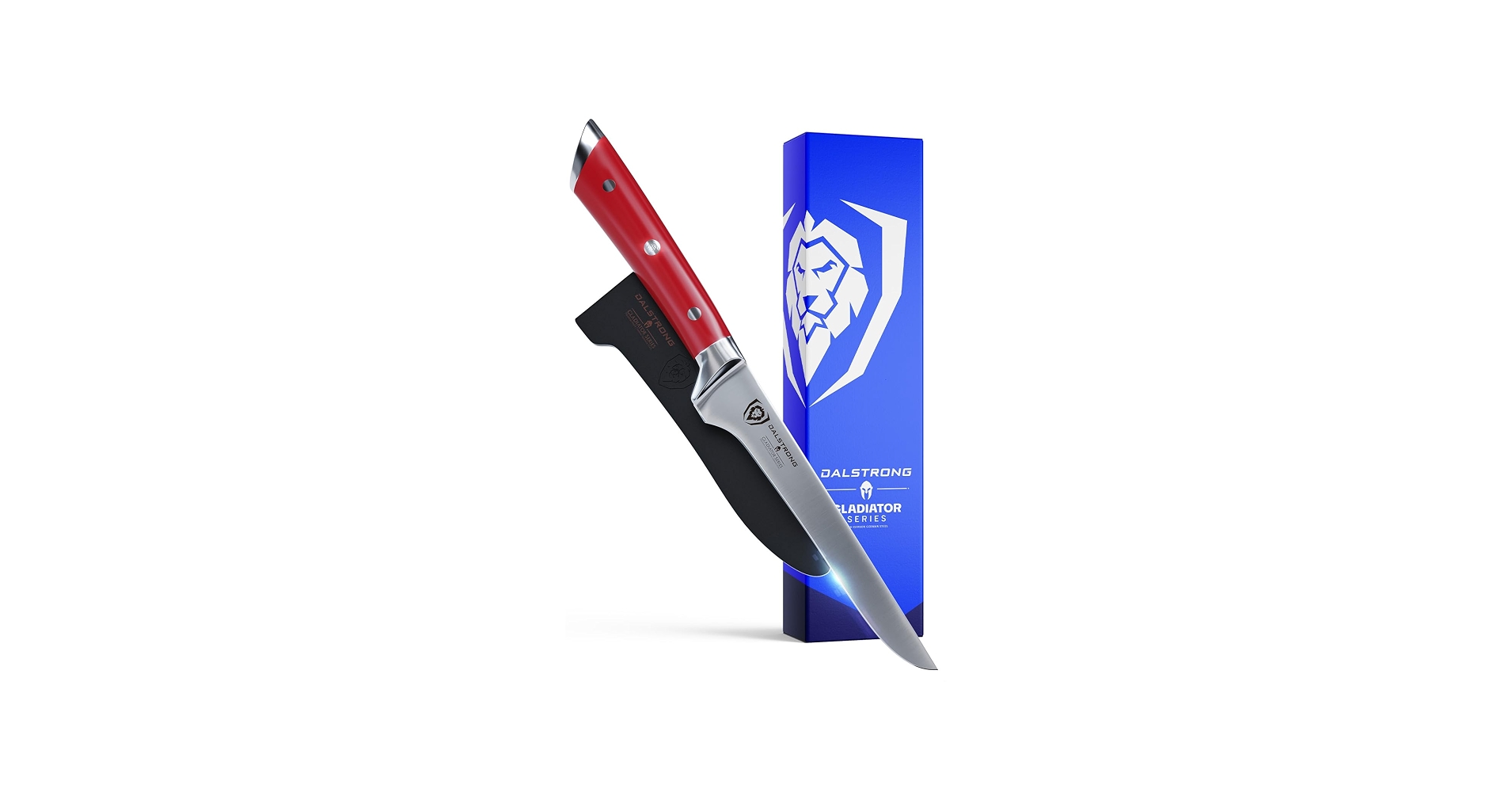
Dalstrong Gladiator Series 6″ Boning Knife, Crimson Red — Versatile with protected storage
Best for: Protected storage
If your boning knife travels between a kitchen, grill station, or processing table, included edge protection can be more useful than decorative extras. The Crimson Red Gladiator uses a 6-inch X50CrMoV15 German steel blade, a listed 56 HRC hardness, a 16–18 degree edge, full-tang construction, an ABS handle, and an included sheath. Dalstrong describes the blade as having enough flex for working around bones while retaining the strength needed for meat and game, so it sits between rigid beef specialists and fully flexible fillet-style knives. That makes it versatile, but also explains its lower rank for beef-only work: I prefer a clearly stiff profile when dense joints are the main job. Choose it when secure storage and mixed meat-processing tasks matter more than maximum stiffness.
- 6-inch X50CrMoV15 blade keeps the working length compact for trimming around bones.
- Listed 56 HRC hardness and 16–18 degree edge target a practical balance of toughness and sharpness.
- Full tang, molded ABS handle, NSF listing, and included sheath suit transport and busy prep areas.
- The blade is designed with some flex, so it does not guide as rigidly through dense beef trimming as a true stiff boner.
| Blade length | 6 in |
| Hardness | 56 HRC |
| Steel | X50CrMoV15 |
| Edge angle | 16–18° |
8.9/10
9.0/10
9.2/10
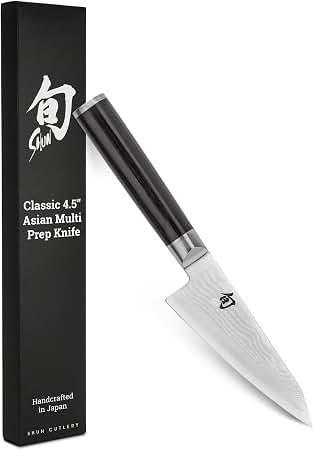
Shun Classic 6″ Boning & Fillet Knife DM0743 — Refined rigid Japanese option
Best for: Premium precise slicing
If you prioritize a refined edge and precise slicing feel, the Shun brings Japanese construction to a category dominated by commercial Western patterns. The Classic DM0743 has a 6-inch curved, rigid blade with a VG-MAX core, 34 Damascus layers on each side, a 16-degree edge, a Pakkawood handle, and a listed weight of about 4.2 ounces. The rigid curved shape is genuinely relevant to beef because it can trace around bones without the blade wandering, while the fine edge works well for silver skin and clean trimming. It ranks lower because the premium layered construction adds care requirements without making it more beef-specific than the simpler Dexter or F. Dick designs. This is the pick for someone who wants a boning knife to feel as polished as the rest of a Japanese-style knife set.
- 6-inch curved rigid blade gives a strong geometry for controlled cuts around beef bones.
- VG-MAX core with 34 layers per side and a 16-degree edge supports fine slicing and trimming.
- At about 4.2 ounces, it stays reasonably light despite its layered construction.
- The polished layered blade and Pakkawood handle demand more careful maintenance than commercial molded-handle knives.
| Blade length | 6 in |
| Core steel | VG-MAX |
| Edge angle | 16° |
| Weight | 4.2 oz |
9.1/10
9.2/10
8.7/10
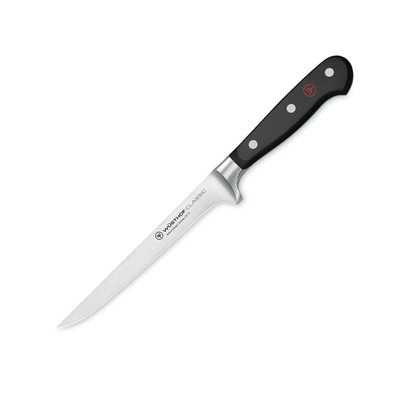
WÜSTHOF Classic 6″ Flexible Boning Knife — Premium flex for mixed trimming
Best for: Flexible premium control
If you like German forged knives and want more flex for sweeping closely along contours, the WÜSTHOF Classic is the premium flexible option in this list. WÜSTHOF specifies a 6-inch flexible forged blade, about 58 HRC hardness, and German manufacture, with a 4.4-inch handle that will feel familiar to users of the Classic line. The flexibility can be useful for separating meat cleanly from broad surfaces and for skinning-style cuts, especially when you do more than beef. It ranks ninth for this specific roundup because beef joints usually reward more stiffness than this model is designed to provide. In other words, it is a capable boning knife, but its strongest trait is not the trait I weight most heavily for dense beef work. It makes more sense for cooks who alternate between beef, pork, poultry, and trimming tasks than for someone buying one knife solely for tough beef joints.
- 6-inch forged blade provides a familiar premium Western-knife construction.
- About 58 HRC hardness is a concrete specification for buyers comparing German forged options.
- Flexible profile follows broad contours smoothly when trimming or skinning.
- Its flexibility is less ideal for forceful, highly controlled work around dense beef joints than a stiff or semi-stiff blade.
| Blade length | 6 in |
| Flex | Flexible |
| Hardness | 58 HRC |
| Made in | Germany |
8.9/10
8.2/10
9.0/10
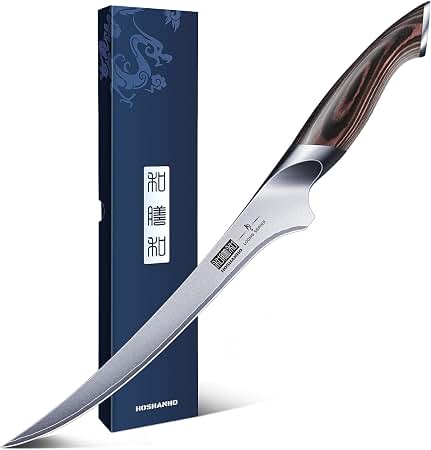
ZWILLING Pro 5.5″ Flexible Boning Knife — Compact forged flexible alternative
Best for: Curved-bolster handling
If handle transition and pinch-grip comfort are your priority, the ZWILLING Pro offers a different route to control than a rigid butcher-style knife. The manufacturer lists a 5.51-inch flexible blade made from special-formula high-carbon stainless steel, SIGMAFORGE construction, FRIODUR hardening, a 55–58 HRC range, full tang, and the Pro line’s curved bolster. The shorter length helps keep the tip close to your hand while the flexible blade follows contours during trimming. It finishes tenth only because this guide is specifically about beef: the same flexibility that helps on delicate contours can feel less decisive beside a joint than a stiff blade. Pick it if you want a compact forged knife that can handle mixed boning work and you already prefer ZWILLING’s curved-bolster ergonomics. For mixed kitchen use, the compact blade and forged handle geometry may outweigh that trade-off, especially when detailed trimming is more common than heavy joint separation.
- 5.51-inch blade keeps tip control close during detailed trimming.
- Forged high-carbon stainless construction is listed at 55–58 HRC with a full tang.
- Curved bolster is designed to support a comfortable pinch-grip transition.
- The flexible blade is less specialized for dense beef joints than the stiff models ranked above it.
| Blade length | 5.51 in |
| Flex | Flexible |
| Hardness | 55–58 HRC |
| Construction | SIGMAFORGE |
8.8/10
8.0/10
9.3/10
Top 3 Head-to-Head: Dexter vs Mercer Millennia vs F. Dick
These three cover the most common final decisions: maximum beef-specific stiffness, the strongest budget route, and a professional processing handle built for repeated work.
| Feature | #1 Dexter | #2 Mercer Millennia | #3 F. Dick |
|---|---|---|---|
| Beef-Cutting Control | 9.8/10 — Best | 9.4/10 | 9.6/10 |
| Blade Suitability | 10.0/10 — Best | 9.3/10 | 9.8/10 |
| Grip & Safety | 9.6/10 | 9.6/10 | 9.9/10 — Best |
| Choose if… | Beef and pork are your main deboning jobs. | You want the strongest value for occasional home use. | You process meat often and prioritize grip and hygiene. |
Who These Boning Knives Are NOT For
Not every beef-cutting job belongs to a narrow boning knife, even when the knife is sharp and well controlled.
They are also not the best one-knife answer for delicate fish filleting, where a more flexible fillet blade can follow thin bones and skin more closely. For breaking down very large beef primals into portions, a longer breaking knife provides reach that a 5.5- to 6-inch boning blade intentionally gives up for control.
Common Mistakes to Avoid
A good boning knife can still waste meat or lose its edge quickly if the blade style, cutting motion, and storage method do not match the job.
Frequently Asked Questions About Boning Knives for Beef
Is a stiff or flexible boning knife better for beef?
A stiff or semi-stiff boning knife is usually better for beef because it gives more directional control around dense joints and connective tissue. Flexible blades are more useful when following delicate contours or handling fish and poultry.
What blade length is best for a beef boning knife?
About 5.5 to 6 inches is a practical range for most beef deboning because it keeps the tip close and visible while providing enough reach along ribs and roasts.
Is a curved or straight boning knife better for beef?
A curved blade is the stronger all-round choice for working around rounded bones and joints, while a straight stiff blade can feel more predictable for long, flat trimming cuts such as silver skin removal.
Can a boning knife cut through beef bone?
No. A boning knife is designed to cut meat and connective tissue around bone, not chop or saw through hard bone; use a purpose-built bone saw or heavy bone-cutting tool for that job.
How often should I hone a boning knife?
Hone lightly when the edge starts to lose clean bite but before it becomes truly dull, and sharpen only when honing no longer restores the edge. Frequency depends on how much meat you process, the steel, and the cutting surface.
What is the difference between a boning knife and a breaking knife?
A boning knife is short and narrow for separating meat from bone and trimming connective tissue, while a breaking knife is longer and designed to portion large primal cuts with sweeping strokes.
Our Final Verdict
For beef, the main tension is simple: a stiff narrow blade gives stronger joint control, while flexible premium knives trade some of that rigidity for contour-following versatility. Handle design then decides whether the knife feels secure during occasional home trimming or repeated processing work.
If beef is your main job, pick #1 Dexter-Russell because its curved stiff design most directly matches the task. If you need a lower-cost home option, pick #2 Mercer Millennia for its curved 6-inch blade and secure textured handle. If you process meat frequently, pick #3 F. Dick ErgoGrip for its stiff blade, guarded non-slip handle, and professional hygiene focus.