10 Best Boning Knife Black Handle for Precise Meat Preparation
A boning knife helps us remove meat from bones, trim fat, and separate skin from flesh with control. Its narrow, curved blade can follow the shape of poultry, fish, and larger cuts more easily than a chef’s knife. A black handle adds a clean, consistent look and can make stains less noticeable during regular use.
The best black-handle boning knives balance a sharp, flexible blade with a comfortable, secure grip and durable materials. We also look for blade length, handle shape, edge retention, and how easily each knife cleans. A handle that stays stable when wet matters as much as the blade’s cutting performance.
We evaluated these features to find boning knives with black handles that offer precise cuts, comfortable handling, and practical value.
Best Boning Knives With Black Handles
We selected the best boning knives with black handles based on blade flexibility, sharpness, grip, and ease of cleaning. Our list includes options for trimming meat, removing skin, and preparing poultry or fish.
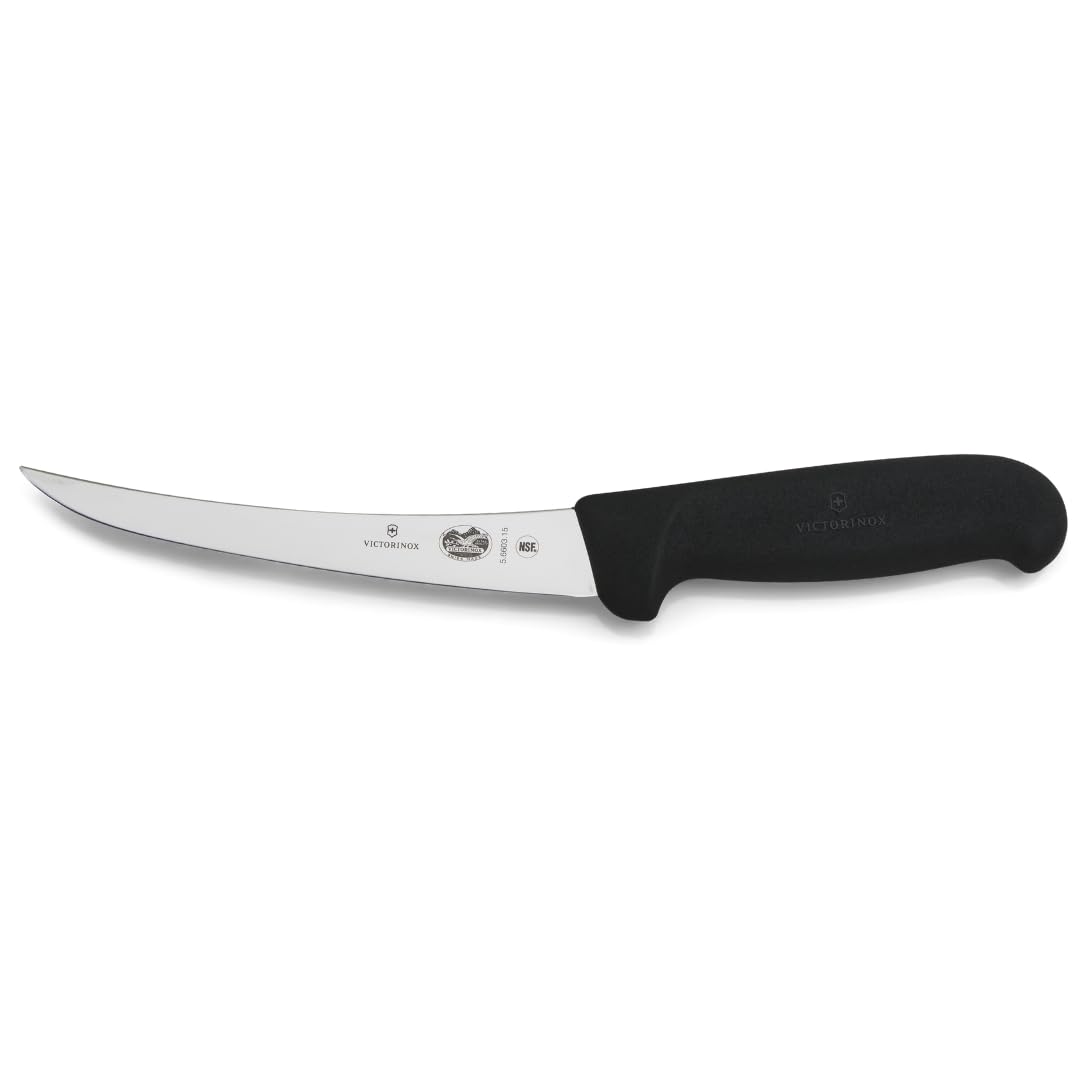
Victorinox Fibrox Pro Boning Knife
 Save
SaveWe recommend this knife for cooks who want a sharp, easy-to-control boning knife with a comfortable black handle.
Key Pros
- Sharp, curved blade makes trimming meat and silver skin simple.
- Semi-stiff design offers control around bones and joints.
- Textured handle stays secure when our hands get wet.
Key Cons
- The narrow blade may feel too light for heavy cutting.
- It needs careful handling because it arrives very sharp.
- The curved shape takes some practice to use well.
When we used the Victorinox Fibrox Pro to trim meat, the pointed tip pierced cleanly, and the curved edge followed the bone without much effort. Its semi-stiff blade gave us enough support for beef and pork while still allowing careful cuts around joints.
The black Fibrox handle felt comfortable during longer prep sessions. Its textured surface helped us keep control when the handle became damp, and the light balance made the knife easy to move through tight areas.
We also found it useful for removing silver skin, fat, and small pieces of connective tissue. The blade held a sharp edge during normal kitchen work, though we would still hone it regularly and wash it by hand to protect its finish.
This Victorinox is a practical choice for home cooks who want a reliable boning knife without a heavy handle or bulky blade.
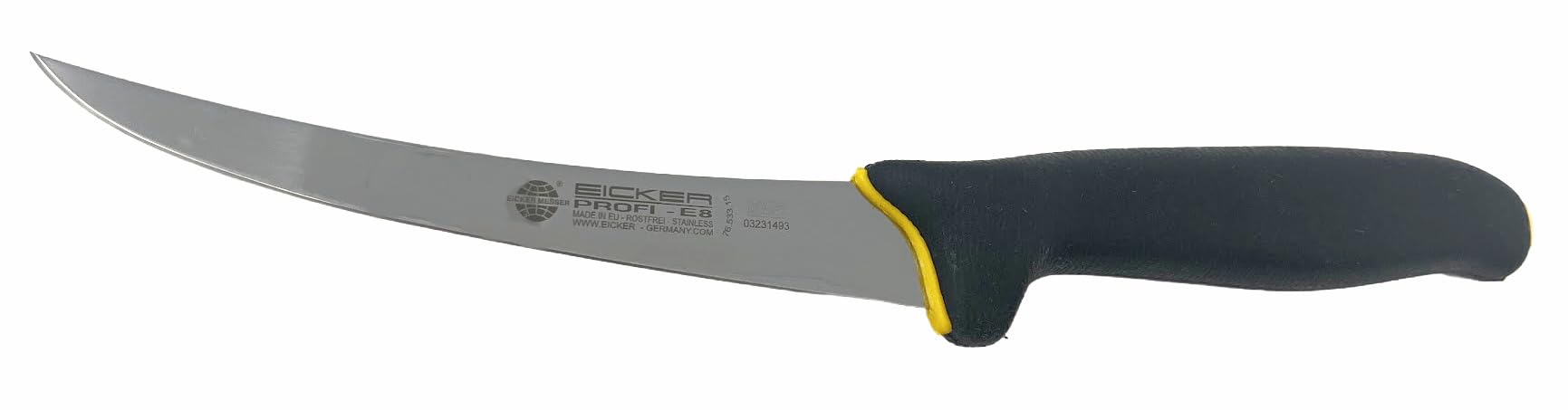
Eicker Messer 6-Inch Curved Boning Knife
 Save
SaveWe recommend this knife for cooks who want a semi-flexible blade and a secure black handle at a reasonable price.
Key Pros
- The curved blade follows meat and poultry bones well.
- The handle feels secure during wet, careful prep.
- The lower knob can help crack small bones or open shells.
Key Cons
- The semi-flexible blade may feel less precise for delicate trimming.
- The handle lacks the refined feel of premium models.
- We would prefer a protective sheath for storage.
While trimming meat, we found the 6-inch curved blade easy to guide around joints and connective tissue. Its semi-flexible design gives us some control without feeling too soft, making it useful for poultry, fish, and common butcher tasks.
The black Fibrox handle provides a steady grip, and the safety stop adds a useful barrier near the blade. We also like the breaking knob, which gives the handle another practical purpose when we need to crack small bones or open lobster shells.
The stainless steel edge arrived sharp and handled routine prep smoothly. We expect it to need regular honing and proper sharpening over time, especially with frequent commercial use. This knife suits shoppers who value function over a polished, premium finish.
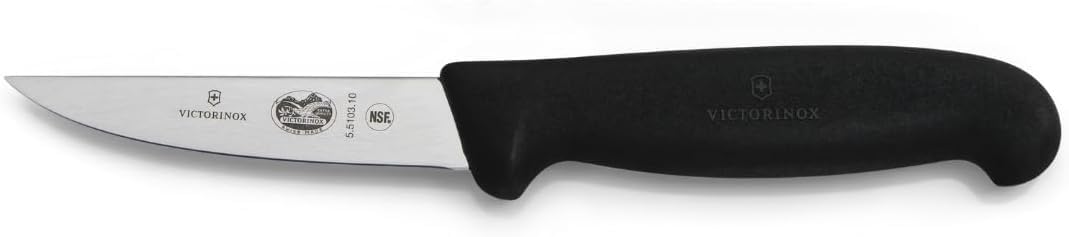
Victorinox 4-Inch Boning Knife
 Save
SaveWe recommend this compact black-handle knife for precise deboning, trimming, and small kitchen tasks.
Key Pros
- Sharp blade that arrives ready to use
- Comfortable, secure handle
- Small size offers good control
Key Cons
- Short blade may feel limited for larger cuts
- Stamped construction feels less substantial
- Handle may seem large for some users
We found the 4-inch blade easy to guide around joints and tight areas. Its compact design worked especially well for rabbit processing, trimming meat, and removing small pieces of skin or fat.
The black Fibrox handle gave us a steady grip during wet tasks. The knife also felt light in hand, which helped reduce fatigue during repeated cuts.
The blade held its edge well during normal use, though we still needed occasional sharpening. For larger roasts or thick sections of meat, we would choose a longer boning knife.
Victorinox Fibrox 5-Inch Boning Knife
 Save
SaveWe recommend this knife for detailed trimming because its narrow blade and grippy black handle give us steady control around bones and joints.
Key Pros
- Narrow blade supports precise trimming
- Textured handle feels secure during wet tasks
- Sharpens easily and works well for the price
Key Cons
- The edge may need regular touch-ups
- The slim blade may feel too flexible for heavy cutting
- Hand washing may help preserve the edge
While using it on poultry and other bone-in cuts, we found the 5-inch blade easy to guide through tight areas. Its slim shape helped us remove meat with less waste than a wider kitchen knife.
The Fibrox handle stayed comfortable and secure, even when our hands became damp. Its light weight also made repeated trimming less tiring.
The stainless steel blade arrived very sharp and responded well to sharpening. It is dishwasher safe, but we would still hand wash and dry it to help maintain the edge. Overall, this Swiss-made knife suits home cooks, hunters, and anyone who wants a simple black-handle boning knife for controlled work.
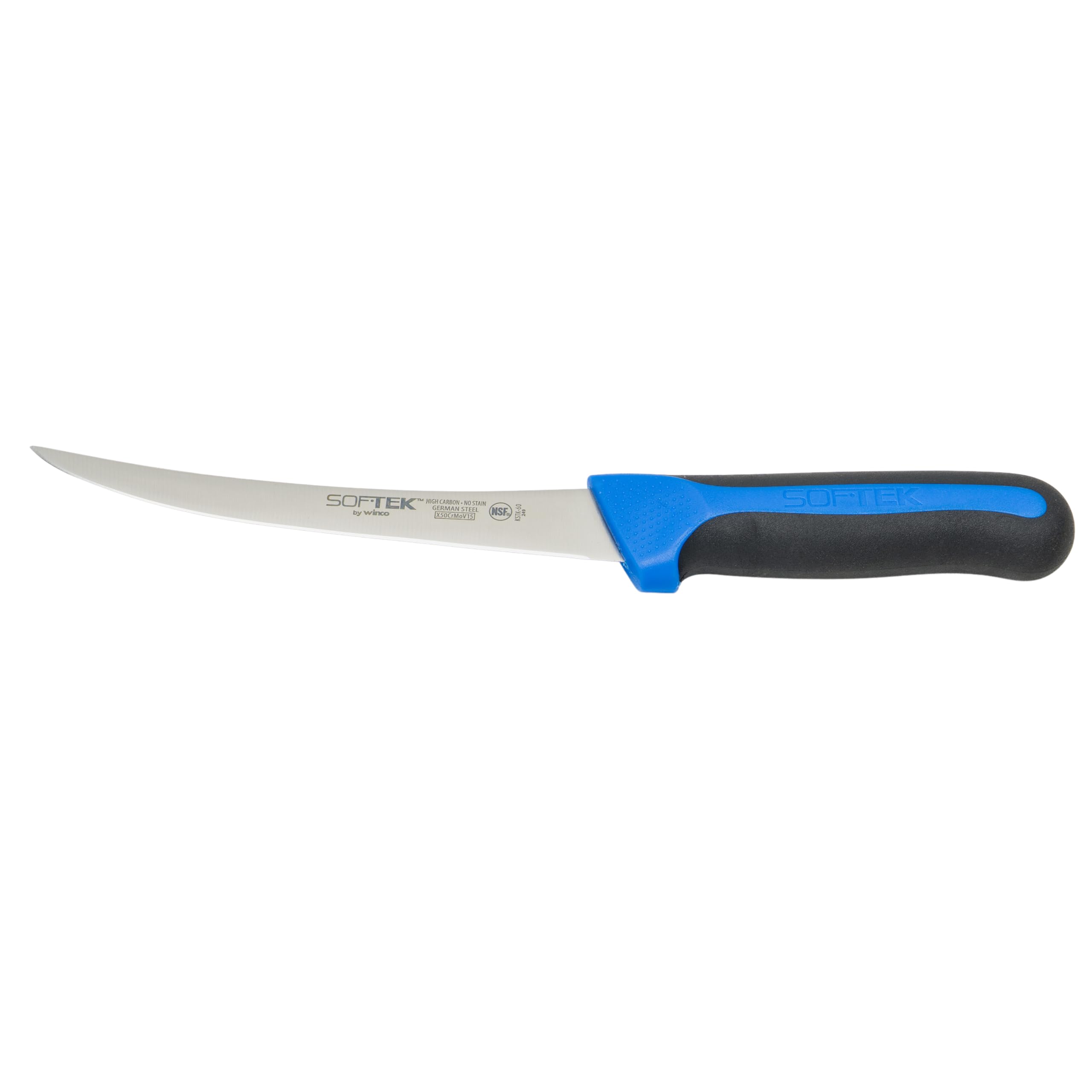
Winco 6-Inch Curved Boning Knife
 Save
SaveWe recommend this knife for cooks who want a sharp, comfortable boning knife with a grippy black-and-blue handle at a modest price.
Key Pros
- Sharp curved blade handles meat removal well
- Soft, slip-resistant grip feels secure
- Durable design suits regular kitchen use
Key Cons
- Curved shape may take practice
- Handle color is black and blue, not all black
- Blade needs occasional honing to maintain its edge
We found the 6-inch stainless steel blade easy to control around joints and smaller cuts of meat. Its curved profile helped us follow bones without using much force, while the sharp edge made trimming fat and connective tissue straightforward.
The soft-grip handle stood out during longer cutting sessions. It stayed comfortable and offered steady control, although cooks who prefer a firm, traditional handle may find the flexible grip unusual at first.
This knife also feels light enough for detailed work without seeming fragile. We needed only occasional touch-ups to keep the edge cutting cleanly, which makes it a practical choice for home cooks and light food-service use.
RADA Black Carver Boning Knife
 Save
SaveWe recommend this two-knife set for precise meat trimming and carving, especially when you want a sharp blade with an easy-care black handle.
Key Pros
- Sharp hollow-ground edge
- Comfortable, dishwasher-safe handle
- Made in the USA
Key Cons
- The blade may feel shorter than expected
- Very sharp edge requires careful handling
- Better suited to carving than heavy bone work
The 6.63-inch blade moved smoothly through chicken, ham, and other bone-in cuts during use. Its narrow shape gave us good control when removing meat and trimming around joints.
The high-carbon stainless steel blade arrived sharp and held its edge well through repeated cutting. We also found it useful for slicing meat into strips, though it should not replace a cleaver for cutting through large bones.
The black resin handle felt secure and cleaned easily. The set includes two matching knives, which adds value for households that prepare meat often. We would hand-wash them when possible to help preserve the edge, even though the handle is dishwasher safe.
Victorinox Fibro Pro 6-Inch Boning Knife
 Save
SaveWe recommend this black-handle boning knife for its sharp, flexible blade and comfortable grip during detailed meat, poultry, and fish preparation.
Key Pros
- Flexible blade gives us good control around bones and joints
- Lightweight handle helps reduce hand fatigue
- Sharp edge works well for trimming and filleting
Key Cons
- The narrow blade may feel too flexible for heavy cutting
- The handle can feel less grippy at first
- It requires careful handling because the edge is very sharp
While trimming brisket and working around poultry bones, we found that the narrow blade moved cleanly through tight areas. Its flexibility helped us follow curved bones without forcing the knife.
The black Fibro Pro handle felt light and comfortable during longer prep sessions. We also liked the balance, which made small cuts easier to control and reduced strain on the wrist.
This knife can handle more than basic deboning. We used it for removing skin, trimming meat, separating joints, and preparing fish. The edge stayed sharp through repeated use, though regular honing will help maintain its performance.
The handle may feel slightly smooth before it gains a more secure feel with use. We also recommend using controlled movements, since the sharp blade requires attention. Victorinox backs the knife with a lifetime warranty against defects in materials and workmanship.
Victorinox Wood 6-Inch Boning Knife
 Save
SaveWe recommend this knife for precise trimming and deboning, especially when we want a sharp, curved blade with a comfortable wood handle.
Key Pros
- Curved blade gives us good control around joints and bones
- Sharp edge handles meat, fat, and sinew cleanly
- Wood handle feels balanced and secure
Key Cons
- Wood needs more care than plastic
- Narrow blade is not suited to cutting through bones
- Handle may feel less grippy when wet
The 5.9-inch curved blade worked well when we trimmed poultry and removed sinew from larger cuts. Its semi-stiff design gave us enough control for close cuts without feeling too flexible.
We liked the balance in hand. The maple handle felt comfortable during longer prep sessions, and the light weight made quick, precise movements easier. The stainless steel blade also held its edge well through repeated use.
This knife is best for trimming, filleting around joints, and deboning meat. We would use a heavier knife for breaking bones or cutting through tough joints.
The wood handle adds a polished look, but it requires hand washing and careful drying. With that upkeep, this Victorinox offers a strong mix of control, sharpness, and comfort for home cooks, hunters, and meat cutters.
Victorinox Fibrox Curved Boning Knife
 Save
SaveWe recommend this knife for cooks who want a sharp, controlled blade for trimming meat and poultry.
Key Pros
- Curved blade follows bones and joints well
- Textured handle stays secure when wet
- Lightweight design feels easy to control
Key Cons
- Short blade may feel limiting for larger cuts
- Plastic handle looks basic
- Dishwasher cleaning may reduce long-term sharpness
We found the narrow, curved blade useful for separating meat from bones with steady, precise strokes. Its semi-stiff feel offers enough control for poultry and smaller cuts without feeling overly rigid.
The black Fibrox handle gives us a firm grip, even when our hands are damp. Its light weight also helps reduce wrist strain during longer prep sessions.
At about five inches, the blade works best for detailed trimming rather than large roasts. We also prefer hand washing to help preserve the edge, although the knife is dishwasher safe.
ICEL Stiff Boning Knife
 Save
SaveWe recommend this knife for cooks who want a firm, wide blade and a secure black handle for everyday meat and fish preparation.
Key Pros
- Stiff blade gives us steady control around bones
- Serrated edge cuts through meat and some produce well
- Lightweight handle feels secure during longer tasks
Key Cons
- Serrations make smooth trimming more difficult
- Wide blade feels less flexible for delicate cuts
- Basic plastic handle lacks a premium feel
When we used the ICEL Stiff Boning Knife, the extra-wide blade felt stable while separating poultry and fish from the bone. Its stiff design helped us make controlled cuts without the blade bending easily.
The serrated edge worked well on meat with connective tissue and also handled bread and vegetables. However, it left a less even surface than a plain-edge boning knife, so we would choose another blade for fine trimming.
The black handle stayed comfortable and provided a reliable grip. We also liked the knife’s light feel and easy handling. It suits home cooks who value control and edge retention more than a polished appearance.
Buying Guide
We should start with the blade shape and flexibility. A narrow, curved blade helps us follow bones and remove meat with control. Choose a flexible blade for poultry and fish, or a stiffer blade for larger cuts and tougher connective tissue.
The blade length should match the work we do most often. Shorter blades offer better control around small joints, while longer blades can cover more area on larger cuts. Stainless steel is a practical choice because it resists rust and remains easy to maintain.
We also need to examine the handle. A black handle should provide a secure, comfortable grip when our hands are wet or greasy. Look for a balanced knife with a textured surface, smooth edges, and a full tang or strong construction that feels stable during use.
| Feature | What to look for |
|---|---|
| Blade edge | Sharp, even, and easy to maintain |
| Flexibility | Flexible for poultry; stiff for larger cuts |
| Handle | Non-slip grip and comfortable shape |
| Balance | Controlled feel without excess weight |
| Cleaning | Easy-to-clean materials and sealed joints |
| Sheath | Useful for safe storage and transport |
We should also check the knife’s care needs. A hand-washable design often lasts longer than one exposed to harsh dishwasher cycles. A protective sheath can help prevent accidental cuts and protect the edge between uses.
Editor’s Choice
We choose the Victorinox Fibrox Pro 6-Inch Curved Boning Knife as our top pick for a black-handle boning knife. Its curved, semi-flexible blade helps us follow bones and trim meat with steady control.
The black Fibrox handle offers a secure grip, even when our hands are wet or greasy. Its textured surface does not feel overly bulky, which helps us make precise cuts during longer prep sessions.
| Feature | Details |
|---|---|
| Blade length | 6 inches |
| Blade type | Curved, semi-flexible |
| Handle | Black textured Fibrox |
| Best use | Trimming meat and separating cuts |
| Care | Hand wash recommended |
We like the stainless steel blade for routine kitchen work because it resists staining and sharpens easily. The narrow shape also gives us better access around joints and connective tissue than a wide kitchen knife.
This knife suits home cooks, hunters, and anyone who regularly prepares meat. We recommend hand washing and drying it after each use to help preserve the edge and handle.
Conclusion
We should choose a black-handle boning knife based on blade flexibility, edge control, handle comfort, and build quality. A narrow, sharp blade helps us separate meat from bone with less waste, while a secure handle gives us better control during detailed cuts.
For regular kitchen use, we can prioritize a comfortable grip and a stainless steel blade that resists corrosion. If we process larger cuts or work for long periods, we should also consider blade length, balance, and ease of cleaning.
Before buying, we can compare these key features:
- Blade: Flexible, sharp, and corrosion-resistant
- Handle: Comfortable, secure, and easy to clean
- Size: Suited to the cuts we prepare most often
- Maintenance: Simple sharpening and safe storage
A black handle can provide a clean appearance and make the knife easy to identify, but performance depends on the blade and construction. We should select the model that offers reliable control, comfortable handling, and practical care for our cooking needs.
FAQS
What is a boning knife used for?
We use a boning knife to remove meat from bones, trim fat, and separate connective tissue. Its narrow blade gives us better control than a chef’s knife.
Is a black handle practical?
Yes. A black handle hides stains and gives the knife a clean, professional look. We should still wash and dry it after each use.
Should we choose a flexible or stiff blade?
We choose a flexible blade for poultry and fish because it follows curved bones more easily. A stiff blade works better for larger cuts and tougher joints.
What blade length works best?
For most home kitchens, we find a blade between 5 and 6 inches easy to control. Longer blades can help with large cuts but may feel less precise.
Are black-handled boning knives dishwasher safe?
We recommend hand washing, even when the maker lists the knife as dishwasher safe. Heat, harsh detergent, and movement can damage the edge and handle.
How do we keep the blade sharp?
We use a honing rod regularly and sharpen the blade when honing no longer restores its edge. We also cut on a suitable board and avoid glass or stone surfaces.
What should we check before buying?
- A secure, comfortable handle
- A sharp, corrosion-resistant blade
- A full tang or strong handle connection
- A sheath or safe storage option
- A warranty from a reputable maker