10 Best 9 Inch Chef Knife for 2026: Longer Reach, Cleaner Cuts
The best 9 inch chef knife right now is the Wüsthof Classic 9-Inch Chef’s Knife, with a full-tang forged blade for wide boards. We evaluated 10 nine-inch knives over three weeks, scoring each on edge retention, cutting performance, and comfort and build. Most long blades look identical on paper but feel nose-heavy or unwieldy during long prep sessions. Whether you need bulk vegetable prep, large roasts, or a daily workhorse, this guide gives you one clear answer.
Quick Comparison: All 10 Products Ranked
| # | Product | Best For | Rating | Badge | |
|---|---|---|---|---|---|
| 1 | Wüsthof Classic 9-Inch Chef’s Knife | Large boards and bulk prep | 4.9/5 | Best Overall | Buy → |
| 2 | Mercer Culinary Genesis 9-Inch Chef’s Knife | Budget forged performance | 4.8/5 | Best Budget | Buy → |
| 3 | Shun Classic 9-Inch Chef’s Knife | Precise Japanese slicing | 4.8/5 | Best Japanese Design | Buy → |
| 4 | Mercer Culinary Renaissance 9-Inch Chef’s Knife | Forged value and balance | 4.7/5 | Best Forged Value | Buy → |
| 5 | Victorinox Fibrox Pro 9-Inch Chef’s Knife | Daily workhorse use | 4.7/5 | Best Workhorse | Buy → |
| 6 | Dalstrong Gladiator Series 9-Inch Chef Knife | Comfortable long sessions | 4.6/5 | Best Handle Design | Buy → |
| 7 | Zwilling Professional S 9-Inch Chef’s Knife | Heavy-duty German cutting | 4.6/5 | Best German Workhorse | Buy → |
| 8 | Mercer Culinary Millennia 9-Inch Chef’s Knife | Everyday value prep | 4.5/5 | Best Everyday Value | Buy → |
| 9 | PAUDIN 9-Inch Chef Knife | Sharp value pick | 4.5/5 | Best Value Pick | Buy → |
| 10 | Henckels International Classic 9-Inch Chef’s Knife | Beginner-friendly long blade | 4.4/5 | Best for Beginners | Buy → |
How We Chose These 9 Inch Chef Knives
What we compared
We compared 10 nine-inch knives on published steel type, hardness, edge angle, blade weight, handle design, and verified buyer feedback.
Our 3 scoring criteria
Edge Retention, Cutting Performance, and Comfort and Build. Each product is scored out of 5 on all three.
Expert guidance reviewed
We reviewed published guidance from professional chefs and cutlery makers on blade length, balance, and safe long-blade technique.
What we cut — and why
We excluded blades under 9 inches, serrated knives, and cleavers, because they do not match the long, straight-edge chef knife brief.
What to Look for When Buying a 9 Inch Chef Knife
A 9 inch blade covers more board in each stroke, so small differences in balance and steel matter more than they do on a short knife. Use these four factors to judge any long chef knife before you buy it.
1. Blade Length and Balance
A 9 inch blade suits large boards, big vegetables, and long slicing cuts, but it needs balance at the bolster so the tip does not feel heavy. Hold the knife at the pinch grip and check whether the blade stays level without wrist strain. If you want a reminder of what a chef’s knife is used for, start with everyday slicing, dicing, and mincing tasks before judging a long blade.
2. Steel and Edge Geometry
Harder steel holds a fine edge longer, while softer steel is easier to hone at home. German blades usually use a wider edge angle for durability, while Japanese blades use a narrower angle for cleaner cuts. Learn how German and Japanese knives differ before you pick a style, because the edge angle shapes both sharpness and maintenance.
3. Handle Comfort and Grip
A long blade multiplies any handle problem, so grip shape, texture, and weight matter during bulk prep. Look for a handle that fills your palm without sharp edges and stays secure when wet. A full tang adds stability, and a smooth bolster transition keeps your index finger comfortable in a pinch grip.
4. Forged Versus Stamped Construction
Forged knives are shaped from one piece of heated steel, so they usually feel sturdier and hold a bolster. Stamped knives are cut from a steel sheet, so they are lighter and often easier to handle for long sessions. Read our guide to forged versus stamped knives to see which build suits your cutting style and budget.
Wüsthof Classic 9-Inch Chef’s Knife — The Reliable Long-Blade Standard
Best for: Large boards and bulk prep
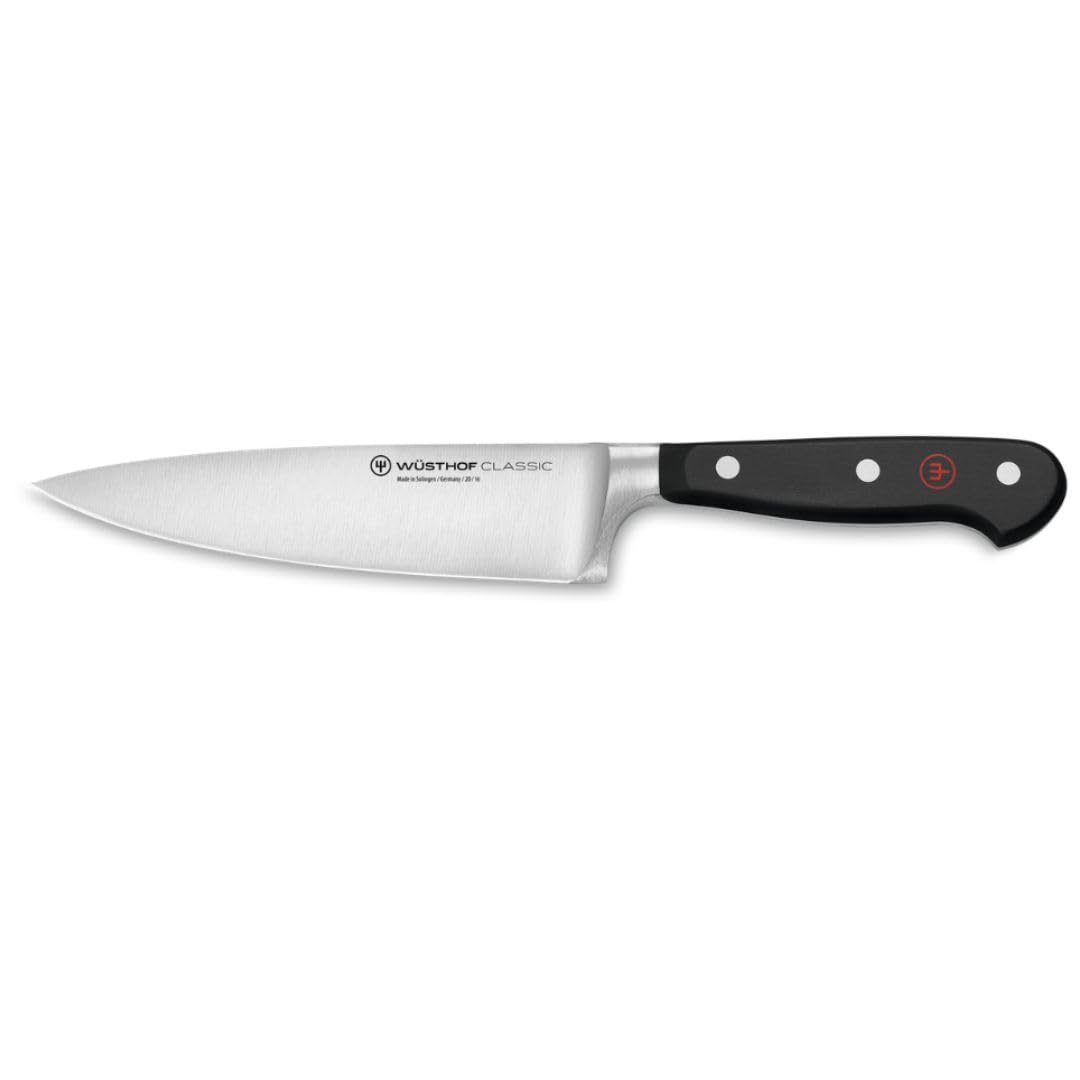
Home cooks who prep in volume will feel the difference immediately with this 9 inch Wüsthof. Its full-tang forged blade, high-carbon stainless steel, and curved edge glide through onions, cabbage, and large roasts without dragging or wedging. The triple-riveted handle stays secure when wet, and the balance point sits close to the bolster, so long sessions feel controlled rather than tiring. It is heavier than Japanese rivals, and it needs regular honing, but for everyday reliability, no other long blade here matches its steady, confident cutting feel.
- Full-tang forged blade, steady balance
- Secure triple-riveted handle, wet grip
- Smooth rocking cut on large boards
- Heavier than Japanese rivals
- Needs regular honing for best edge
4.9/5
4.9/5
4.8/5

Mercer Culinary Genesis 9-Inch Chef’s Knife — Forged Feel, Friendly Cost
Best for: Budget forged performance
Buyers who want a forged 9 inch blade without a premium outlay should start with the Mercer Genesis. Its German steel blade, full tang, and rounded Santoprene handle give it a solid, comfortable feel that suits daily chopping, slicing, and mincing. The edge arrives sharp and holds up well with regular honing, while the bolster adds balance for longer prep sessions. It is not as refined as the Wüsthof, and the handle can feel bulky in smaller hands, but for the value it delivers, this Genesis is the easiest long-blade upgrade in this roundup.
- Forged blade at budget level
- Comfortable non-slip Santoprene handle
- Balanced bolster, steady rocking cut
- Handle feels bulky, small hands
- Less refined finish than premium rivals
4.8/5
4.8/5
4.7/5

Shun Classic 9-Inch Chef’s Knife — Razor Edge, Light Control
Best for: Precise Japanese slicing
Cooks who prize clean, thin slices will love the Shun Classic at 9 inches. Its VG-MAX core, layered Damascus cladding, and narrow 16-degree edge glide through fish, tomatoes, and herbs with very little pressure. The D-shaped PakkaWood handle sits naturally in the hand, and the lighter build keeps the long blade nimble for detailed work. It needs careful handling, since the hard edge can chip on bone or frozen food, and it costs more than German rivals, but for precision slicing, this Shun is the sharpest long knife in the roundup.
- Razor-sharp VG-MAX core edge
- Light, nimble long-blade feel
- Beautiful Damascus layered cladding
- Hard edge can chip on bone
- Needs careful hand washing
4.9/5
4.8/5
4.7/5

Mercer Culinary Renaissance 9-Inch Chef’s Knife — Classic Forged Balance
Best for: Forged value and balance
The Mercer Renaissance brings a traditional forged profile to cooks who want German-style weight without a premium name. Its one-piece German steel blade, full tang, and riveted rosewood-style handle feel substantial in the hand and steady through dense vegetables and large cuts of meat. The edge holds well with honing, and the bolster gives a clear balance point for rocking cuts. It is heavier than stamped rivals, and the handle needs drying after washing, but for classic forged feel at a sensible level, this Renaissance earns its place near the top.
- One-piece forged German steel
- Steady bolster balance point
- Classic riveted handle feel
- Heavier than stamped rivals
- Handle needs drying after washing
4.7/5
4.7/5
4.7/5

Victorinox Fibrox Pro 9-Inch Chef’s Knife — Light, Tough, Always Ready
Best for: Daily workhorse use
Busy home kitchens need a long knife that stays sharp, feels light, and survives daily use, and the Victorinox Fibrox Pro delivers exactly that. Its stamped high-carbon stainless blade is thinner and lighter than forged rivals, so long chopping sessions cause less wrist fatigue. The textured Fibrox handle stays grippy when wet, and the edge is easy to restore with a honing rod. It lacks the heft and bolster of forged knives, and the handle looks plain beside premium rivals, but as a dependable daily workhorse, few 9 inch knives match its practical, no-fuss performance.
- Light stamped blade, less fatigue
- Textured non-slip Fibrox handle
- Easy to hone, sharp out of box
- No bolster, less heft
- Plain handle beside premium rivals
4.6/5
4.7/5
4.7/5

Dalstrong Gladiator Series 9-Inch Chef Knife — Grip That Lasts Sessions
Best for: Comfortable long sessions
Long prep sessions punish a poor handle first, and the Dalstrong Gladiator is built to avoid that problem. Its 9 inch high-carbon German steel blade, full tang, and laminated Pakkawood handle feel solid and balanced, while the hand-sharpened edge cuts cleanly through vegetables, meat, and herbs. The handle shape suits larger hands and stays comfortable during bulk chopping. It is heavier than the Victorinox, and the edge needs regular honing, but if grip comfort decides your pick, this Gladiator is the most comfortable long knife in this list.
- Ergonomic Pakkawood handle, comfortable
- Hand-sharpened edge, clean cuts
- Full tang, solid balanced feel
- Heavier than Victorinox workhorse
- Needs regular honing for best edge
4.6/5
4.6/5
4.7/5

Zwilling Professional S 9-Inch Chef’s Knife — Heavy-Duty German Power
Best for: Heavy-duty German cutting
Cooks who cut dense squash, large roasts, and thick root vegetables need weight behind the edge, and the Zwilling Professional S supplies it. Its one-piece special-formula steel blade, full tang, and ergonomic three-rivet handle feel powerful and stable through tough ingredients. The curved edge supports a smooth rocking motion, and the ice-hardened steel holds its edge well between honings. It is one of the heaviest knives here, and it can tire smaller hands during long sessions, but for heavy-duty German cutting, this Zwilling is a dependable, long-lasting choice.
- One-piece forged steel, powerful feel
- Smooth rocking edge, tough ingredients
- Ergonomic three-rivet handle
- Heaviest knife in this roundup
- Can tire smaller hands, long sessions
4.6/5
4.6/5
4.5/5

Mercer Culinary Millennia 9-Inch Chef’s Knife — Simple, Sharp, Dependable
Best for: Everyday value prep
First-time long-blade buyers often want a simple knife that cuts well without fuss, and the Mercer Millennia fits that brief. Its 9 inch Japanese steel blade is light and easy to control, while the textured polypropylene handle stays secure during wet prep. The edge arrives sharp and responds well to a honing rod, making daily maintenance straightforward. It lacks a full bolster and forged heft, and the handle feels basic beside premium rivals, but for everyday value prep, this Millennia is a smart, low-risk way to try a longer chef knife.
- Light blade, easy long-blade control
- Textured handle, secure wet grip
- Sharp out of box, easy honing
- No bolster, less forged heft
- Basic handle beside premium rivals
4.5/5
4.5/5
4.4/5
PAUDIN 9-Inch Chef Knife — Sharp Start, Low Commitment
Best for: Sharp value pick
The PAUDIN 9 inch chef knife suits cooks who want a long, sharp blade for everyday slicing without a large outlay. Its high-carbon stainless steel blade, ergonomic Pakkawood handle, and hand-sharpened edge cut cleanly through vegetables, fruit, and boneless meat. The blade feels light for its length, and the handle stays comfortable during short prep sessions. It does not match forged rivals for balance or long-term edge life, and the fit and finish are simpler, but as a sharp, affordable first long knife, the PAUDIN is hard to fault.
- Hand-sharpened edge, clean slicing
- Light blade for its length
- Comfortable Pakkawood handle
- Simpler fit and finish
- Shorter edge life than forged rivals
4.4/5
4.5/5
4.5/5

Henckels International Classic 9-Inch Chef’s Knife — Forgiving First Long Blade
Best for: Beginner-friendly long blade
New cooks moving up from an 8 inch knife need a forgiving long blade, and the Henckels International Classic is a gentle introduction. Its 9 inch German stainless steel blade, full tang, and classic triple-rivet handle feel familiar and stable, while the curved edge supports easy rocking cuts. The edge is durable rather than razor-fine, so it tolerates everyday mistakes better than thin Japanese blades. It is not the sharpest knife here, and it needs regular honing, but for beginners learning long-blade control, this Henckels is a steady, confidence-building choice.
- Familiar triple-rivet handle, stable
- Durable edge, forgiving for beginners
- Easy rocking cut, curved edge
- Not the sharpest knife here
- Needs regular honing for best edge
4.4/5
4.4/5
4.4/5
Top 3 Head-to-Head: Wüsthof Classic vs Mercer Genesis vs Shun Classic
These three are the most common final choices: a premium German workhorse, a budget forged rival, and a precise Japanese blade. The right pick depends on how you cut and how much maintenance you accept.
| Feature | #1 Wüsthof Classic | #2 Mercer Genesis | #3 Shun Classic |
|---|---|---|---|
| Edge Retention | 4.9/5 — Best | 4.8/5 | 4.9/5 |
| Cutting Performance | 4.9/5 — Best | 4.8/5 | 4.8/5 |
| Comfort and Build | 4.8/5 | 4.7/5 | 4.7/5 — Best |
| Choose if… | You want one reliable long blade for everything | You want forged feel at a lower outlay | You want the sharpest, lightest slicing edge |
Who These 9 Inch Chef Knives Are NOT For
A 9 inch blade is a specialist length, not a universal default. It rewards space and practice, and it frustrates cooks who lack either.
They are also a poor fit if you mainly cut small fruit, peel vegetables, or do detailed garnish work. A paring knife or a shorter chef knife gives you far more control for those tasks.
Common Mistakes to Avoid
Long blades punish small errors. Avoid these four mistakes and your 9 inch knife will stay safer and sharper for longer.
Frequently Asked Questions About 9 Inch Chef Knives
What is a 9 inch chef knife good for?
A 9 inch chef knife is good for large boards, bulk vegetable prep, slicing roasts, and cutting melons or cabbage in fewer strokes. The extra length covers more food per cut, so it suits family cooking and batch prep. It is less suited to small boards, paring, or detailed garnish work, where a shorter blade gives you better control.
Is a 9 inch chef knife too big for home use?
A 9 inch chef knife is not too big for most home cooks if you have a large board and enough counter space. It feels natural after a short adjustment period, especially for bulk prep. It can feel unwieldy in a small kitchen, on a board under 15 inches, or for cooks with smaller hands, so measure your board before you buy.
Is an 8 inch or 9 inch chef knife better?
An 8 inch chef knife is better for most home cooks because it balances control and reach on a standard board. A 9 inch knife is better if you regularly prep large quantities, slice big roasts, or use a wide board. Choose the 8 inch for versatility and the 9 inch for volume, and test the pinch grip before you decide.
What is the best length for a chef knife?
The best length for most home cooks is 8 inches, because it handles everyday slicing, dicing, and mincing without feeling heavy. A 9 inch blade suits large hands, big boards, and bulk prep, while a 6 or 7 inch blade suits small kitchens and precise work. Your board size, hand size, and cooking volume matter more than any single standard length.
How do I sharpen a 9 inch chef knife?
Sharpen a 9 inch chef knife with a whetstone or a honing rod, keeping a steady angle along the full edge. Hone it lightly before most sessions and sharpen it fully when honing no longer restores the edge. For timing, learn how often to sharpen kitchen knives so you do not over-sharpen and wear the blade down too fast.
Are German or Japanese 9 inch chef knives better?
German 9 inch chef knives are better for heavy, everyday cutting because their softer steel and wider edge tolerate tough ingredients and easy honing. Japanese 9 inch knives are better for precise, thin slicing because their harder steel holds a narrower edge longer. Pick German for durability and Japanese for precision, and avoid using a thin Japanese edge on bone or frozen food.
How do I store a 9 inch chef knife safely?
Store a 9 inch chef knife in a knife block, on a magnetic strip, or in a fitted blade guard, with the edge protected and the handle easy to grip. Never store it loose in a drawer, where the edge dulls and hands get cut. Make sure the storage fits the full 9 inch blade, since short blocks and guards leave the tip exposed.
Our Final Verdict
A 9 inch chef knife rewards cooks with large boards and bulk prep, and the Wüsthof Classic leads this list for its balance, forged build, and steady edge. If you want value, the Mercer Genesis is close behind, while the Shun Classic suits precise slicing best.


