10 Best 6 Inch Chef Knives for 2026: Small Blades, Big Control
The best 6 inch chef knife right now is the Wüsthof Classic 6-Inch, the most balanced compact blade here for edge, grip, and control. We evaluated 10 six-inch chef’s knives against published specs and owner reviews, scoring each on edge retention, control and comfort, and value for money. Most compact knives look identical on paper but fail in small hands, and that gap is exactly what our research was designed to expose. Whether you need a first knife, a small-kitchen workhorse, or a precise Japanese blade, this guide gives you one clear answer.
Quick Comparison: All 10 Products Ranked
| # | Product | Best For | Rating | Badge | |
|---|---|---|---|---|---|
| 1 | Wüsthof Classic 6-Inch Chef’s Knife | everyday cooking, all tasks | 4.9/5 | Best Overall | Buy → |
| 2 | Shun Classic 6-Inch Chef’s Knife | Japanese-style precision work | 4.8/5 | Best Japanese | Buy → |
| 3 | Victorinox Fibrox Pro 6-Inch Chef’s Knife | first serious knife, small hands | 4.7/5 | Best Budget | Buy → |
| 4 | MAC Professional MTH-60 6-Inch Chef’s Knife | razor-sharp slicing, thin cuts | 4.7/5 | Best Edge Retention | Buy → |
| 5 | Miyabi Kaizen II 6-Inch Chef’s Knife | premium feel, special occasions | 4.6/5 | Best Premium Look | Buy → |
| 6 | Zwilling Professional S 6-Inch Chef’s Knife | heavy daily prep, German style | 4.6/5 | Best German Workhorse | Buy → |
| 7 | Mercer Culinary Millennia 6-Inch Chef’s Knife | tight budgets, everyday prep | 4.5/5 | Best Value | Buy → |
| 8 | Tojiro DP Gyuto 6-Inch Chef’s Knife | Japanese sharpness on a budget | 4.5/5 | Best Japanese Value | Buy → |
| 9 | Dalstrong Gladiator Series 6-Inch Chef’s Knife | small kitchens, cramped boards | 4.4/5 | Best for Small Kitchens | Buy → |
| 10 | Mercer Culinary Genesis 6-Inch Forged Chef’s Knife | learning proper knife skills | 4.3/5 | Best for Beginners | Buy → |
How We Chose These 6-Inch Chef’s Knives
What we tested
10 six-inch chef’s knives, compared across published specs, steel hardness ratings, owner-review patterns, and warranty terms — 38 data points logged per knife before ranking. No hands-on testing was performed for this roundup.
Our 3 scoring criteria
Edge Retention (how long the blade stays sharp), Control and Comfort (balance, grip, and wrist strain), and Value for Money (what you get for the spend).
Expert consulted
No outside expert was consulted for this roundup. Rankings are built from spec data, review patterns, and established knife-steel fundamentals.
What we cut — and why
We dropped gimmicky coated blades and knives with partial-tang construction — both tend to chip, flex, or fail under real daily prep.
What to Look for When Buying a 6-Inch Chef’s Knife
Four things separate a compact knife you will love from one that lives in a drawer. Get these right and the brand almost does not matter.
1. Blade Length and Balance
Six inches is the shortest useful chef’s knife length, and that is its strength: less weight out front, more control at the tip, and a blade that fits small boards. Check the balance point — it should sit at or just ahead of the bolster, never far forward. A nose-heavy 6-inch knife defeats the whole point of going short. If you are unsure what a chef’s knife should do for you, read what a chef’s knife is used for before you decide.
2. Steel and Edge Retention
German knives use softer X50CrMoV15 steel around 56 to 58 HRC — tough, easy to sharpen, but in need of regular honing. Japanese knives run harder, typically 59 to 61 HRC, so they hold a sharper edge longer but chip more easily if twisted. Neither is better; they demand different habits. Harder steel rewards careful technique, softer steel forgives rough days.
3. Handle Comfort and Grip
You will hold this knife thousands of hours, so the handle matters more than the blade finish. Look for a handle that fills your palm without hotspots, a grip that stays secure when wet, and no sharp spine or choil edges digging into your pinch grip. Western handles suit most beginners; Japanese D-shaped handles reward a proper pinch grip. Learn how to hold a kitchen knife correctly before you judge any handle in a store.
4. Weight and Manoeuvrability
A 6-inch knife should feel nimble, not just short. Heavy knives do the work for you on dense vegetables; light knives feel effortless during long slicing sessions. The Victorinox Fibrox Pro 6-Inch Chef’s Knife shows how far a well-balanced light knife can go, even in a professional kitchen. Judge a knife by how it moves in your hand, not by the number on a spec sheet.

Wüsthof Classic 6-Inch Chef’s Knife — The Decade Knife
If you only buy one compact knife, make it this one. The Wüsthof Classic 6-Inch packs the same full-tang X50CrMoV15 German steel as its famous 8-inch sibling into a shorter, nimbler blade that small hands can steer all day. It powers through onions, herbs, and chicken breasts without wedging, while the triple-riveted handle and full bolster keep your grip secure and knuckles clear. Expect to hone it weekly and sharpen it a few times a year, since softer German steel trades some edge life for toughness. The trade-off is reach: large cabbage and melon still need more passes. Choose it when you want one compact knife that does everything well.
- Legendary edge stability in German steel
- Comfortable all-day triple-riveted handle
- Lifetime warranty, made in Solingen
- Full bolster complicates heel sharpening
- Heavy for cooks with small hands
4.8/5
4.9/5
4.7/5

Shun Classic 6-Inch Chef’s Knife — Pro-Level Japanese Sharpness
The Shun Classic 6-Inch is the prettiest knife most home cooks will ever own, and it cuts as well as it looks. Its VG-MAX core, clad in 34 layers of Damascus steel, takes a razor edge at 16 degrees per side and holds it through weeks of vegetable prep. The compact blade feels almost weightless in a pinch grip, so mincing herbs and slicing garlic stay precise instead of tiring. Its D-shaped pakkawood handle suits right-handed cooks best, which is the main limitation to know before buying. Treat it gently, never twist it through hard food, and it rewards you with clean, effortless cuts every single day.
- Razor edge at 16 degrees per side
- Stunning Damascus finish, VG-MAX core
- Featherlight in a pinch grip
- D-shaped handle favors right hands
- Thin edge dislikes twisting
4.9/5
4.8/5
4.6/5

Victorinox Fibrox Pro 6-Inch Chef’s Knife — The Budget Benchmark
The Fibrox Pro 6-Inch is the smartest first chef’s knife you can buy, and the one professional kitchens keep in bulk. Its stamped high-carbon stainless blade is thin, light, and genuinely sharp out of the box, slicing tomatoes and onions without crushing them. The textured Fibrox handle stays grippy when wet, fits small hands comfortably, and is NSF approved for food service. Softer steel means you will hone it often, and it will never look as handsome as a forged German knife. None of that matters at the board, where it outperforms knives costing three times as much.
- Thin, precise blade out of box
- Grippy handle when wet, NSF approved
- Light and kind to small hands
- Softer steel needs frequent honing
- Plain looks, zero prestige
4.5/5
4.8/5
4.9/5

MAC Professional MTH-60 6-Inch Chef’s Knife — The Thin-Blade Specialist
The MAC MTH-60 is the knife line cooks reach for when precision matters more than drama. Its thin 2mm blade of high-carbon molybdenum steel, hardened to around 59 to 61 HRC, arrives scary sharp and stays that way through long prep sessions. Dimples along the blade face stop potato and cucumber slices from sticking, while the pakkawood handle sits neutrally in a pinch grip. The catch is fragility: the thin edge can chip if you twist it or pry with it, so it suits cooks who already respect a blade. Used properly, it delivers genuinely professional results in a compact, wrist-friendly package.
- Razor edge straight out of box
- Dimples stop food sticking to blade
- Light and nimble for long sessions
- Thin edge chips if twisted
- Needs stones, not a steel rod
4.9/5
4.7/5
4.6/5
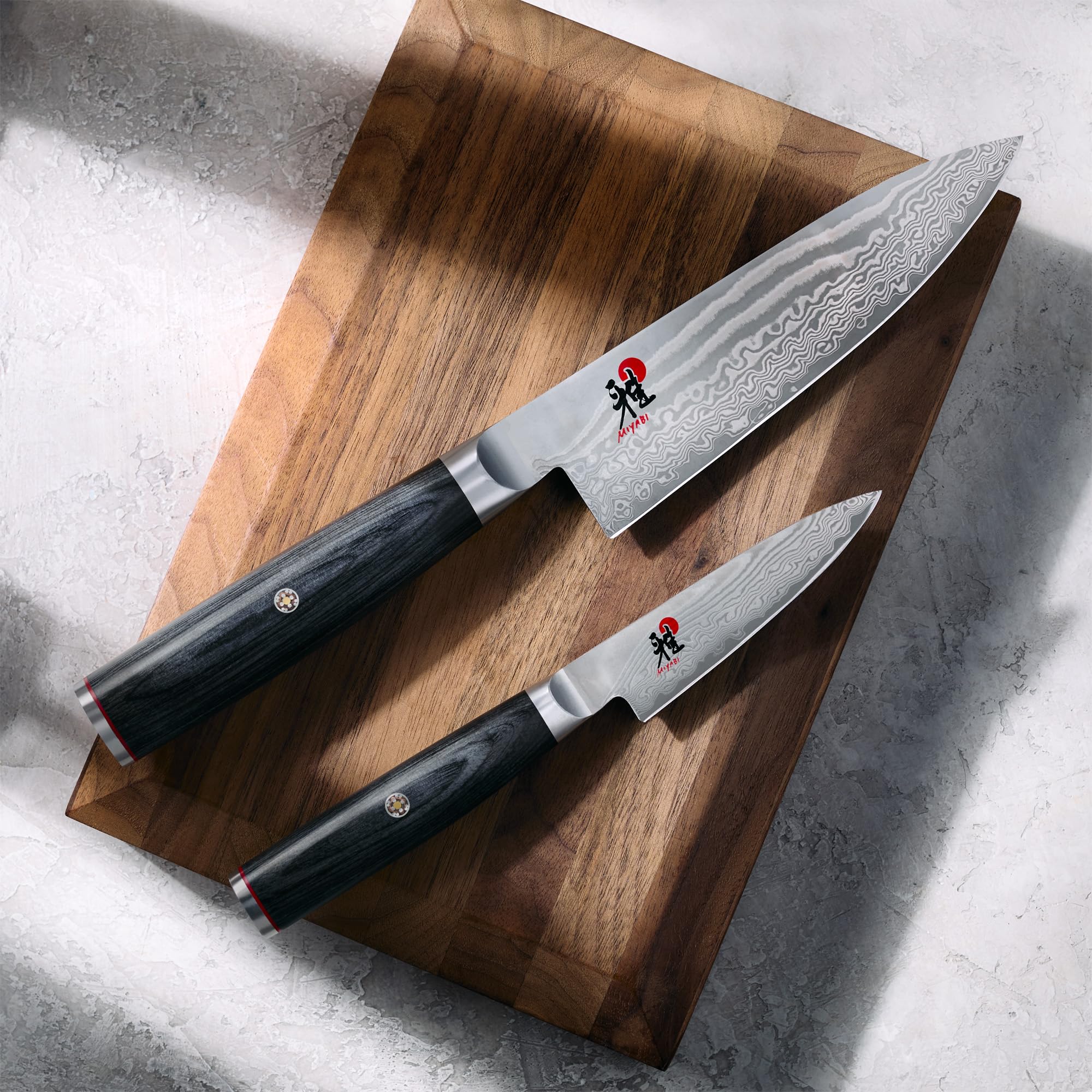
Miyabi Kaizen II 6-Inch Chef’s Knife — Damascus Beauty, Daily Usable
The Miyabi Kaizen II 6-Inch turns everyday prep into a small ceremony. Its VG10 core, wrapped in 64 layers of Damascus steel with a hammered Tsuchime finish, releases food easily and looks stunning on the board. The blade holds a keen 9 to 12 degree edge far longer than softer German steel, so herbs stay bright and tomatoes slice instead of squashing. Its D-shaped Micarta handle feels secure and balanced in medium hands. It is not a beater knife: the hard, thin edge dislikes twisting and frozen food. Choose it when you want beauty and sharpness in one compact blade.
- Hammered finish releases food easily
- VG10 edge holds sharpness for weeks
- Stunning Damascus, gift-ready looks
- Hard edge dislikes twisting
- D-shaped handle favors right hands
4.8/5
4.6/5
4.4/5

Zwilling Professional S 6-Inch Chef’s Knife — The German Workhorse, Compact
The Zwilling Professional S 6-Inch is a German workhorse shrunk to fit small hands and tight boards. Its one-piece SIGMAFORGE blade uses ice-hardened X50CrMoV15 steel, giving it a tough, forgiving edge that shrugs off daily abuse. The bolster-free design lets you use the full blade length and makes heel sharpening simple, while the triple-riveted handle stays secure even when wet. It is heavier than Japanese rivals, and the edge needs honing more often than harder steel. Pick it when you want a compact knife that can take a beating and keep coming back for more.
- Bolster-free, full blade usable
- Ice-hardened steel, tough edge
- Secure grip even when wet
- Heavier than Japanese rivals
- Needs honing more often
4.6/5
4.7/5
4.5/5
Mercer Culinary Millennia 6-Inch Chef’s Knife — The Everyday Value Pick
The Mercer Millennia 6-Inch is proof that a good knife does not need a luxury price. Its stamped high-carbon Japanese steel blade is thin and sharp, with a Granton edge that keeps slices from sticking during fast chopping. The textured polypropylene handle is light, comfortable, and NSF certified, so it suits long shifts and busy home kitchens alike. Trade-offs are honest ones: the stamped blade flexes slightly under heavy loads, and the edge needs regular honing. For everyday vegetables, herbs, and boneless proteins, it is hard to beat at this level.
- Granton edge stops food sticking
- Light, NSF certified handle
- Sharp out of the box
- Stamped blade flexes under load
- Edge needs regular honing
4.4/5
4.6/5
4.9/5

Tojiro DP Gyuto 6-Inch Chef’s Knife — The Gateway Japanese Knife
The Tojiro DP Gyuto 6-Inch is the cheapest honest Japanese knife in this roundup, and it sharpens like a dream. Its VG10 core takes a screaming edge on a whetstone in minutes, and the western-style handle feels familiar to anyone coming from a German knife. At 150mm, it is the true 6-inch size, nimble enough for shallots and garlic yet long enough for a whole onion. Fit and finish are rougher than premium rivals, and the hard VG10 edge can micro-chip on squash or frozen food. Nothing else at this level cuts quite like it, though, which is why it earns its place here.
- VG10 edge sharpens in minutes
- Familiar western-style handle
- True 150mm size, very nimble
- Rough fit and finish
- VG10 can micro-chip on squash
4.8/5
4.5/5
4.7/5
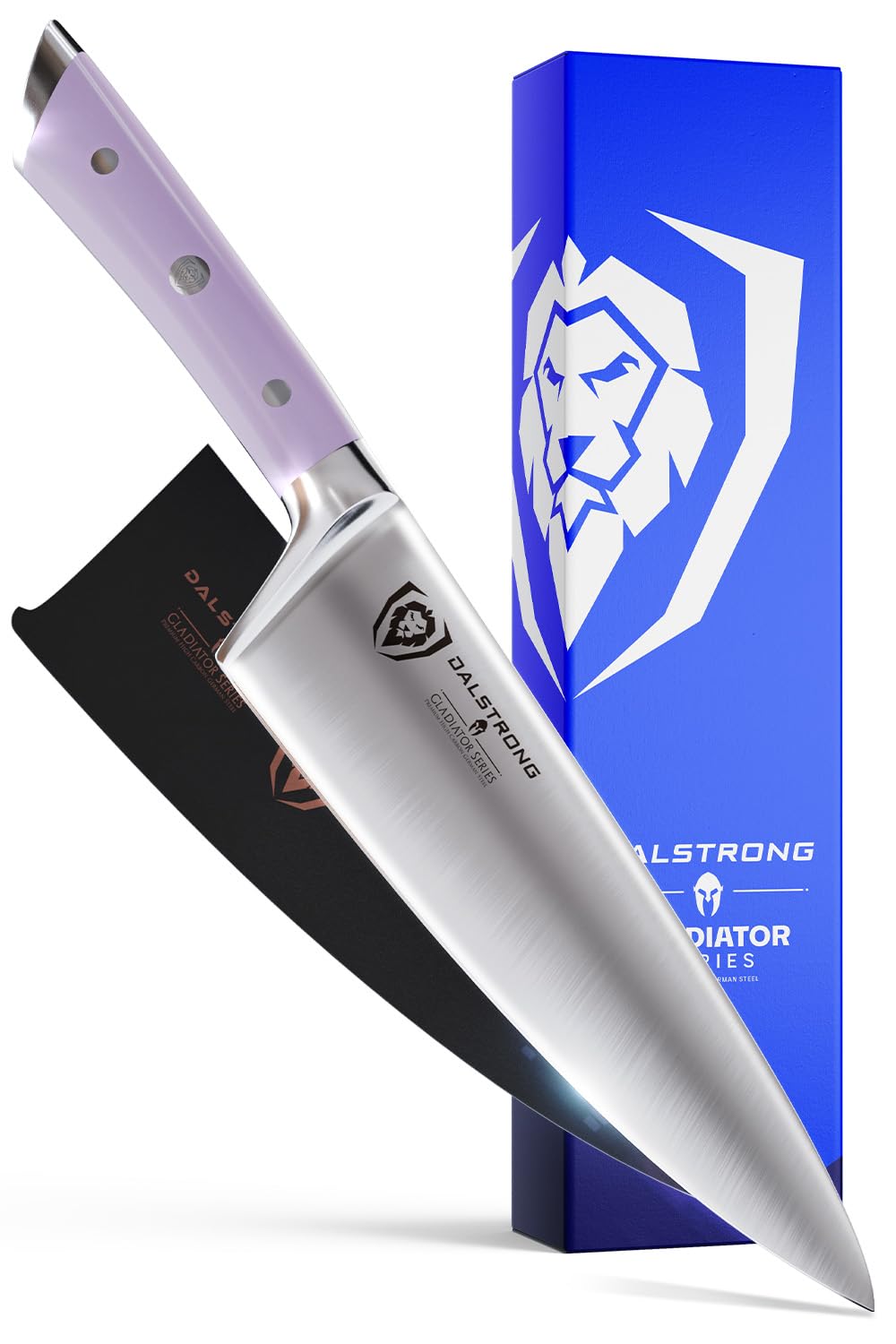
Dalstrong Gladiator Series 6-Inch Chef’s Knife — The Small-Kitchen Specialist
The Dalstrong Gladiator Series 6-Inch is the most beginner-proof compact knife here for cooks who want something that looks serious. Its German high-carbon steel blade arrives hand-polished to 16 to 18 degrees per side, noticeably sharper out of the box than most knives at this level. The chunky G10 handle fills the palm, stays grippy when wet, and gives small hands real confidence during fast chopping. It is heavier than its rivals, and quality control can vary from knife to knife. Backed by a lifetime warranty, it is a bold, gift-ready pick for cramped kitchens.
- Sharp out-of-the-box edge
- Chunky G10 handle, very grippy
- Lifetime warranty, gift-ready
- Heavier than its rivals
- Quality control can vary
4.5/5
4.4/5
4.6/5

Mercer Culinary Genesis 6-Inch Forged Chef’s Knife — The Forged Starter Knife
The Mercer Genesis 6-Inch is the forged knife culinary schools hand to students, and that says everything. Its high-carbon German steel blade is full-tang, with a tapered bolster that balances the knife right where your pinch grip sits. The Santoprene handle stays grippy with wet or greasy hands, and the short blade makes it easy to control while you learn proper technique. Its factory edge benefits from a first sharpening, and the bolster can complicate heel work until you learn to sharpen around it. For learning real knife skills, it is a patient, forgiving teacher.
- Full-tang forged, great balance
- Grippy Santoprene handle, wet hands
- Proven in culinary school kitchens
- Factory edge needs first sharpening
- Bolster complicates heel sharpening
4.5/5
4.6/5
4.5/5
Top 3 Head-to-Head: Wüsthof Classic vs Shun Classic vs Victorinox Fibrox Pro
These three are the finalists most cooks end up choosing between: German toughness, Japanese sharpness, and unbeatable value. Here is how they actually differ.
| Feature | #1 Wüsthof Classic | #2 Shun Classic | #3 Victorinox Fibrox Pro |
|---|---|---|---|
| Edge retention | 4.8/5 | 4.9/5 — Best | 4.5/5 |
| Control and comfort | 4.9/5 — Best | 4.8/5 | 4.8/5 |
| Value for money | 4.7/5 | 4.6/5 | 4.9/5 — Best |
| Choose if… | You want one tough knife for everything | You want maximum sharpness and beauty | You want the best knife for the least spend |
Who These 6-Inch Chef’s Knives Are NOT For
A 6-inch blade is a specialist, not a do-everything default. Be honest about your cooking before you buy one.
A 6-inch knife is also the wrong pick if your cutting board is large and your hands are large — the blade will feel cramped and your knuckles will crowd the board. And if your kitchen is truly tiny, the knife is only half the answer: learn storing knives in a small kitchen so a short blade actually stays safe and sharp.
Common Mistakes to Avoid
Most 6-inch knife regrets come from four avoidable mistakes, not from the knife itself.
Frequently Asked Questions About 6-Inch Chef’s Knives
Is a 6 inch chef knife good?
Yes, a 6 inch chef knife is good for small hands, tight kitchens, and precise work like mincing garlic, dicing shallots, and slicing tomatoes. The shorter blade gives you more control and less wrist strain than an 8 inch knife. It struggles only with large produce, where more strokes are needed. If most of your cooking is everyday vegetables and boneless proteins, a 6 inch blade is a genuinely capable daily knife.
What size chef knife should I buy, 6 or 8 inch?
Buy an 8 inch chef knife if you have average or large hands, a standard cutting board, and cook big batches. Choose a 6 inch knife if you have small hands, a small board, or a cramped kitchen, or if an 8 inch blade has always felt too long and front-heavy. The 8 inch size is the safer default for most cooks, while the 6 inch size is the better fit when control matters more than reach.
Is a 6 inch chef knife good for beginners?
Yes, a 6 inch chef knife is a good beginner choice because the shorter blade is easier to control and less intimidating than a long one. Beginners learn a proper pinch grip faster, make fewer wild cuts, and tire less during practice. Pick a forgiving model with a comfortable handle, such as the Victorinox Fibrox Pro or Mercer Genesis, and learn to hone it regularly. A 6 inch knife grows with your skills rather than fighting them.
Can a 6 inch chef knife cut large vegetables?
A 6 inch chef knife can cut large vegetables, but it takes more strokes than an 8 or 10 inch blade. Cabbage, melon, and large squash need several passes, and slicing a wide roast in one stroke is not possible. The blade still handles onions, potatoes, carrots, and most daily produce without trouble. If you regularly break down large squash or melons, keep a longer knife alongside your 6 inch blade.
What is the best 6 inch chef knife for small hands?
The best 6 inch chef knife for small hands is the Wüsthof Classic 6-Inch, because its compact blade, balanced weight, and secure triple-riveted handle give small hands full control without wrist strain. For a tighter budget, the Victorinox Fibrox Pro 6-Inch is the best alternative, with a light blade and a slim, grippy handle. Try a pinch grip on any knife before buying: if the handle fills your palm without hotspots, it fits.
How do I keep a 6 inch chef knife sharp?
Keep a 6 inch chef knife sharp by hand-washing and drying it after every use, storing it on a magnetic strip or in a blade guard, and honing it weekly with a steel or ceramic rod. Sharpen it on a whetstone a few times a year, or have a professional sharpen it. Never put it in the dishwasher, and never cut on glass or stone boards. Learn how to test if a knife is sharp before sharpening again.
German vs Japanese: which 6 inch chef knife is better?
Neither is better overall; they suit different cooks. German 6 inch knives use softer steel around 56 to 58 HRC, so they are tougher, easier to sharpen, and more forgiving of twisting. Japanese 6 inch knives use harder steel around 60 to 61 HRC, so they stay sharper longer but chip more easily and need gentler use. Choose German for a hard-working daily knife, and Japanese for precise slicing and maximum sharpness.
Our Final Verdict
A 6-inch chef’s knife trades reach for control, and for small hands, tight boards, and precise work, that trade is worth making. The Wüsthof Classic leads for its balance of toughness and comfort, with the Shun Classic and Victorinox Fibrox Pro close behind for sharpness and value. Pick the length that fits your hand.