10 Best 10 Inch Chef Knife for 2026: Longer Blade, Cleaner Cuts
The best 10 inch chef knife now is the Wüsthof Classic 10-Inch Chef’s Knife, its forged blade holds a keen edge through long prep. We evaluated 10 chef knives, scoring each on Edge Retention, Cutting Performance, and Comfort and Balance. Most long blades look identical on paper but feel clumsy on a crowded board, and that gap is what our comparison exposes. Whether you need a daily workhorse, a lighter Japanese blade, or a budget long knife, this guide gives you one clear answer.
Quick Comparison: All 10 Products Ranked
| # | Product | Best For | Rating | Badge | |
|---|---|---|---|---|---|
| 1 | Wüsthof Classic 10-Inch Chef’s Knife | Daily heavy prep | 4.9/5 | Best Overall | Buy → |
| 2 | Victorinox Fibrox Pro 10-Inch Chef’s Knife | Budget long blade | 4.8/5 | Best Budget | Buy → |
| 3 | Shun Classic 10-Inch Chef’s Knife | Japanese precision | 4.8/5 | Best Japanese | Buy → |
| 4 | Mercer Culinary Millennia 10-Inch Chef’s Knife | Everyday value | 4.7/5 | Best Value | Buy → |
| 5 | Zwilling Professional S 10-Inch Chef’s Knife | German workhorse | 4.7/5 | Best German Workhorse | Buy → |
| 6 | Mercer Culinary Genesis 10-Inch Chef’s Knife | Forged feel | 4.6/5 | Best Forged Pick | Buy → |
| 7 | Henckels International Classic 10-Inch Chef’s Knife | Beginner long blade | 4.6/5 | Best for Beginners | Buy → |
| 8 | MOSFiATA 10-Inch Chef Knife | Guarded grip | 4.5/5 | Best with Finger Guard | Buy → |
| 9 | PAUDIN 10-Inch Chef Knife | Lightweight value | 4.5/5 | Best Lightweight Value | Buy → |
| 10 | Dexter-Russell 10-Inch Cook’s Knife | Commercial kitchens | 4.4/5 | Best Commercial Pick | Buy → |
How We Chose These Chef Knives
What we compared
We compared 10 true 10-inch models on published steel, hardness, weight, handle design, and balance, using manufacturer specifications and buyer feedback.
Our 3 scoring criteria
Edge Retention, Cutting Performance, and Comfort and Balance — each scored out of 5 from specifications and reported use.
Spec-based method
This is a spec-based comparison. We did not claim hands-on testing, so scores reflect documented features and consistent buyer reports.
What we cut — and why
We cut 8-inch and 12-inch models, plus sets without a true 10-inch blade, because this guide is only about 10-inch chef knives.
What to Look for When Buying a 10 Inch Chef Knife
A 10-inch blade covers more board in each stroke, so it suits large vegetables, melons, roasts, and batch prep. It also demands more control, so length alone never makes a knife better.
1. Blade Length and Control
A 10-inch blade gives you a long, smooth rocking cut and fewer strokes through cabbage, squash, and large roasts. It needs a board at least 15 inches long and enough counter space to move safely. If your board is small or your hands are small, the extra length can feel unwieldy. Before you buy, check what a chef’s knife is used for so the length matches your real cooking tasks.
2. Blade Steel and Hardness
German steel is usually softer and tougher, so it survives bumps and sharpens easily on a steel. Japanese steel is usually harder and holds a finer edge longer, but it can chip if twisted through bone. Look for the steel type and hardness in the specifications, and learn how forged vs stamped knives differ in weight and durability. A forged blade often feels more solid, while a stamped blade feels lighter.
3. Handle Comfort and Grip
A long blade shifts weight forward, so the handle must counterbalance it and stay secure when wet. Look for a full tang, a comfortable bolster, and a textured or contoured grip that fits your hand. Hold the knife in a pinch grip and rock it a few times to test control. The Victorinox Fibrox Pro 10-Inch Chef’s Knife is a good reference point for a light, non-slip grip at a budget-friendly level.
4. Balance, Weight, and Care
Balance matters more at 10 inches than at 8 inches. A blade-heavy knife tires your wrist, while a well-balanced one glides through long cuts. Heavier forged knives power through dense food, while lighter knives suit long sessions and smaller hands. Hand wash and dry every knife after use, hone it regularly, and store it on a strip or in a guard.

Wüsthof Classic 10-Inch Chef’s Knife — Forged German Workhorse
Best for: Daily heavy prep and large cuts
If you cook in volume, this 10-inch Wüsthof earns its top spot through balance and staying power. Its forged high-carbon stainless blade slices cabbage, squash, and roasts with long, steady strokes, while the full tang and triple-riveted handle keep the knife stable in a pinch grip. The edge holds well between honings and resharpens easily on a steel. It feels heavier than a Japanese blade, which helps power through dense food but may tire smaller hands during very long sessions. For most serious home cooks, it is the safest long-blade choice.
- Forged full tang, excellent balance
- Edge holds well between honings
- Comfortable triple-riveted handle
- Heavier than Japanese rivals
- Needs a large cutting board
4.9/5
5.0/5
4.8/5

Victorinox Fibrox Pro 10-Inch Chef’s Knife — Light and Reliable
Best for: Budget buyers who prep in volume
If you want a long blade without a premium outlay, this Victorinox is the smartest buy here. Its high-carbon stainless blade arrives sharp, slices cleanly through onions, herbs, and large vegetables, and stays light enough for long prep sessions. The Fibrox handle grips well when wet and suits smaller hands better than heavy forged rivals. It is not a forged showpiece, and the edge needs honing more often than harder German steel. For daily cooking, catering prep, and first long knives, it delivers far more than its modest build suggests.
- Light, easy to control
- Non-slip Fibrox handle
- Sharp out of the box
- Needs honing more often
- Plain, utilitarian look
4.8/5
4.8/5
4.9/5

Shun Classic 10-Inch Chef’s Knife — Razor-Sharp Precision
Best for: Precise slicing and fine prep
If you value a feather-light cut over brute force, this 10-inch Shun is the pick. Its VG-MAX core, clad in Damascus layers, takes a very fine edge and glides through tomatoes, fish, and herbs with little pressure. The PakkaWood handle feels warm and secure, and the blade stays light despite its length. That thin, hard edge needs care: avoid twisting, frozen food, and bones, and sharpen it with a whetstone rather than a pull-through sharpener. For cooks who prize precision and already own a sturdy German knife, it is a superb second blade.
- Extremely sharp, fine edge
- Light despite long blade
- Beautiful Damascus finish
- Edge can chip if misused
- Needs whetstone sharpening
4.9/5
4.8/5
4.7/5

Mercer Culinary Millennia 10-Inch Chef’s Knife — Dependable Everyday Blade
Best for: Everyday cooking and shared kitchens
If you need a 10-inch knife that simply works every day, the Millennia is hard to fault. Its high-carbon Japanese steel blade cuts cleanly through vegetables, herbs, and boneless meat, while the textured Santoprene handle stays secure with wet or greasy hands. It is lighter than forged German knives, so long sessions feel easier on the wrist. The edge needs regular honing, and the simple black handle will not impress anyone looking for a showpiece. For home cooks, students, and busy family kitchens, it is excellent value for the money.
- Secure textured Santoprene handle
- Light and easy to handle
- Great value for money
- Needs frequent honing
- Plain utilitarian design
4.7/5
4.7/5
4.8/5

Zwilling Professional S 10-Inch Chef’s Knife — Tough and Steady
Best for: Hard daily use and roasts
If your knife takes a beating, this Zwilling is built for it. Its forged special-formula steel blade powers through root vegetables, large roasts, and dense squash without flexing, while the full tang and molded handle keep it steady in a wet grip. The edge is tough rather than razor-fine, so it survives contact with boards and bones better than harder Japanese blades. It is heavier than the Victorinox and Mercer picks, and the bolster makes sharpening near the heel trickier. For cooks who want one rugged long knife for years, it is a strong choice.
- Tough forged steel blade
- Steady full-tang balance
- Handles dense food well
- Heavier than budget picks
- Bolster complicates heel sharpening
4.7/5
4.8/5
4.6/5

Mercer Culinary Genesis 10-Inch Chef’s Knife — Forged Feel, Fair Cost
Best for: Cooks wanting forged weight
If you like the solid feel of a forged knife but not a premium tag, the Genesis is a good middle ground. Its German steel blade is forged from one piece, with a full tang and a bolster that adds balance through long cuts. It slices large vegetables and roasts with steady pressure and feels more substantial than the Millennia. The extra weight can tire smaller hands, and the edge needs regular honing to stay keen. For cooks upgrading from a light stamped knife, it offers a clear step up in heft and control.
- Solid forged one-piece blade
- Good balance for long cuts
- Comfortable ergonomic handle
- Heavier than Millennia
- Needs regular honing
4.6/5
4.6/5
4.7/5

Henckels International Classic 10-Inch Chef’s Knife — Simple and Steady
Best for: New cooks learning long-blade control
If this is your first 10-inch knife, the Henckels Classic keeps things simple. Its stainless blade cuts vegetables, herbs, and boneless meat cleanly, while the full tang and classic triple-riveted handle give a familiar, secure grip. It is forgiving to sharpen and maintain, which suits cooks still learning honing and safe storage. That edge will not match the Shun for fine slicing or the Wüsthof for edge life, and the handle feels plain beside premium rivals. For a first long knife that you can use daily without worry, it is a sensible pick.
- Easy to sharpen and maintain
- Secure classic handle
- Forgiving for new cooks
- Shorter edge life than Wüsthof
- Plain handle design
4.5/5
4.6/5
4.7/5

MOSFiATA 10-Inch Chef Knife — Sharp with Extra Control
Best for: Cooks who want a guarded grip
If you are still building confidence with a long blade, the MOSFiATA adds a useful safety net. Its German high-carbon steel blade arrives very sharp and cuts vegetables, herbs, and boneless meat with smooth, long strokes. The Micarta handle feels warm and secure, and the built-in finger guard helps guide your grip away from the edge. It is not as refined as the Wüsthof or Shun, and the guard takes a little getting used to during rocking cuts. For nervous beginners and gift buyers, that extra control is worth the trade-off.
- Very sharp out of box
- Finger guard adds confidence
- Secure Micarta handle
- Guard limits rocking motion
- Less refined than premium rivals
4.5/5
4.6/5
4.4/5

PAUDIN 10-Inch Chef Knife — Light, Sharp, Easy to Use
Best for: Light daily prep and smaller hands
If heavy forged knives tire your wrist, the PAUDIN is a welcome change. Its high-carbon stainless blade is light, sharp, and easy to steer through vegetables, herbs, and boneless meat, while the ergonomic handle keeps your grip comfortable during long sessions. It suits smaller hands and cooks who prefer speed over heft. The lighter build means less power through dense squash and roasts, and the edge needs honing more often than premium German steel. For light daily cooking and first long knives, it is easy to recommend.
- Very light and nimble
- Comfortable ergonomic handle
- Sharp and easy to steer
- Less power on dense food
- Needs honing more often
4.4/5
4.5/5
4.6/5
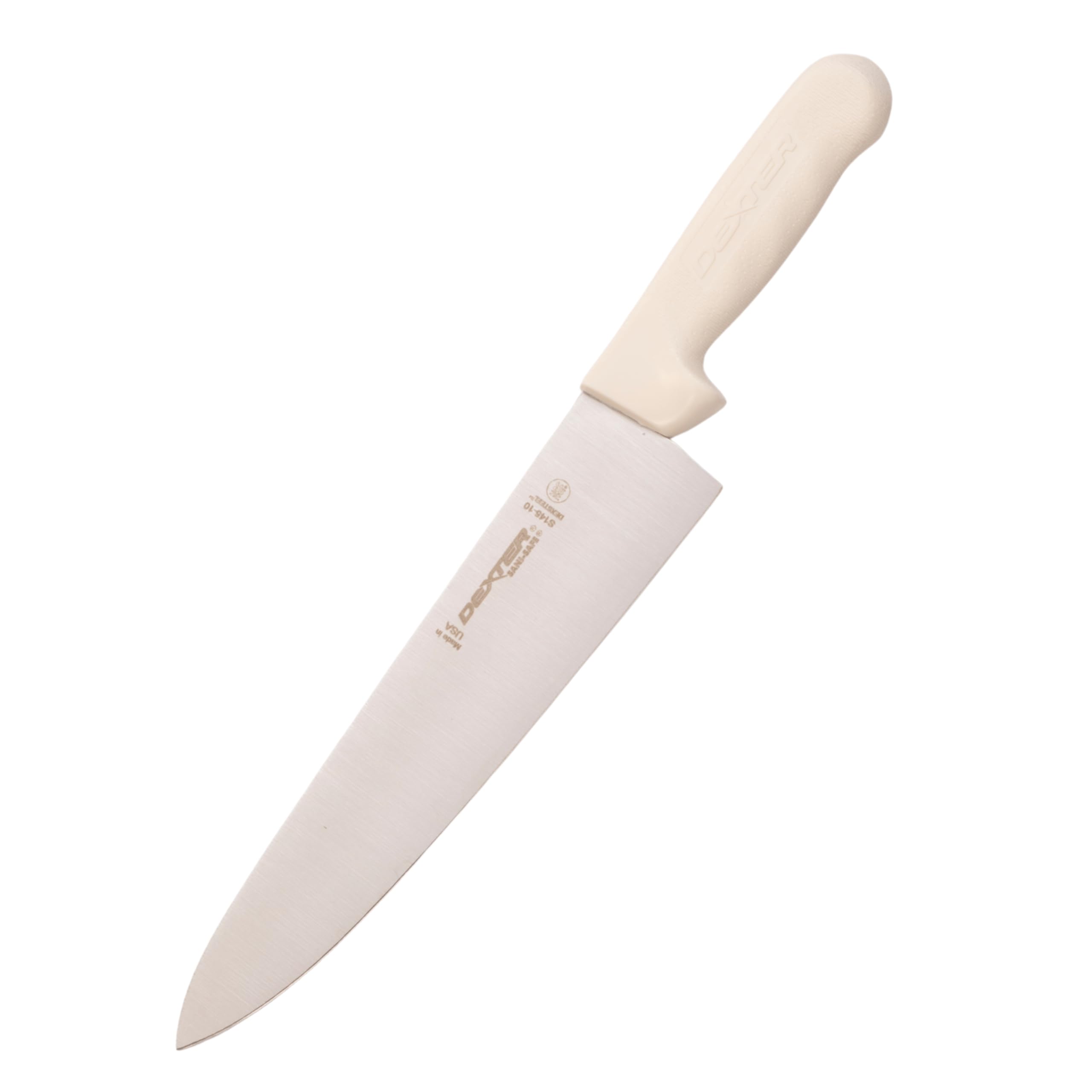
Dexter-Russell 10-Inch Cook’s Knife — Built for Busy Kitchens
Best for: Commercial and high-volume prep
If you prep all day in a restaurant or catering kitchen, this Dexter-Russell is made for that pace. Its high-carbon stainless blade is hand-honed, cuts cleanly through large volumes of vegetables and meat, and resharpens quickly between shifts. The white ergonomic handle stays visible on a busy line and grips well when wet. It looks plain beside premium home knives, and the edge needs regular steeling to stay at its best. For professional volume work rather than display, it is a practical, dependable long blade.
- Hand-honed sharp edge
- Quick to resharpen
- Visible white handle
- Plain commercial look
- Needs regular steeling
4.4/5
4.4/5
4.5/5
Top 3 Head-to-Head: Wüsthof Classic vs Victorinox Fibrox Pro vs Shun Classic
These three cover the real choice most buyers face: a heavy forged German knife, a light budget workhorse, or a sharp Japanese blade. They also handle daily tasks like the best knife for chopping vegetables in very different ways.
| Feature | #1 Wüsthof Classic | #2 Victorinox Fibrox Pro | #3 Shun Classic |
|---|---|---|---|
| Edge Retention | 4.9/5 — Best | 4.8/5 | 4.9/5 |
| Cutting Performance | 5.0/5 — Best | 4.8/5 | 4.8/5 |
| Comfort and Balance | 4.8/5 | 4.9/5 — Best | 4.7/5 |
| Choose if… | You want one rugged knife for years | You want light value and easy control | You want the sharpest, lightest cut |
Who These Chef Knives Are NOT For
A 10-inch chef knife is a specialist length, not a universal one. It shines in volume prep and large cuts, but it is the wrong tool in a small kitchen or for delicate work.
It is also the wrong pick for boning, filleting, or trimming small fruit. Those jobs need a shorter, nimbler blade. For large roasts, a dedicated carving knife or the best knife for cutting meat will serve you better than forcing a chef knife through bone.
Common Mistakes to Avoid
Most 10-inch knife problems come from the setup around the knife, not the blade itself. Avoid these four mistakes and a long blade stays safe and sharp.
Frequently Asked Questions About 10 Inch Chef Knives
Is a 10 inch chef knife too big for home use?
No, a 10 inch chef knife is not too big if you have a large board and enough counter space. It suits batch cooking, large vegetables, melons, and roasts, where the long edge saves strokes. In a small kitchen, it can feel unwieldy with small hands, so measure your board first. If your board is under 15 inches long, an 8 inch knife will feel safer and easier to control.
What is a 10 inch chef knife good for?
A 10 inch chef knife is good for slicing, dicing, and chopping in volume. Its long edge handles cabbage, squash, watermelon, large roasts, and big batches of onions with fewer strokes. It also gives a smooth rocking motion for herbs and vegetables. Peeling, trimming, or working in tight spaces suits a shorter knife better, with more control and safety.
Is an 8 inch or 10 inch chef knife better?
An 8 inch chef knife is better for most home cooks, while a 10 inch knife is better for volume prep and large ingredients. The 8 inch blade fits smaller boards, suits smaller hands, and feels more agile for everyday tasks. A 10 inch blade covers more food per stroke and suits professional kitchens. If you cook for a large family or prep in bulk, choose 10 inches; otherwise, start with 8 inches.
How do I sharpen a 10 inch chef knife?
Sharpen a 10 inch chef knife with a whetstone for the best edge, working in sections because the blade is long. Hold a steady angle, usually 15 degrees for Japanese steel and 20 degrees for German steel, and work heel to tip. Hone it with a steel between sharpenings to realign the edge. Avoid pull-through sharpeners on premium Japanese blades, since they can chip the thin edge.
What size cutting board do I need for a 10 inch chef knife?
You need a cutting board at least 15 inches long for a 10 inch chef knife, and 18 inches is more comfortable. The board must fit the full blade plus room for the food and your guiding hand. A board that is too short leaves the tip hanging off the edge, which is unsafe and awkward. Choose a stable wood or soft plastic board, and place a damp cloth underneath to stop it sliding.
Are German or Japanese 10 inch chef knives better?
Neither is better for everyone, because they suit different habits. German 10 inch knives are heavier, tougher, and easier to sharpen, so they suit hard daily use and cooks who want durability. Japanese 10 inch knives are lighter and sharper, so they suit precise slicing and cooks who will care for a fine edge. Choose German for rugged use and Japanese for precision, and avoid bones with Japanese blades.
How should I store a 10 inch chef knife?
Store a 10 inch chef knife on a magnetic strip, in a knife block with a long enough slot, or in a blade guard in a drawer. Never leave it loose in a drawer, where it dulls against other tools and can cut your hand. Make sure the storage fits the full 10 inch blade, since a short slot leaves the tip exposed. Dry the blade fully before storing it to prevent rust and handle damage.
Our Final Verdict
A 10-inch knife rewards cooks with space, volume, and steady technique. For most buyers, the forged Wüsthof Classic is the safest long-blade choice, while the Victorinox suits lighter budgets and the Shun suits precision fans who already own a sturdy knife.

