Is Hickory Good for Cutting Boards? Pros, Cons, and Better Alternatives
Quick Answer
Yes, hickory can be used for cutting boards, but it isn’t my first recommendation for everyday chopping. Hickory is a strong, durable North American hardwood with a Janka hardness of approximately 1,820 pounds-force. However, its high hardness, relatively coarse texture, and moisture-related movement make hard maple a more balanced choice for many kitchens. A properly constructed hickory board can still perform well when cleaned and maintained correctly. For comparison, see this guide to cherry wood cutting boards.
Key Things to Know
- Excellent durability: Hickory resists dents and heavy wear better than many common hardwoods.
- High hardness: Its firm surface may be less forgiving on knife edges than softer board woods.
- Grain considerations: Choose a smooth, well-finished surface without cracks or rough areas.
- Food safety: Proper cleaning and drying matter more than assuming any wood is naturally sanitary.
- Best alternative: Hard maple usually offers a better balance of durability, texture, and knife friendliness.
My Recommendation
- Choose hickory: If you prioritize strength, rustic appearance, and a durable occasional-use board.
- Choose maple: If you want a dependable wooden board for everyday cooking.
Hickory is famous for its strength, but that doesn’t automatically make it the best cutting board material. A board also needs to work comfortably with your kitchen knives.
When I compare hardwoods, I focus on their grain, hardness, construction, and cleaning requirements. This guide explains where hickory works, where it struggles, and when another wood makes more sense.
What Is Hickory Wood?
Hickory is a group of North American hardwood trees belonging to the genus Carya. Manufacturers use hickory for flooring, furniture, tool handles, and other products requiring strength.
Its distinctive appearance includes pale sapwood and darker brown heartwood. Some boards display dramatic contrasts between the two.
Important Characteristics of Hickory
- Wood family: Carya species, including shagbark and other true hickories.
- Typical hardness: Approximately 1,820 lbf on the Janka scale for commercial hickory/pecan groupings.
- Appearance: Creamy white, tan, and reddish-brown tones.
- Texture: Medium to somewhat coarse, depending on species and preparation.
- Strength: Excellent resistance to impact and indentation.
- Maintenance: Requires prompt drying and periodic conditioning.
Different hickory species have different physical properties. For example, shagbark hickory has a reported Janka hardness of about 1,880 lbf.
The Wood Database’s shagbark hickory profile provides further species-specific information.
Is Hickory Good for Cutting Boards?
Hickory is a usable cutting board material, especially when strength and durability are priorities. However, its hardness and texture can make it less appealing for frequent precision chopping.
A well-built board is more important than hardness alone. Smooth construction, suitable adhesives, and an appropriate food-contact finish all influence performance.
Advantages of Hickory Cutting Boards
- Strong surface: Hickory resists indentation from heavy use.
- Long service potential: Well-maintained hardwood boards can remain functional for years.
- Distinctive grain: Contrasting colors create an attractive rustic appearance.
- Natural hardwood: A suitable alternative to plastic for people who prefer wooden kitchen equipment.
- Versatile design: Hickory can be used in edge-grain boards, serving boards, and selected end-grain constructions.
One appealing feature is hickory’s resistance to dents. That matters when a board handles heavy cookware or repeated preparation tasks.
Still, a cutting board must do more than resist damage. The cutting experience matters just as much.
Disadvantages of Hickory Cutting Boards
- Hard cutting surface: Hickory may be less forgiving on delicate knife edges.
- Texture variation: Poorly finished boards can feel rough and become harder to clean.
- Wood movement: Moisture changes can cause swelling, shrinking, or warping.
- Heavy construction: Large hickory boards can be cumbersome to move.
- Manufacturing difficulty: Its density makes machining and sanding more demanding.
I wouldn’t reject a properly made hickory board simply because it’s hard. But I would inspect its surface and construction carefully before buying.
How Hard Is Hickory Compared With Other Cutting Board Woods?
 Save
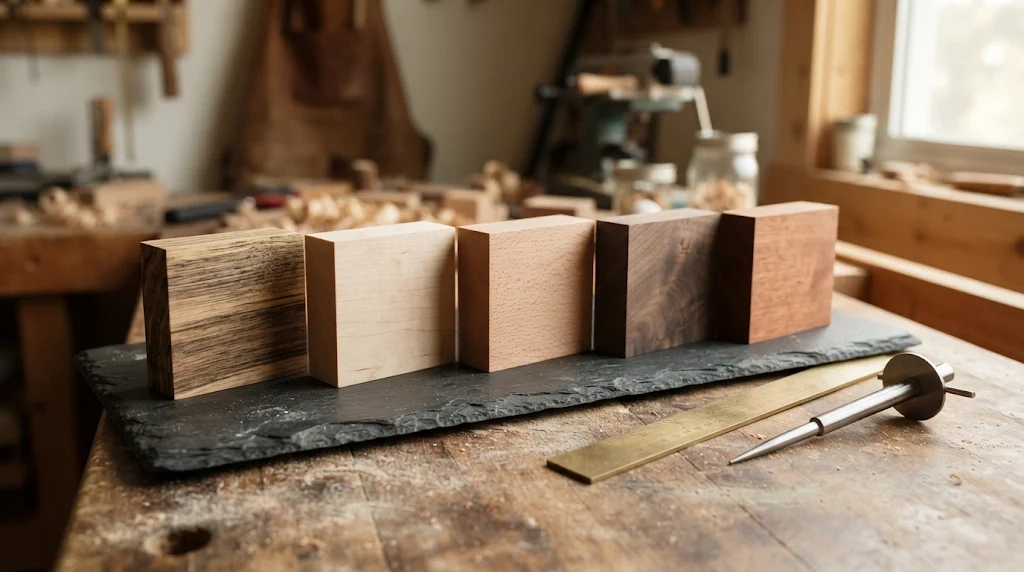
Hickory is harder than hard maple, American black walnut, and American black cherry. That improves indentation resistance but doesn’t automatically improve knife performance.
The Janka test measures the force required to press a steel ball into wood. It doesn’t directly measure knife wear, food safety, or cutting comfort.
| Wood Species | Janka Hardness | Main Advantage | Practical Verdict |
|---|---|---|---|
| Hickory/Pecan | 1,820 lbf | High strength | Durable but very firm |
| Hard Maple | 1,450 lbf | Fine, close grain | Excellent everyday choice |
| American Beech | 1,300 lbf | Consistent texture | Good general-purpose wood |
| Black Walnut | 1,010 lbf | Attractive dark grain | Comfortable for routine prep |
| Black Cherry | 950 lbf | Moderate hardness | Good for lighter chopping |
Note: Figures are representative Janka hardness values. Individual species and samples can differ, and the numbers aren’t food-safety ratings.
For me, hard maple offers the most practical compromise. It provides substantial durability without requiring the extreme hardness of hickory.
Will a Hickory Cutting Board Dull Your Knives?
A hickory cutting board can contribute to knife-edge wear during repeated use. Its high hardness makes it a less forgiving surface than many traditional cutting board woods.
However, knife dulling depends on more than Janka hardness. Blade steel, cutting technique, grain orientation, and embedded abrasive particles also affect wear.
What Makes a Board Knife-Friendly?
- Suitable hardness: The surface should resist damage without being excessively unforgiving.
- Smooth finishing: Raised fibers and rough patches should be removed.
- Clean surface: Sand, grit, and other abrasives can accelerate blade wear.
- Good construction: A flat, stable board supports controlled cutting.
- Appropriate grain: End-grain construction can provide a different cutting feel from edge grain.
A wood’s hardness alone cannot predict exactly how quickly a blade will dull. The Wood Database cutting board guide explains this trade-off in more detail.
Is Hickory Wood Safe for Food Preparation?
Properly manufactured, unfinished or appropriately finished hickory can be suitable for household food preparation. The important conditions are sound construction, a cleanable surface, and consistent hygiene.
Do not assume that strong wood is automatically bacteria-resistant. Even durable boards can develop grooves and cracks that trap food residue.
Is Hickory Too Porous for a Cutting Board?
Hickory has a medium texture, and its surface characteristics vary among species and cuts. A smooth, intact finished board is easier to maintain than one with open cracks or rough fibers.
Porosity alone doesn’t determine whether a board is safe. The way you clean, dry, inspect, and separate food-preparation surfaces matters greatly.
How Do You Prevent Bacterial Contamination?
- Wash cutting boards with hot, soapy water after use.
- Rinse thoroughly and dry promptly.
- Use separate boards for raw meat and ready-to-eat foods when possible.
- Sanitize appropriately after preparing raw animal products.
- Replace boards with excessive wear or hard-to-clean grooves.
The USDA cutting board guidance explains how wood and plastic boards should be maintained.
The University of Illinois Extension also recommends dedicated cutting boards to help prevent cross-contamination.
Can Commercial Kitchens Use Hickory Cutting Boards?
Commercial kitchens must follow applicable food-contact regulations. The FDA Food Code permits hard maple or equivalently hard, close-grained wood for specified food-contact uses.
Hickory’s hardness doesn’t establish compliance by itself. Check the board’s grain, construction, finish, and local health department requirements before using it commercially.
Hickory vs. Maple Cutting Boards: Which Is Better?
 Save
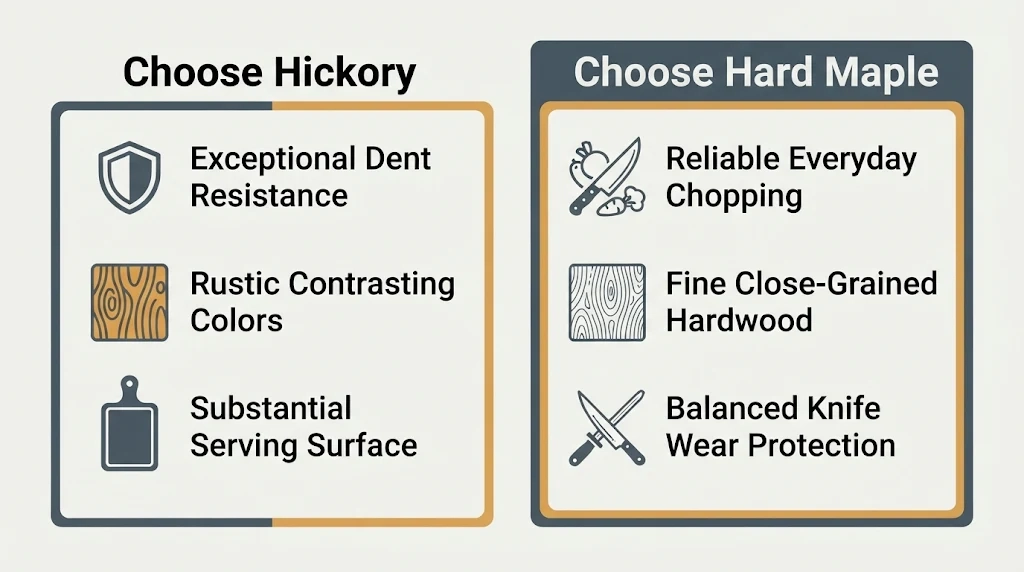
Hard maple is generally the better choice for daily chopping. Hickory offers greater indentation resistance, but maple’s close grain and moderate hardness make it a trusted cutting board material.
Choose Hickory If You Want:
- Exceptional resistance to dents and impact.
- A rustic board with contrasting natural colors.
- A substantial wooden serving or preparation surface.
- A custom woodworking project using known, suitable lumber.
Choose Hard Maple If You Want:
- A reliable everyday chopping surface.
- Fine, close-grained hardwood.
- A more balanced relationship between hardness and knife wear.
- A widely available material used in established butcher blocks.
For a primary kitchen cutting board, I’d choose maple. Hickory becomes more appealing when appearance and strength matter more than frequent delicate knife work.
Hickory vs. Walnut Cutting Boards: Which Should You Choose?
Walnut is softer than hickory and often feels more forgiving during everyday cutting. Hickory resists indentation better, while walnut offers a darker appearance and comfortable cutting surface.
Neither material is automatically superior in hygiene. Both require proper construction, cleaning, and drying.
- Hickory: Better suited to buyers prioritizing hardness and strength.
- Walnut: Appealing for routine slicing, presentation, and a dark wood aesthetic.
- Maple: A balanced alternative when practical performance comes first.
My advice is to choose based on actual cutting habits. A beautiful board isn’t particularly useful if its surface doesn’t suit your knives.
Is End-Grain or Edge-Grain Hickory Better?
Both construction methods can work, but each has different advantages. End-grain hickory can offer a more forgiving cutting action, while edge-grain boards are simpler to manufacture.
End-Grain Hickory
End-grain boards expose the ends of the wood fibers on the cutting surface. This arrangement can allow a knife edge to move between fibers rather than cutting across their length.
- Can provide an appealing chopping feel.
- Often requires more complex glue-up and finishing.
- May involve higher manufacturing costs.
- Needs careful moisture management and sound adhesive joints.
Edge-Grain Hickory
Edge-grain boards use long strips with their edges facing upward. This construction creates a strong, straightforward chopping surface.
- Usually easier to manufacture.
- Often costs less than comparable end-grain construction.
- May develop visible knife marks over time.
- Provides a particularly firm feel with dense hickory.
If choosing hickory specifically, I’d look at a well-made end-grain version before a basic edge-grain model. However, build quality remains more important than the grain label.
Can You Make a Cutting Board From Hickory?
Yes, you can make a cutting board from suitable hickory lumber. Choose clean, dry, untreated wood and construction materials appropriate for food-contact use.
Hickory can be challenging to work because of its density and tendency to split during some operations. Careful preparation helps prevent problems.
How to Make a Hickory Cutting Board
- Select the lumber: Choose properly dried hickory with no rot, deep cracks, or questionable chemical treatment.
- Inspect the grain: Avoid unstable sections, loose knots, and obvious structural defects.
- Prepare the pieces: Cut and joint the boards to create accurate mating surfaces.
- Arrange the layout: Position strips for a stable, attractive finished surface.
- Glue the joints: Use a suitable waterproof woodworking adhesive according to its instructions.
- Clamp evenly: Apply enough pressure to close joints without distorting the assembly.
- Flatten and sand: Create a smooth cutting face with no raised fibers or sharp edges.
- Finish appropriately: Apply a product intended for wooden food-contact cutting surfaces.
- Inspect before use: Confirm that the finished board is stable, clean, and free from exposed glue gaps.
If you’re preparing your own lumber, accuracy during assembly makes a major difference. This guide to preventing cutting board warping explains additional moisture-control practices.
How Do You Clean and Maintain a Hickory Cutting Board?
 Save
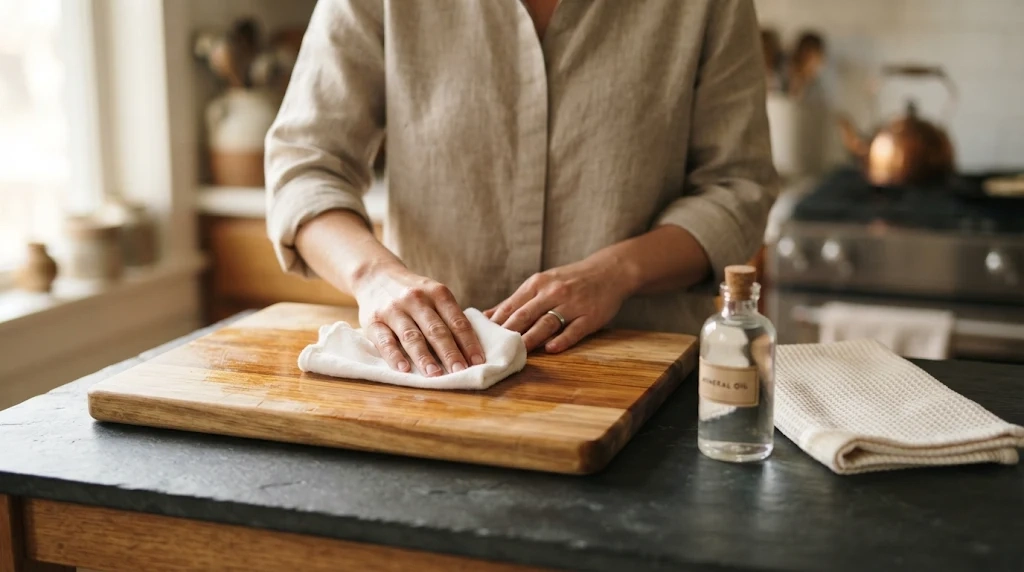
Clean a hickory cutting board after every use and dry it thoroughly. Occasional conditioning helps maintain its appearance and reduce rapid moisture absorption.
Daily Cleaning Routine
- Remove loose food particles.
- Wash with warm or hot water and mild dish soap.
- Scrub the cutting face and edges gently.
- Rinse away the soap completely.
- Dry with a clean towel.
- Allow both sides to air-dry before storage.
Avoid prolonged soaking, even with a dense hardwood. Extended moisture exposure can damage glued boards and encourage movement.
For wooden laminated boards, I recommend handwashing rather than using a dishwasher.
How Often Should You Oil Hickory?
Oil a hickory cutting board when the surface begins looking dry or absorbing water rapidly. Monthly conditioning is a reasonable starting point for many regularly used wooden boards.
- Choose food-grade mineral oil intended for cutting boards.
- Apply it to a completely clean, dry surface.
- Spread a thin, even coating across both faces and edges.
- Allow the oil to absorb according to the product instructions.
- Wipe away any remaining surface oil.
Don’t use ordinary cooking oil as a routine replacement for dedicated board conditioner. Some vegetable oils can develop unpleasant odors or sticky residues.
For a more detailed process, see how to oil a wooden cutting board correctly.
Can You Sand a Damaged Hickory Board?
Light scratches and raised fibers may be improved through careful sanding. However, deep cracks, loose joints, and severely damaged surfaces may require replacement.
Hickory is dense, so sanding can take more effort than softer hardwoods. Always use clean abrasives and remove all dust before applying a suitable finish.
This step-by-step cutting board refinishing guide explains how to restore a structurally sound board.
What Should You Look for When Buying a Hickory Cutting Board?
Choose a well-constructed board with a clean, smooth cutting surface. A beautiful grain pattern cannot compensate for loose joints or unsuitable finishes.
Important Buying Factors
- Wood quality: Avoid visible rot, major cracks, and unstable knots.
- Surface texture: Look for a smooth finish without splinters or rough pores.
- Board thickness: Choose enough thickness for stability without unnecessary weight.
- Construction: Check glue joints and overall flatness.
- Food-contact suitability: Confirm the manufacturer identifies the board as appropriate for food preparation.
- Size: Select a surface large enough for your ingredients and knife movements.
- Care instructions: Prefer manufacturers that explain cleaning and maintenance requirements.
For many home kitchens, a board around 12 by 18 inches provides a practical working area. Smaller spaces may benefit from a lighter, more compact design.
When Should You Avoid a Hickory Cutting Board?
Hickory isn’t ideal for every cook. Its weight, hardness, and care requirements can make other materials more convenient.
- Delicate knife collections: Consider maple, walnut, or another suitable knife-friendly surface.
- Dishwasher-first households: A dishwasher-compatible plastic board may be easier to maintain.
- Frequent raw-meat preparation: A dedicated, easily sanitized nonporous board can simplify cleanup.
- Limited counter space: A heavy, thick hickory board may be inconvenient.
- Low-maintenance preferences: Wooden boards require more attention to drying and conditioning.
The University of Maine Cooperative Extension cutting board guide offers further information on material selection and safe use.
Recommended Cutting Boards and Alternatives
If you’re ready to choose a board, I’d focus on construction and day-to-day convenience rather than hardness alone. These established product options address different kitchen priorities.
Disclosure: This section contains affiliate links. Qualifying purchases may earn a commission at no additional cost to you. The ratings below are editorial suitability estimates, not verified customer ratings or hands-on test scores.
🏆 Best Everyday Hardwood
John Boos Maple Cutting Board
★★★★☆ 4.5/5 editorial fit
John Boos offers hard maple cutting boards designed for kitchen preparation. I favor maple for its practical balance of hardness, fine grain, and everyday usability. Check the specific model’s dimensions and care instructions before purchasing.
💰 Best Easy-Care Alternative
OXO Good Grips Carving and Cutting Board
★★★★☆ 4.3/5 editorial fit
OXO’s nonporous cutting board provides an alternative for cooks who prefer simpler cleaning. I’d consider this style for a dedicated raw-meat preparation surface, following the manufacturer’s dishwasher and care guidance.
Frequently Asked Questions
1. Is Hickory Wood Food-Safe for Cutting Boards?
Hickory can be suitable for household cutting boards when the wood is clean, untreated with inappropriate chemicals, and properly manufactured. A suitable food-contact finish and smooth surface are important. Clean the board after use, prevent cross-contamination, and replace it if serious cracks or hard-to-clean damage develop.
2. Is Hickory Better Than Maple for Cutting Boards?
Hickory is harder and more resistant to indentation than hard maple, but maple is generally a better everyday cutting board material. Its close grain and more moderate hardness create a practical balance of durability and cutting comfort. Hickory may suit occasional chopping or presentation-focused boards.
3. Does Hickory Dull Kitchen Knives?
Hickory may contribute to knife-edge wear because it is a relatively hard wood. However, exact wear depends on the blade, cutting technique, surface condition, and grain orientation. If protecting delicate knife edges is your priority, hard maple or walnut may be a more comfortable choice.
4. Can You Use Hickory for an End-Grain Cutting Board?
Yes, suitable hickory can be used for an end-grain cutting board. End-grain construction may provide a more forgiving cutting action than an equivalent edge-grain surface. However, the board must have accurate joints, appropriate adhesive, a stable structure, and a properly prepared food-contact surface.
5. How Long Does a Hickory Cutting Board Last?
A well-built hickory cutting board can last for years when maintained properly, but there’s no reliable universal lifespan. Construction, moisture exposure, usage, and cleaning habits all matter. Inspect the board regularly and replace it when cracks, severe wear, or deep grooves make thorough cleaning difficult.
Final Verdict: Should You Choose Hickory for a Cutting Board?
Hickory is durable, attractive, and strong enough for cutting board construction. Its biggest limitation is that strength doesn’t automatically translate into a better cutting experience.
For everyday chopping, I recommend hard maple because it offers a more balanced surface. Walnut is another appealing alternative for lighter knife work and an attractive dark finish.
If you already own a well-made hickory board, there’s no reason to discard it solely because of its species. Keep it smooth, clean, dry, and structurally sound.
My final recommendation: Choose maple for a primary everyday cutting board, and consider hickory when exceptional hardness, distinctive appearance, or a custom design is your priority.

