
Does Apple Wood Make a Good Cutting Board? Pros, Cons, and Safety
Quick Answer
Yes, apple wood can make a good cutting board because it is hard, dense, and fine-grained. Its Janka hardness is approximately 1,730 lbf, according to The Wood Database’s apple wood profile. However, apple wood has significant seasonal movement, making proper drying, construction, and maintenance especially important. For most kitchens, hard maple remains the more practical everyday choice.
Key Factors to Consider
- Excellent hardness: Apple wood resists dents and ordinary surface wear.
- Fine grain: Small pores create a smooth, closely textured cutting surface.
- Moisture sensitivity: Improperly dried wood may warp, cup, or crack.
- Knife compatibility: Its firm surface may feel less forgiving than softer hardwoods.
- Limited availability: Large, clear apple wood boards can be difficult to find.
My Recommendation
- Choose apple wood for a distinctive, properly seasoned board with beautiful grain.
- Choose hard maple for a dependable everyday cutting surface with easier replacement options.
Apple wood is an interesting choice when you want something different from ordinary maple or walnut. Its attractive color and dense structure make it appealing for handmade kitchen boards.
Still, wood hardness tells only part of the story. I’ll explain how apple wood handles knives, moisture, cleaning, and long-term kitchen use.
What Is Apple Wood, and Why Is It Used for Cutting Boards?
Apple wood is a dense hardwood from trees in the genus Malus, which includes cultivated apple trees. Woodworkers value it for its fine texture, attractive grain, and ability to take a smooth finish.
Its heartwood often displays reddish-brown tones, while the sapwood tends to be lighter. Some pieces show striking color variation.
Apple trees usually produce smaller trunks than commercial lumber trees. Consequently, finding wide, straight, defect-free pieces can be challenging.
Apple Wood Properties That Matter
- Wood type: Dense deciduous hardwood.
- Janka hardness: Approximately 1,730 pounds-force.
- Average dried density: Approximately 52 pounds per cubic foot.
- Grain: Usually fine and uniform, sometimes irregular.
- Pore structure: Diffuse-porous, with small to very small pores.
- Appearance: Cream, reddish-brown, and darker contrasting streaks.
- Dimensional behavior: Relatively high shrinkage and seasonal movement.
These characteristics make apple wood a promising cutting-board material, but they do not guarantee a durable board. The wood must be properly selected and prepared.
Is Apple Wood Hard Enough for a Cutting Board?
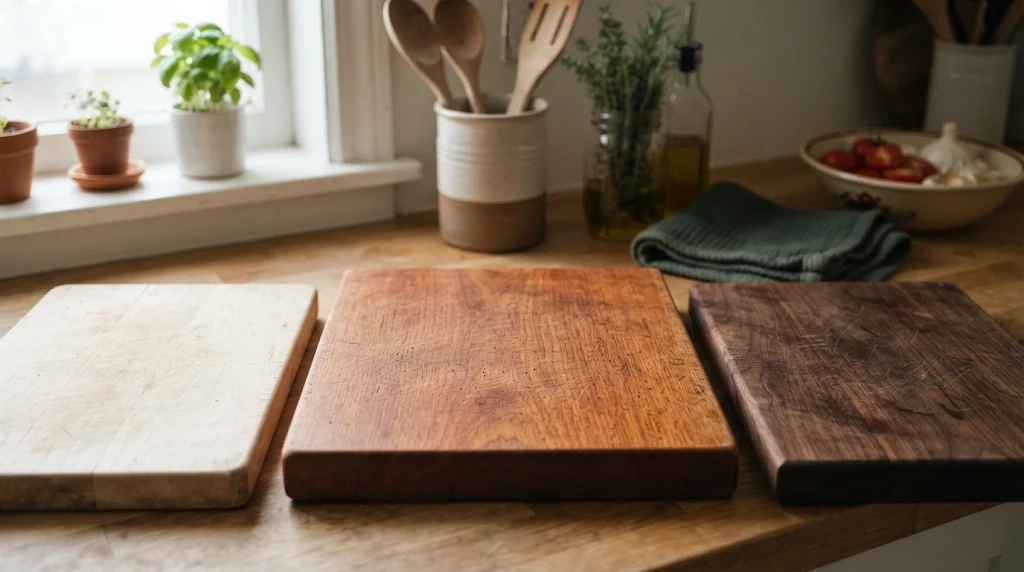
Yes, apple wood is more than hard enough for ordinary kitchen cutting. In fact, it is harder than several popular cutting-board hardwoods.
The Janka hardness test measures resistance to indentation using a steel ball. It does not directly measure knife sharpness, sanitation, or resistance to cracking.
Apple Wood vs. Other Cutting Board Woods
| Wood | Janka Hardness | Main Consideration | Best Fit |
|---|---|---|---|
| Apple | 1,730 lbf | Hard with high wood movement | Specialty boards |
| Hard maple | 1,450 lbf | Balanced hardness and established use | Everyday chopping |
| Black walnut | 1,010 lbf | Softer, dark-colored hardwood | General food preparation |
| Black cherry | 950 lbf | Softer cutting feel | Light to moderate chopping |
Note: Janka values are approximate species reference figures, not measurements of finished cutting boards. Actual performance depends on grain orientation, moisture content, construction, and use.
For cutting boards, maximum hardness isn’t always the goal. A comfortable cutting surface should balance durability with reasonable treatment of knife edges.
The Wood Database’s cutting-board wood guide explains why hardness and grain orientation matter.
Will Apple Wood Dull Kitchen Knives?
Apple wood can be somewhat demanding on a knife edge because of its density and hardness. However, normal cutting on a smooth apple wood board doesn’t automatically damage a properly maintained kitchen knife.
Knife wear also depends on blade steel, sharpening, technique, and board construction. Heavy chopping against a particularly hard surface can accelerate edge wear.
- Use a sharp chef’s knife with controlled pressure.
- Avoid forceful sideways scraping with the cutting edge.
- Choose a smooth board without embedded grit.
- Consider end-grain construction for frequent chopping.
I would favor apple wood for careful slicing and moderate chopping rather than constant heavy cleaver work.
Is Apple Wood Food-Safe for Cutting Boards?
Clean, untreated apple wood from a known source can be suitable for food-contact cutting surfaces. However, wood species alone doesn’t establish that a particular board is food-safe.
The material must also be free from unsuitable treatments, contamination, severe defects, and unsafe finishes.
What Makes an Apple Wood Board Suitable for Food Contact?
- Known wood source: Confirm that the material is apple wood rather than unidentified reclaimed lumber.
- No chemical treatment: Avoid pressure-treated, chemically preserved, or contaminated material.
- Suitable finish: Use products specifically intended for cutting boards and food-contact surfaces.
- Sound construction: Reject loose joints, splinters, and open cracks.
- Proper maintenance: Clean and dry the board after every use.
Apple wood’s small pores are a useful characteristic, but pore size does not eliminate the need for sanitation. Bacteria can remain on improperly cleaned cutting surfaces.
The University of Maine Cooperative Extension’s cutting-board safety guidance discusses hygiene, cleaning, and material selection.
Does Apple Wood Have Natural Antibacterial Properties?
Do not rely on apple wood to disinfect itself. Natural wood characteristics are not a substitute for cleaning and appropriate sanitizing.
Research into bacterial behavior on wood is more complicated than the common claim that all wooden boards automatically kill germs. Surface condition and cleaning practices remain essential.
My approach is simple: treat every cutting board as a food-preparation tool that requires regular cleaning.
What Are the Advantages and Disadvantages of Apple Wood Cutting Boards?
Apple wood’s biggest strengths are its hardness, smooth grain, and appearance. Its major drawbacks involve movement, availability, and the care needed to preserve the finished surface.
Advantages of Apple Wood
- Strong cutting surface: The dense hardwood offers substantial resistance to ordinary dents.
- Attractive appearance: Reddish-brown heartwood creates a warm, distinctive look.
- Fine texture: Small pores allow careful sanding to produce a smooth surface.
- Custom woodworking potential: Smaller pieces can become beautiful handmade boards.
- Long-term refinishing: Sound boards may tolerate light resurfacing when knife wear develops.
Disadvantages of Apple Wood
- High shrinkage: Poorly seasoned pieces can distort as moisture changes.
- Cracking risk: Existing drying checks may develop into larger defects.
- Limited board sizes: Apple trees rarely provide the same lumber dimensions as commercial hardwood species.
- Higher weight: Dense boards may feel heavy for their size.
- Less forgiving cutting feel: Some cooks may prefer a softer hardwood.
- Availability problems: Identifying reliable, well-dried stock can take extra effort.
The disadvantages matter most when buying a homemade board without information about its construction. Attractive grain alone shouldn’t determine your purchase.
Does Apple Wood Warp or Crack Easily?
Apple wood has a meaningful risk of warping and cracking when drying or moisture management is poor. It experiences relatively high shrinkage compared with several common furniture and kitchen hardwoods.
The Wood Database reports approximately 5.6% radial and 10.1% tangential shrinkage from green to oven-dry conditions. These figures describe wood drying behavior, not the movement expected during every household wash.
Why Does Apple Wood Move?
Wood absorbs and releases moisture as surrounding humidity changes. Different grain directions expand and shrink by different amounts.
This uneven movement can produce cupping, twisting, or splits. A board that dries faster on one face may develop stress.
How Can You Reduce Warping?
- Start with properly dried wood: Use moisture-tested lumber suited to indoor service.
- Inspect for defects: Avoid unstable pith sections, existing checks, and loose knots.
- Use sound construction: Follow appropriate grain orientation and moisture-resistant joinery practices.
- Wash briefly: Do not leave the board soaking in a sink.
- Dry both surfaces: Wipe away water and allow air circulation.
- Store appropriately: Avoid prolonged contact with wet countertops or direct heat.
Oiling can help limit rapid moisture exchange at the surface, but it cannot guarantee that a poorly constructed board stays flat.
Is Edge Grain or End Grain Better for an Apple Wood Cutting Board?
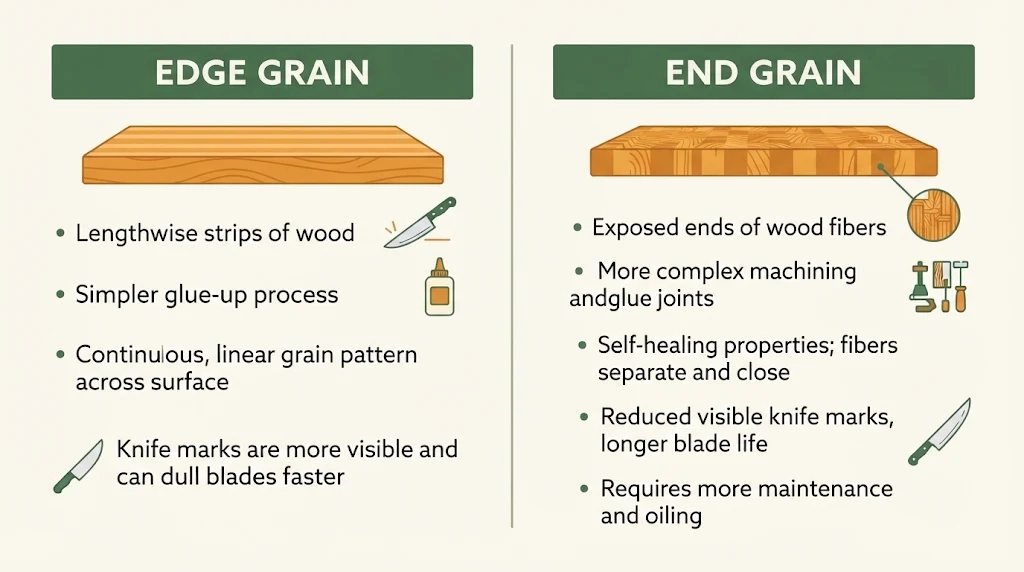
Both constructions can work, but each presents trade-offs. End grain can provide a more forgiving cutting action, while edge grain generally requires a simpler glue-up.
Edge-Grain Apple Wood Cutting Boards
An edge-grain board exposes the lengthwise grain of joined wooden strips. This arrangement is common in rectangular hardwood cutting boards.
- Usually easier to construct than end grain.
- Can produce an attractive continuous grain pattern.
- Requires well-matched, properly dried strips.
- May display more visible knife marks than end grain.
For apple wood, I would inspect every strip for existing cracks and irregular grain before assembling the panel.
End-Grain Apple Wood Cutting Boards
An end-grain cutting board exposes the ends of wood fibers on its working surface. This construction can help reduce visible knife marks during repeated cutting.
However, end-grain boards require more precise machining and more glue joints. Apple wood’s movement makes careful material preparation particularly important.
For detailed construction methods, see my guide on how to make an end-grain cutting board.
Which Construction Would I Choose?
For a small apple wood board, I would consider a carefully made edge-grain design. It offers a straightforward way to showcase the wood’s color and texture.
For frequent heavy chopping, I would prioritize an expertly constructed end-grain board made from stable stock. Maple is still my preferred starting point for beginners.
Can You Make a Cutting Board From an Apple Tree?
Yes, an apple tree can provide material for a cutting board if the wood is sound and properly dried. However, freshly cut apple branches should not become kitchen boards immediately.
Green wood contains moisture that must be reduced through controlled drying. Apple wood is especially vulnerable to checking and distortion when drying conditions are unsuitable.
Basic Steps for Making an Apple Wood Cutting Board
- Select appropriate material: Choose sound wood with known treatment history.
- Remove unsuitable sections: Exclude decayed wood, major cracks, and questionable knots.
- Dry the wood: Season the stock carefully and verify moisture with a suitable meter.
- Prepare the pieces: Mill the boards flat and square using appropriate equipment.
- Assemble if necessary: Use an adhesive suitable for cutting-board construction and follow its instructions.
- Sand thoroughly: Remove roughness and splinters without leaving abrasive residue.
- Apply a suitable finish: Use food-grade mineral oil or a dedicated cutting-board conditioner.
- Inspect the finished board: Verify that it remains flat, smooth, stable, and free from open defects.
Not every apple log will produce useful cutting-board lumber. Some pieces are better suited to small wooden utensils or decorative projects.
Do not assume that pesticide-treated orchard lumber is automatically suitable for direct food contact. Confirm its history and avoid questionable stock.
How Should You Clean an Apple Wood Cutting Board?
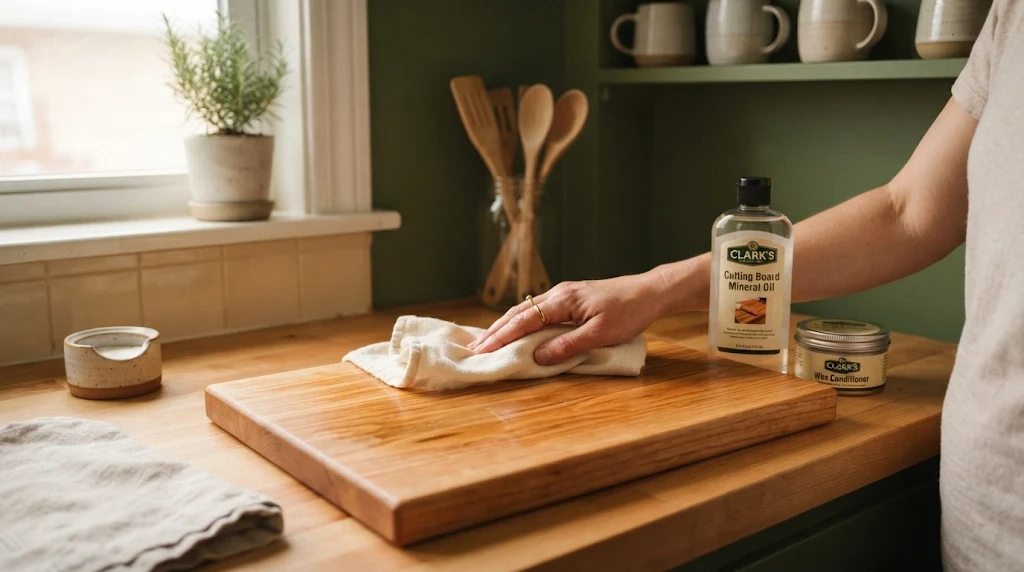
Wash an apple wood cutting board by hand with warm water and dish soap. Rinse it thoroughly, then dry it promptly.
Avoid soaking, prolonged damp storage, and dishwasher cleaning unless the board’s manufacturer explicitly approves it. Most glued wooden boards are best kept out of dishwashers.
Everyday Cleaning Steps
- Remove loose food particles with a clean scraper or sponge.
- Wash both sides with warm water and mild dish soap.
- Scrub any shallow knife marks that contain food residue.
- Rinse thoroughly with clean water.
- Dry with a clean towel immediately.
- Allow the board to air-dry completely before storage.
The USDA cutting-board guidance recommends cleaning boards thoroughly and sanitizing them when necessary.
Can You Cut Raw Meat on Apple Wood?
A properly maintained wooden cutting board can be used for raw meat if it can be cleaned and sanitized effectively. However, a dedicated dishwasher-safe plastic board is often more convenient for this task.
I prefer separating raw animal products from ready-to-eat ingredients. That reduces the chance of transferring contamination between foods.
For additional precautions, read my guide on how to use a cutting board safely.
How Do You Oil and Maintain an Apple Wood Cutting Board?
Apply a food-contact-appropriate cutting-board oil when the wood appears dry. Food-grade mineral oil is a common option because it remains stable and doesn’t become rancid like ordinary cooking oils.
A mineral-oil-and-beeswax conditioner can also help reduce surface water absorption. Follow the product’s directions for application and curing or absorption time.
Simple Conditioning Routine
- Wash the cutting board and allow it to dry completely.
- Inspect the surface for cracks, rough patches, and raised fibers.
- Apply a thin, even layer of food-grade mineral oil.
- Coat the edges and underside as well as the cutting face.
- Allow the product to absorb according to its label.
- Remove excess oil with a clean cloth.
- Apply an approved wax conditioner if desired.
The goal is a conditioned surface, not a greasy one. Excess oil should not remain pooled on the board.
If you want additional water resistance, my guide explains how to wax a cutting board with food-contact-suitable products.
Which Oils Should You Avoid?
- Ordinary vegetable oil: May oxidize and produce unpleasant odors.
- Unspecified furniture oil: May contain ingredients unsuitable for food contact.
- Unapproved wood stains: Decorative finishes are not automatically appropriate for cutting surfaces.
- Unknown homemade mixtures: Avoid blends without reliable ingredient or use information.
As of 2026, dedicated food-grade mineral oils and cutting-board conditioners remain practical choices. Always check the label instead of relying on product names alone.
How Long Can an Apple Wood Cutting Board Last?
A well-made apple wood board may provide years of useful service, but there is no reliable universal lifespan. Durability depends on drying, construction, moisture exposure, maintenance, and frequency of use.
Light knife scratches are normal. Deep cracks, persistent rocking, and damaged glue joints deserve more attention.
Signs Your Board Needs Attention
- Dry appearance: The wood looks pale or rough and may need conditioning.
- Raised grain: The surface feels fuzzy after repeated washing.
- Minor knife scratches: Light resurfacing may restore a sound board.
- Visible cupping: The board no longer sits flat on the countertop.
- Deep cracks: Food debris becomes difficult to remove.
- Loose joints: Glued sections begin separating.
Small surface problems can sometimes be corrected. Structural defects require a more cautious decision.
See my detailed instructions on how to refinish a cutting board before attempting repairs.
Should You Buy an Apple Wood Cutting Board?
Buy an apple wood board if you value its unusual appearance and can verify its construction quality. It can be an attractive specialty cutting surface for controlled, everyday kitchen tasks.
For frequent meal preparation, a commercially available maple board may be easier to choose and maintain. Availability and documented care instructions are useful advantages.
What to Check Before Buying
- Material identification: Confirm that the seller uses genuine apple wood.
- Drying process: Ask whether the wood was adequately seasoned.
- Surface condition: Look for splinters, cracks, and large gaps.
- Board stability: Check that it sits flat without rocking.
- Finish: Confirm suitability for direct food contact.
- Construction: Ask about the adhesive and grain orientation if the board is laminated.
- Care instructions: Prefer sellers who explain proper cleaning and maintenance.
As a practical example, I would choose a sound 12-by-8-inch specialty apple wood board over a large board with visible drying checks. A stable surface matters more than impressive dimensions.
Recommended Alternatives and Care Products
If finding a well-made apple wood board proves difficult, consider these established products. My selections focus on everyday cutting performance, ease of ownership, and wooden board maintenance.
The ratings below represent editorial suitability judgments, not laboratory test results or verified customer-review averages.
🏆 Best Everyday Alternative
John Boos Maple R-Board Series
★★★★☆ 4/5
This hard-maple series uses edge-grain construction and a substantial 1.5-inch thickness. I favor it as a practical alternative for cooks who want a familiar hardwood cutting surface rather than an uncommon specialty species.
🌳 Best Teak Alternative
Teakhaus Traditional Cutting Board 107
★★★★☆ 4/5
This edge-grain teak board offers a generous preparation surface and a warm wood appearance. I would consider it when countertop space matters, while remembering that teak still requires handwashing and regular conditioning.
🧴 Best for Wood Maintenance
Howard Butcher Block Conditioner
★★★★☆ 4/5
This conditioner combines USP food-grade mineral oil with beeswax and carnauba wax. I consider it a convenient maintenance option for suitable wooden boards, including properly prepared apple wood.
Affiliate disclosure: As an Amazon Associate, this website may earn from qualifying purchases through the product links above.
Frequently Asked Questions
1. Is Apple Wood Better Than Maple for Cutting Boards?
Apple wood is harder than hard maple based on published Janka ratings, but hardness doesn’t make it universally better. Maple has a long history of cutting-board use and is widely available. Apple wood’s relatively high shrinkage and limited lumber sizes make maple the easier everyday recommendation for many kitchens.
2. Can You Use Apple Wood for an End-Grain Cutting Board?
Yes, properly dried apple wood can be used in end-grain cutting-board construction. The wood’s small pores and hardness are appealing, but its movement demands careful preparation. Use sound stock, appropriate adhesive, precise joinery, and a food-contact-suitable finish. End-grain construction does not eliminate the risk of cracking.
3. Does Apple Wood Absorb Water?
Yes, apple wood can absorb moisture and release it as environmental conditions change. This movement may contribute to warping or cracking when a board is poorly dried or maintained. Wash the board promptly, avoid soaking, dry both sides, and store it where air can circulate.
4. Is Apple Wood Safe for Cutting Vegetables and Fruit?
Clean, untreated apple wood with a suitable finish can be used for vegetables and fruit. The board should be smooth, structurally sound, and free from questionable chemical treatments. Wash it after use and prevent contact with raw-meat contamination. Replace boards that cannot be cleaned effectively.
5. Can I Use Olive Oil on an Apple Wood Cutting Board?
I wouldn’t recommend ordinary olive oil as a routine cutting-board finish because it can oxidize and develop unwanted odors. Food-grade mineral oil or a conditioner labeled for cutting boards is a more predictable choice. Always follow the finish manufacturer’s application instructions.
Final Verdict: Is Apple Wood Worth Using for a Cutting Board?
Yes, apple wood can be a worthwhile cutting-board material when properly selected, dried, constructed, and maintained. Its dense structure, fine pores, and attractive grain offer genuine advantages.
However, it is not necessarily the best choice for every kitchen. High shrinkage, limited availability, and demanding woodworking characteristics make it less convenient than hard maple.
My recommendation is to choose apple wood when you appreciate its appearance and can verify the board’s quality. For a dependable everyday workhorse, I would still put hard maple near the top of the list.
Before buying or making your board, prioritize cleanability, stability, food-contact safety, and long-term maintenance over wood hardness alone.

