Chef Knife Sharpening Stone Soaking: Time and Tips
Quick Answer
Most standard chef knives and whetstones do not require long soaking, but traditional Japanese waterstones (especially ceramic or softer synthetic stones) typically need to be soaked in water for 10 to 15 minutes before sharpening until air bubbles stop rising. Splash-and-go stones, diamond plates, and oil stones should never be soaked.
Understanding Sharpening Stone Types and Soaking Needs
When preparing to sharpen a chef knife, knowing whether your whetstone requires soaking is the first crucial step. Different stone compositions react to water in vastly different ways. Misjudging stone type can lead to poor sharpening results or even permanent damage to your sharpening equipment.
Waterstones are broadly categorized by how they absorb moisture. Some stones are porous and designed to release abrasive grit suspended in water as you sharpen, while others are dense and non-porous, requiring only a light surface spray.
Soaking Stones vs. Splash-and-Go Stones
 Save
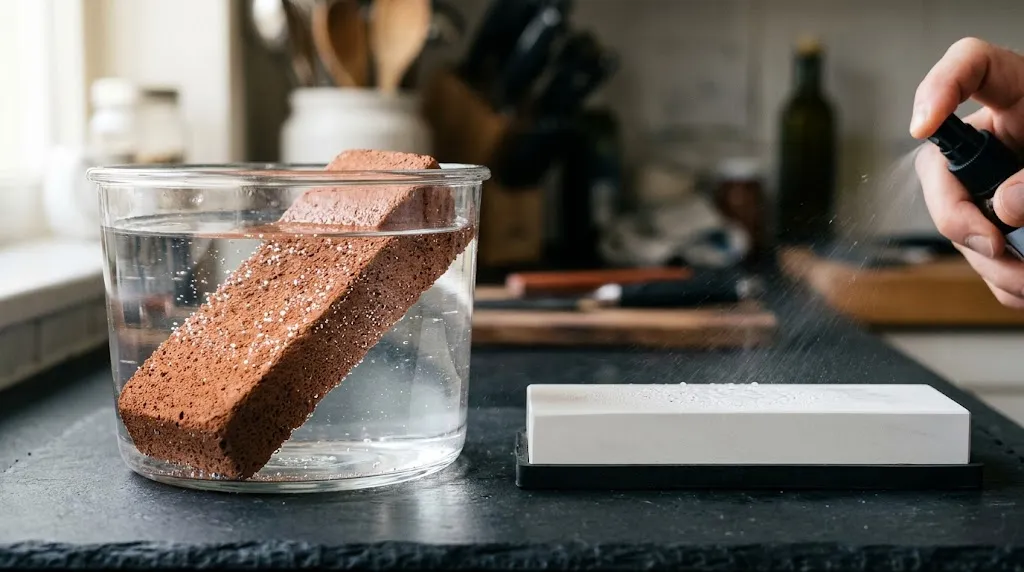
Traditional soaking stones (often traditional ceramic or resin-bonded stones) possess a porous structure. When placed in water, they absorb moisture deep into their core. This internal hydration ensures the stone stays lubricated during extended sharpening sessions and continuously releases fresh abrasive particles.
In contrast, modern splash-and-go stones have a denser binder matrix. Water sits entirely on top of the surface rather than penetrating deeply. Submerging a splash-and-go stone can degrade its bonding agents over time or cause it to crack as internal water pressure shifts unevenly.
Key Insight
Always verify manufacturer guidelines for your specific stone. Assuming all waterstones require a 15-minute soak is a common mistake that can soften and ruin high-end splash-and-go whetstones.
How Long Should You Soak a Sharpening Stone?
For stones that explicitly require soaking, the standard duration is between 10 and 15 minutes. Submerge the stone completely in clean tap water at room temperature. You will immediately notice a steady stream of small air bubbles rising to the surface.
Once the bubbling stops completely, the internal pores are fully saturated with water. Leaving the stone submerged for hours or overnight is counterproductive and can cause the bonding material to soften excessively, making the surface too crumbly during knife sharpening.
Signs That Your Stone Is Ready
Evaluating whether a stone has absorbed enough water involves observing both physical cues and surface texture:
- Air bubbles have completely ceased rising from the pores.
- The stone feels noticeably heavier due to absorbed water weight.
- The color of the stone appears uniformly darkened or dampened.
- Water applied to the surface no longer absorbs instantly like a dry sponge.
Stones That Should Never Be Soaked
Several types of sharpening media will be ruined if submerged in water. Recognizing these materials protects your investment and ensures safe sharpening practices.
Oil stones, such as natural Arkansas stones or manufactured silicon carbide oil stones, rely on honing oil rather than water. Soaking an oil stone in water accomplishes nothing useful, while introducing oil to a waterstone ruins its porous bonding structure.
Diamond sharpening plates feature a steel base plate coated with industrial diamonds electroplated to the surface. Submerging diamond plates in water for extended periods traps moisture against the steel core, accelerating rust and corrosion around the edges.
Warning
Never submerge resin-bonded diamond stones or metal-bonded stones unless explicitly cleared by the manufacturer, as prolonged soaking can dissolve adhesives and detach abrasive layers.
Step-by-Step Procedure for Soaking and Preparing Whetstones
Executing the soaking process correctly ensures stable stone performance throughout the sharpening session. Follow a structured approach to preparation.
- Clean a basin or sink and fill it with clean room-temperature water until the water level sits an inch above where the stone will rest.
- Lower the sharpening stone gently into the water on its side to allow air to escape evenly from all pores.
- Observe the stone for 10 to 15 minutes until bubbling completely stops.
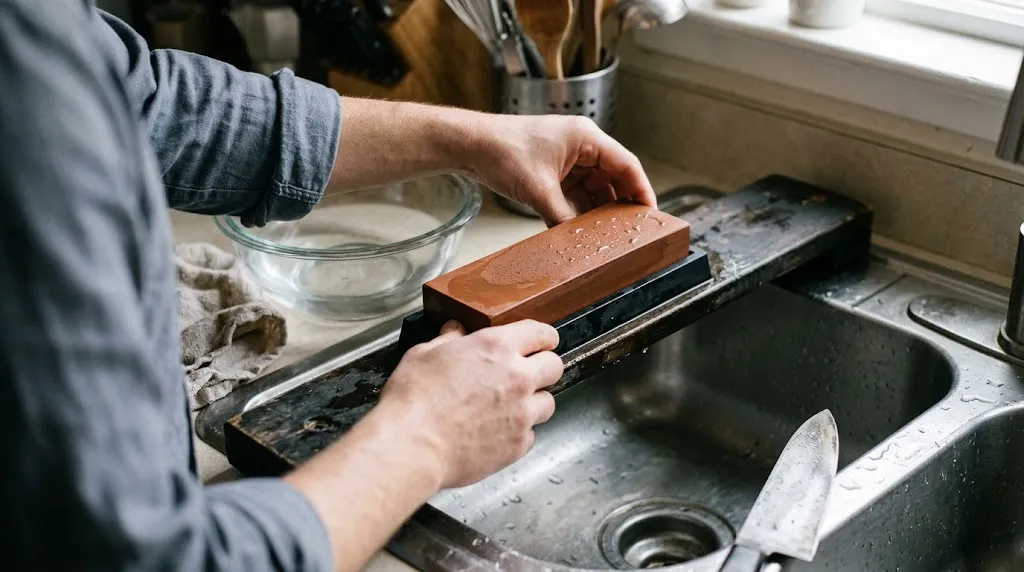
- Remove the stone from the water bath and place it securely on a non-slip sink bridge or rubber sharpening base.
- Apply a small splash of clean water to the working surface whenever friction starts creating a dry paste during knife strokes.
Proper Post-Sharpening Care and Drying Methods
Caring for your sharpening stone after use is just as important as proper soaking. Storing a soaked stone improperly leads to mold growth, cracking, or structural breakdown.
After finishing your chef knife, rinse the stone thoroughly under running tap water to remove metal swarf (the dark metallic slurry created during sharpening). Wipe the surface clean with a sponge.
Allow the stone to air dry completely in a well-ventilated area for at least 24 to 48 hours. Never store a damp whetstone inside an airtight plastic container, wooden box, or drawer until it is 100% dry.
Tip
Avoid drying your stones under direct sunlight or with artificial heat sources like hair dryers, as rapid temperature changes can cause the stone to warp or fracture.
Frequently Asked Questions
Can you leave a sharpening stone in water permanently?
 Save
No. Leaving a waterstone soaking indefinitely causes the bonding agent to dissolve, turning the stone soft, muddy, and structurally weak. Only soak stones for 10 to 15 minutes immediately prior to use.
What happens if you use a soaking stone dry?
Using a soaking stone dry generates excessive friction, ruins the knife edge, clogs the stone surface instantly with steel particles, and creates extreme heat that can crack the stone.
Do lower grit stones need longer soaking than high grit stones?
Coarser grit stones are often denser or have different bonding compositions, but generally, standard soaking times of 10 to 15 minutes apply universally across grit levels unless specified otherwise by the maker.
Can warm or hot water be used to soak sharpening stones?
Room temperature water is ideal. Extremely hot water can cause thermal shock, leading internal stresses to fracture the stone material.
How do I know if my stone is a soak stone or splash-and-go?
If water beads up on the surface or is absorbed slowly over a few seconds without bubbling profusely, it is likely a splash-and-go stone. If it drinks water quickly and produces continuous bubbles, it requires soaking.
How often should sharpening stones be flattened?
Stones should be flattened whenever you notice uneven wear, dishing in the center, or loss of feedback while sharpening your chef knife. Flattening is best done while the stone is wet using a diamond leveling plate.
Related Product
Chef Knife Sharpening Stone Set
A reliable dual-grit whetstone and non-slip base provide the consistent foundation needed to maintain razor-sharp kitchen cutlery.
As an Amazon Associate, we earn from qualifying purchases.
Conclusion
Properly managing whetstone hydration preserves the integrity of your sharpening equipment and ensures your chef knife receives a clean, precise edge. Always match your soaking routine to the specific stone composition, respecting the 10 to 15 minute window for porous waterstones while keeping oil stones and diamond plates entirely dry. With correct preparation, storage, and maintenance, your sharpening stones will deliver exceptional performance for years.

