Chef Knife Cladding Explained: San-Mai & Multi-Layer Blades
Quick Answer
Chef knife cladding refers to a manufacturing technique where a core of hard, high-carbon steel is encased between layers of softer, corrosion-resistant stainless steel. This creates a blade that combines edge retention and sharpness with increased structural durability and stain resistance.
What Is Knife Cladding and Why Is It Used?
Knife cladding—often referred to as san-mai (three-layer) or multi-layer construction—is a metallurgical process designed to solve a fundamental trade-off in kitchen cutlery. To achieve a sharp, long-lasting cutting edge, a knife needs very hard steel. However, extremely hard steel is often brittle and prone to rusting or staining.
By sandwiching a hard core steel (the cutting edge) between softer outer layers, knife makers create a composite blade. The core provides exceptional sharpness and edge retention, while the outer cladding absorbs impact shock and protects the core from moisture and acidic foods.
Understanding this construction helps home cooks and professional chefs choose blades that match their maintenance habits and cutting style.
How Clad Chef Knives Are Constructed
 Save
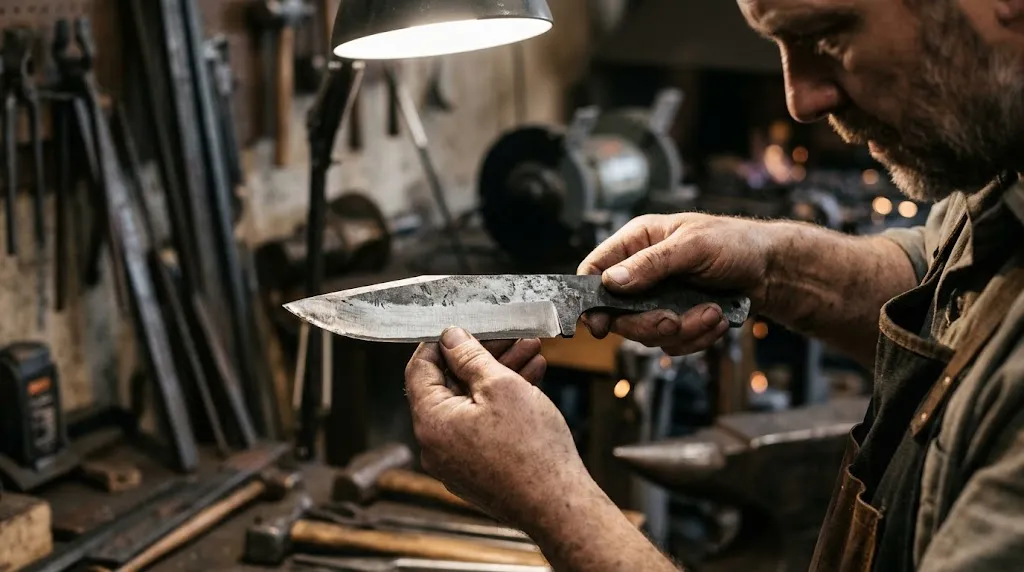
The manufacturing process determines how the blade performs, how it looks, and how it wears over time. Most clad chef knives utilize either a three-layer structure or a multi-layered damascus pattern.
San-Mai (Three-Layer Construction)
In a standard san-mai blade, three layers of steel are forge-welded together. The innermost layer forms the cutting edge, exposed only at the very bottom of the bevel. The outer two layers wrap around the core, protecting the sides of the blade.
Damascus Cladding
Many decorative kitchen knives feature damascus cladding. In this style, multiple layers of contrasting steels are folded and welded around a high-performance core steel. While the outer layers provide a striking aesthetic wave pattern, they still function as protective and supportive cladding.
Key Insight
Only the exposed edge of a clad knife consists of the hard core steel. As the knife is sharpened over many years, the geometry of the edge remains consistent because the softer outer steel is easily abraded behind the apex.
Core Steels vs. Cladding Steels
The performance of a clad chef knife depends heavily on the combination of metals used by the smith or manufacturer.
Common high-performance core steels include carbon-rich alloys like Shirogami (White Steel), Aogami (Blue Steel), SG2 (R2), and ZDP-189. These steels can reach high Rockwell hardness ratings, allowing them to hold a micro-thin edge for extended periods.
The outer cladding typically consists of softer stainless steels, such as 304 or 410 stainless, or softer low-carbon stainless alloys. This pairing ensures that the parts of the knife most vulnerable to food acids and hand contact remain stain-resistant, while the hidden core handles the heavy cutting work.
Advantages of Clad Chef Knives
Cladding offers distinct practical benefits that make it popular in both traditional Japanese smithing and modern knife manufacturing.
- Enhanced Durability: The softer outer layers absorb lateral stress, reducing the risk of the brittle core snapping under twisting forces.
- Corrosion Resistance: If the core is made of reactive carbon steel, stainless cladding protects the main body of the blade from rust and discoloration.
- Easier Maintenance: Users get the cutting performance of high-carbon steel with fewer maintenance requirements on the flanks of the blade.
- Structural Support: Thinner cutting geometries are possible without sacrificing overall blade rigidity.
Potential Drawbacks and Limitations
Despite their benefits, clad knives come with specific characteristics that buyers should consider before purchasing.
- The Cladding Line (Hamon / Kasumi Finish): As the knife scratches through use, the transition line between the hard core and soft cladding becomes visible. Some users prefer a uniform satin finish.
- Sharpening Considerations: When thinning a clad knife on waterstones over years of heavy use, the soft outer cladding can drag on the stone differently than the hard core, requiring careful technique to maintain proper blade geometry.
- Cost: Forge-welding multiple layers of steel requires advanced craftsmanship, often making clad knives more expensive than monosteel stainless alternatives.
Warning
Even if the outer cladding is stainless, knives with reactive carbon steel cores will still expose a small strip of carbon steel along the very edge. Always dry the blade immediately after washing to prevent edge rusting.
How to Care for a Clad Chef Knife
 Save
Proper maintenance ensures a clad knife retains both its structural integrity and its appearance.
- Hand Wash Only: Never put a clad chef knife in the dishwasher. Harsh detergents and thermal shock can pit the steel and damage the handle.
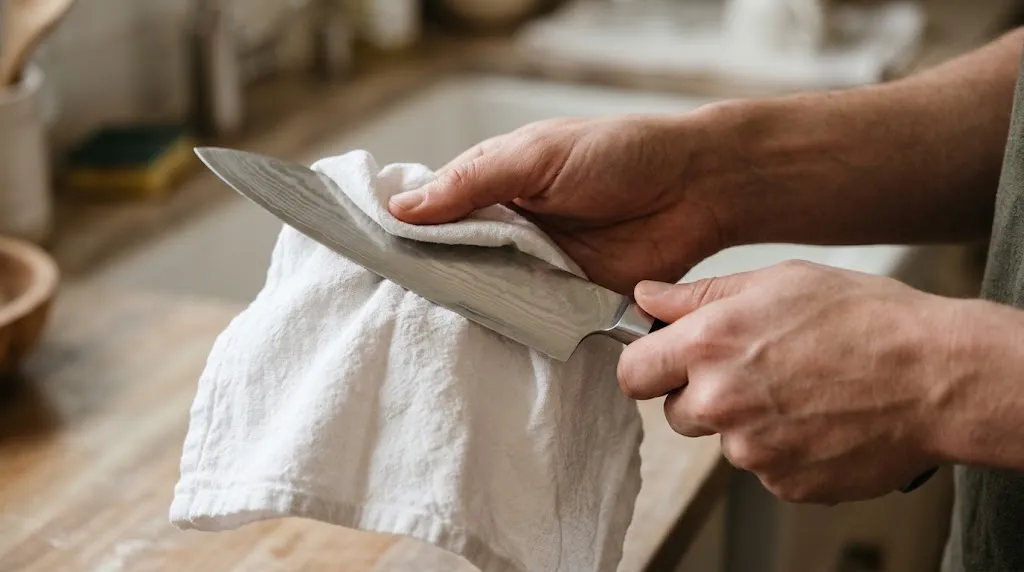
- Dry Immediately: Wipe the blade completely dry with a soft towel right after washing, paying special attention to the cutting edge where the core is exposed.
- Use Proper Cutting Surfaces: Cut only on wood or soft plastic boards. Glass, granite, and ceramic boards will quickly dull and chip the fine edge.
- Store Safely: Use a magnetic strip, wooden block, or blade guard rather than tossing the knife loose into a drawer with other utensils.
Related Product
Japanese Whetstone Sharpening Stones
Maintain the precise edge geometry of high-performance clad chef knives with a dual-grit waterstone.
As an Amazon Associate, we earn from qualifying purchases.
Frequently Asked Questions
Is clad steel better than monosteel for a chef knife?
Neither is objectively better; they serve different design philosophies. Monosteel blades offer uniform composition and easier thinning over time, while clad blades combine the extreme hardness of high-performance cores with the toughness and stain resistance of exterior jacket steels.
Can you see the cladding layers on a chef knife?
Yes, on most traditional san-mai and damascus knives, a visible line or pattern runs along the sides of the blade just above the edge bevel. This line marks the boundary where the hard core steel meets the softer cladding layer.
Does cladding make a kitchen knife stainless?
It depends on the materials used. If both the cladding and the core are made of stainless steel alloys, the entire knife is stainless. However, many traditional knives feature stainless cladding over a reactive carbon steel core, meaning the sides resist rust while the exposed edge requires careful drying.
Will a clad knife snap if dropped?
While the softer outer cladding provides shock absorption that makes clad blades less brittle than pure high-hardness monosteel blades, dropping any high-performance kitchen knife onto a hard floor can still cause chips, bends, or handle damage.
How does cladding affect sharpening over time?
Cladding does not negatively impact routine sharpening. Because the edge bevel is ground into the hard core steel, sharpening on stones maintains the knife’s cutting performance. Over many years of heavy thinning, the knife smith or sharpener simply removes a small amount of the softer outer steel to expose more core material.
Are all Damascus knives clad?
Not necessarily. While most modern kitchen knives with damascus patterns are constructed by cladding a core steel with patterned Damascus steel jackets, some historical or specialized blades are pattern-welded entirely out of homogeneous or mixed steels throughout the entire cross-section.
Conclusion
Chef knife cladding represents a sophisticated balance between ancient metallurgical tradition and modern kitchen utility. By fusing a razor-sharp, hard steel core with resilient outer layers, manufacturers create knives that deliver exceptional cutting precision alongside improved durability and corrosion resistance. Understanding how these layers interact helps you select, maintain, and appreciate the craftsmanship behind your kitchen cutlery.

