
Can You Use a Noodle Board as a Cutting Board? Safety Guide
Quick Answer
Yes, you can use a noodle board as a cutting board, but only if its manufacturer confirms that it is safe for direct food contact and knife use. Many decorative noodle boards have painted, stained, or varnished surfaces unsuitable for chopping. A dedicated cutting board is usually the safer choice, especially when preparing raw meat. Follow cutting board food safety guidelines to reduce contamination risks.
Five Things to Check Before Cutting
- Food-safe surface: Confirm that the finish is suitable for direct contact with food.
- Knife compatibility: Make sure the board is designed to tolerate cutting and chopping.
- Suitable material: Choose durable hardwood or another approved cutting surface.
- Stable construction: Check that the board stays flat and secure during use.
- Easy cleaning: Avoid boards with damaged coatings, cracks, or hard-to-clean details.
My Recommendation
- For light food prep: Use a noodle board only when its cutting suitability is confirmed.
- For everyday chopping: Choose a dedicated wooden or plastic cutting board.
- For stove safety: Never use a noodle board as a cutting surface while it rests over stove burners.
A wooden noodle board looks like the perfect extra kitchen workspace. But its attractive appearance doesn’t automatically make it suitable for a sharp knife.
I prefer judging a board by its actual construction rather than its product name. This guide explains when cutting is safe, what materials to avoid, and which alternatives make more sense.
What Is a Noodle Board?
A noodle board is a large, usually wooden surface associated with preparing dough or covering a stovetop. Modern decorative versions commonly function as stove covers, serving trays, or temporary work surfaces.
Traditional pasta preparation boards have a different purpose from many modern stove covers. Their designs may look similar, but their food-contact suitability can differ.
What Are Noodle Boards Used For?
Modern noodle boards serve several household purposes. Their exact uses depend on their construction and the manufacturer’s instructions.
- Decorative stove covers: Concealing burners when the stove is not operating.
- Additional work surfaces: Supporting lightweight kitchen items where the manufacturer permits.
- Serving trays: Carrying dishes or displaying items when designed for serving.
- Dough preparation: Rolling pasta or pastry on food-safe boards intended for that task.
- Kitchen decoration: Adding farmhouse-style wood details to a countertop.
Not every noodle board supports all these activities. A product designed only for decoration should remain decorative.
Why Is It Called a Noodle Board?
The name comes from the traditional use of large wooden surfaces during homemade noodle preparation. Cooks needed room to roll dough and work with long pasta sheets.
Today’s marketplace also uses the term for decorative stovetop covers. That naming overlap creates confusion about whether a particular board can safely handle food.
Can You Safely Use a Noodle Board for Cutting Food?
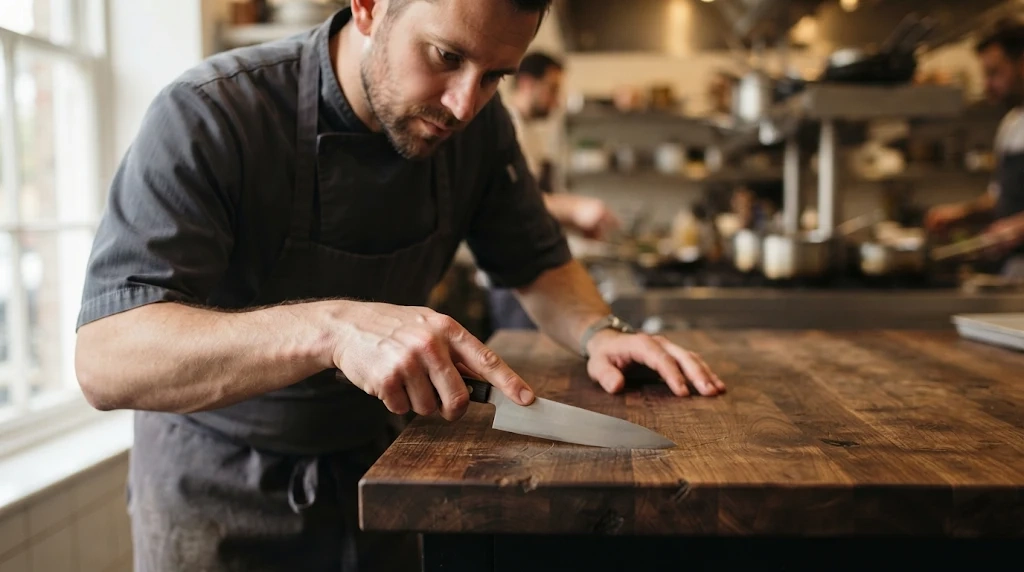
Yes, but only when the board’s material, finish, construction, and care instructions support cutting. A decorative stove cover should not automatically become a food-preparation surface.
The biggest concern is often the finish. Paint, varnish, decorative resin, and unknown coatings may not withstand repeated knife contact.
When Is a Noodle Board Suitable for Cutting?
A noodle board may work as a cutting board when its manufacturer explicitly approves that use. The following conditions should also apply.
- Its entire cutting surface is suitable for direct food contact.
- Its finish can tolerate repeated contact with kitchen knives.
- The material is durable enough for the intended cutting task.
- The surface has no loose paint, splinters, or damaged joints.
- The board rests securely on an ordinary countertop.
- You can wash, dry, and sanitize it as needed.
All these conditions matter. A food-safe finish alone does not prove that a surface is suitable for chopping.
When Should You Avoid Cutting on a Noodle Board?
Avoid cutting whenever its intended use or surface treatment remains unclear. Unknown coatings are a good reason to choose another board.
- The product is labeled for decoration only.
- The surface has paint, glitter, or decorative lettering.
- The maker doesn’t confirm food-contact suitability.
- The finish could chip under a knife.
- The board has splinters, cracks, or loose components.
- Raised handles prevent stable countertop placement.
- Cleaning instructions don’t support food preparation.
My rule is simple: uncertainty means no cutting. A separate board eliminates unnecessary guesswork.
Noodle Board vs. Cutting Board: What’s the Difference?
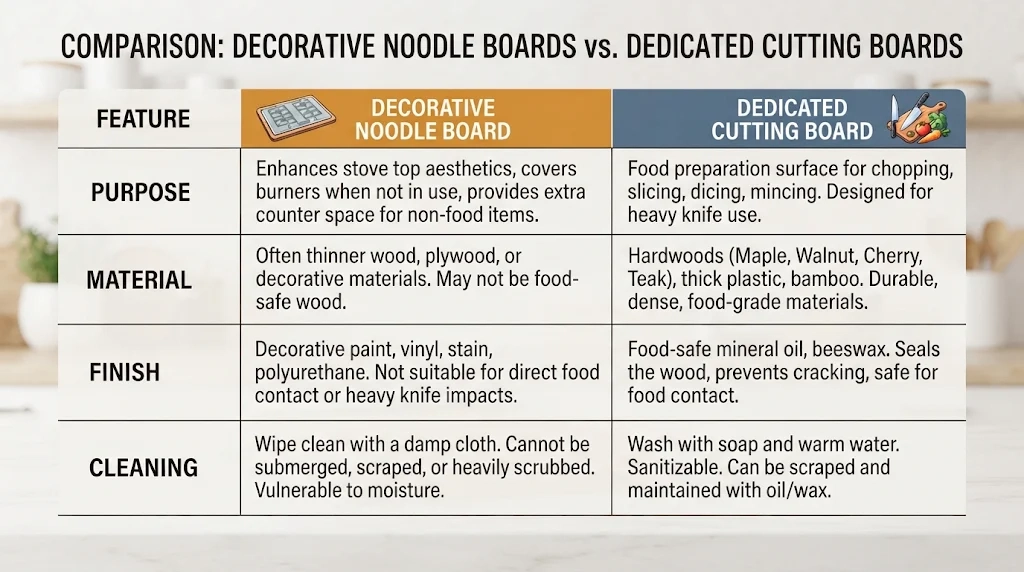
A noodle board is often designed for covering, displaying, or supporting items. A dedicated cutting board is made specifically to handle repeated knife contact and routine food preparation.
Some dual-purpose products combine both functions. Their manufacturer should clearly identify those uses.
| Feature | Decorative Noodle Board | Dedicated Cutting Board |
|---|---|---|
| Main purpose | Decoration or stove covering | Cutting and food preparation |
| Common material | Wood with decorative treatments | Wood, plastic, bamboo, or composite |
| Surface finish | May contain paint, stain, or varnish | Designed for food contact and knife use |
| Knife compatibility | Often unsuitable | Intended for regular cutting |
| Cleaning | Depends on finish and design | Established cleaning instructions |
| Best application | Decorative display | Everyday chopping and slicing |
The practical distinction is intended use, not appearance. Even an attractive hardwood stove cover may be unsuitable for cutting.
For another useful comparison, explore our guide explaining whether a serving board can function as a cutting board.
Are Noodle Boards Food Safe?
Some noodle boards are food-safe, while others are not. Their safety depends on the actual materials, coatings, adhesives, intended use, and condition.
A wooden appearance proves very little. Check the manufacturer’s documentation before allowing direct contact with food.
Does a Food-Safe Finish Make a Noodle Board Safe for Cutting?
Not necessarily. A finish may be suitable for incidental food contact but unsuitable for repeated knife cuts.
A knife can scratch or damage certain coatings. That makes the finish’s resistance to cutting just as important as its food-contact approval.
What About Painted or Stained Noodle Boards?
I would not use a painted or stained decorative noodle board for chopping without explicit manufacturer approval. The problem is not simply whether the finish has dried.
Repeated cuts can damage decorative coatings. Unknown products also make it difficult to judge appropriate cleaning and maintenance.
Can You Make a Decorative Board Food Safe by Oiling It?
No. Adding mineral oil cannot establish the safety of an unknown finish or restore damaged decorative coatings.
Food-grade mineral oil is commonly used to condition suitable unfinished wooden cutting boards. It does not replace manufacturer approval, cleaning, or sanitizing.
If a board needs restoration, our wooden cutting board refinishing guide explains the basic process for appropriate cutting boards. Don’t sand unknown coatings without identifying the materials and necessary safety precautions.
Which Noodle Board Materials Are Best for Cutting?
Hardwood can work well when the complete board is designed for food preparation. However, the same wood species may appear in unsuitable decorative products.
Look for a cutting-approved construction rather than choosing by color or grain pattern alone.
Hard Maple
Hard maple is a popular material for quality wooden cutting boards. It provides a durable surface suitable for regular kitchen knives.
I would prioritize a properly manufactured maple cutting board over an unknown painted stove cover. Its intended function is easier to verify.
Walnut
Walnut offers a darker appearance and works well in many premium cutting boards. It can provide an attractive surface for both cutting and serving when designed accordingly.
Its appearance doesn’t remove the need for cleaning and maintenance. The manufacturer’s care instructions still apply.
Bamboo
Bamboo is used in many lightweight kitchen boards. Some manufacturers offer bamboo products specifically designed for cutting.
However, bamboo construction and adhesives vary. Confirm that the complete board is suitable for food contact and knife use.
Painted Softwood
Painted softwood is common in decorative household projects. Such boards should remain decorative unless their entire construction is approved for cutting.
Softwood may also develop knife marks more readily than suitable hardwood. Decorative coatings create an additional concern.
Can You Cut Vegetables, Bread, or Meat on a Noodle Board?
The answer depends on the food and the board’s approved uses. A suitable dual-purpose board may handle light preparation, but decorative boards should not touch unpackaged food.
Vegetables and Fruit
Light vegetable preparation is reasonable on a stable, cutting-approved noodle board. Examples include slicing cucumbers, apples, or tomatoes.
Wash produce appropriately before cutting. Clean the board before and after food preparation.
Bread and Cheese
A suitable food-safe wooden board can work for slicing bread or cheese. However, serrated bread knives may leave deeper scratches than smooth-edged knives.
If preserving the board’s appearance matters, use a separate bread board. This keeps decorative surfaces looking better.
Raw Meat, Poultry, and Seafood
I recommend using a separate dedicated cutting board for raw animal products. This simplifies cleaning and reduces the likelihood of cross-contamination.
Cross-contamination occurs when harmful microorganisms transfer between foods, tools, or surfaces. Raw poultry juices contacting ready-to-eat vegetables are a common concern.
The USDA’s wooden and plastic cutting board guidance explains proper cleaning and sanitation. Both suitable wood and plastic cutting boards can be used safely with appropriate care.
How Do You Check Whether a Noodle Board Can Be Used for Cutting?
Start with the product label and manufacturer instructions. Never rely entirely on appearance or a seller’s decorative photographs.
A Six-Step Safety Inspection
- Read the description: Look for explicit approval for direct food preparation and knife use.
- Identify the material: Confirm the wood species, construction, and adhesives where possible.
- Check the coating: Find out whether the surface is painted, varnished, or treated with a cutting-approved finish.
- Inspect the condition: Look for cracks, splinters, loose joints, or peeling coatings.
- Check stability: Place the board on a clean countertop and confirm that it doesn’t rock or slide.
- Review cleaning instructions: Make sure the board can be washed and maintained appropriately after contact with food.
If any important information remains unclear, contact the manufacturer. Without confirmation, use a dedicated cutting board instead.
Does Board Thickness Matter?
Thickness affects stiffness and handling, but it doesn’t guarantee cutting safety. A thick decorative board can still have an unsuitable finish.
For example, John Boos sells a Chop-N-Slice maple cutting board measuring 18 × 12 × 1.25 inches. Its purpose-built construction matters more than thickness alone.
How Do You Use an Approved Noodle Board for Cutting?
Use it on a stable countertop, not on stove burners. Follow the manufacturer’s preparation and cleaning instructions throughout the process.
- Confirm that the board is intended for cutting and food contact.
- Wash it according to the manufacturer’s directions.
- Dry the surface and inspect for damage.
- Place it on a clean, level countertop.
- Use a suitable nonslip mat if the board needs extra stability.
- Choose a sharp knife and cut with controlled movements.
- Move prepared ingredients to a clean container.
- Wash the board promptly and dry it completely.
Pay special attention to raised side handles. They can interfere with a board’s stability if the design is intended to span stovetop components.
What Should You Avoid During Cutting?
- Heavy chopping on a board approved only for light slicing.
- Cutting across painted lettering or decorative designs.
- Using a board that moves under knife pressure.
- Placing hot cookware on a board without heat-use approval.
- Allowing raw meat juices to contact ready-to-eat food.
- Using damaged or hard-to-clean cutting surfaces.
My practical preference is a stable, purpose-built board with enough room for ingredients. Decorative features should never interfere with safe knife movement.
Is It Safe to Use a Noodle Board on a Stove?
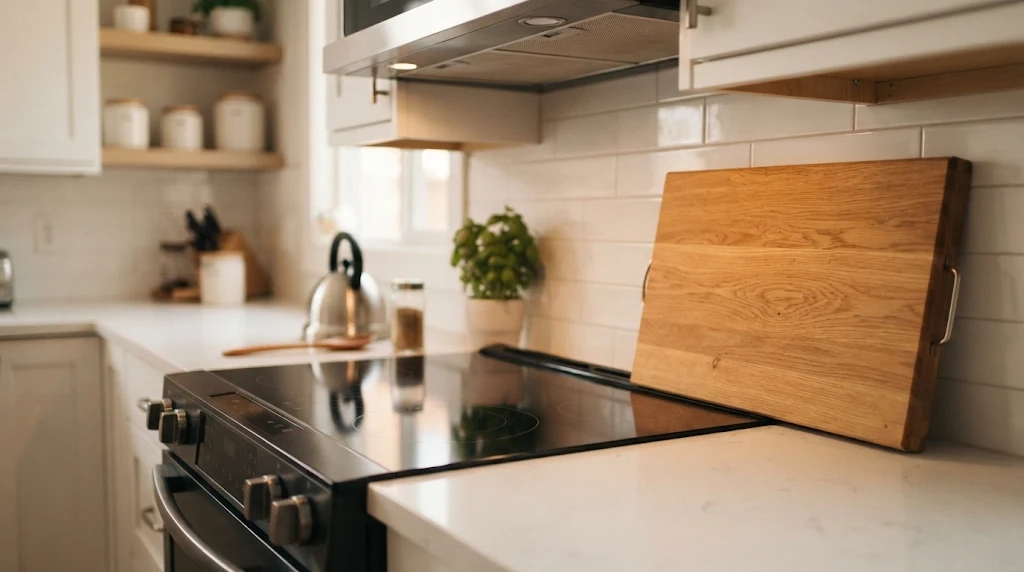
A wooden noodle board over a stovetop creates a significant fire hazard. Accidental burner activation and residual heat are important concerns.
The Chambersburg Fire Department’s noodle board safety warning specifically discusses these risks. Gas burners present additional concerns when combustible covers conceal the cooking surface.
Why Are Stovetop Noodle Boards Risky?
- Accidental activation: A burner may turn on beneath a wooden cover.
- Residual heat: Recently used burners may remain dangerously hot.
- Combustible materials: Wood and some decorative finishes can burn.
- Concealed burners: A cover can make the condition of the cooktop harder to observe.
- Additional storage: Objects placed on a cover may increase fire hazards.
The U.S. Fire Administration’s cooking fire safety guidance recommends keeping combustible items away from stovetops. I would follow that advice rather than treating a cover as permanent counter space.
Should You Chop Food While the Board Covers Burners?
No. Even a noodle board approved for cutting should be moved to a normal countertop before food preparation.
This avoids working above a potential heat source. It also provides a more predictable, stable cutting arrangement.
How Do You Clean a Food-Safe Noodle Board?
Cleaning depends on the manufacturer’s instructions and the board’s material. For suitable wooden boards, prompt handwashing and thorough drying are generally sensible.
Basic Cleaning Steps
- Remove food scraps from the surface.
- Wash with warm water and mild dish soap.
- Clean any food-contact edges and corners.
- Rinse thoroughly with clean water.
- Dry immediately with a clean towel.
- Allow airflow around both faces before storage.
Avoid prolonged soaking unless the maker specifically approves it. Moisture can contribute to swelling, cracking, and warping.
Our guide on which cutting boards are dishwasher safe explains why cleaning methods differ between materials.
When Should You Sanitize the Board?
Sanitize a suitable cutting board when necessary, particularly after raw animal products touch its surface. Follow an appropriate food-contact sanitizing procedure and the manufacturer’s directions.
Never assume decorative finishes tolerate ordinary cutting-board sanitizers. If a board cannot be cleaned adequately, stop using it for food preparation.
How Can You Prevent Warping?
Keep washing brief and allow moisture to evaporate from both sides. Avoid leaving one face wet against the countertop.
For additional maintenance tips, read our guide on how to prevent cutting board warping.
What Are the Best Alternatives to a Noodle Board for Cutting?
A dedicated cutting board is usually the most practical alternative. Choose a material that fits your cooking habits, maintenance preferences, and available space.
Wooden Cutting Boards
Maple and walnut cutting boards provide durable surfaces for everyday kitchen knives. They also offer an attractive appearance for kitchens with visible countertop storage.
Wood requires appropriate washing, drying, and occasional conditioning. That maintenance is the main trade-off.
Plastic Cutting Boards
Plastic cutting boards are often lightweight and easy to clean. Many models support dishwasher washing when their manufacturers approve it.
I especially like the practicality of a separate, easily cleaned board for raw meat preparation. Replace plastic boards when deep grooves make effective cleaning difficult.
Paper-Composite Cutting Boards
Paper-composite boards offer another useful option. Some are thin, lightweight, dual-sided, and dishwasher safe.
They can suit smaller kitchens where a thick wooden butcher block would be inconvenient. Always check the specific manufacturer’s specifications.
What Size Cutting Board Should You Choose?
The right size depends on countertop space, storage, and the amount of food you prepare. Larger boards provide more room but can be harder to wash.
Here are three actual cutting-board sizes from established product lines.
| Cutting Board | Example Dimensions | Practical Advantage |
|---|---|---|
| John Boos Chop-N-Slice Maple | 18 × 12 × 1.25 inches | Substantial hardwood workspace |
| OXO Good Grips Utility | 14.75 × 10.5 inches | Practical daily preparation |
| Epicurean Kitchen Series | 14.5 × 11.25 × 0.25 inches | Lightweight handling and storage |
These are example configurations, not the only sizes available. Confirm the dimensions of your selected version before purchasing.
Recommended Cutting Boards for Everyday Food Preparation
If your noodle board is decorative, I would keep it away from knives. These three purpose-built cutting board options offer more practical alternatives.
The recommendations are based on manufacturer specifications and intended uses, not claims of hands-on product testing. The suitability scores below are editorial judgments, not verified customer ratings.
🏆 Best Hardwood Option
John Boos Chop-N-Slice Maple Cutting Board
★★★★½ Editorial fit: 4.5/5
The Chop-N-Slice line includes substantial maple cutting boards, including an 18 × 12 × 1.25-inch model. I would choose this option for regular vegetable chopping and anyone who appreciates traditional hardwood construction. Handwashing and periodic conditioning are important.
💰 Best Practical Everyday Option
OXO Good Grips Utility Cutting Board
★★★★☆ Editorial fit: 4/5
This nonporous, double-sided cutting board includes a solid side and a grooved side for containing liquids. I would consider it for everyday meal preparation, particularly when straightforward cleaning matters more than decorative appearance.
🍽️ Best Lightweight Alternative
Epicurean Kitchen Series Cutting Board
★★★★½ Editorial fit: 4.5/5
Epicurean’s Kitchen Series uses a thin paper-composite design and includes dishwasher-safe options. I would shortlist the 14.5 × 11.25-inch version for smaller kitchens where lightweight handling and easy storage are priorities.
Frequently Asked Questions
Can you use a wooden stove cover as a cutting board?
Only if the manufacturer confirms that the wooden stove cover is designed for direct food contact and knife use. Many stove covers are decorative and have unsuitable finishes. If the board is approved for cutting, remove it from the stove and place it on a stable countertop before preparing food.
Can you roll dough on a noodle board?
Yes, when the noodle board is specifically designed for direct food preparation and its surface is suitable for dough. Traditional pasta boards often support rolling and shaping dough. Decorative stove covers may have coatings that make direct food contact inappropriate, so verify the manufacturer’s instructions first.
Are all wooden noodle boards food safe?
No. A wooden construction doesn’t automatically make a noodle board food-safe. Paint, decorative varnish, unknown adhesives, and damaged coatings can affect suitability. Check the complete product’s intended use rather than assuming that natural-looking wood is appropriate for preparing food.
Can you use a noodle board for a charcuterie board?
You can use a noodle board for charcuterie only if the manufacturer approves direct food contact and the surface can be cleaned properly. A decorative board may still hold serving dishes without touching the food. Avoid placing unpackaged cheese, fruit, or cured meats directly on an unverified finish.
Can you put a noodle board in the dishwasher?
Most traditional wooden noodle boards should not go in the dishwasher unless the manufacturer explicitly approves it. Prolonged moisture and heat may damage wood, adhesives, or decorative finishes. Handwashing is generally more appropriate for suitable wooden food-preparation boards, followed by prompt drying.
Final Verdict: Should You Use a Noodle Board as a Cutting Board?
Yes, a noodle board can double as a cutting board when its complete construction is approved for direct food contact and repeated knife use. However, many decorative stove covers do not meet those requirements.
My recommendation is to separate decoration from everyday chopping whenever possible. A purpose-built cutting board provides a more predictable surface for food preparation.
Before deciding, remember these priorities:
- Check manufacturer approval: Never assume that a wooden surface is suitable for cutting.
- Inspect the finish: Avoid decorative coatings not approved for knife contact.
- Prioritize stability: Use a level countertop instead of a stovetop.
- Keep raw foods separate: Use appropriate dedicated boards for raw animal products.
- Clean properly: Follow material-specific washing, drying, and sanitizing instructions.
- Choose practical equipment: Buy a dedicated cutting board if the noodle board’s suitability remains uncertain.
A beautiful noodle board can still be a useful decorative kitchen accessory. It simply doesn’t need to replace a reliable cutting board.
Choose a board designed for the food you prepare, check the maker’s instructions, and keep your cutting surface clean. Those habits matter more than appearance.

