
Can You Put Hot Food on a Plastic Cutting Board? Safety Guide
Quick Answer
Yes, you can usually place moderately warm cooked food on a clean, food-safe plastic cutting board. However, very hot food may damage certain plastics, especially with prolonged contact. Never place a hot skillet, baking tray, or pot directly on an ordinary plastic board. The safest approach is to follow the manufacturer’s temperature guidance and the USDA cutting board safety recommendations.
What You Need to Know
- Warm cooked food: Usually acceptable on a suitable food-safe board.
- Very hot food: May soften or deform plastic, depending on temperature and contact time.
- Hot cookware: Never use an ordinary plastic cutting board as a trivet.
- Material differences: HDPE and polypropylene have different thermal properties.
- Food safety: Clean the board and keep cooked food separate from raw meat contamination.
- Visible damage: Replace boards with melting, serious warping, or hard-to-clean cracks.
My Practical Recommendation
- Check the label: Look for manufacturer-approved food-contact uses and heat limitations.
- Choose another surface: Use suitable heat-resistant equipment for exceptionally hot food or cookware.
You’ve just finished cooking dinner, and your plastic cutting board is sitting beside the stove. Can you safely transfer hot chicken, steak, or vegetables onto it?
It’s a practical kitchen question with an important distinction: hot food isn’t the same as hot cookware. I’ll explain the material risks, safer alternatives, cleaning methods, and signs that your board needs replacing.
Is It Safe to Put Hot Food on a Plastic Cutting Board?
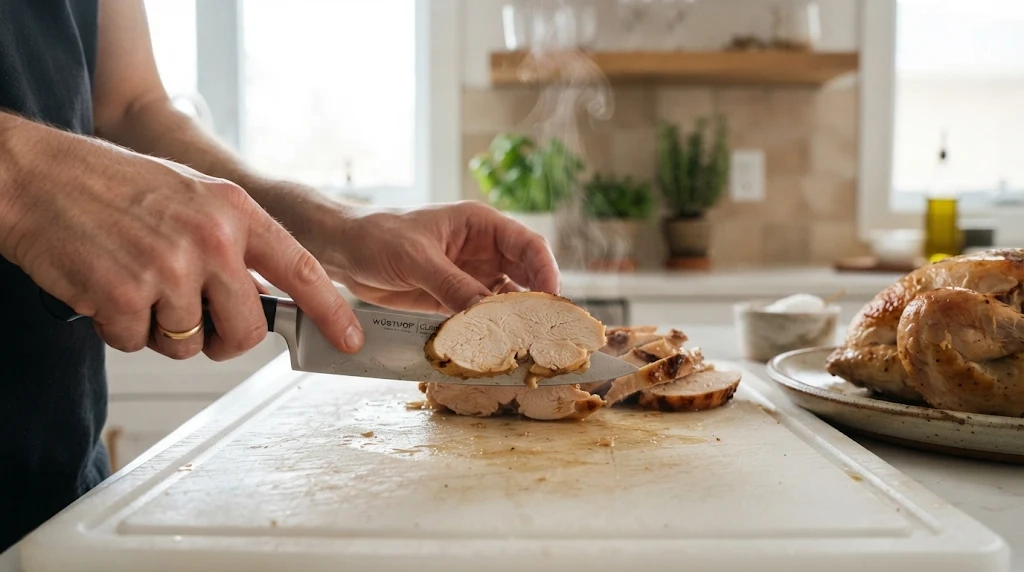
Putting warm cooked food on a food-safe plastic cutting board is generally acceptable. The concern increases when food is extremely hot, remains in contact for a long time, or touches plastic with a low heat tolerance.
A plastic cutting board is a food-preparation surface made from a polymer, commonly polyethylene or polypropylene. Manufacturers design these boards primarily for chopping, slicing, and preparing food.
That doesn’t automatically make every plastic board suitable for high-temperature use. Different products have different compositions, thicknesses, and manufacturer instructions.
Why Does Food Temperature Matter?
Heat transfers from hot food into the cutting board beneath it. The resulting surface temperature depends on how hot the food is, how long it remains, and the amount of contact.
A few warm vegetable pieces create a different situation from a large roast resting on the board. The roast has more stored heat and may transfer energy over a longer period.
- Temperature: Hotter food creates greater potential for surface damage.
- Contact duration: Longer exposure allows more heat transfer.
- Food quantity: A large piece of meat can retain heat longer than small pieces.
- Board construction: Thickness and polymer composition influence performance.
- Surface condition: Old scratches and previous damage can complicate cleaning.
My preferred approach is to keep plastic boards for ordinary preparation and carving tasks. When heat becomes the main concern, I use equipment specifically intended for that purpose.
What Happens When Plastic Cutting Boards Get Too Hot?
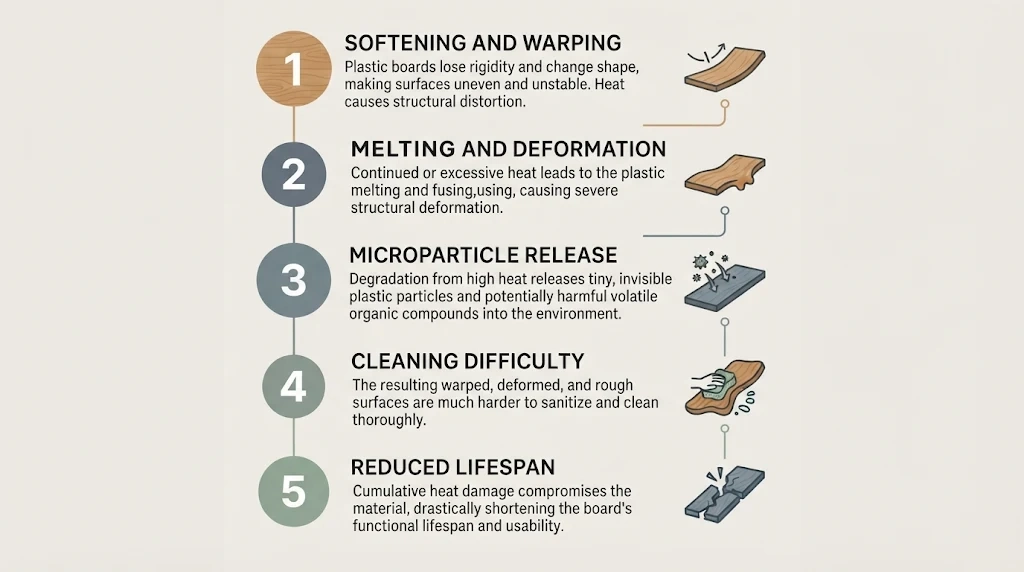
Excessive heat can make certain plastics soften, change shape, or suffer permanent surface damage. The exact outcome depends on the material and exposure conditions.
Here are the main problems worth recognizing.
Softening and Warping
Plastic can lose its original shape when exposed to unsuitable temperatures. A warped board may rock or slide while you’re cutting.
That creates a practical safety issue. A stable cutting surface helps maintain control of your knife.
Melting and Surface Deformation
Severe heat exposure may leave shiny areas, dents, raised spots, or melted sections. A hot metal pan creates a much greater risk than ordinary cooked food.
Once plastic melts or becomes badly distorted, I wouldn’t use that board for food preparation again. Replacing it is the simpler choice.
Potential Plastic Particle Release
Plastic cutting boards can release small particles through normal knife contact and wear. Researchers continue studying the possible health effects of dietary microplastics.
The University of California’s food and nutrition guidance recommends avoiding very hot foods on plastic boards when trying to reduce potential material breakdown.
However, detecting plastic particles doesn’t prove that a particular meal will cause illness. Current evidence doesn’t establish specific human health outcomes from cutting-board microplastic exposure.
Damage That Makes Cleaning Difficult
Heat damage may create uneven areas where food residue collects. Deep knife grooves can also make thorough washing more difficult.
Learn more about everyday material and hygiene concerns in this guide to plastic cutting board safety.
How Hot Is Too Hot for a Plastic Cutting Board?
There is no single safe temperature limit for every plastic cutting board. You need the exact product’s specifications to establish its approved operating conditions.
Two boards that look identical may have different material compositions. Never assume a temperature rating from appearance alone.
Typical Food Temperature Examples
The following examples explain common cooking situations. They are not certified temperature limits for plastic cutting boards.
| Example | Temperature | Practical Guidance |
|---|---|---|
| Warm prepared food | Varies | Usually suitable if within the board’s approved range. |
| Cooked poultry | 165°F / 74°C minimum internal cooking temperature | Cooking safety temperature, not a cutting-board heat rating. |
| Boiling water | 212°F / 100°C at sea level | Avoid pouring directly onto unrated plastic surfaces. |
| Hot oven cookware | Can reach hundreds of degrees Fahrenheit | Use a properly rated trivet or heat-resistant support. |
Remember that an internal cooking temperature measures the food, not the cutting board. A food-safe cooking temperature does not establish plastic heat resistance.
Does Dishwasher-Safe Mean Heatproof?
No. Dishwasher-safe simply means the manufacturer approves washing the board under specified dishwasher conditions.
Dishwasher water and a hot metal skillet create different heat exposures. Some cutting boards even have restricted dishwasher temperature settings.
Always check the manufacturer’s care instructions before using any cleaning cycle. Never interpret dishwasher compatibility as permission to use the board beneath cookware.
Are HDPE and Polypropylene Cutting Boards Heat-Resistant?
Both HDPE and polypropylene appear in food-contact cutting boards, but they have different thermal characteristics. Neither material should automatically be considered safe for direct contact with hot pans.
High-Density Polyethylene (HDPE)
HDPE is a widely used plastic for household and commercial cutting surfaces. It offers moisture resistance and a practical surface for routine food preparation.
Its weakness is exposure to excessive heat. A sufficiently hot surface can cause softening or deformation.
Polypropylene (PP)
Polypropylene is another common food-contact plastic. It generally has a higher melting temperature than HDPE, although specific performance depends on formulation and construction.
That doesn’t mean every polypropylene board is suitable for hot food or cookware. Product-specific instructions still matter.
HDPE vs. Polypropylene vs. Composite
| Material | Main Advantage | Heat Consideration |
|---|---|---|
| HDPE plastic | Durable, nonporous preparation surface | May soften or warp under excessive heat |
| Polypropylene | Lightweight and easy to maintain | Higher melting range than HDPE, but not automatically trivet-safe |
| Paper composite | Some models offer specified heat resistance | Heat tolerance varies by product |
| Solid hardwood | Durable cutting and carving surface | High heat can scorch, dry, or crack the wood |
If heat resistance is important, consider purpose-built composite products. This guide explains paper composite cutting board safety and everyday maintenance.
Can You Put Hot Chicken, Steak, or Roasted Vegetables on Plastic?
Often, yes, provided the board is suitable for the food’s temperature and you’re following safe food-handling practices. The food’s condition and contact duration determine how cautious you should be.
Hot Cooked Chicken
Chicken should reach its recommended safe internal temperature before serving. That cooking requirement doesn’t tell you how much heat your cutting board can tolerate.
For hot chicken, choose a clean carving surface approved for the task. Avoid placing a heavy, exceptionally hot roasting pan on the board.
Freshly Cooked Steak
A steak may remain hot after leaving the pan or grill. A compatible cutting board can provide a convenient surface for resting and slicing.
I prefer a board with a juice groove when carving meat. It helps contain liquid and makes cleanup easier.
Roasted Vegetables and Baked Foods
Warm vegetables are often easy to transfer onto an appropriate board. Extremely hot food straight from an oven tray deserves greater caution.
Use a heat-rated serving dish when the board’s temperature limitations are unknown. Avoid unnecessary prolonged contact with very hot ingredients.
What About Hot Pizza or Bread?
Warm bread can usually be sliced on a suitable cutting board. Pizza removed directly from a hot oven may need a more heat-tolerant serving surface.
Never transfer the hot baking tray itself onto ordinary plastic. The metal may be far hotter than the food.
Can You Put a Hot Pan on a Plastic Cutting Board?
No. An ordinary plastic cutting board is not an appropriate replacement for a heat-resistant trivet.
Cookware can remain extremely hot after leaving a burner or oven. Its underside may damage plastic immediately upon contact.
For additional examples, read our guide on using cutting boards as trivets.
Better Surfaces for Hot Cookware
- Silicone trivets: Select a product with an appropriate stated heat rating.
- Cast-iron trivets: Provide sturdy support when used according to their instructions.
- Heat-resistant countertop pads: Choose products designed for hot cookware.
- Manufacturer-approved composite boards: Consider only models explicitly rated for the intended temperatures.
Don’t assume a countertop is heatproof either. Some materials and finishes can suffer discoloration or thermal damage.
What Should You Do If Hot Food Damages Your Plastic Cutting Board?
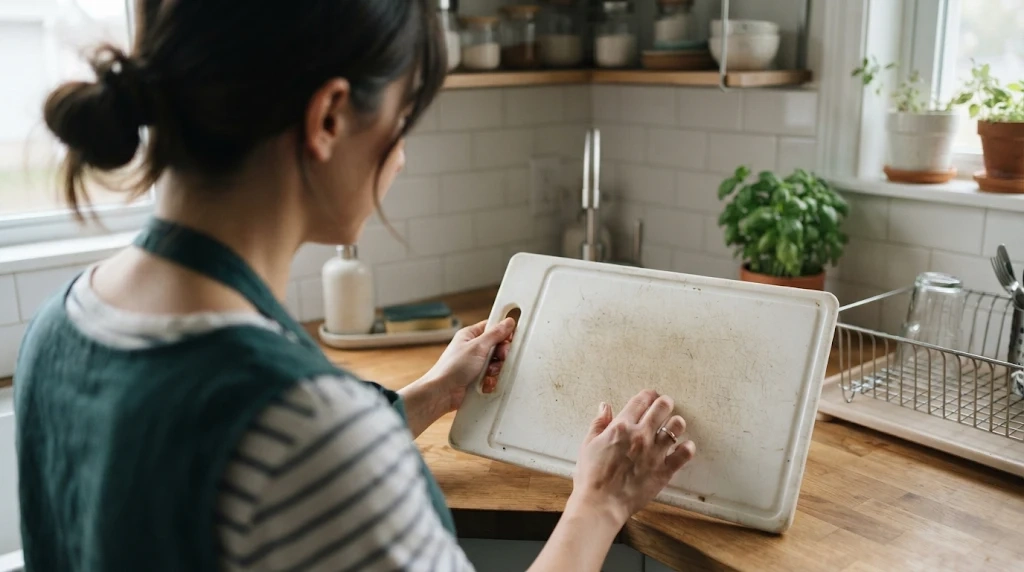
Stop using the board until it has cooled and you can inspect its condition. Serious deformation or melting is a strong reason to replace it.
How to Inspect the Damage
- Allow the board to cool naturally on a suitable surface.
- Check for raised spots, dents, bubbling, or glossy melted patches.
- Place it on a flat counter and check whether it rocks.
- Inspect the surface for cracks and damaged knife grooves.
- Look for peeling, loose fragments, or unusual changes in texture.
- Replace the board if its surface is no longer stable or easy to clean.
Do not attempt to repair melted plastic with a torch, direct flame, or household iron. Such methods can introduce more damage and unsafe heating conditions.
Can a Slightly Warped Board Still Be Used?
A warped board may become unstable even without visible melting. Instability increases the chance of slipping while cutting.
I would replace a board that no longer sits flat. A secure working surface is worth more than keeping a damaged board.
How Do You Clean a Plastic Cutting Board After Hot Food?
Wash the board thoroughly after food preparation. Cleaning removes food residue and helps reduce cross-contamination.
The University of Maine Cooperative Extension provides detailed guidance on choosing, cleaning, sanitizing, and maintaining cutting boards.
Step-by-Step Cleaning Method
- Remove residue: Clear leftover food particles from the surface.
- Wash thoroughly: Use warm or hot water and ordinary dish soap.
- Scrub grooves: Clean around edges and visible knife marks.
- Rinse well: Remove remaining detergent and food debris.
- Sanitize when needed: Follow an appropriate food-contact sanitizing procedure, particularly after raw meat preparation.
- Dry completely: Air-dry or use clean paper towels before storage.
Use a dishwasher only when the board’s instructions allow it. Some plastic cutting boards have specific cleaning-temperature limitations.
Preventing Cross-Contamination
Raw meat can introduce harmful microorganisms onto a cutting surface. Never place cooked food onto a board contaminated by raw meat without thorough cleaning and appropriate sanitizing.
The University of Illinois Extension’s cutting board guidance emphasizes proper board hygiene and food-safe materials.
For everyday cooking, keep separate preparation areas for raw animal products and ready-to-eat foods. Color-coded boards can make this system easier to follow.
What Is the Best Cutting Board for Hot Food?
The best cutting board depends on the type of food, its temperature, and the manufacturer’s guidance. No single material is ideal for every kitchen task.
Plastic for Everyday Preparation
Food-safe plastic is useful for routine chopping and preparing ingredients. Many models are lightweight, nonporous, and easy to wash.
However, standard plastic should never become your default surface for extremely hot cookware.
Wood for Carving and Serving
Well-maintained hardwood can be a practical carving surface. It offers a traditional appearance and works for many ordinary food-preparation tasks.
Still, extreme heat can scorch wood or affect glued joints. Treat wooden cutting boards according to their manufacturer’s instructions.
Composite for Specific Heat-Resistant Applications
Some paper composite boards have manufacturer-stated heat resistance. Their suitability depends on the exact product rather than the material category alone.
Even a heat-resistant board may have restrictions on prolonged exposure or cookware contact. Always check the published product guidance.
Common Mistakes to Avoid When Handling Hot Food
Many cutting-board problems come from using the wrong surface for the job. Small changes in kitchen habits can help prevent unnecessary damage.
- Using plastic as a trivet: Keep hot cookware on properly rated supports.
- Ignoring product instructions: Check heat and dishwasher limitations.
- Resting extremely hot food too long: Choose a suitable dish when prolonged contact is expected.
- Using damaged boards: Replace surfaces with melting, cracks, or severe warping.
- Mixing raw and cooked food: Use clean, separate preparation surfaces.
- Assuming thickness means heatproof: A thick board can still deform.
- Heating a board in appliances: Never place a regular plastic board in the oven.
If you’re unsure about appliance use, see our related article on putting a cutting board in the oven.
Recommended Kitchen Tools for Safe Food Preparation
If you regularly prepare hot meals, I recommend combining a stable cutting board with a dedicated heat-resistant support. These products serve different purposes rather than replacing one another.
The ratings below represent editorial suitability judgments for their stated uses, not measured customer-review averages.
Affiliate disclosure: Some product links below are Amazon affiliate links. We may earn a commission from qualifying purchases at no additional cost to you.
🏆 Best for Carving
OXO Good Grips Carving & Cutting Board
★★★★☆ 4/5 editorial fit
This polypropylene board features non-slip feet, a grooved carving side, and generous space for cutting meat. I like its practical design for ordinary carving and food preparation, but it is not a hot-pan trivet.
⭐ Heat-Resistant Alternative
Epicurean All-in-One Cutting Board
★★★★★ 5/5 editorial fit
This paper composite cutting board includes non-slip silicone feet, a reversible design, and manufacturer-described heat resistance. I would consider it when seeking a composite alternative, while checking the exact temperature limits before using it with hot items.
🔥 Best for Hot Cookware
Lodge Silicone Trivet
★★★★★ 5/5 editorial fit
Lodge offers silicone trivets designed to protect surfaces from hot cookware. I prefer a purpose-built trivet over putting hot pans on plastic, while following the trivet’s stated heat rating and handling instructions.
Frequently Asked Questions
Can You Put Hot Cooked Meat on a Plastic Cutting Board?
Yes, hot cooked meat can be placed on a suitable food-safe plastic board when the product allows that temperature and use. Very hot meat or prolonged contact may increase the risk of damage. Use a clean carving surface and avoid setting hot cookware directly on plastic.
Will Hot Food Melt a Plastic Cutting Board?
Hot food doesn’t automatically melt a plastic cutting board. Melting or deformation depends on the polymer, temperature, and exposure time. Warm food may cause no visible problems, while extremely hot objects can damage some boards. Check manufacturer guidance rather than assuming every plastic board has identical heat resistance.
Is Polypropylene Safer Than HDPE for Hot Food?
Polypropylene generally has a higher melting temperature than HDPE, but that alone doesn’t prove one cutting board is safer for hot food. Manufacturers may use different formulations and designs. Select a board approved for food contact and check its specific operating temperature guidance before exposing it to substantial heat.
Can You Pour Boiling Water on a Plastic Cutting Board?
Avoid pouring boiling water directly onto a plastic cutting board unless the manufacturer explicitly approves that exposure. Boiling water can reach approximately 212°F (100°C) at sea level, and some boards may warp or deform. For cleaning, use the recommended washing or dishwasher method instead.
Should You Replace a Plastic Cutting Board After Heat Damage?
Replace the board if melting, cracking, deep deformation, or severe warping makes it difficult to clean or unsafe for knife work. Minor cosmetic changes require inspection, but no home repair method guarantees the original food-contact properties. When in doubt about significant damage, replacement is the safer practical decision.
Final Verdict: Should You Put Hot Food on Plastic Cutting Boards?
Plastic cutting boards can handle many everyday food-preparation tasks, including suitable warm cooked foods. However, they aren’t universally heat-resistant, and high temperatures can damage some materials.
The distinction is simple: a cutting board handles food preparation, while a trivet handles hot cookware. Keeping those jobs separate helps protect your equipment.
Before your next meal, check your cutting board’s material, condition, and care instructions. If you frequently carve hot food, choose a manufacturer-approved surface and keep a heat-resistant trivet nearby.
My takeaway: Use plastic cutting boards for their intended purpose, avoid excessive heat, and replace damaged surfaces. Those habits support safer, more convenient cooking.

