Can You Cut Directly on Granite Countertops? What You Need to Know
Quick Answer
Yes, you can technically cut directly on granite countertops, but you shouldn’t make it a habit. Granite is harder than most kitchen knife blades, so direct cutting can dull your knives quickly. Although granite resists scratches, its finish and edges are not indestructible. Using a cutting board protects your knives, improves food preparation hygiene, and follows sensible natural stone care recommendations.
Five Reasons to Use a Cutting Board
- Protect knife edges: Hard granite can rapidly wear down a sharpened blade.
- Preserve stone finishes: Avoid unnecessary contact that may leave marks or damage vulnerable areas.
- Improve food hygiene: Separate boards make cross-contamination easier to prevent.
- Increase cutting control: A stable board provides a more predictable preparation surface.
- Simplify cleanup: Move food scraps and juices without spreading them across the countertop.
Best Everyday Choice
- Choose a quality wooden or plastic cutting board with a stable, non-slip base.
Granite countertops are beautiful, durable, and popular in busy kitchens. Their impressive hardness can make cutting directly on the stone seem harmless.
However, a surface that survives knife contact isn’t necessarily a good cutting surface. The difference matters for your knives, countertop maintenance, and food safety.
In this guide, I’ll explain what happens when a blade meets granite, which cutting boards work best, and how to protect your kitchen surfaces.
In This Guide
- Why Shouldn’t You Cut Directly on Granite?
- Can Knives Scratch or Damage Granite Countertops?
- Is Cutting Food Directly on Granite Hygienic?
- What Cutting Boards Work Best on Granite?
- How Can You Protect Granite While Preparing Food?
- What Should You Do After Cutting on Granite?
- Frequently Asked Questions
Why Shouldn’t You Cut Directly on Granite Countertops?
You should avoid cutting directly on granite because its hard surface can damage knife edges and offers little cushioning during cutting. Granite works wonderfully as a countertop, but it wasn’t designed to replace a cutting board.
Granite Is Harder Than Most Kitchen Knife Blades
Granite is a natural igneous rock containing minerals such as quartz and feldspar. These minerals contribute to its exceptional durability and resistance to everyday wear.
Granite commonly contains minerals with hardness values around 6–7 on the Mohs scale. The exact hardness of a slab varies with its mineral composition.
The Mohs scale measures resistance to scratching, not every aspect of material strength. It also cannot directly predict how long a kitchen knife will stay sharp.
Still, the hardness difference explains why granite makes an unforgiving cutting surface.
What Happens to Your Knife Edge?
Kitchen knives depend on thin, carefully sharpened edges. Repeatedly striking a hard stone surface can cause microscopic edge damage.
Several problems may follow:
- Faster dulling: The cutting edge loses its sharpness sooner.
- Edge rolling: Thin sections of steel may bend under pressure.
- Microchipping: Hard or brittle knife edges can develop tiny chips.
- More sharpening: Restoring the blade requires additional maintenance.
- Reduced performance: A damaged edge may crush soft ingredients rather than cut cleanly.
These effects depend on the blade steel, edge geometry, cutting force, and frequency of contact. One accidental cut doesn’t automatically ruin a knife.
Why a Softer Surface Works Better
A good cutting board supports the blade without subjecting it to unnecessary hard impacts. Wood and suitable plastic provide a more forgiving contact surface.
Consider slicing tomatoes with a sharp chef’s knife. A supportive cutting board helps preserve the fine edge needed for clean, controlled slices.
Using granite instead adds avoidable wear without improving the food preparation process.
Section Takeaway: Granite can withstand ordinary kitchen use, but repeated knife contact is hard on blades. A dedicated cutting board is the better long-term choice.
Can Knives Scratch or Damage Granite Countertops?
Most ordinary kitchen knives are unlikely to scratch quality granite deeply during normal cutting. However, granite is scratch-resistant rather than scratch-proof, and its finish can still suffer damage.
Scratches Versus Surface Marks
Not every visible line on granite is a scratch in the stone itself. Some marks involve metal transfer, surface residue, or changes to a coating or finish.
Possible problems include:
- Metal transfer marks: Knife contact may leave a line that resembles a scratch.
- Surface scratches: Hard particles or abrasive objects can damage polished stone.
- Finish wear: Repeated abrasive contact can affect the appearance of some surfaces.
- Edge chips: A strong impact near a vulnerable countertop edge may cause localized damage.
A visible mark doesn’t necessarily mean the stone has been permanently damaged. Its cause needs to be identified before choosing a repair method.
Can Cutting Damage the Granite Sealer?
Some granite countertops receive a penetrating sealer that helps resist liquid absorption and staining. Others may need little additional sealing because of their natural density or factory treatment.
Sealer performance varies by product, stone type, and application. Repeated abrasion is best avoided, particularly on surfaces with topical treatments.
Don’t assume that a sealed granite countertop is immune to scratches, stains, or physical damage.
Are Countertop Edges More Vulnerable?
Granite is strong under ordinary kitchen conditions, but it can chip when struck sharply. Corners, narrow sections, and exposed edges deserve particular care.
Keep heavy knives, meat cleavers, and other metal tools from striking countertop edges. Never use the granite countertop as a chopping block for forceful blows.
Pro tip: For stubborn marks or chipped stone, consult your countertop fabricator before using abrasive pads or polishing compounds.
Section Takeaway: Granite resists routine scratches, but damage is still possible. Protect the finish and edges instead of testing the stone’s toughness with your knife.
Is Cutting Food Directly on Granite Hygienic?
 Save
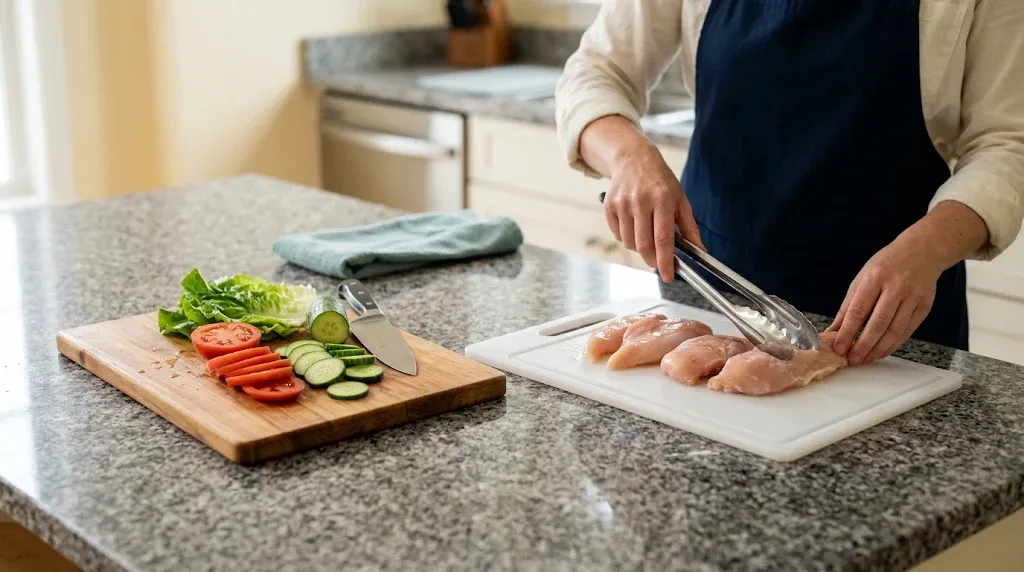
Clean granite can be suitable for normal food contact, but directly cutting ingredients on it isn’t the most practical hygiene method. Separate cutting boards make it easier to manage raw foods and prevent cross-contamination.
Does Granite Harbor Bacteria?
Granite is not automatically an unsafe kitchen material. Properly maintained countertops can support normal food preparation when cleaned appropriately.
However, germs from raw ingredients can contaminate any inadequately cleaned preparation surface. Sealing does not eliminate the need for cleaning.
The key concern is how you handle different food types, especially ingredients eaten without further cooking.
Why Separate Cutting Boards Matter
The USDA’s cutting board guidance recommends separating fresh produce from raw meat, poultry, and seafood when possible.
A simple kitchen setup uses:
- Produce board: For vegetables, fruit, bread, and ready-to-eat foods.
- Raw-protein board: For uncooked meat, poultry, and seafood.
- Clean utensils: For handling food after cooking.
This arrangement helps stop harmful microorganisms from moving between food categories.
For example, I would prepare salad vegetables on a clean produce board before handling raw chicken. The chicken would go on a separate board, keeping its juices away from the salad ingredients.
What About Cutting Raw Meat Directly on Granite?
It’s better to use a dedicated cutting board for raw meat. A removable board can be washed thoroughly after use without spreading juices across the counter.
The FDA’s produce safety guidance also emphasizes keeping raw animal products separate from foods that won’t undergo further cooking.
Using a cutting board doesn’t replace proper washing. It simply makes a safe preparation routine easier to follow.
Section Takeaway: The biggest hygiene advantage of cutting boards is food separation. Keep raw meat away from ready-to-eat ingredients and clean every preparation surface properly.
What Are the Best Cutting Boards for Granite Countertops?
 Save
Wooden and quality plastic cutting boards are excellent everyday options for granite countertops. The best choice balances knife protection, cleaning convenience, stability, and durability.
A cutting board is a portable food-preparation surface designed to support slicing, chopping, and cutting. Unlike granite, a suitable board provides a more forgiving surface for a knife’s edge.
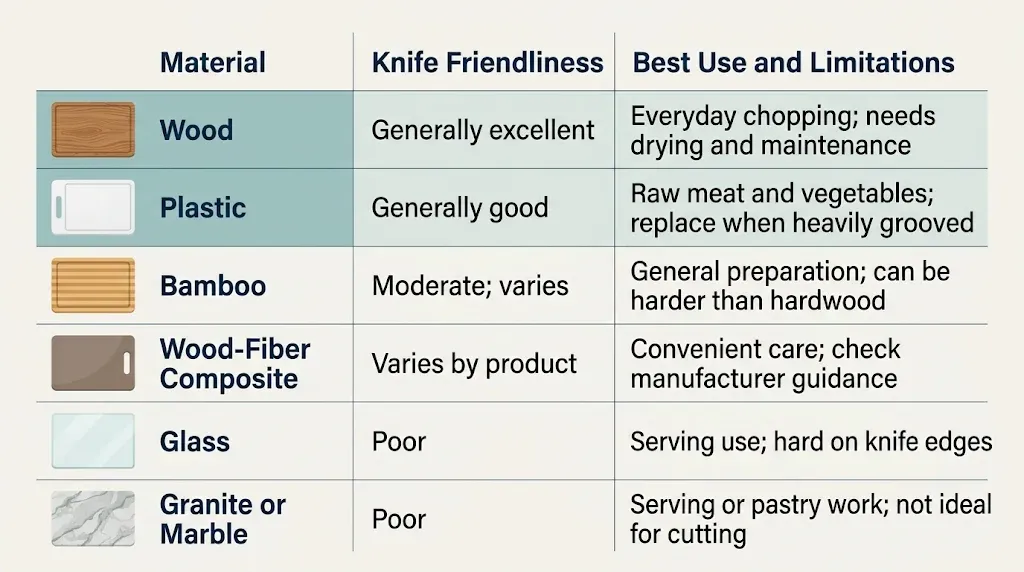
Cutting Board Materials Compared
| Material | Knife Friendliness | Best Use and Limitations |
|---|---|---|
| Wood | Generally excellent | Everyday chopping; requires careful drying and maintenance. |
| Plastic | Generally good | Raw meat and vegetables; replace when heavily grooved. |
| Bamboo | Moderate; varies | General food prep; often harder than many hardwood boards. |
| Wood-fiber composite | Varies by product | Convenient maintenance; check hardness and manufacturer guidance. |
| Glass | Poor | Easy to wipe clean, but extremely hard on knife edges. |
| Granite or marble | Poor | Better for serving or pastry work than repeated knife cutting. |
Are Wooden Cutting Boards Good for Granite?
Yes. A quality wooden board offers a useful combination of stability, durability, and knife-friendly performance.
Maple and walnut are popular hardwood choices. Their performance depends on grain structure, finish, construction, and maintenance.
Look for these practical features:
- A flat base that sits securely on polished stone.
- Enough thickness to resist excessive movement.
- A smooth, food-safe cutting surface.
- A size that comfortably fits your countertop.
- A juice groove if you frequently prepare juicy ingredients.
For many everyday kitchens, a board around 12 × 18 inches offers useful preparation space. Smaller boards may suit apartments and limited counters.
Most wooden cutting boards should be washed by hand and dried promptly. Follow the manufacturer’s instructions for oiling and other maintenance.
Are Plastic Cutting Boards Better for Raw Meat?
Plastic boards are convenient for raw meat because many can tolerate dishwasher cleaning. Confirm that your specific board is dishwasher-safe before using that method.
They are also lightweight, affordable, and available in several sizes. Color-coded boards can help distinguish raw-protein preparation from ready-to-eat foods.
Plastic is not maintenance-free, though. Deep knife grooves can become difficult to clean and indicate that replacement is needed.
Should You Use Glass or Stone Cutting Boards?
Glass and stone boards may look attractive beside granite countertops. However, their hardness makes them poor choices for regular knife work.
These materials are better reserved for serving, presentation, or suitable non-cutting tasks. They can also become slippery without a secure base.
For everyday chopping, I favor a stable wooden board and a separate washable plastic board for raw proteins. This setup addresses both knife care and practical kitchen hygiene.
Section Takeaway: Choose wood or appropriate plastic for daily cutting. Avoid treating decorative glass or stone serving boards as substitutes for knife-friendly surfaces.
How Can You Protect Granite While Preparing Food?
The simplest way to protect granite is to keep cutting, heavy impacts, and abrasive cleaning away from the stone. A consistent preparation routine makes countertop care easier.
Use a Stable Cutting Board
A cutting board that slides during chopping creates a safety risk. Polished granite can provide a particularly smooth surface, so board stability matters.
Use these steps before preparing ingredients:
- Clean and dry the granite beneath your board.
- Choose a flat board with non-slip feet or a suitable non-slip mat.
- Place the board away from countertop edges.
- Check that it doesn’t move under light pressure.
- Keep ingredients within the board’s cutting area.
- Use controlled chopping motions instead of excessive force.
A damp towel beneath a board may help prevent sliding, provided it stays flat and secure. A purpose-made non-slip mat is another practical option.
Clean the Countertop After Food Preparation
Everyday granite cleaning usually requires little more than a gentle cleaner and soft cloth. Avoid harsh products unless the stone or sealer manufacturer specifically approves them.
A straightforward cleaning routine looks like this:
- Remove crumbs, food scraps, and loose debris.
- Wipe the surface with warm water and mild dish soap or a suitable stone cleaner.
- Rinse away remaining cleaning solution.
- Dry the surface with a clean microfiber cloth.
- Address spills promptly to reduce the chance of staining.
The CDC’s food safety recommendations advise washing countertops and cutting boards after preparing food, especially raw animal products.
When sanitizing is needed, select a product and method approved for your particular stone finish. Never assume a strong household disinfectant is safe for granite or its sealer.
Should You Seal Granite Countertops?
Some granite countertops benefit from sealing, while others need little or no additional treatment. The stone’s porosity, finish, and existing treatment determine the appropriate approach.
The Natural Stone Institute’s sealing guidance explains that many granite surfaces are naturally moisture-resistant.
Sealers improve resistance to some liquids and stains. They do not turn granite into a scratch-proof cutting board.
Ask your countertop supplier which sealer, if any, is recommended. Avoid applying products on a fixed schedule without considering the stone and manufacturer’s instructions.
Other Habits That Help Protect Granite
- Use trivets beneath hot pans and appliances as a precaution.
- Clean spills before they sit for extended periods.
- Avoid dragging rough ceramic or metal objects across polished stone.
- Keep heavy objects away from vulnerable countertop edges.
- Don’t use abrasive scouring powders for routine cleaning.
- Keep dedicated cutting boards accessible during meal preparation.
These habits don’t require special equipment or expensive countertop treatments. They reduce unnecessary wear during ordinary cooking.
Section Takeaway: Protecting granite comes down to sensible daily habits. Keep your cutting board stable, clean the surface gently, and follow your countertop supplier’s care instructions.
What Should You Do If You’ve Already Cut Directly on Granite?
 Save
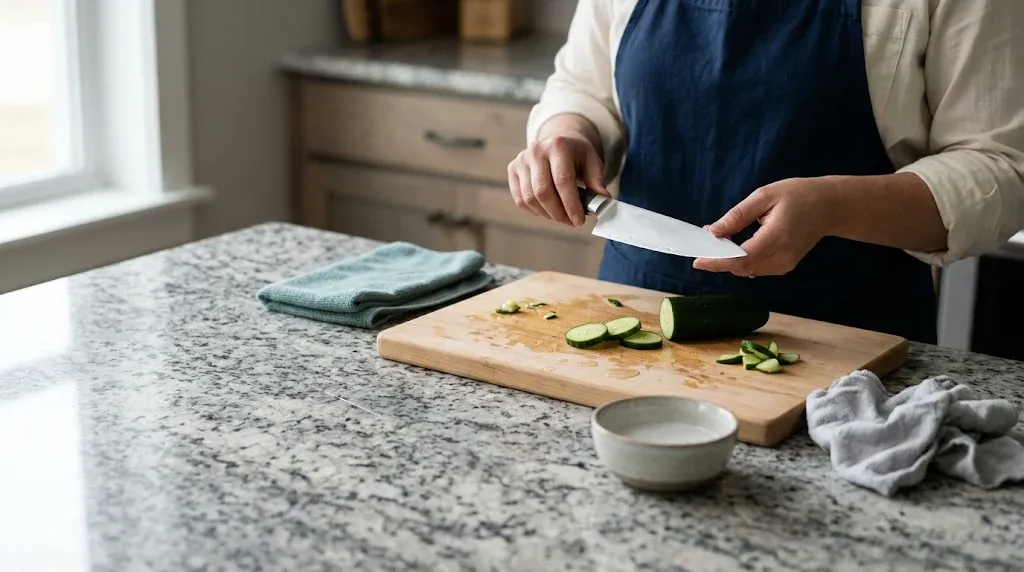
If you’ve already cut food directly on granite, don’t assume you’ve caused permanent damage. Inspect the knife and countertop, then clean the work area thoroughly.
Check Your Kitchen Knife First
The knife edge is often more vulnerable than the granite. A blade may look normal while its cutting performance has deteriorated.
Inspect it carefully without running a finger along the sharp edge.
- Look for visible chips or irregularities in the blade.
- Notice whether the knife struggles with foods it previously cut easily.
- Check for bent or damaged sections near the edge.
- Consider professional sharpening if the edge is damaged.
Minor dullness may respond to suitable sharpening equipment. A chipped or severely damaged blade may need professional attention.
Inspect the Granite Surface
Clean and dry the affected area before checking for scratches. Residue can resemble damage when viewed under kitchen lighting.
Examine the surface from different angles. Look for lines, chipped edges, or changes in the finish.
Don’t immediately scrub visible marks with steel wool or aggressive abrasives. The wrong treatment may turn a minor cosmetic problem into a larger repair.
Contact the stone installer if a mark remains after gentle cleaning. They can distinguish surface residue from damage that needs professional restoration.
Clean Any Food Contact Area
If vegetables or other ready-to-eat ingredients touched the countertop, clean the preparation area before moving to another task.
If raw meat or poultry contacted the granite, follow appropriate cleaning and sanitizing guidance for your specific surface. Keep those foods and their juices away from produce and cooked meals.
Finally, place a cutting board in an accessible location. Convenient storage makes it easier to avoid direct cutting the next time you cook.
Section Takeaway: A few accidental cuts rarely justify panic. Check for damage, clean the surface properly, and use a suitable cutting board going forward.
Frequently Asked Questions
Can you chop vegetables directly on granite countertops?
You can technically chop vegetables on clean granite, but using a cutting board is better. The hard stone can dull your knife, and a separate board makes moving chopped vegetables easier.
A stable wooden or plastic board also helps keep your food preparation organized.
Will cutting directly on granite ruin my knives?
One accidental cut won’t necessarily ruin a kitchen knife. However, repeatedly cutting against granite can accelerate dulling and potentially damage a delicate blade edge.
Sharp knives benefit from a more forgiving cutting surface, such as quality wood or suitable plastic.
Can a kitchen knife scratch granite countertops?
Most ordinary kitchen knives are unlikely to produce deep scratches in typical granite during light cutting. However, granite isn’t completely scratch-proof, and marks or damage to certain finishes remain possible.
Avoid dragging sharp metal objects or abrasive particles across the surface.
Is granite more hygienic than a wooden cutting board?
Neither material guarantees food safety simply because of what it’s made from. Hygiene depends on cleaning, maintenance, and preventing cross-contamination.
Properly maintained wood can be a suitable cutting surface. Separate boards for raw animal products and ready-to-eat foods provide an important practical safeguard.
What is the safest cutting board for granite countertops?
A stable wooden or food-grade plastic cutting board is a good option for most home kitchens. Choose a board that doesn’t slide, is large enough for the task, and is easy to clean.
Using separate boards for raw proteins and other ingredients adds another layer of protection.
Can you use a granite cutting board instead of a wooden one?
A granite board can be useful for serving food or certain pastry tasks. It isn’t an ideal everyday cutting surface because its hardness can damage knife edges.
Choose wood or suitable plastic when slicing vegetables, chopping herbs, or preparing meat.
Does sealing granite make it safe to cut directly on?
Sealing may improve granite’s resistance to liquid absorption and staining, but it doesn’t make the surface knife-friendly. A sealer also doesn’t eliminate the need for food-safe cleaning practices.
Even properly sealed granite benefits from the protection of a separate cutting board.
Is it okay to cut pizza directly on a granite countertop?
A pizza cutter may contact granite without immediately damaging the stone, but repeated contact can wear the cutter’s edge. A wooden pizza board or suitable cutting surface is preferable.
It also makes serving easier while keeping the countertop cleaner.
Can granite countertops chip from chopping meat?
Forceful impacts can chip granite, particularly near exposed edges or existing weak points. Ordinary slicing is less likely to cause this kind of damage.
Avoid striking the countertop with heavy cleavers or other cutting tools. Use a durable chopping block designed for that purpose instead.
How do you keep a cutting board from sliding on granite?
Choose a board with effective non-slip feet or place an appropriate non-slip mat underneath it. Some cooks use a flat, damp towel for extra grip.
Always check that the board remains stable before chopping, and keep it safely away from countertop edges.
Is granite better than quartz for cutting directly on?
Neither granite nor engineered quartz is recommended as a regular cutting surface. Both are hard materials that can dull knife edges, even though their compositions and surface-care requirements differ.
Use a separate cutting board and follow the specific maintenance guidance for your countertop material.
Final Takeaway: Use a Cutting Board, Not Your Granite
Granite countertops are durable enough to handle the demands of everyday cooking, but durability doesn’t make them ideal for direct cutting. Their hardness works against the fine edges of kitchen knives.
A wooden or plastic cutting board offers better knife protection, easier ingredient handling, and a practical way to separate raw foods.
My recommendation is simple: keep a reliable cutting board within easy reach and make it part of every meal preparation routine.
You’ll protect your kitchen tools, reduce unnecessary countertop wear, and make food preparation easier to manage.
Ready to improve your kitchen setup? Start with two stable cutting boards: one for produce and ready-to-eat foods, and another for raw meat, poultry, and seafood. It’s a small change with useful everyday benefits.

