Can You Use Coconut Oil on a Cutting Board? Safety, Benefits, and Better Alternatives
Quick Answer
Yes, you can use coconut oil on a wooden cutting board, but ordinary virgin coconut oil isn’t the best choice for long-term conditioning. It can oxidize, develop unpleasant odors, or leave residue over time. Food-grade mineral oil is generally more reliable. If you prefer coconut-derived products, choose a board conditioner specifically formulated for food-contact surfaces. For routine maintenance, follow a proven method for oiling a wooden cutting board.
What You Should Know
- Generally food-safe: Plain edible coconut oil isn’t inherently toxic when used on a clean food-contact board.
- Rancidity risk: Ordinary coconut oil can deteriorate during prolonged exposure to air.
- Possible residue: Thick applications can create a greasy or waxy surface.
- Better alternative: Food-grade mineral oil remains a dependable conditioning option.
- Plant-based option: Consider a properly formulated, food-contact-safe fractionated coconut oil product.
My Recommendation
- For regular maintenance: Use food-grade mineral oil or a manufacturer-approved board conditioner.
- For occasional coconut oil use: Apply a very thin layer, remove excess, and monitor for odors or stickiness.
Coconut oil is common in kitchens, so using it to condition a cutting board sounds convenient. However, an edible oil isn’t automatically an ideal wood conditioner.
I prefer keeping cutting board maintenance simple and predictable. In this guide, I’ll explain when coconut oil makes sense, what can go wrong, and which alternatives deserve consideration.
Is Coconut Oil Safe for Wooden Cutting Boards?
Plain, edible coconut oil is generally safe for incidental food contact on a cutting board. However, its suitability for long-term wood maintenance is a separate question.
Coconut oil is a plant-derived fat extracted from coconuts. It contains a relatively high proportion of saturated fatty acids, which makes it more oxidation-resistant than many common cooking oils.
That doesn’t mean it lasts indefinitely. Its quality still changes with storage conditions, temperature, light, and exposure to oxygen.
Why People Use Coconut Oil on Wood
Coconut oil is appealing because it’s widely available and simple to apply. It can temporarily darken dry wood and give the surface a conditioned appearance.
- Availability: Many households already have coconut oil in the pantry.
- Plant origin: It appeals to people seeking plant-derived maintenance products.
- Appearance: It can make wood grain look richer after application.
- Spreadability: Warmed coconut oil spreads easily across wooden surfaces.
- Food compatibility: Plain culinary coconut oil is intended for consumption.
These benefits explain its popularity, but they don’t remove its limitations. The most important concern is how the oil behaves after remaining on wood.
Does Food-Safe Mean Ideal for Cutting Boards?
No. Food-safe describes whether a substance is suitable for its intended food-contact use, not whether it performs well as a long-term wood conditioner.
Cooking oils can degrade or form unpleasant residues. A dedicated cutting board product should provide stable conditioning without unwanted ingredients.
The University of Maine Cooperative Extension recommends food-safe mineral oil or beeswax for regular wooden board conditioning. It also cautions against cooking oils that may become sticky or rancid.
Does Coconut Oil Go Rancid on a Cutting Board?
Yes, coconut oil can eventually become rancid on a cutting board. Although it resists oxidation better than many unsaturated cooking oils, it isn’t immune to deterioration.
Rancidity happens when fats undergo chemical changes that affect their smell and flavor. Thin oil films exposed to air can deteriorate differently from oil stored in a sealed container.
Signs Your Coconut Oil May Have Deteriorated
Inspect the board before preparing food, particularly after it has been stored for a long period. Watch for changes in odor, surface texture, and appearance.
- Unpleasant smell: A stale, sour, or unusual fatty odor may indicate deterioration.
- Sticky surface: Residue may remain after repeated applications.
- Greasy patches: Excess oil may collect in uneven areas or knife marks.
- Changed appearance: Discoloration or unusual residue deserves closer inspection.
- Unwanted flavor: An off-smelling board should not contact food until properly cleaned.
Not every sticky board contains rancid oil. Applying too much fresh coconut oil can also create residue.
How Long Does Coconut Oil Last on Wood?
There is no reliable universal lifespan for coconut oil applied to a cutting board. Temperature, humidity, oil quality, application thickness, and cleaning frequency all affect its condition.
A thin coat may disappear through repeated washing, while excessive oil can remain on the surface. Avoid relying on an arbitrary number of weeks as a safety guarantee.
Practical tip: If a coconut-oiled board develops persistent odors or stickiness, stop adding oil. Clean it thoroughly and reassess the surface before further use.
Coconut Oil vs. Mineral Oil: Which Is Better for Cutting Boards?
 Save
Food-grade mineral oil is the better everyday choice for most unfinished wooden cutting boards. It is chemically stable, generally odorless, and widely recommended for routine conditioning.
Coconut oil may work temporarily, but ordinary kitchen varieties have more uncertainty about residue and long-term odor development.
Cutting Board Oil Comparison Table
| Oil Type | Oxidation / Rancidity | Suitability | Recommendation |
|---|---|---|---|
| Food-grade mineral oil | Resists the rancidity associated with edible fats | Excellent for unfinished wood | Best routine choice |
| Virgin coconut oil | Can deteriorate over time | Usable occasionally, with limitations | Not preferred |
| Fractionated coconut oil | Generally more oxidation-resistant | Depends on product formulation | Choose food-contact-labeled products |
| Mineral oil and beeswax | Stable when properly formulated | Excellent surface conditioner | Good for extra surface protection |
| Olive oil | Can oxidize and become rancid | Poor for long-term conditioning | Avoid |
| Generic vegetable oil | Varies; can oxidize and form residue | Unpredictable for routine care | Avoid |
The comparison explains why mineral oil remains so popular. It provides predictable conditioning without relying on the shelf stability of cooking fats.
Always use a mineral oil clearly labeled for food-contact wood maintenance. Industrial lubricants, fragranced oils, and unknown mineral oil products aren’t suitable substitutes.
Can You Use Fractionated Coconut Oil on a Cutting Board?
Yes, some food-contact-safe fractionated coconut oil formulations can condition wooden cutting boards. However, not every product labeled fractionated coconut oil is intended for kitchen surfaces.
Fractionation separates selected fat components to create an oil with different physical properties. Many fractionated coconut oils remain liquid at ordinary room temperatures.
Fractionated Coconut Oil vs. Virgin Coconut Oil
- Virgin coconut oil: A traditional coconut fat that commonly becomes solid in cooler rooms.
- Fractionated coconut oil: A processed coconut-derived oil that often stays liquid.
- Oxidative stability: Certain fractionated formulations resist oxidation better than ordinary coconut oil.
- Labeling: Food-contact suitability depends on the actual formulation and intended use.
- Best application: Choose a purpose-made board conditioner with clear manufacturer instructions.
Don’t assume a cosmetic massage oil is suitable for food preparation. Fragrances, essential oils, or other additives may make it inappropriate.
How Do You Apply Coconut Oil to a Cutting Board?
 Save
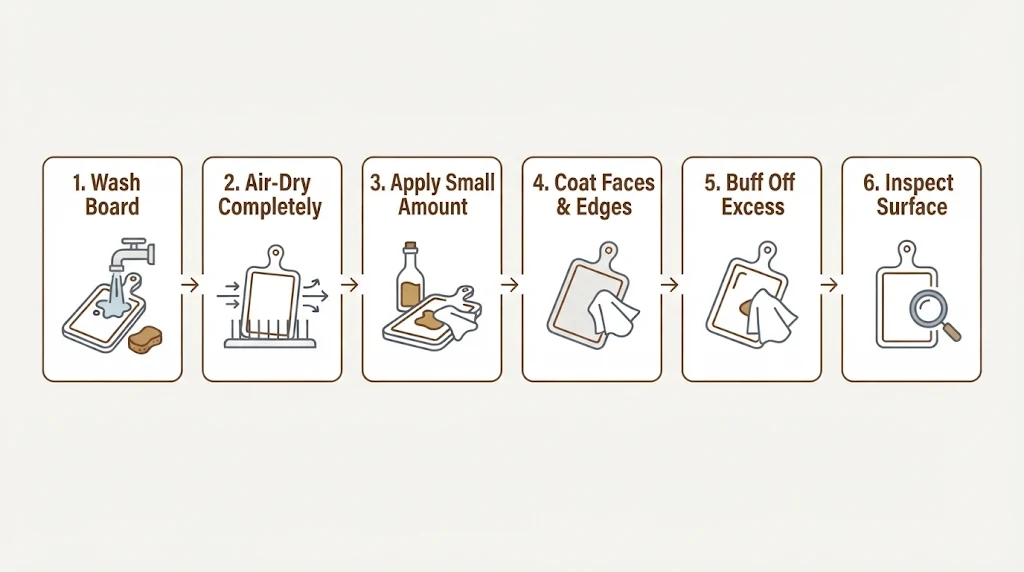
Start with a clean, completely dry wooden board and apply only a small amount of plain coconut oil. Spread it thinly, remove excess, and inspect the surface before use.
This process is for an occasional application, not my preferred long-term maintenance routine. For consistent care, I would choose food-grade mineral oil instead.
What You’ll Need
- A clean wooden cutting board
- Plain, edible coconut oil without added fragrance
- Mild dishwashing soap
- Warm water
- A clean sponge
- Two clean, lint-free cloths
- A ventilated drying area
Step 1: Wash the Cutting Board
Remove food particles and wash the board using warm water and mild dishwashing soap. Rinse thoroughly without leaving the wood submerged.
Proper cleaning is essential because oil doesn’t remove bacteria or trapped food residue. The FoodSafety.gov cleaning guidance emphasizes washing utensils and food-preparation surfaces after use.
Step 2: Allow the Wood to Dry Completely
Use a clean towel to remove visible moisture. Stand the board upright in a ventilated location until completely dry.
Avoid applying oil over damp wood. Moisture trapped around joints and deep grooves can complicate maintenance.
Step 3: Apply a Small Amount of Coconut Oil
Place a small amount of oil on a clean cloth. If the oil is solid, allow it to soften naturally before spreading.
Work across the cutting surface using light, even strokes. Avoid leaving thick deposits around edges and corners.
Step 4: Cover Both Sides and Edges
Apply an equally thin coat to the opposite face and exposed edges. The goal is consistent conditioning, not a glossy layer of oil.
Pay attention to the end grain where wood fibers are exposed. These areas can absorb conditioning products differently.
Step 5: Remove Excess Oil
Wipe away remaining surface oil with another clean cloth. Continue buffing until the board doesn’t feel excessively greasy.
Allow the surface to settle according to its condition before preparing food. Don’t leave puddles of coconut oil sitting on the wood.
Step 6: Inspect Before Using
Check for unusual odors, sticky patches, and visible residue. Wash the board again if the surface doesn’t feel clean.
If your board repeatedly develops residue, switch to a dedicated conditioning product. Adding more coconut oil will not solve the problem.
What Are the Disadvantages of Using Coconut Oil on Cutting Boards?
The main disadvantages are possible rancidity, greasy buildup, and inconsistent performance. These problems matter most when you condition the board repeatedly over months.
Potential Problems
- Unwanted odors: Old cooking fat can develop a stale smell.
- Sticky buildup: Excess oil may cling to the surface or collect in shallow cuts.
- Temperature sensitivity: Ordinary coconut oil changes consistency as temperatures fluctuate.
- Extra maintenance: You may need to remove residue before applying a different conditioner.
- Product differences: Refined, virgin, and fractionated oils don’t have identical properties.
These risks don’t mean a single light application automatically ruins a board. They explain why culinary coconut oil isn’t my first recommendation.
How Do You Remove Coconut Oil From a Cutting Board?
Remove unwanted coconut oil by washing the board thoroughly with mild soap and warm water. Dry it completely before deciding whether further treatment is needed.
Removing Greasy or Sticky Residue
- Scrape gently: Remove visible deposits using a suitable non-sharp scraper.
- Wash: Scrub both surfaces with warm, soapy water.
- Rinse: Remove all soap and loose residue.
- Dry: Wipe with a clean towel and stand upright to air-dry.
- Inspect: Check for lingering grease, odors, and damage.
- Repeat if necessary: Wash again rather than applying additional oil over residue.
If the board remains persistently smelly or cannot be cleaned effectively, discontinue food preparation on it. A damaged board may require replacement.
For a structurally sound board with surface wear, see the detailed instructions on how to refinish a cutting board. Refinishing should address the wood’s condition rather than simply hiding residue under fresh oil.
How Often Should You Oil a Wooden Cutting Board?
Inspect your board regularly and condition it when the wood appears dry. Approximately monthly oiling is a useful starting point for many unfinished wooden boards.
The actual schedule depends on washing frequency, climate, wood type, and manufacturer guidance. A heavily used board may need attention sooner.
Signs Your Cutting Board Needs Conditioning
- The wood looks pale or noticeably dry.
- The surface feels slightly rough after cleaning.
- Water absorbs quickly into exposed wood.
- The board has experienced frequent washing.
- The manufacturer’s recommended maintenance interval has passed.
Oiling doesn’t make wood waterproof. Good washing and drying practices remain essential for controlling moisture damage.
If the board has started bending or twisting, review the guidance on preventing cutting board warping. Conditioning is only one part of protecting wood from uneven moisture exposure.
Can Coconut Oil Prevent Bacteria on Cutting Boards?
No. Don’t rely on coconut oil to sanitize a cutting board or prevent foodborne illness. Board conditioning and food-contact sanitation serve different purposes.
A coconut oil coating doesn’t replace removing food residue, washing with soap, or sanitizing when appropriate. Even a well-conditioned wooden board can become contaminated.
Essential Cutting Board Safety Practices
- Wash after use: Clean with hot, soapy water and rinse thoroughly.
- Separate foods: Use different boards for raw animal products and ready-to-eat foods when possible.
- Sanitize when needed: Follow appropriate food-contact sanitation guidance.
- Dry completely: Don’t store a wet cutting board against another surface.
- Replace damaged boards: Discard boards with excessive wear or grooves that cannot be cleaned properly.
The USDA Food Safety and Inspection Service recommends washing boards between food-preparation tasks and using separate boards for raw meat and fresh produce where possible.
For additional sanitation and maintenance advice, consult the University of Illinois Extension cutting board guidance. Food safety should always take priority over cosmetic wood care.
Which Cutting Boards Should You Avoid Oiling?
Not every cutting board needs coconut oil, mineral oil, or a wood conditioner. Material type and the original surface finish determine appropriate maintenance.
Material-Specific Considerations
- Unfinished hardwood: Usually benefits from suitable food-safe conditioning.
- Bamboo: May benefit from manufacturer-approved conditioning products.
- Plastic: Does not need oiling; focus on washing and surface condition.
- Glass: Does not absorb wood conditioner and shouldn’t be oiled.
- Stone or marble: Follow manufacturer-specific sealing and cleaning instructions.
- Factory-sealed wood: Follow the original coating manufacturer’s maintenance directions.
Don’t apply oil to a board simply because it looks dull. First determine whether its material and finish require conditioning.
What Is the Best Alternative to Coconut Oil for Cutting Boards?
Food-grade mineral oil is my first choice for straightforward wooden board maintenance. A mineral oil and beeswax conditioner is another practical option when extra surface protection is desired.
Why I Prefer Mineral Oil
My practical rule is to choose a conditioner designed specifically for wooden food-preparation surfaces. This reduces uncertainty about ingredients, application, and long-term maintenance.
I also favor simple routines that are easy to repeat. Cleaning, complete drying, light conditioning, and thorough buffing cover most regular maintenance needs.
When Beeswax Makes Sense
Beeswax-based board conditioners can provide an additional surface layer. They are commonly combined with food-grade mineral oil to make spreading easier.
Always check the ingredients before purchasing. A board cream containing fragrance or unverified additives may be inappropriate for direct food-contact surfaces.
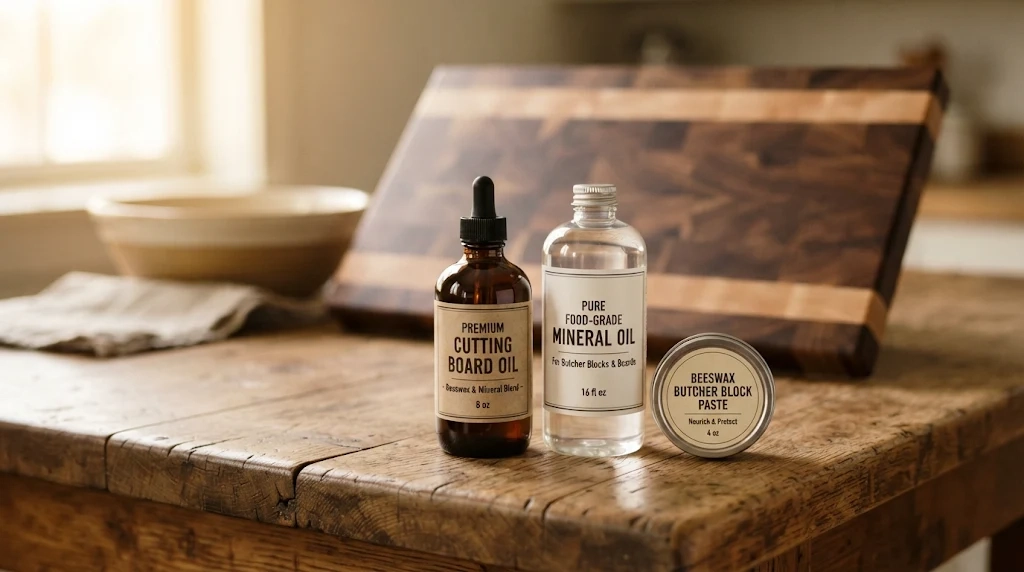
Recommended Cutting Board Oils and Conditioners
 Save
If you’re ready to maintain your wooden cutting board, these established products are worth comparing. My selections focus on intended use and formulation rather than unverified customer review scores.
Disclosure: As an Amazon Associate, this website may earn from qualifying purchases. Prices and availability may change.
🏆 Best for Routine Oiling
John Boos Mystery Oil
★★★★★ 4.8/5 editorial fit
A food-safe conditioner marketed for butcher blocks and wooden cutting boards. I would shortlist it for straightforward routine care because it is designed specifically for wood used in food preparation.
💰 Best Simple Mineral Oil Option
Thirteen Chefs Food Grade Mineral Oil
★★★★☆ 4.7/5 editorial fit
A mineral oil product intended for wood kitchenware and cutting boards. I like the uncomplicated single-purpose approach for people who want routine conditioning without a wax finish.
🛡️ Best Wax-Based Conditioner
Howard Butcher Block Conditioner
★★★★☆ 4.7/5 editorial fit
A conditioner made with food-grade mineral oil and wax ingredients for wood kitchen surfaces. I would consider it when a board needs conditioning plus a light wax-based surface finish.
Buying tip: Read the latest label and application instructions before purchasing. These editorial suitability scores aren’t Amazon customer ratings or results from hands-on product testing.
Frequently Asked Questions
Can I use virgin coconut oil on my wooden cutting board?
Yes, plain virgin coconut oil can be used occasionally on a clean wooden cutting board. However, it can deteriorate or leave greasy residue over time. For regular conditioning, food-grade mineral oil or a purpose-made board conditioner is a more predictable option.
Is refined coconut oil better than unrefined coconut oil for cutting boards?
Refined coconut oil typically has a milder aroma than virgin coconut oil, but neither is my preferred long-term board conditioner. Both contain edible fats that can change during storage. A properly formulated food-contact-safe fractionated coconut oil product may offer better stability.
Will coconut oil make my cutting board waterproof?
No. Coconut oil may temporarily reduce how readily exposed wood absorbs moisture, but it doesn’t create a permanent waterproof barrier. Washing, careful drying, and appropriate maintenance remain essential. Never leave a wooden cutting board submerged in water just because it has been oiled.
Can I use coconut oil on a bamboo cutting board?
Plain coconut oil may temporarily condition bamboo, but it isn’t the most dependable long-term choice. Many bamboo board manufacturers recommend food-grade mineral oil or a dedicated wood conditioner. Check the board’s original care instructions, particularly if it has a factory-applied finish.
What happens if I accidentally use too much coconut oil?
Too much coconut oil can make the cutting board slippery, greasy, or sticky. Wipe off excess oil with a clean cloth, then wash with mild dish soap if residue remains. Dry the board thoroughly before use and avoid adding another coat until the surface is clean.
Final Verdict: Should You Use Coconut Oil on a Cutting Board?
Yes, coconut oil can be used occasionally, but I wouldn’t choose ordinary pantry coconut oil as my regular cutting board conditioner. The possible odor, rancidity, and residue issues make dedicated products more practical.
Food-grade mineral oil is a dependable starting point for unfinished wooden boards. A compatible mineral oil and beeswax conditioner is also worth considering.
The most important habit is consistent care. Clean your board after use, dry it completely, inspect for damage, and condition it when needed.
Your next step: Check your cutting board’s surface today. If it looks dry, follow its manufacturer-approved conditioning instructions rather than applying a thick coat of cooking oil.

