10 Best Skinning and Boning Knife for Precision Meat Preparation
Skinning and boning knives help us remove hide, fat, meat, and connective tissue with better control than a general-purpose kitchen knife. Their narrow, flexible blades can follow the shape of an animal or fish, making them useful for hunters, anglers, butchers, and home cooks who prepare meat regularly.
The best skinning and boning knives combine a sharp, durable blade with a comfortable handle and enough flexibility for precise cuts. When choosing one, we pay close attention to blade shape, steel quality, edge retention, flexibility, grip, and ease of cleaning. The right balance depends on whether we mostly process game, poultry, fish, or larger cuts of meat.
We tested and compared skinning and boning knives to find options that offer reliable control, comfortable handling, and practical performance across common preparation tasks.
Best Skinning and Boning Knives
We reviewed skinning and boning knives for blade quality, comfort, control, and ease of cleaning. Our list highlights the best options for preparing meat, trimming fat, and removing bones.
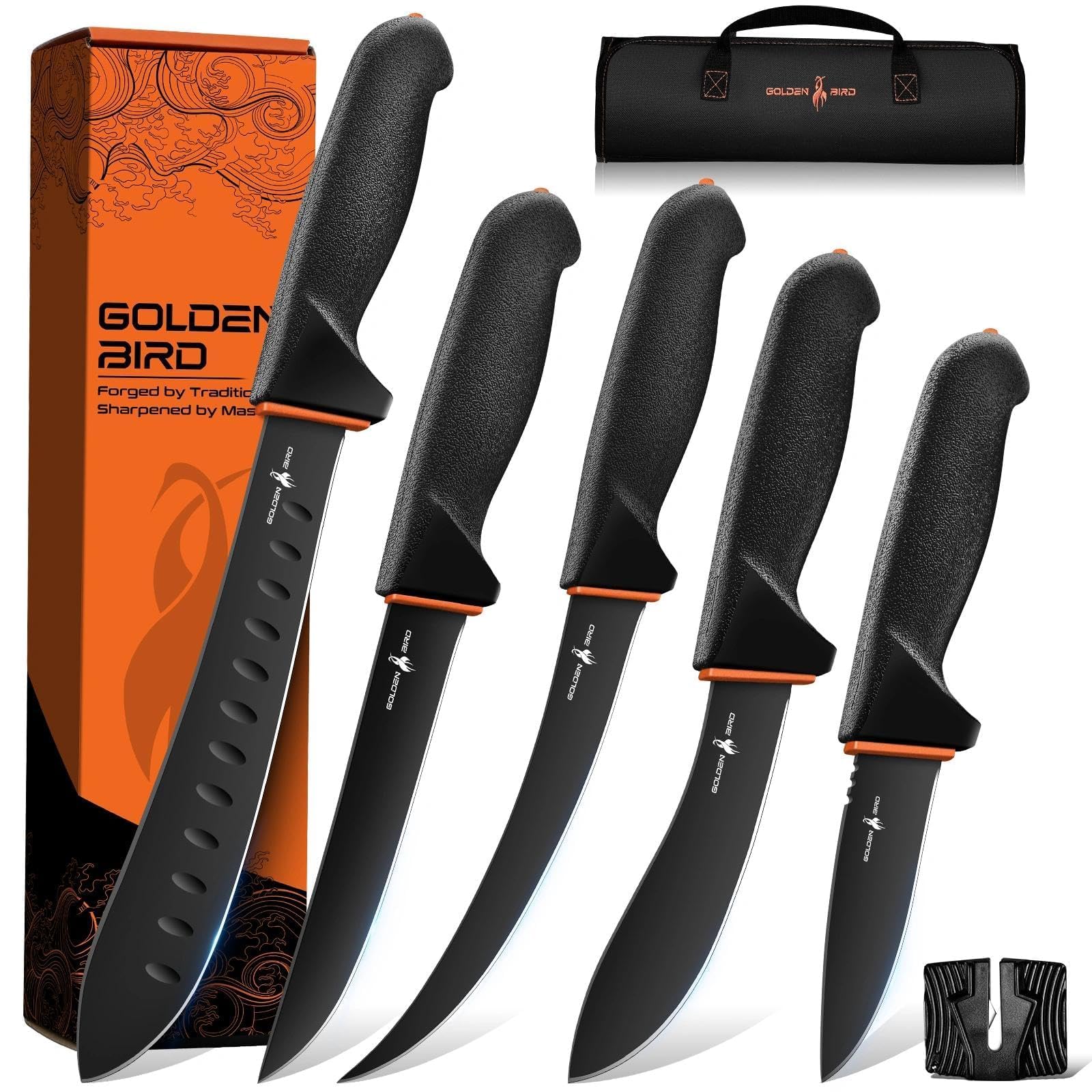
Golden Bird Butcher Knife Set
 Save
SaveWe recommend this set for hunters and home butchers who want several useful knives in one portable kit.
Key Pros
- Includes skinning, boning, and butcher knives
- Handles stay comfortable during wet, greasy work
- Roll bag keeps the set organized
Key Cons
- Some handles may squeak during use
- The butcher knife can feel flexible on heavy cuts
- The included sharpener may not replace a proper sharpening system
We found the knife selection practical for breaking down meat. The boning knife handled silver skin and trimming well, while the skinning knife gave us good control around curves and joints.
The textured plastic handles felt secure when our hands became wet. They also stayed comfortable during longer sessions, although one handle may make an irritating squeaking sound.
The stainless steel blades arrived sharp and worked well for meat, poultry, trimming, and outdoor cooking. The larger butcher knife felt better suited to regular cuts than forceful work through dense beef or bone.
Everything fits into the included roll bag, which makes transport simple for camp, an outdoor kitchen, or a processing area. The set offers good value when we need a broad range of knives without buying each piece separately.
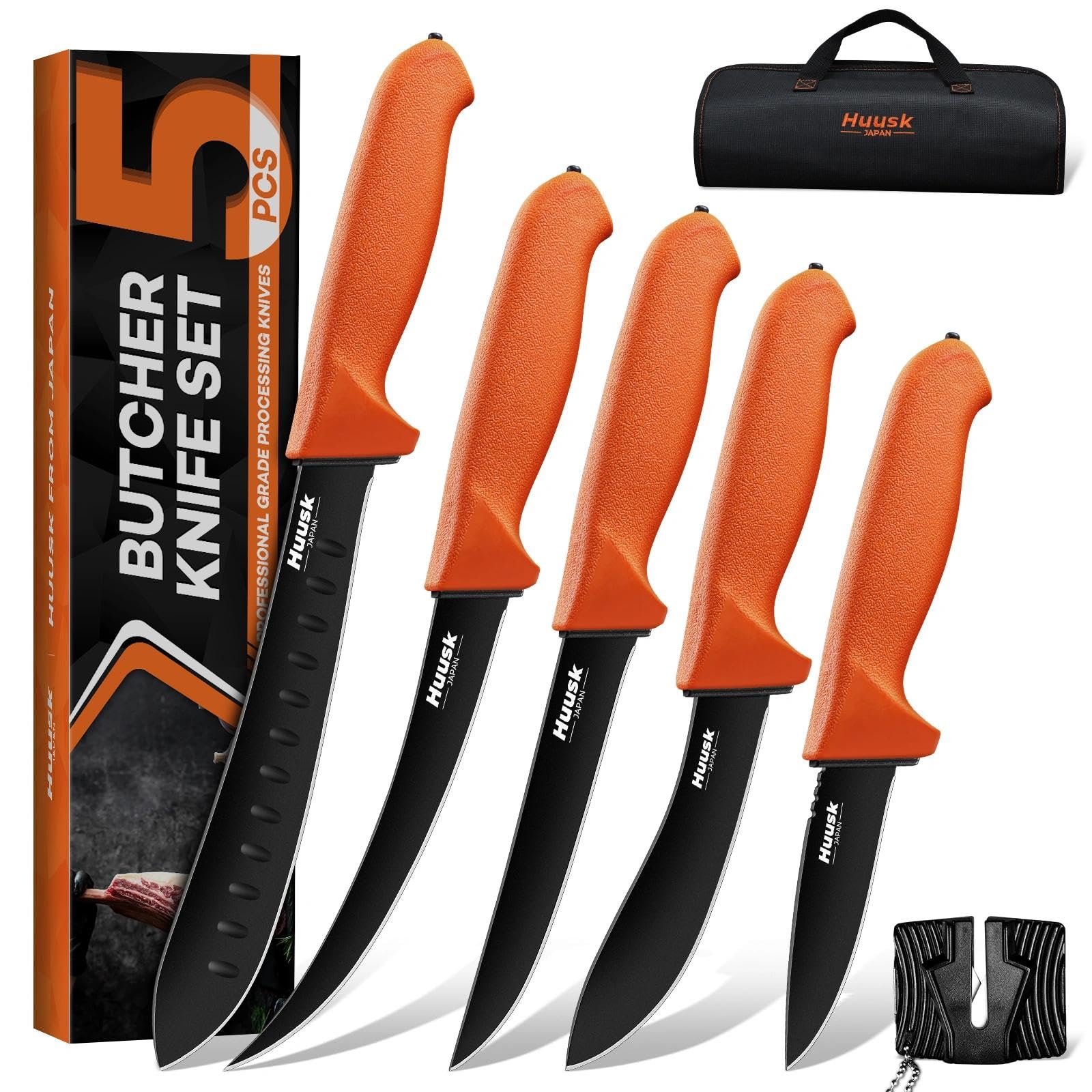
Huusk Butcher Knife Set
 Save
SaveWe recommend this set for hunters and home cooks who want several meat-processing knives, useful accessories, and portable storage in one kit.
Key Pros
- Includes curved and straight boning knives, a skinning knife, a caping knife, a butcher knife, sharpening stone, and roll bag
- Textured orange handles provide a visible, secure grip
- Blades arrive sharp and handle trimming, skinning, and boning well
Key Cons
- The roll bag offers storage but does not provide individual blade covers
- The set may include more knives than casual cooks need
- Some users may prefer a less aggressive blade shape for general trimming
We found the blades sharp straight from the package, especially when removing silver skin and trimming larger cuts. The different blade shapes helped us switch between detailed work and broader cuts without reaching for another set of tools.
The textured handles felt secure with wet or greasy hands, and the bright orange color made the knives easy to find outdoors. Their light build also reduced hand strain during longer processing sessions, though users who prefer heavier knives may want more weight.
The roll bag kept the set together for transport and fit easily in a hunting or camping pack. We would still add blade guards before carrying the knives, since the bag stores them but does not fully protect each edge.
The included sharpening stone helps maintain the blades, but it takes practice to use it well. Overall, this Huusk set suits buyers who want a complete, portable kit for field dressing, meat preparation, and backyard cooking.
OUTDOOR EDGE ErgoMax Knife Set
 Save
SaveWe recommend this set for hunters who want several sharp, comfortable knives and a compact case for field dressing and basic meat processing.
Key Pros
- Sharp blades with useful knife sizes
- Grippy handles help during wet work
- Includes a built-in sharpener and storage case
Key Cons
- The set may include more knives than some users need
- The case adds bulk to a hunting pack
- The black coating can make blade wear harder to see
We found the ErgoMax set practical for breaking down game because it includes caping, boning, skinning, and butcher knives. The different blade shapes let us switch tools instead of forcing one knife to handle every task.
The rubberized handles gave us a steady grip when our hands were wet or greasy. They also felt comfortable during longer sessions, though users with larger hands may prefer a thicker handle.
The blades arrived sharp and handled common field-dressing tasks well. The included tungsten carbide and ceramic sharpener offers a quick way to restore the edge, but we would use it lightly to avoid removing too much metal.
Storage is another strong point. The clear-lid case keeps the six-piece set together and makes it easy to check whether every knife is packed. For hunters who already own several processing knives, the full set may feel unnecessary, but it offers good coverage for new or occasional users.
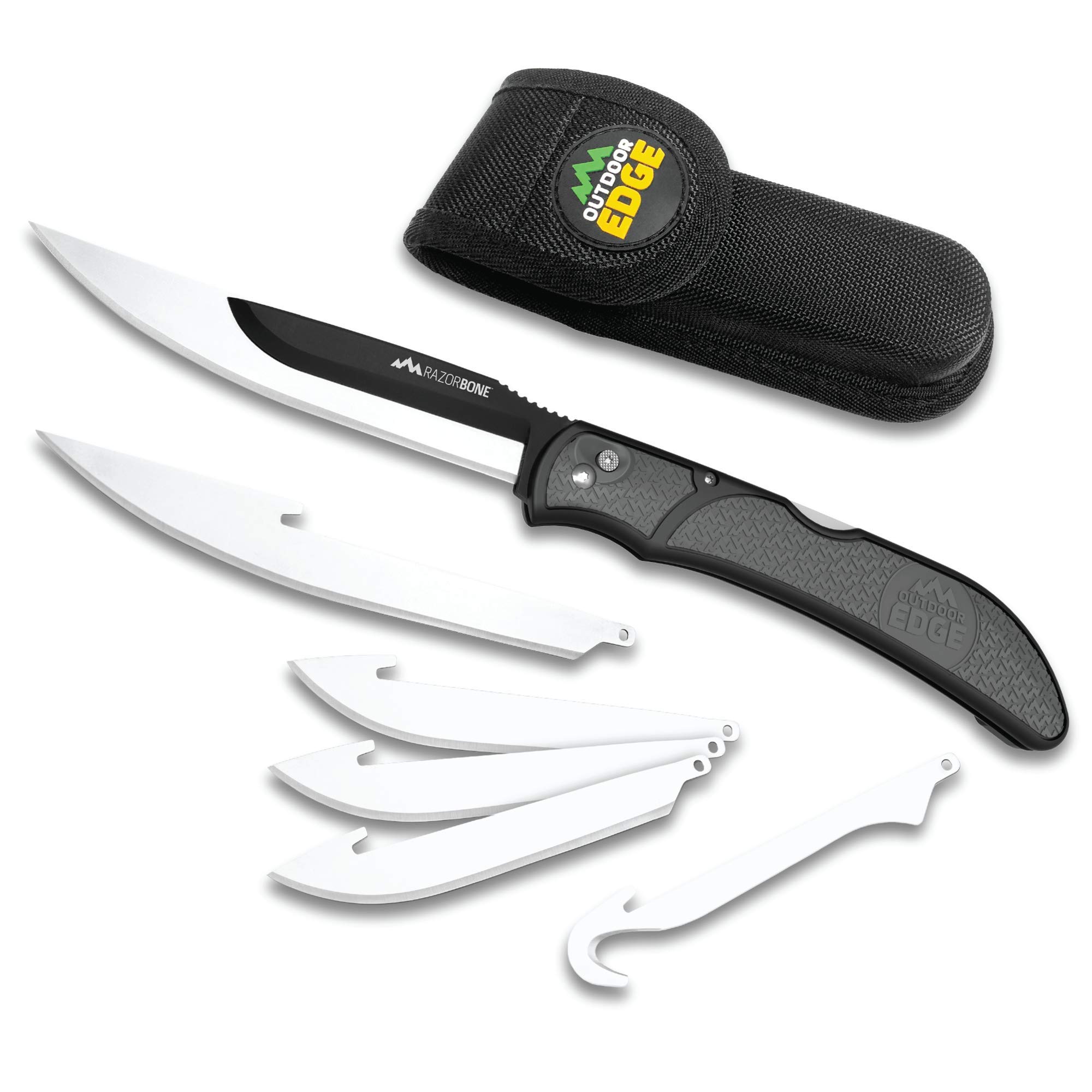
OUTDOOR EDGE RazorBone Folding Hunting Knife
 Save
SaveWe recommend this knife for hunters who want one compact tool with interchangeable blades for skinning, gutting, and boning.
Key Pros
- Three blade styles handle common field-dressing tasks
- Textured handle stays secure when wet
- Lightweight design includes a sheath and blade box
Key Cons
- Blade changes may feel less convenient without a thumb screw
- Folding design needs careful cleaning after use
- Extra blades require organized storage
We found the blade-swapping system useful during field dressing. The 5-inch boning blades worked well for separating meat, while the shorter drop-point blades gave us better control around the hide and joints.
The rubberized handle helped us keep a steady grip with wet hands. Its bright color also made the knife easier to spot in grass, gear bags, or a truck bed.
At about 6.4 ounces with the sheath, the RazorBone carried easily without adding much weight. The nylon sheath and storage box kept the spare blades together, which helped prevent them from getting mixed in with other equipment.
The Japanese 420J2 stainless steel blades arrived sharp and handled deer and other game well. We would hand-wash and dry the knife after each use, especially around the folding parts, to help prevent buildup and corrosion.
This set offers good value for hunters who prefer replaceable blades. We would choose a fixed-blade knife for heavier work, but the RazorBone gives us more cutting options in a small field kit.
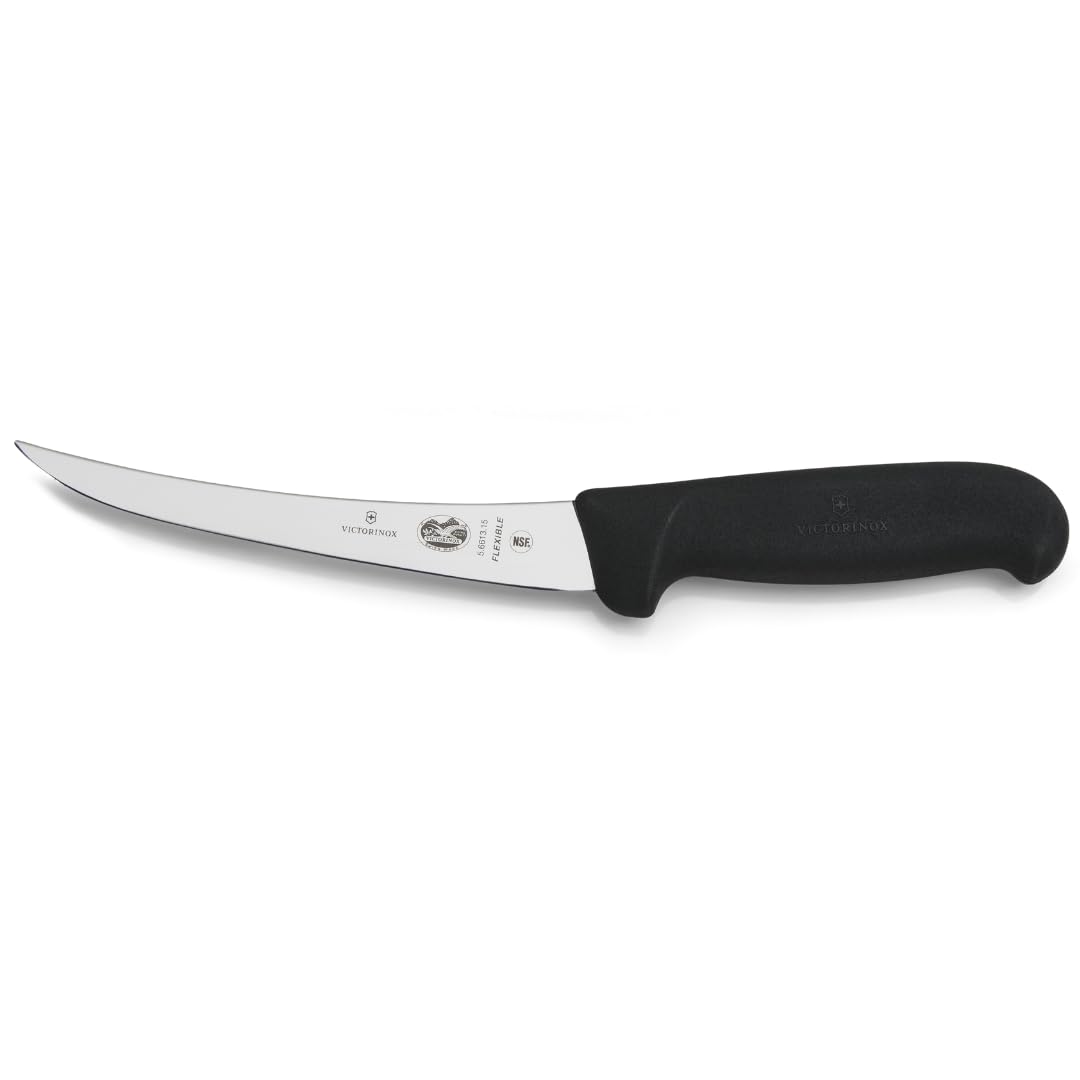
Victorinox Fibrox Pro Boning Knife
 Save
SaveWe recommend this knife for buyers who want a light, flexible blade for trimming meat, poultry, and fish around bones.
Key Pros
- Flexible, curved blade offers good control near joints and bones
- Textured handle stays secure when wet or greasy
- Lightweight design reduces hand and wrist fatigue
Key Cons
- No storage sheath included
- Flexible blade may feel too soft for heavy cutting
- Dishwasher cleaning can shorten edge life
The six-inch curved blade gave us the angle we needed when working close to bones. Its flexibility helped us follow the shape of chicken and fish without removing too much meat.
We also liked how easily the knife moved through tendons and thin cuts. The blade arrived very sharp and held its edge well during regular kitchen use.
The Fibrox handle felt secure in both dry and wet conditions. Its light weight made longer prep sessions easier, although we would still wash and dry the knife by hand to protect its sharpness.
This knife suits home cooks and professionals who value control over brute force. We would pair it with a blade guard or knife block because Victorinox does not include a sheath.
Mercer Culinary 6-Inch Curved Boning Knife
 Save
SaveWe recommend this knife for home cooks and hunters who want an affordable, sharp tool for deboning poultry, trimming meat, and working around bones.
Key Pros
- Sharp blade that trims meat smoothly
- Curved shape improves control near bones
- Textured handle feels secure during wet work
Key Cons
- White handle can show stains
- Six inches may feel long for some users
- Hand washing takes extra care
We found the curved blade helpful when following the shape of chicken joints, ribs, and larger cuts of meat. Its narrow profile gave us enough control for trimming fat and sinew without needing much force.
The handle felt comfortable during longer tasks, and the textured areas helped prevent slipping. The blade arrived sharp and held its edge well during regular kitchen use.
The white polypropylene handle is easy to spot but can pick up marks from spices, blood, or meat juices. We also recommend hand washing and drying it right away, since the manufacturer advises against dishwasher use.
OUTDOOR EDGE WildLite 6-Piece Knife Set
 Save
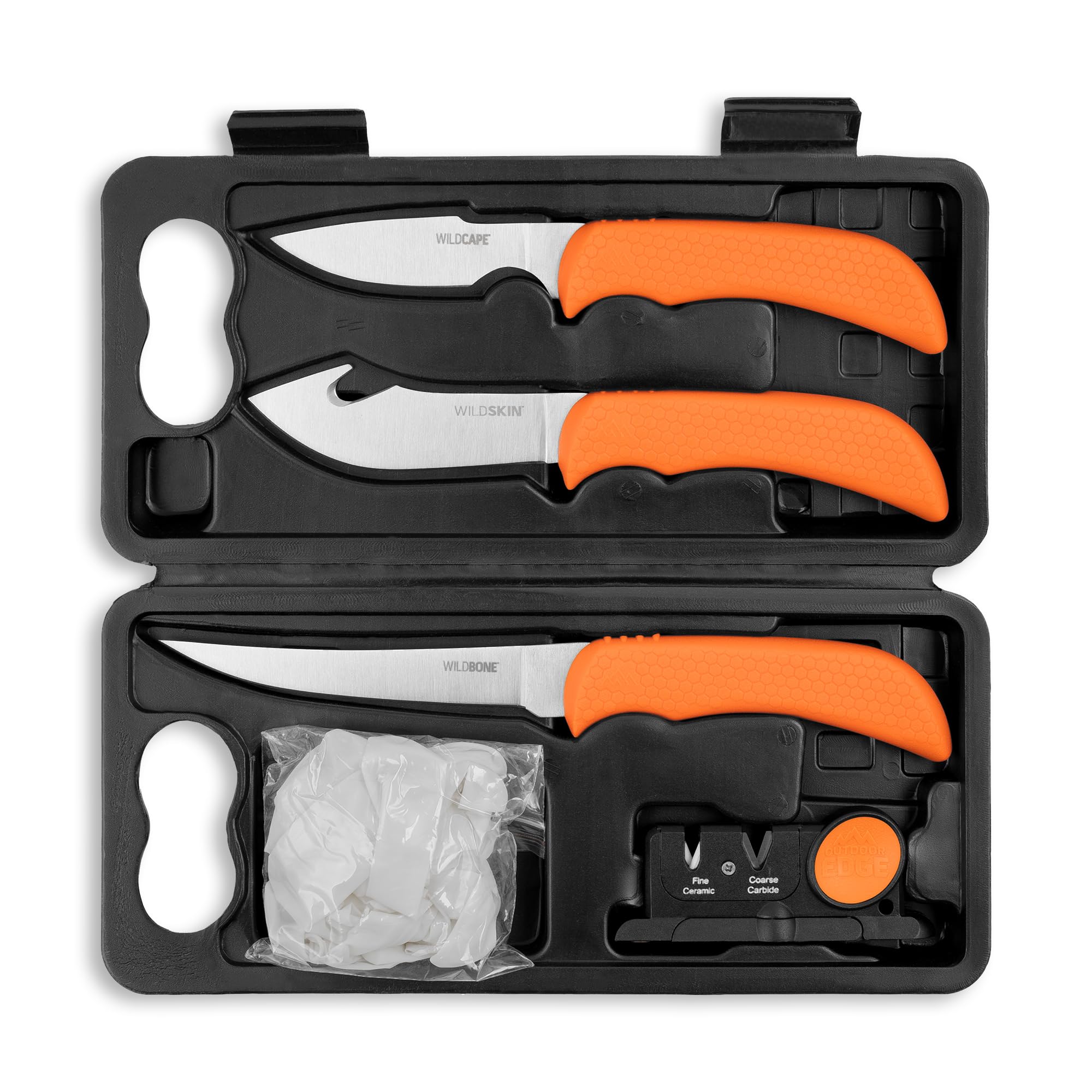
SaveWe recommend this set for hunters who want a compact, affordable kit with the main tools needed for field dressing and basic game processing.
Key Pros
- Sharp blades with comfortable, high-visibility handles
- Includes skinning, caping, and boning knives
- Compact case keeps the tools organized
Key Cons
- The smaller blades may feel limited on larger animals
- Hand washing takes more time than machine cleaning
- The included gloves may not suit every hand size
We found the knives easy to control during skinning and trimming. The orange rubberized handles stayed secure when our hands were wet or slippery, while the compact size helped reduce fatigue during longer tasks.
The set covers most basic needs in the field. The gutting and skinning knife handles larger cuts, while the caping and boning knives help with detailed work around joints and smaller areas.
The hard case fits neatly in a hunting pack and keeps each tool in place. We also liked having the two-stage sharpener available when the blades needed a quick edge refresh.
The knives require hand washing and thorough drying after use. For larger game, we may want a longer or heavier boning knife, but this set remains a practical choice for deer, small game, poultry, and general meat preparation.
Victorinox Fibrox 6-Inch Curved Boning Knife
 Save
SaveWe recommend this knife for meat, poultry, and game processing because its sharp curved blade and secure handle make detailed trimming easier.
Key Pros
- Sharp blade handles deboning and silver skin well
- Comfortable, slip-resistant Fibrox handle
- Lightweight design is easy to control
Key Cons
- Thin blade may need frequent honing with heavy use
- Six-inch length may feel short for large cuts
- Dishwasher-safe construction still benefits from hand washing
We found the curved blade useful when working around joints and following the shape of bones. Its semi-stiff design offers enough control for removing meat while still allowing some flexibility for trimming.
The handle stays comfortable during longer prep sessions and provides a steady grip when our hands become wet or greasy. The knife also feels light, which helps reduce hand strain during repeated cuts.
The edge arrived very sharp and handled poultry, pork, beef, and game cleanly. We would use a honing steel regularly to maintain its performance, especially when processing larger amounts of meat.
This knife suits home cooks, hunters, and anyone who breaks down meat at home. Its narrow blade works best for careful trimming rather than chopping through bones.
Victorinox Wood 6-Inch Boning Knife
 Save
SaveWe recommend this knife for hunters and home processors who want a sharp, curved blade for controlled trimming and deboning.
Key Pros
- Curved blade handles sinew, fat, and meat separation well
- Comfortable maple handle feels balanced in the hand
- Lightweight design supports precise, repeated cuts
Key Cons
- Wood handle needs careful cleaning and drying
- Narrow blade is not made for cutting through bones
- Semi-stiff blade may feel limiting for some tasks
We found the narrow, curved blade easy to guide around joints and along bones. Its shape worked especially well when trimming deer, poultry, and other smaller cuts where control mattered more than force.
The stainless steel edge arrived very sharp and made clean cuts through meat, fat, and sinew. We would avoid twisting the blade or using it against hard bones, since this knife suits precise separation rather than heavy chopping.
Its maple handle added a comfortable, traditional feel and gave us a secure grip during longer jobs. The wood does require more care than a synthetic handle, so we would wash it by hand, dry it promptly, and avoid leaving it submerged.
At about six inches, the blade gives us enough reach for common field and kitchen tasks without feeling bulky. We consider it a strong choice for users who value balance, sharpness, and a classic wood handle.
PAUDIN 6-Inch Boning Knife
 Save
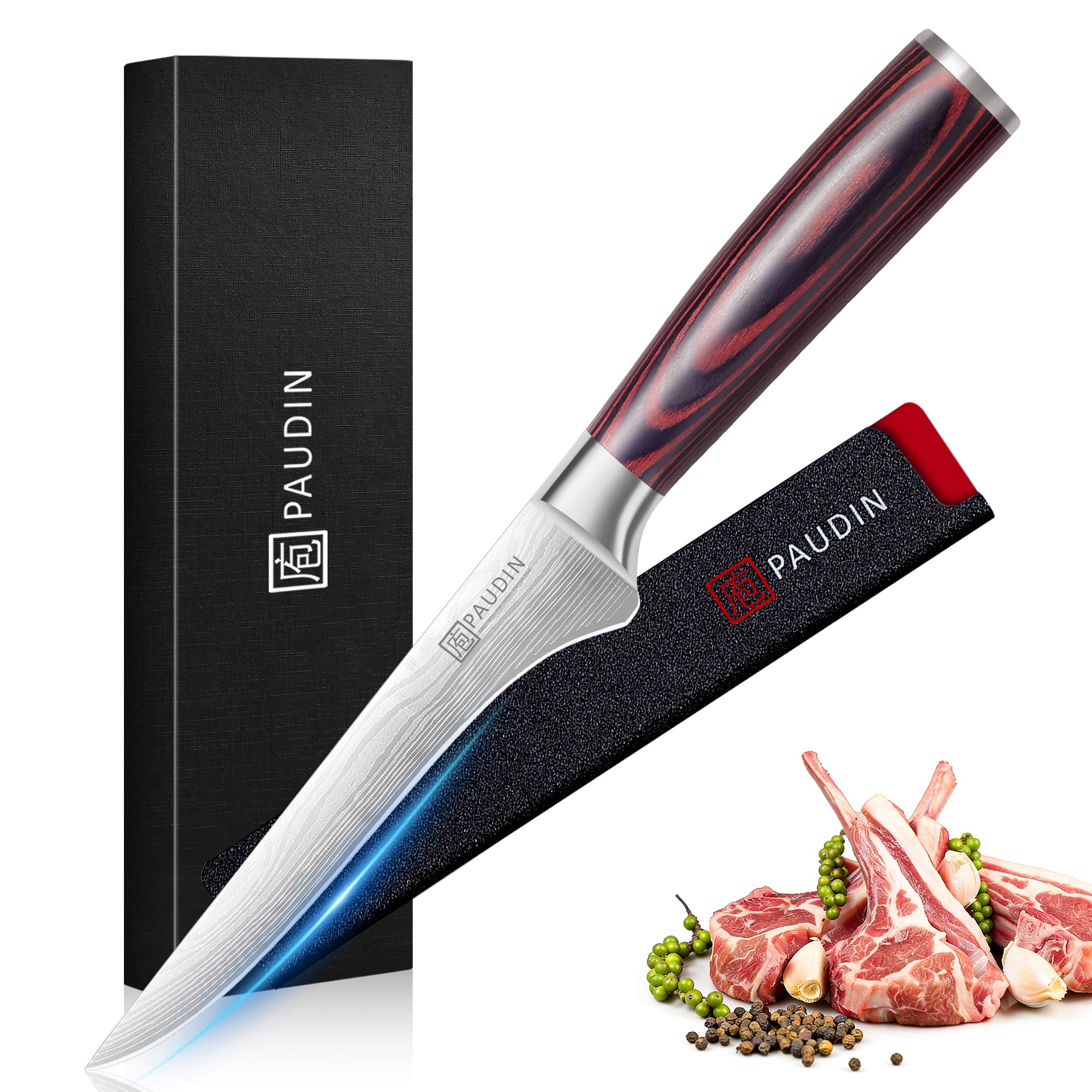
SaveWe recommend this knife for home cooks who want a balanced, versatile tool for trimming meat, poultry, and fish at a reasonable price.
Key Pros
- Comfortable pakkawood handle with steady balance
- Narrow, flexible blade handles trimming and filleting well
- Sharp edge works smoothly on common meat-cutting tasks
Key Cons
- Blade sharpness may vary between units
- It needs careful hand washing and drying
- The handle may feel small for larger hands
We found the 6.1-inch blade easy to control around joints, fat, and skin. Its flexible design helped us make clean cuts while trimming pork and poultry without needing much pressure.
The handle felt secure during longer prep sessions, and the knife’s light weight made detailed work less tiring. The patterned blade also gives it a polished look, although the pattern is decorative rather than true Damascus steel.
Some users report excellent sharpness out of the box, while others say the edge needed additional honing. We would check the blade before use and maintain it with hand washing, drying, and occasional sharpening.
For cooks who want one knife for deboning, skinning, filleting, and trimming, this PAUDIN offers useful versatility. Its performance and comfortable grip make it a strong value, but buyers should keep their expectations realistic about edge retention and factory sharpness.
Buying Guide
We should match the knife to the task. A skinning knife usually needs a curved, flexible blade for separating hide from meat, while a boning knife benefits from a narrow blade that can follow joints and cut around bones.
| Feature | What to look for |
|---|---|
| Blade length | Choose a length that gives us control without feeling awkward. |
| Flexibility | Select more flex for trimming and less flex for cutting through firm sections. |
| Blade shape | A curved edge helps with skinning; a narrow, pointed blade supports precise boning. |
| Steel | Look for corrosion resistance, edge retention, and easy sharpening. |
| Handle | Choose a secure, comfortable grip that remains stable when wet. |
| Construction | Full-tang designs often provide strong support through the handle. |
We should check the knife’s balance before buying. A well-balanced knife feels controlled and reduces the need to apply extra pressure.
Safety features matter. We should look for a textured handle, a guard or raised bolster, and a sheath or blade cover for storage. The handle should fit our hand without causing pressure points.
We should also consider cleaning and maintenance. A knife that resists staining and sharpens easily may suit regular use better than one that requires specialized care. Always confirm whether the manufacturer allows dishwasher cleaning, since hand washing usually protects the blade and handle.
Editor’s Choice
We choose the Victorinox Fibrox Pro 6-Inch Curved Boning Knife as our editor’s pick. Its curved, flexible blade helps us separate meat from bone and follow the shape of joints with steady control.
The textured Fibrox handle gives us a secure grip, even when our hands are wet. Its lightweight design also reduces hand fatigue during longer cutting tasks.
| Feature | Details |
|---|---|
| Blade length | 6 inches |
| Blade style | Curved and flexible |
| Handle | Textured, non-slip grip |
| Best for | Skinning, trimming, and boning |
We find this knife well suited to hunters, home cooks, and anyone who regularly breaks down meat. The narrow blade makes precise cuts, while the curved shape supports smooth work around bones and connective tissue.
We should hand-wash and dry the knife after each use to protect its edge and handle. A sharpening steel can help maintain cutting performance between full sharpenings.
Conclusion
We should choose a skinning and boning knife based on the work we do most often. A flexible blade helps us follow bones and make clean cuts, while a stiffer blade offers better control for larger cuts of meat.
A comfortable handle, sharp edge, and reliable construction also matter. We should select a blade length that feels easy to control and use a knife that fits our hand securely.
Before buying, we can compare:
- Blade flexibility: More flex for detailed trimming
- Blade length: Shorter blades for control; longer blades for larger cuts
- Handle design: A secure, comfortable grip
- Maintenance: Easy sharpening and resistance to rust
The best knife supports safe, precise work without causing hand strain. With proper cleaning, drying, sharpening, and storage, our knife can remain useful for many cutting tasks.
FAQS
What is the best knife for skinning and boning?
We recommend a sharp, flexible knife with a comfortable handle. A blade between 5 and 6 inches works well for most game and meat because it offers control without feeling bulky.
Should we choose a flexible or stiff blade?
We should choose flexibility based on the task. Flexible blades follow curves around joints and bones, while stiffer blades provide better control when separating large cuts.
What blade material should we look for?
Stainless steel resists rust and requires less maintenance. High-carbon steel can hold a sharp edge well, but we must dry it promptly and apply a light coat of food-safe oil when needed.
How should we clean a skinning and boning knife?
We should wash the knife by hand with warm water and mild dish soap. Dry it immediately, and avoid putting it in the dishwasher because heat and harsh detergent can damage the blade and handle.
How often should we sharpen it?
We should hone the edge regularly to maintain alignment and sharpen it when honing no longer restores cutting performance. A sharpening stone or guided sharpener can help us maintain a consistent angle.
What safety features matter most?
We should look for a secure grip and a handle guard or finger stop. We should also use a stable cutting surface and keep the blade pointed away from our body.