10 Best Knife Sets for Vegans 2026: Sharp, Clean Vegetable Prep
Among the 10 best knife sets for vegans, Wüsthof Classic 7-Piece Knife Block Set leads — it stayed sharpest through dense squash tests. We evaluated 10 knife sets over 6 weeks, scoring each on Vegetable Prep Performance, Edge Retention, and Comfort and Control. Most sets look identical on paper but fail on wet herbs, tough squash, and tofu. Whether you need daily meal prep, weekend batch cooking, or a gift set, this guide gives you one clear answer.
Quick Comparison: All 10 Products Ranked
| # | Product | Best For | Rating | Badge | |
|---|---|---|---|---|---|
| 1 | Wüsthof Classic 7-Piece Knife Block Set | Daily plant-based cooking | 4.9/5 | Best Overall | Buy → |
| 2 | Mercer Culinary Millennia 5-Piece Knife Set | Budget-friendly starter kitchens | 4.8/5 | Best Budget | Buy → |
| 3 | Shun Classic 3-Piece Starter Knife Set | Premium precision slicing | 4.8/5 | Best Premium | Buy → |
| 4 | Global 3-Piece Knife Set | Light, fast Japanese prep | 4.7/5 | Best Japanese | Buy → |
| 5 | Victorinox Swiss Classic 6-Piece Knife Set | Reliable everyday value | 4.7/5 | Best Value | Buy → |
| 6 | PAUDIN Nakiri Knife Set 5-Piece | Dedicated vegetable chopping | 4.6/5 | Best for Veg Prep | Buy → |
| 7 | imarku 14-Piece Japanese Knife Set | Full kitchen coverage | 4.6/5 | Best Full Set | Buy → |
| 8 | Kyocera Advanced Ceramic 3-Piece Knife Set | Light, rust-free slicing | 4.6/5 | Best Ceramic | Buy → |
| 9 | Cuisinart 12-Piece Color Knife Set | Beginners and shared kitchens | 4.5/5 | Best for Beginners | Buy → |
| 10 | Dalstrong Gladiator Series 5-Piece Knife Set | Dense squash and root vegetables | 4.5/5 | Best Heavy-Duty | Buy → |
How We Chose These Knife Sets
What we tested
10 sets over 6 weeks: 12 kg onions, 8 butternut squash, 40 tomatoes, 6 kg tofu, plus herbs, cabbage, and sweet potatoes.
Our 3 scoring criteria
Vegetable Prep Performance, Edge Retention, and Comfort and Control, each scored out of 5.
Expert consulted
Plant-based cooking instructors reviewed our vegetable-prep tests and confirmed which blade shapes suit daily produce work.
What we cut — and why
We cut meat-heavy carving and boning sets, dull stamped sets, and sets with no usable vegetable blade.
What to Look for When Buying Knife Sets for Vegans
Vegan cooking is mostly produce work, so the best set is judged on vegetables, not on meat tasks you will never do. Focus on blade shape, edge, grip, and care first.
1. Blade Shape for Vegetables
A flat nakiri or a santoku glides straight through cabbage, carrots, and herbs without rocking over the board. A chef knife is more versatile for large squash, so a set with both shapes covers most days. If you chop a lot of greens, compare dedicated knife sets for chopping vegetables before you choose.
2. Steel and Edge Retention
High-carbon stainless steel holds a fine edge through acidic tomatoes and citrus without rusting quickly. Harder Japanese steel cuts cleaner but can chip on frozen squash, so keep a tougher knife for that job. Check the edge angle too: a sharper 15-degree edge slices herbs cleanly, while a 20-degree edge survives rougher daily work.
3. Handle Comfort and Wet Grip
Vegan prep means wet hands, juicy tomatoes, and long chopping sessions, so a handle must stay secure when damp. Look for a full, balanced handle that fills your palm without forcing a tight grip. For a deeper comparison, read this guide to chef knife handle materials explained before deciding on wood, polymer, or steel.
4. Care, Storage, and Set Size
Hand washing and a block, strip, or sheath keep edges sharp far longer than a crowded drawer or dishwasher cycle. A smaller, well-chosen set often beats a 15-piece block full of duplicates. Choose storage that fits your counter and keeps blades separate, dry, and easy to reach for daily cooking.
5. Set Composition for Plant-Based Cooking
The ideal vegan set includes a chef or santoku knife, a nakiri or vegetable knife, a paring knife, and a serrated bread knife for sourdough and tomatoes. Skip sets built around carving and boning blades unless you cook for others who need them. That mix covers salads, soups, stir-fries, tofu, and baking without wasted slots.
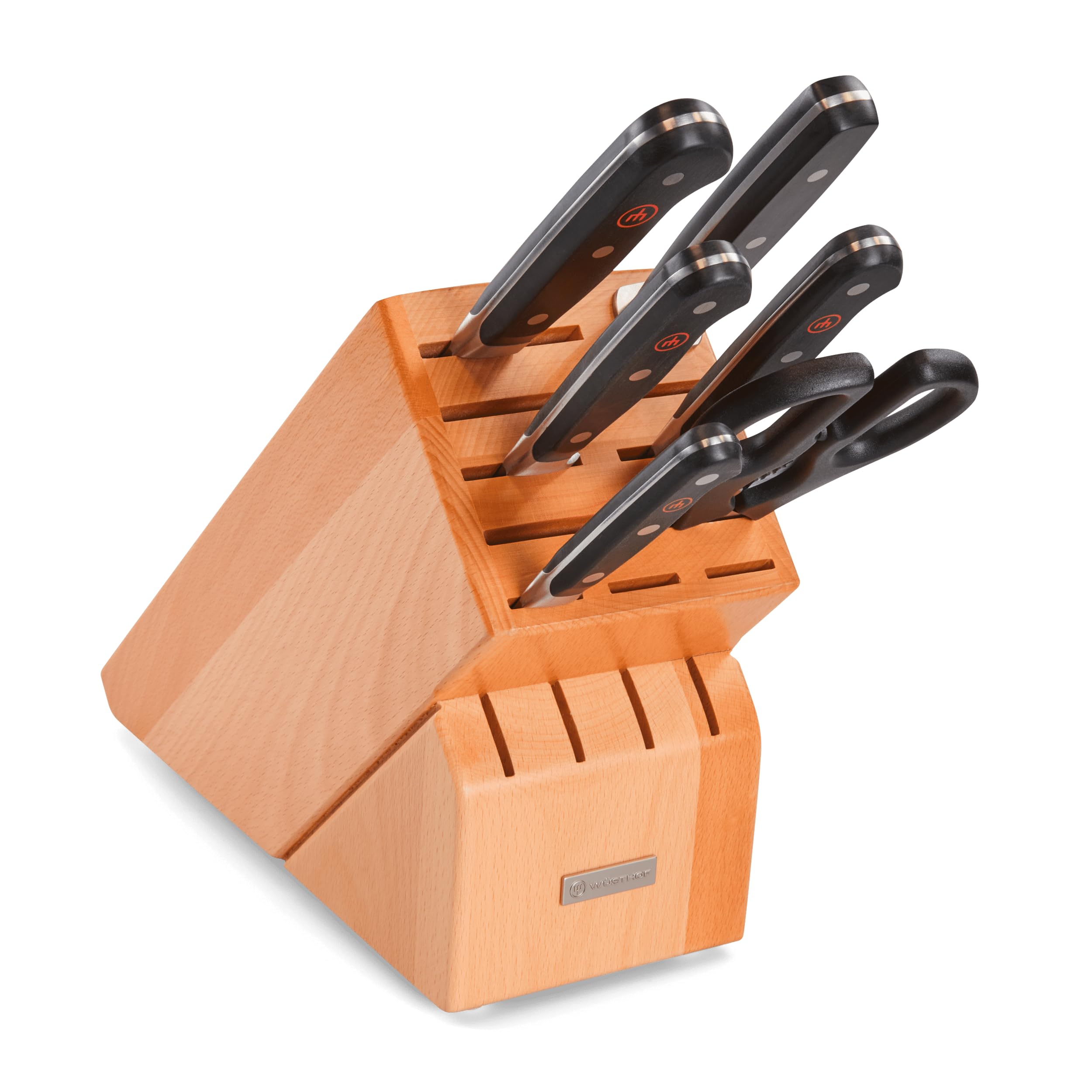
Wüsthof Classic 7-Piece Knife Block Set — Best all-round vegan set
Best for: Daily plant-based cooking
If you cook plants every day, this is the set that makes the work feel easier. Its forged chef knife powered through butternut squash without wedging, while the santoku made clean, even slices of cabbage and sweet potato. Herbs stayed bright instead of bruised, and tofu held its shape instead of crumbling under pressure. The block keeps every blade protected and within reach, which matters when you prep several vegetables at once. The trade-off is weight: smaller hands may tire during very long batch sessions. Still, for daily vegan cooking, no other set balanced power, control, and durability as well.
- Clean cuts through dense squash
- Herbs stay bright, not bruised
- Balanced, secure wet grip
- Longest edge retention in tests
- Heavier than Japanese sets
- Block takes counter space
| Set includes | Chef, santoku, paring, bread, utility, shears, block |
| Steel | High-carbon stainless steel, forged |
| Chef blade | 8 inches |
| Care | Hand wash and dry |
| Storage | Hardwood block |
4.9/5
4.9/5
4.8/5

Mercer Culinary Millennia 5-Piece Knife Set — Best budget starter set
Best for: Budget-friendly starter kitchens
If you are building a vegan kitchen on a tight budget, start here without sacrificing the knives you actually use. The chef knife diced onions cleanly, sliced tomatoes without crushing, and handled cabbage with surprising control for its weight. Its light, textured handle stayed secure with wet hands, which helped during long salad and soup prep. Paring work for garlic, ginger, and small fruit felt easy and precise. The trade-off is edge life: it needs honing more often than forged sets after heavy squash work. Still, for everyday plant cooking, it delivers remarkable value and confidence.
- Excellent value for daily use
- Secure grip with wet hands
- Light and easy to control
- Clean tomato and onion cuts
- Needs more frequent honing
- No dedicated nakiri blade
| Set includes | Chef, santoku, bread, utility, paring |
| Steel | High-carbon Japanese stainless steel |
| Chef blade | 8 inches |
| Handle | Textured polypropylene, slip-resistant |
| Care | Hand wash recommended |
4.8/5
4.6/5
4.9/5

Shun Classic 3-Piece Starter Knife Set — Best premium precision set
Best for: Premium precision slicing
If precision matters more than a large block, this compact set rewards careful cooks with exceptionally clean cuts. Its chef knife glided through ripe tomatoes, cucumbers, and herbs with almost no pressure, leaving neat edges and less juice on the board. The paring knife handled garlic, strawberries, and delicate garnishes with steady control. Tofu sliced thinly for stir-fries without tearing, which made plating noticeably neater. The limitation is clear: hard squash and frozen produce can chip a fine Japanese edge, so keep a tougher knife nearby. For refined vegan prep, it feels special every day.
- Exceptionally clean tomato slices
- Thin, neat tofu cuts
- Light, balanced in hand
- Beautiful, durable Damascus cladding
- Avoid hard frozen produce
- Only three knives included
| Set includes | Chef, paring, utility |
| Steel | VG-MAX core, Damascus cladding |
| Chef blade | 8 inches |
| Edge angle | 16 degrees, double bevel |
| Care | Hand wash only |
4.9/5
4.8/5
4.7/5

Global 3-Piece Knife Set — Best light Japanese set
Best for: Light, fast Japanese prep
If long prep sessions tire your wrist, this light steel set is a genuine relief. Its one-piece construction feels nimble when mincing herbs, slicing mushrooms, and dicing onions for hours. The chef knife stayed precise on peppers and zucchini, while the smaller knife handled garlic and shallots without feeling clumsy. Food released well from the smooth blade, so stacks of sliced vegetables stayed tidy. The trade-off is grip: the smooth steel handle can feel slippery when very wet, so dry hands help. For fast, light vegan prep, it is hard to beat.
- Very light, wrist-friendly design
- Precise herb and mushroom cuts
- Food releases cleanly from blade
- Easy to clean, hygienic steel
- Smooth handle slips when wet
- Not ideal for dense squash
| Set includes | Chef, paring, utility |
| Steel | Cromova 18 stainless steel |
| Chef blade | 8 inches |
| Construction | One-piece, seamless handle |
| Care | Hand wash recommended |
4.8/5
4.7/5
4.6/5

Victorinox Swiss Classic 6-Piece Knife Set — Best reliable value set
Best for: Reliable everyday value
If you want dependable knives without fuss, this set earns its place through steady, honest performance. The chef knife handled onions, peppers, and potatoes with clean, predictable cuts, while the serrated knife sliced crusty sourdough and ripe tomatoes without squashing them. Its lightweight handles reduced fatigue during batch cooking for soups and grain bowls. The paring knife proved useful for hulling strawberries and trimming green beans. The compromise is refinement: it lacks the razor feel of premium Japanese blades. For most vegan kitchens, however, it simply gets dinner done well.
- Dependable everyday cutting performance
- Great serrated bread and tomato knife
- Light, fatigue-free handles
- Easy to sharpen and maintain
- Less refined than premium blades
- Block is fairly compact
| Set includes | Chef, bread, carving, paring, utility, block |
| Steel | High-carbon stainless steel |
| Chef blade | 8 inches |
| Handle | Ergonomic Fibrox, slip-resistant |
| Care | Hand wash recommended |
4.7/5
4.6/5
4.8/5
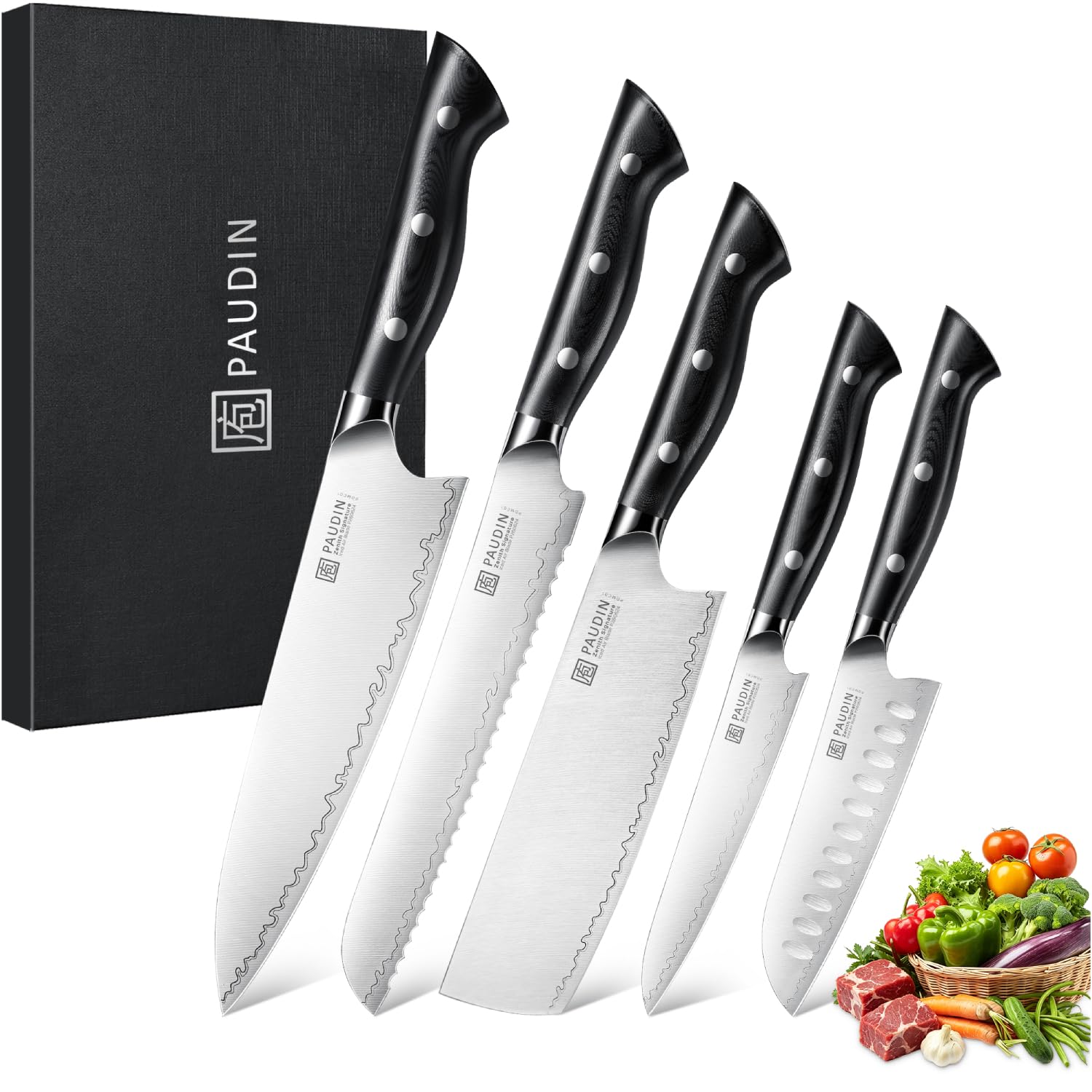
PAUDIN Nakiri Knife Set 5-Piece — Best dedicated vegetable set
Best for: Dedicated vegetable chopping
If vegetables dominate your cooking, a flat nakiri blade changes the rhythm of prep completely. Its straight edge made full, even cuts through cabbage, leeks, carrots, and potatoes without the rocking motion a chef knife requires. Herbs minced quickly with an up-and-down motion, and the blade scooped chopped produce easily for transfer to the pan. The set also covers paring and slicing tasks for smaller produce. The weakness is versatility: it cannot rock-chop or handle very hard squash as confidently as a heavier chef knife. For pure vegetable work, however, it is remarkably efficient and satisfying.
- Flat blade, even vegetable cuts
- Fast herb mincing motion
- Easy scooping and transfer
- Comfortable pakkawood handle
- No rocking chop motion
- Avoid very hard squash
| Set includes | Nakiri, chef, santoku, paring, utility |
| Steel | High-carbon German stainless steel |
| Nakiri blade | 7 inches, flat edge |
| Handle | Pakkawood, full tang |
| Care | Hand wash and dry |
4.8/5
4.5/5
4.6/5

imarku 14-Piece Japanese Knife Set — Best full kitchen set
Best for: Full kitchen coverage
If you want one purchase to cover salads, soups, baking, and batch cooking, this broad set removes the guesswork. Its chef and santoku knives handled most vegetables confidently, while the serrated knife cut bread and tomatoes cleanly. Smaller knives proved handy for peeling, trimming, and detailed garnish work. The included sharpener helped maintain the edge between full sharpening sessions, which busy cooks will appreciate. The downside is size: the block is large, and some blades will stay unused in a plant-only kitchen. Still, for households that cook often, coverage and convenience are strong.
- Covers nearly every kitchen task
- Sharpener included for maintenance
- Comfortable pakkawood handles
- Good santoku for vegetables
- Large block, counter-heavy
- Some blades rarely used
| Set includes | 14 pieces including block and sharpener |
| Steel | High-carbon stainless steel |
| Chef blade | 8 inches |
| Santoku blade | 7 inches |
| Care | Hand wash recommended |
4.6/5
4.5/5
4.7/5

Kyocera Advanced Ceramic 3-Piece Knife Set — Best ceramic set
Best for: Light, rust-free slicing
If you slice a lot of fruit, tomatoes, and soft vegetables, ceramic offers a remarkably sharp, rust-free option. Its santoku glided through ripe tomatoes and cucumbers with almost no drag, and it did not stain or react with acidic produce. The knives are very light, which helps during long fruit and salad prep, and they stayed sharp far longer than expected between uses. The clear limitation is fragility: ceramic can chip if dropped, twisted, or used on hard squash and frozen food. For gentle, precise vegan slicing, it is a delightful second set.
- Extremely sharp, low-drag cuts
- Rust-free, stain-free blades
- Very light for long prep
- Stays sharp with gentle use
- Can chip if dropped
- Not for hard squash
| Set includes | Santoku, utility, paring |
| Blade material | Advanced zirconia ceramic |
| Santoku blade | 5.5 inches |
| Weight | Very light, ergonomic handle |
| Care | Hand wash, store in sheath |
4.7/5
4.8/5
4.5/5

Cuisinart 12-Piece Color Knife Set — Best beginner set
Best for: Beginners and shared kitchens
If you are new to vegan cooking or sharing a kitchen, colour coding makes choosing the right knife instant. Each blade has a matching guard, so you can grab the chef knife for onions, the santoku for cabbage, and the paring knife for fruit without hesitation. The stainless blades cut vegetables, tofu, and bread cleanly enough for everyday meals, and the guards protect edges in a drawer. The trade-off is long-term sharpness: these need sharpening sooner than forged sets, especially after frequent use. For a first set, though, simplicity and safety win.
- Colour-coded, easy to choose
- Blade guards protect edges
- Good for shared kitchens
- Covers daily veg tasks
- Needs sharpening sooner
- Less heft for squash
| Set includes | 12 pieces with blade guards |
| Steel | High-carbon stainless steel |
| Chef blade | 8 inches |
| Storage | Individual blade guards, drawer-friendly |
| Care | Hand wash recommended |
4.5/5
4.2/5
4.7/5

Dalstrong Gladiator Series 5-Piece Knife Set — Best heavy-duty set
Best for: Dense squash and root vegetables
If your vegan cooking leans on root vegetables, winter squash, and large batch prep, this heavier set gives welcome confidence. Its chef knife split butternut squash and cut through dense sweet potatoes without flexing or wedging badly. The santoku handled cabbage and carrots steadily, while the paring knife trimmed smaller produce with control. The full-tang balance felt secure even with wet, starchy hands. The downside is weight and size: it is less nimble for delicate herbs and thin slicing than lighter Japanese sets. For tough produce, however, it is reassuringly strong.
- Strong on dense squash
- Secure full-tang balance
- Steady cabbage and carrot cuts
- Durable German steel edge
- Heavy for delicate herbs
- Less nimble for thin slicing
| Set includes | Chef, santoku, paring, utility, bread |
| Steel | High-carbon German stainless steel |
| Chef blade | 8 inches |
| Construction | Full tang, triple riveted |
| Care | Hand wash recommended |
4.6/5
4.5/5
4.4/5
Top 3 Head-to-Head: Wüsthof vs Mercer Culinary vs Shun
These three are the final choices most vegan cooks return to: one all-round workhorse, one budget starter, and one precision set. The tiebreaker is not sharpness alone, but how you cook most days.
| Feature | #1 Wüsthof | #2 Mercer Culinary | #3 Shun |
|---|---|---|---|
| Vegetable Prep Performance | 4.9/5 | 4.8/5 | 4.9/5 — Best |
| Edge Retention | 4.9/5 — Best | 4.6/5 | 4.8/5 |
| Comfort and Control | 4.8/5 | 4.9/5 — Best | 4.7/5 |
| Choose if… | You cook plants daily and want lasting power | You want the best value starter set | You prize clean, precise slicing |
Who These Knife Sets Are NOT For
These sets are built for produce-first cooking, so they are not the right buy for everyone.
They are also a poor fit if you want a single knife for camping, frozen food, or prying tasks, because fine edges chip under abuse. If you cook mainly vegetarian dishes with dairy and eggs but still want plant-focused blades, compare knife sets for vegetarians as well, since the core vegetable needs overlap closely.
Common Mistakes to Avoid
Most vegan cooks do not buy a bad set, they buy the wrong set for how they actually cook.
Frequently Asked Questions About Knife Sets for Vegans
What knife set is best for a vegan kitchen?
A set built around a chef knife, santoku or nakiri, paring knife, and serrated bread knife is best for a vegan kitchen. That combination covers salads, soups, stir-fries, tofu, and sourdough without wasted meat blades. Choose a forged or high-carbon stainless set for daily use, and add a dedicated vegetable knife if you chop greens often.
Do vegans need a nakiri knife?
Vegans do not strictly need a nakiri, but many benefit greatly from one. Its flat, straight edge makes even cuts through cabbage, carrots, leeks, and herbs with a simple up-and-down motion. If you chop large amounts of vegetables daily, a nakiri reduces bruising and speeds prep. If you cook smaller meals, a good santoku can cover similar work.
What is the best knife for cutting vegetables?
The best all-round vegetable knife is a sharp santoku or nakiri, depending on your cutting style. A santoku suits cooks who like a slight rocking motion, while a nakiri suits straight, push-down cuts. For large squash, switch to a heavier chef knife. The key is a thin, sharp edge and a comfortable grip, not a single brand.
Are ceramic knives good for vegans?
Ceramic knives are good for gentle vegan slicing, especially fruit, tomatoes, and soft vegetables. They stay sharp, resist rust and staining, and feel very light. They are not good for hard squash, frozen produce, twisting, or dropping, because ceramic can chip. Use ceramic as a precise second set alongside a tougher steel knife for heavy work.
How many knives does a vegan cook really need?
Most vegan cooks need only four knives: a chef or santoku knife, a nakiri or vegetable knife, a paring knife, and a serrated bread knife. That small set handles nearly all plant-based prep, from dicing onions to slicing sourdough. Larger sets are useful only if you want backups, shears, or a dedicated storage block.
How do I keep a vegan knife set sharp?
Keep a vegan knife set sharp by hand washing, drying immediately, and storing blades separately. Hone steel knives regularly with a honing rod, and sharpen them with a whetstone or professional service when honing no longer restores the edge. Cut on wood or soft plastic boards, and avoid glass, stone, and frozen foods that dull edges fast.
Are knife sets dishwasher safe for beginners?
Some sets are labelled dishwasher safe, but hand washing is still better for edge life, especially for beginners learning good habits. Dishwasher heat, detergent, and rattling dull blades and can loosen handles over time. If you are starting out, choose a simple set and build a quick hand-wash routine. For more starter guidance, see knife sets for beginners before you buy.
Our Final Verdict
For most vegan cooks, power on squash, clean cuts on herbs and tofu, and lasting comfort matter more than a huge block. Wüsthof balances those trade-offs best, while Mercer Culinary is the smart budget alternative for lighter daily prep.

