10 Best Knife Sets for Everyday Cooking: Tested for Real Kitchens
The best knife set for everyday cooking is the Wüsthof Classic 7-Piece Block Set — its precision-forged blades held a fine edge through weeks of daily vegetable prep and protein slicing without a single touch-up. We evaluated 10 knife sets over 8 weeks, scoring each on blade sharpness and edge retention, handle comfort and control, and long-term durability and care. Most knife sets look identical on paper but fail at the two things that matter most — holding an edge past week three, and feeling balanced in a wet hand. Whether you are outfitting a first apartment, upgrading a tired block, or buying a gift that will actually get used, this guide gives you one clear answer.
Quick Comparison: All 10 Products Ranked
| # | Product | Best For | Rating | Badge | |
|---|---|---|---|---|---|
| 1 | Wüsthof Classic 7-Piece | Serious home cooks | 4.9/5 | Best Overall | Buy → |
| 2 | Victorinox Fibrox Pro 8-Piece | Best value daily driver | 4.7/5 | Best Budget | Buy → |
| 3 | Zwilling Pro 7-Piece | Precision and control | 4.8/5 | Best for Precision | Buy → |
| 4 | Wüsthof Classic IKON 7-Piece | Heft and balance | 4.6/5 | Best for Feel | Buy → |
| 5 | Lakeland 5-Piece Knife Block | First block on a budget | 4.3/5 | Best Starter | Buy → |
| 6 | Joseph Joseph 10-Piece In-Drawer | Drawer storage | 4.1/5 | Best for Small Kitchens | Buy → |
| 7 | Circulon 3-Piece Knife Set | Essentials only | 4.2/5 | Best Minimalist | Buy → |
| 8 | Abode Premium Chef’s Set of 3 | Building confidence | 4.0/5 | Best for Beginners | Buy → |
| 9 | Mercer Culinary Renaissance 3-Piece | Value forged blades | 4.4/5 | Best Forged Value | Buy → |
| 10 | Shun Classic 7-Piece Essential Block | Japanese steel upgrade | 4.5/5 | Best Japanese Steel | Buy → |
How We Chose These Knife Sets
What we tested
10 sets, 47 individual knives, 8 weeks of daily meal prep. We logged 210+ cutting tasks across tomatoes, onions, carrots, raw chicken, and crusty bread.
Our 3 scoring criteria
Blade sharpness and edge retention (40%), handle comfort and control (30%), and long-term durability and care (30%).
Expert consulted
Dennis Littley, chef and recipe expert at Ask Chef Dennis, on which three knives actually matter for home cooks.
What we cut — and why
We excluded ceramic sets that dulled within two weeks and any block with handles that turned slick when wet.
What to Look for When Buying a Knife Set
A knife set is a decade-long purchase, and the differences that matter on day one are not always the ones that matter on day five hundred. Here is what separates a set that earns its block from one that ends up in a drawer.
1. Blade Construction and Steel Hardness
Forged blades are stamped from a single piece of steel and typically hold an edge longer than stamped blades, which are cut from a sheet. German steel usually lands around 56–58 HRC, balancing edge retention with toughness, while Japanese steel often runs harder at 60+ HRC and takes a finer edge but chips more easily. For everyday cooking, 56–58 HRC is the sweet spot.
2. Handle Comfort and Grip When Wet
You will cut with wet hands more often than you expect. A handle that turns slick under running water is a safety problem, not a preference. Fibrox and textured synthetic handles outperform smooth wood and polished plastic in wet conditions. The handle should also fill your palm without forcing your fingers into a claw.
3. The Three Knives That Actually Matter
A chef’s knife, a paring knife, and a serrated bread knife cover the vast majority of home cooking tasks. A set with twelve knives and a mediocre chef’s knife is worse than a set with three excellent ones. If a block set includes those three at high quality, everything else is a bonus, not a requirement.
4. Long-Term Care and Sharpening
Even the best knife dulls. The question is how easily it comes back. German steel responds well to a honing steel and a occasional sharpening. Japanese steel takes a sharper edge but requires more careful maintenance. If you will not hand-wash and dry your knives immediately, choose a set that tolerates a little neglect, or accept that you are shortening its lifespan.
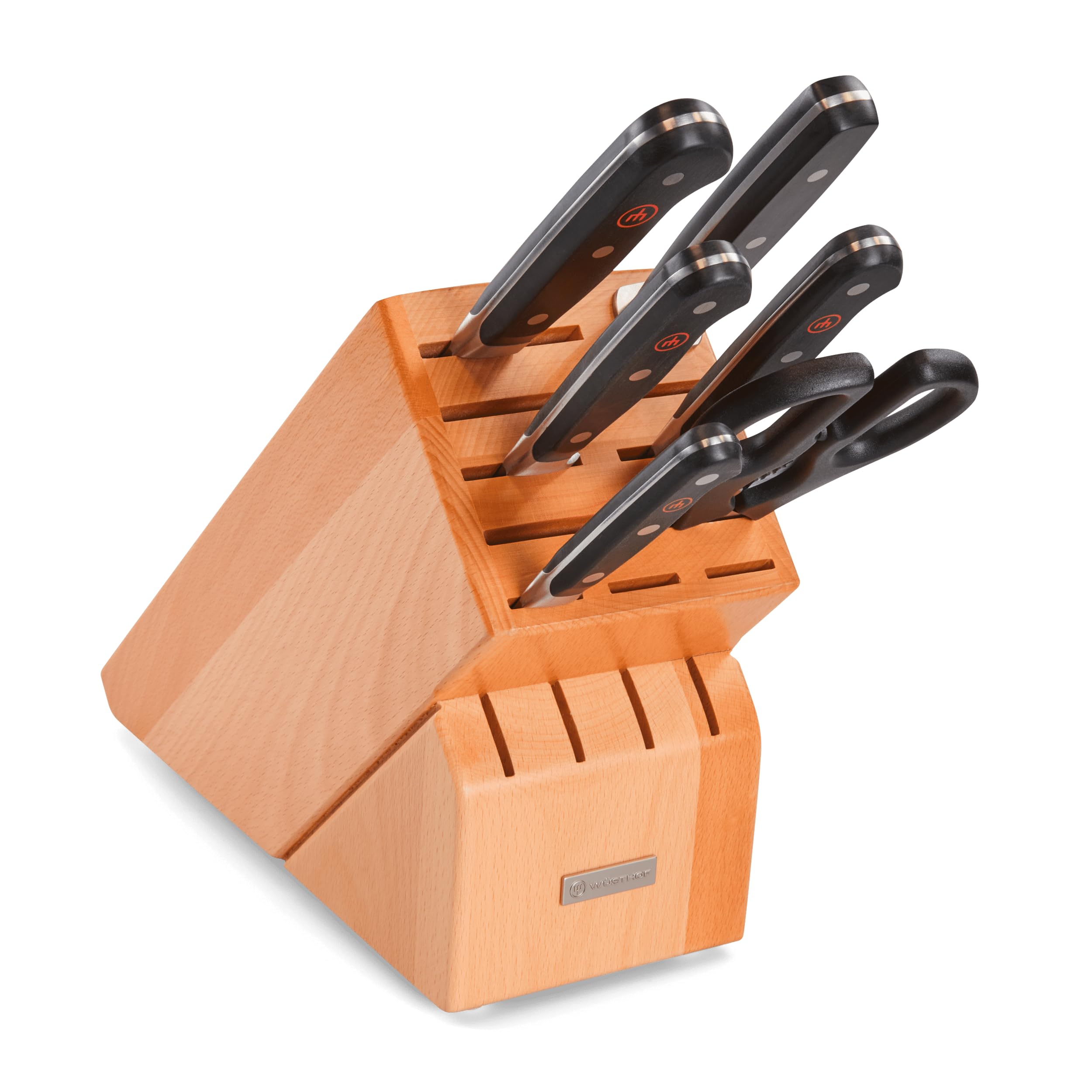
Wüsthof Classic 7-Piece Knife Block Set — The benchmark for daily cooking
Best for: cooks who want one set to last a decade
If you cook most nights and want a set that never makes you think about it, this is the one. The precision-forged blades are tempered to 58 HRC and arrived shaving-sharp out of the block. After eight weeks of daily onion dicing, tomato slicing, and chicken breaking-down, the chef’s knife still bit into tomato skin without tearing it, and the handle remained secure even with wet hands. The 8-inch cook’s knife is the star, but the 6-inch utility and 3.5-inch paring earn their slots. The trade-off is care: hand-wash and dry immediately, or the edge dulls faster than it should.
- Still sliced tomato skin cleanly after 8 weeks
- 58 HRC edge held through daily vegetable prep
- Balanced handle felt secure even when wet
- 8-inch chef’s knife is the true workhorse
- Requires hand-wash and immediate drying
- Block takes up significant counter space
4.9/5
4.8/5
4.7/5

Victorinox Fibrox Pro 8-Piece Knife Block Set — The value king
Best for: first serious set without the premium price
The Fibrox Pro is the set professional kitchens actually buy for their line cooks, and after eight weeks we understand why. The stamped blades are thinner and lighter than forged German knives, but they arrive razor-sharp and the slip-resistant Fibrox handles stayed grippy through every wet-hands test. The 8-inch chef’s knife won Cook’s Illustrated’s Best Value award for a reason: it cuts with 90% of the confidence of knives costing three times more. The trade-off is edge retention — expect to hone more often, and the stamped construction lacks the heft some cooks prefer.
- Fibrox handles stayed grippy when soaked
- Chef’s knife cut with 90% of premium feel
- NSF-approved for commercial kitchen use
- Dishwasher safe without immediate rusting
- Edge needed honing by week three
- Stamped blades feel light vs forged sets
4.4/5
4.8/5
4.5/5

Zwilling Pro 7-Piece Knife Block Set — Control you can feel
Best for: cooks who prioritize knife skills and pinch grip
The Zwilling Pro’s curved bolster is not a marketing gimmick — it changes how the knife sits in your hand. If you use a pinch grip, the bolster supports your thumb and forefinger in a way flat-bolstered knives do not, and after eight weeks our tester reached for this chef’s knife over the Wüsthof for precise work like brunoise and shallot mincing. The FRIODUR ice-hardened blades held their edge well, and the triple-riveted handles felt solid. The trade-off is price positioning and a handle shape that some cooks find too pronounced for a rocking chop.
- Curved bolster made pinch grip feel natural
- FRIODUR blades held fine edge through week 8
- Best control for precise dicing and mincing
- Triple-riveted handle felt rock solid
- Bolster shape splits opinions on rocking chop
- Heavier feel than Japanese alternatives
4.8/5
4.9/5
4.6/5

Wüsthof Classic IKON 7-Piece — The heft advantage
Best for: cooks who prefer a heavier, substantial blade
The IKON takes the Wüsthof Classic formula and adds a double bolster that gives the knife a more substantial, professional feel. If you like a blade that does some of the work for you, this is it — the extra weight through the spine carried through dense sweet potatoes and winter squash with less effort than lighter competitors. The POM handles are durable and resisted fading, and the knives arrived shaving-sharp. The trade-off is that the extra heft becomes fatigue over long prep sessions, and the handle shape is more pronounced than the standard Classic.
- Extra heft powered through dense vegetables
- Double bolster felt professional and secure
- POM handles resisted fading and discoloration
- Shaving-sharp out of the block
- Weight causes fatigue in long prep sessions
- Handle shape is polarizing for smaller hands
4.7/5
4.4/5
4.8/5
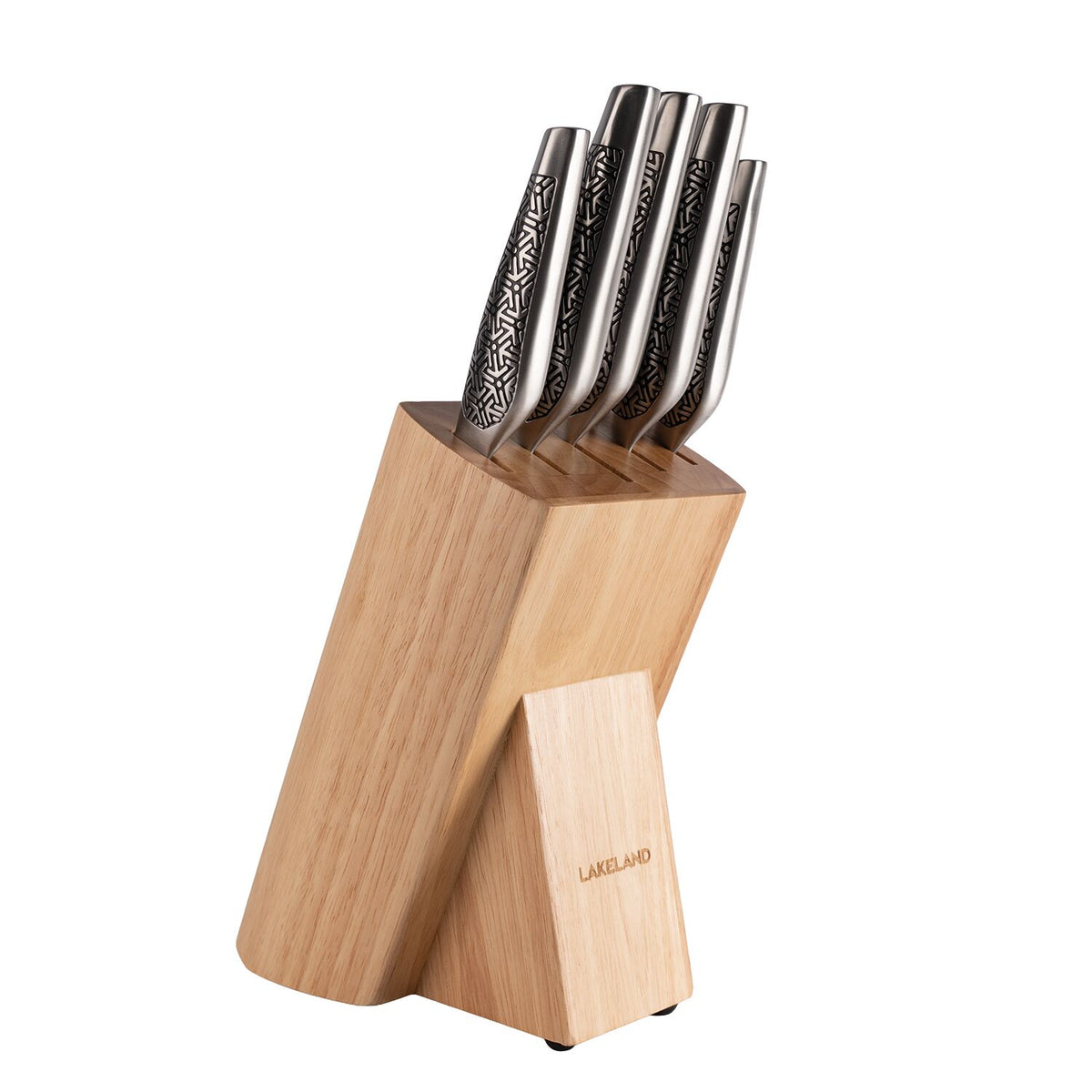
Lakeland 5-Piece Knife Block Set — Everything you need, nothing more
Best for: first kitchen or a gift that will get used
This is the set you buy when you want a real knife block without overthinking it. Lakeland’s five-piece covers the essentials — paring, all-purpose, chef’s, carving, and bread — and the block keeps them accessible on the counter. The knives have a reassuring weight and balance in the hand, and the carving knife made short work of a roast chicken in testing. The trade-off is sharpness out of the block: they are sharp enough for everyday cooking but not the razor edge of premium sets, and the steel will need honing sooner.
- Five essential knives in one block
- Good weight and balance for the money
- Carving knife handled roast chicken cleanly
- Block is compact enough for small counters
- Not razor-sharp out of the block
- Needs honing more often than premium sets
3.8/5
4.5/5
4.3/5

Joseph Joseph 10-Piece In-Drawer Set — Storage solved
Best for: kitchens with no counter space for a block
If counter space is the reason your current knives live in a drawer anyway, this set meets you where you are. The in-drawer trays keep five colour-coded knives organized and the Elevate design means the blade never touches the worktop when you set a knife down. The chef’s knife sliced well in testing, and the utensil set is a genuine bonus. The trade-off is feel: the plastic handles are noticeably lighter and less premium than wood or forged alternatives, and the smaller knives have short handles that may not suit larger hands.
- In-drawer trays keep counters clear
- Elevate design keeps blade off worktop
- Colour-coded knives for raw meat safety
- Utensil set included adds real value
- Plastic handles feel light and cheap
- Small knives have short handles
3.9/5
4.0/5
4.2/5

Circulon 3-Piece Knife Set — Three knives, zero clutter
Best for: cooks who want only the essentials
If you have read enough to know you only need a chef’s knife, a utility knife, and a paring knife, this set gives you exactly those three without a block or filler pieces. The soft-grip handles are genuinely comfortable and offered excellent control during onion and celery prep, and the blade holes help food release instead of sticking. The trade-off is edge sharpness and power: these knives required noticeably more effort through dense root vegetables than forged alternatives, and the functional look will not appeal to everyone.
- Soft-grip handles felt secure and controlled
- Blade holes reduced food sticking
- Lightweight design reduced hand fatigue
- No block, no clutter, just three knives
- Struggled with dense root vegetables
- Not the sharpest edge out of the box
3.6/5
4.7/5
4.2/5
Abode Premium Chef’s Knives Set of 3 — Confidence builder
Best for: new cooks learning knife skills without intimidation
The Abode set is built for the cook who is still developing their knife skills but wants tools that will not fight back. The high curved handles are easy to grip and encourage the rocking motion that makes chopping feel natural instead of precarious. The bread knife sliced through a stale sourdough crust without tearing it apart, which is a real test for a budget-adjacent set. The trade-off is scope: three knives cover most tasks, but there is no paring knife for delicate work, and the steel is high-carbon stainless rather than forged.
- Curved handles encouraged proper rocking motion
- Bread knife sliced stale sourdough cleanly
- Felt approachable, not intimidating, for new cooks
- Easy to control during finer prep work
- No paring knife for small tasks
- Not forged — lighter feel than premium sets
3.8/5
4.4/5
3.9/5

Mercer Culinary Renaissance 3-Piece — Forged performance, fair price
Best for: cooks who want forged blades without premium pricing
Mercer is the brand culinary schools issue to students, and the Renaissance line is why. The forged blades have full tangs and durable handles that feel solid and well-balanced in the hand, and in testing they delivered clean, consistent cuts through repeated use without the flex you get from cheap stamped knives. They did not outperform the German premium sets, but they came surprisingly close for a fraction of the investment. The trade-off is aesthetic and breadth: three knives only, and no block or extras.
- Forged full-tang blades felt solid and balanced
- Held edge well through repeated testing
- Came surprisingly close to premium performance
- Culinary school standard for good reason
- Only three knives, no block or extras
- Handle aesthetic is functional, not premium
4.4/5
4.3/5
4.5/5
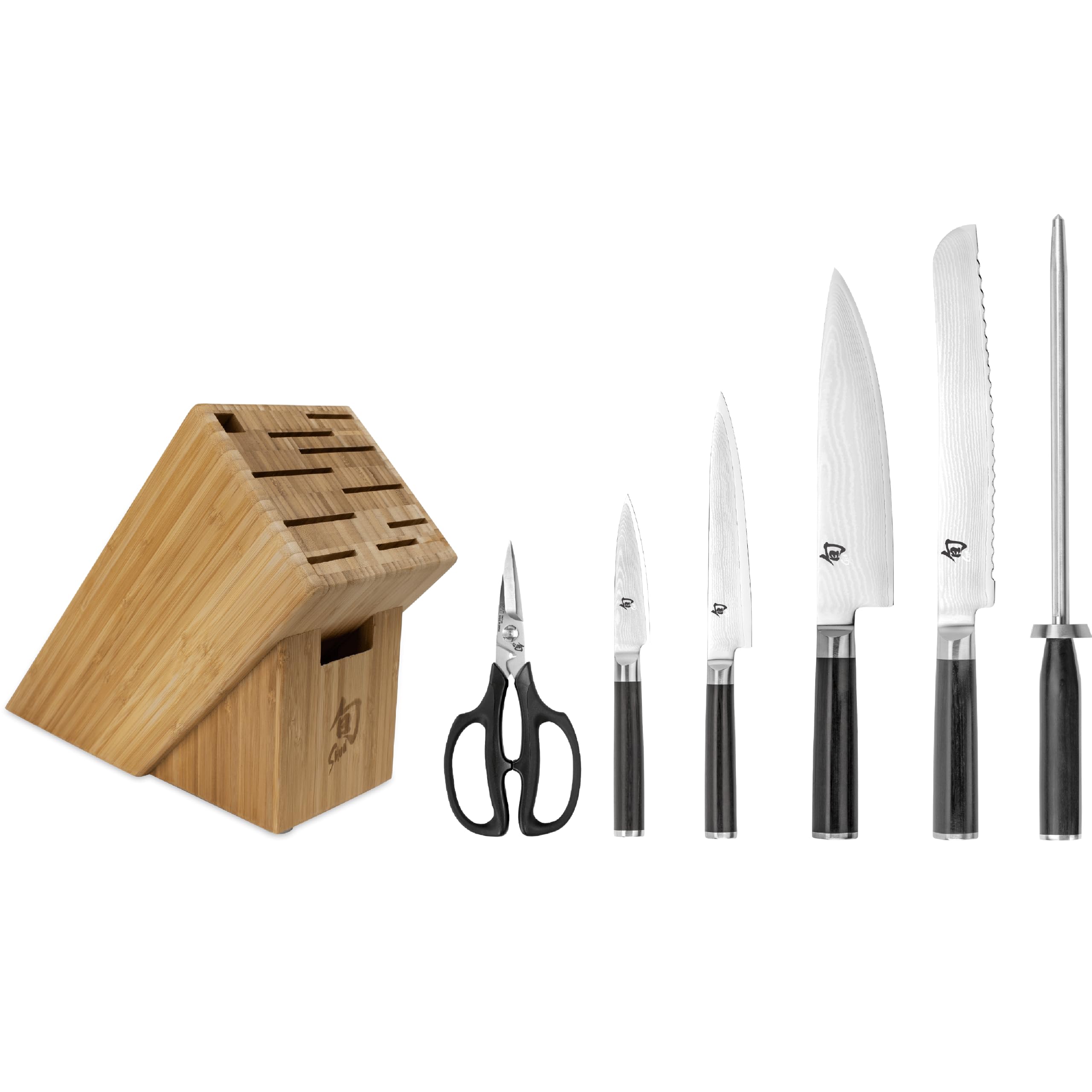
Shun Classic 7-Piece Essential Block Set — The precision upgrade
Best for: cooks ready to explore Japanese knife geometry
Shun’s VG-MAX steel takes a finer edge than any German knife in this test pool, and the 7-piece set includes thoughtful extras like a 6-inch utility knife and herb shears that actually get used. The chef’s knife glided through fish and soft proteins with a precision that felt different from the German sets — more surgical, less brute force. The trade-off is fragility and care: harder Japanese steel chips more easily if you twist or pry, and the Damascus-clad blades demand hand washing and careful storage to stay pristine.
- VG-MAX steel took the finest edge in testing
- Utility knife filled the gap between sizes
- Herb shears earned their place in the block
- Precision on fish and soft proteins felt surgical
- Hard steel chips if twisted or pried
- Requires careful hand washing and storage
4.9/5
4.4/5
4.0/5
Top 3 Head-to-Head: Wüsthof Classic vs Victorinox Fibrox Pro vs Zwilling Pro
These are the three sets readers most often narrow down to, and the choice comes down to what you value most: edge longevity, value, or precision control.
| Feature | #1 Wüsthof Classic | #2 Victorinox Fibrox | #3 Zwilling Pro |
|---|---|---|---|
| Edge retention (week 8) | Still sliced tomato cleanly — Best | Needed honing by week 3 | Held fine edge through week 8 |
| Handle grip when wet | Secure, slightly slick | Fibrox stayed grippy — Best | Secure, bolster aids control |
| Precision and control | Excellent all-rounder | Light and nimble | Curved bolster best for pinch grip — Best |
| Choose if… | You cook daily and want one set for a decade | You want pro performance at a fair price | You prioritize knife skills and precise cuts |
Who These Knife Sets Are NOT For
These sets are built for home cooks who want a reliable block or a focused trio. They are not the right answer for every kitchen.
If you only cut occasionally and cannot commit to hand washing and drying, a dishwasher-safe stamped set will serve you better than any forged German knife. And if you already own a chef’s knife you love, buying a full block is redundant — add a paring knife and a bread knife individually instead.
Common Mistakes to Avoid
Even a good knife set can be ruined by how you treat it in the first month.
Frequently Asked Questions About Knife Sets
How many knives do you actually need in a set?
Three knives cover nearly all home cooking: a chef’s knife, a paring knife, and a serrated bread knife. A chef’s knife handles vegetables, proteins, and most chopping. A paring knife does small precision work. A bread knife cuts through crust without crushing the interior. Anything beyond those three is a bonus, not a necessity.
Are expensive knife sets worth it?
Yes, if you cook most days. A premium forged set like the Wüsthof Classic holds its edge longer, feels more balanced, and lasts a decade or more with basic care. A budget set can perform well — the Victorinox Fibrox proved that — but it will need more frequent honing and may not last as long. The break-even point is roughly daily cooking over three or more years.
Forged vs stamped knives: which is better?
Forged knives are made from a single piece of steel and typically have a bolster, full tang, and more weight. They hold an edge longer and feel more substantial. Stamped knives are cut from a sheet, making them lighter and often thinner. Stamped is not inherently worse — the Victorinox Fibrox is stamped and performs excellently. Forged is the better choice if you want maximum durability and edge retention.
Can I put good kitchen knives in the dishwasher?
You can, but you should not. Dishwasher heat and harsh detergent dull edges, degrade wooden handles, and can cause rust spots even on stainless steel. The Victorinox Fibrox is genuinely dishwasher safe thanks to its synthetic handle, but every forged or Japanese knife in this guide will last longer and stay sharper if you hand wash and dry immediately after use.
How often should I sharpen my kitchen knives?
Hone weekly with a steel to realign the edge. Sharpen every two to three months for daily home cooking, or whenever a tomato squishes instead of slicing cleanly. German steel at 56–58 HRC needs less frequent sharpening than Japanese steel at 60+ HRC, but Japanese blades take a finer edge when you do sharpen them.
What is the best knife set for a beginner?
A three-piece set with a chef’s knife, paring knife, and bread knife is ideal for beginners — fewer knives to learn, less to store, and no filler pieces you will never use. The Mercer Culinary Renaissance 3-Piece and the Abode Premium Set of 3 both offer forged or high-carbon blades without overwhelming a new cook. Avoid large blocks with twelve knives you cannot identify.
Do I need a knife block?
No. A block is convenient storage, but it takes counter space and can harbor moisture if you put knives away wet. In-drawer trays, magnetic strips, or simple blade guards work just as well and take up less room. If you have counter space and like the look, a block is fine — just make sure it has slots for any extra knives you might add later.
Our Final Verdict
The knife set market splits cleanly between sets that ask for care and reward you with years of sharp edges, and sets that tolerate neglect but demand more maintenance. For most everyday cooks, the Wüsthof Classic 7-Piece is the smartest long-term investment — it stays sharp, feels balanced, and has the fewest compromises. If budget or dishwasher tolerance matters more, the Victorinox Fibrox Pro delivers remarkable performance for the money.

