What Is a Partial Tang Chef Knife? Construction & Performance Explained
Quick Answer
A partial tang chef knife features a blade steel extension that only goes partway into the handle rather than running all the way to the butt. While this makes the knife lighter and often less expensive, it generally offers lower long-term durability and handle strength compared to full-tang alternatives.
What Is a Knife Tang?
 Save
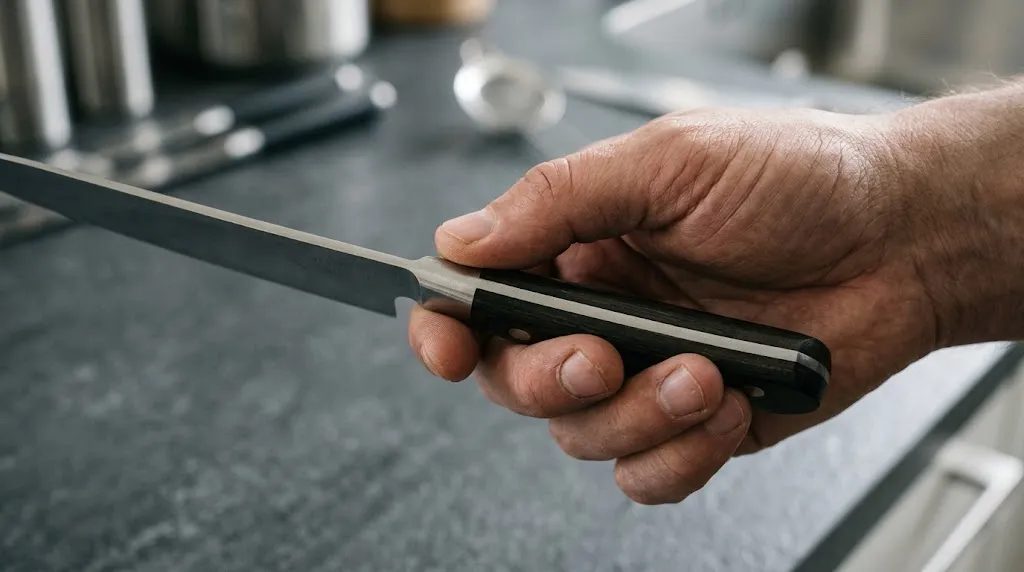
To understand a partial tang chef knife, it helps to look at the underlying structure of a kitchen knife. The tang is simply the portion of the metal blade that extends backward into the handle, serving as the backbone that anchors the two handles together.
Knife construction generally falls into two main categories based on this internal spine: full tang and partial tang. In a full tang design, the steel sheet continues in full thickness all the way to the end of the handle. In a partial tang design, the metal stops short inside the handle material.
How a Partial Tang Chef Knife Is Constructed
When manufacturers build a partial tang knife, they typically insert a narrower or shorter spike of steel into a pre-molded handle. This inner steel extension is often secured using resin, adhesives, or a single pin rather than the heavy rivets commonly seen on full-tang cutlery.
Because less steel is used in the handle assembly, the overall weight distribution shifts forward toward the blade. This shift changes how the knife feels in the hand, altering both its balance point and its cutting leverage during routine prep tasks.
Common Types of Partial Tangs
Partial tang construction varies depending on manufacturing standards and price points. Understanding these variations helps explain why some partial tang knives perform better than others:
- Push-tang (Rat-tail tang): A thin, narrow rod of metal extends into the handle. This style is very common in traditional Japanese knives and certain lightweight utility blades.
- Stub tang: A very short piece of metal embedded just an inch or two into the top of the handle. This type is generally found in lower-end or novelty kitchen cutlery.
- Encapsulated tang: The partial steel spine is completely molded inside a synthetic or plastic handle block, hiding the internal structure from view.
Performance Characteristics in the Kitchen
The internal structure of a chef knife directly influences how it handles daily cooking tasks like chopping, slicing, and dicing. Evaluating these performance factors reveals what to expect from a partial tang design.
Weight and Maneuverability
One notable characteristic of a partial tang chef knife is its reduced weight. Because there is less heavy steel enclosed in the handle, the overall tool feels lighter. Cooks who experience hand fatigue from heavy Western-style chef knives often find lighter partial tang options more comfortable for quick, repetitive tasks.
Balance and Cutting Leverage
Balance is critical for clean, safe cutting. Full-tang knives usually balance right at the bolster where the blade meets the handle. A partial tang knife, having a lighter handle, often feels blade-heavy. While some users prefer this forward-weighted feel for driving through dense produce, others find it less predictable during precise slicing.
Warning
Never use a partial tang chef knife for heavy-duty kitchen tasks like splitting winter squash, hacking through frozen foods, or chopping dense bones. The stress point where the blade meets the internal tang is vulnerable to snapping under high torque.
Durability and Long-Term Reliability
Durability remains the primary trade-off when choosing a partial tang design. The junction where the blade transitions into the handle represents a structural stress concentration point.
Over time, rigorous lateral pressure—such as twisting the blade or prying food apart—can cause the internal tang to loosen inside the handle cavity. Once a partial tang becomes loose, repairing it is rarely practical, meaning the knife usually needs to be replaced.
Moisture and Maintenance Risks
Handle construction also affects longevity. If microscopic gaps form around where a partial tang enters the handle, moisture from washing and food juices can seep inside. Trapped moisture encourages corrosion along the hidden metal surface, potentially weakening the internal bond without any visible warning on the exterior.
Partial Tang vs. Full Tang: Making the Right Choice
 Save
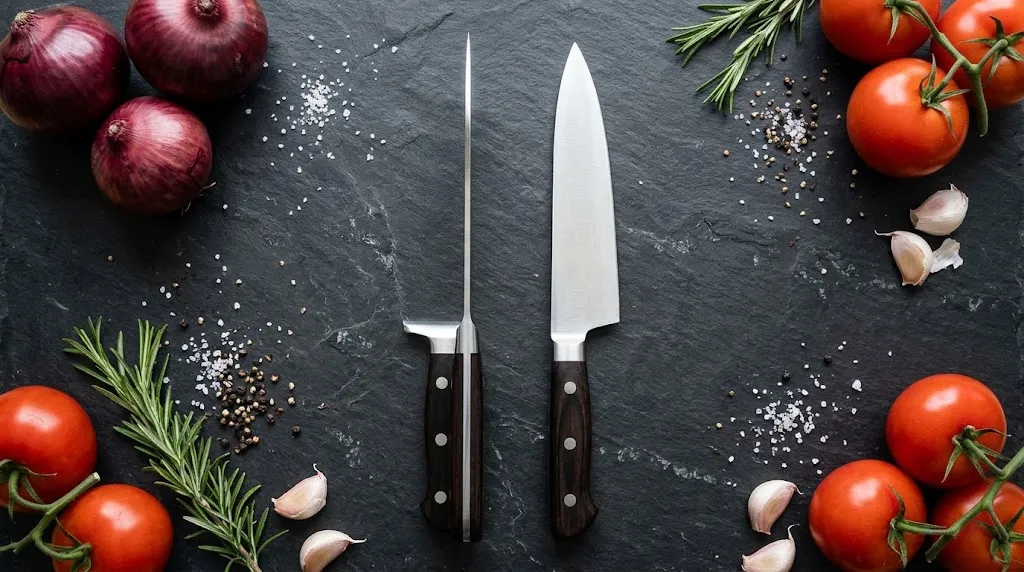
Deciding whether a partial tang chef knife fits your kitchen depends entirely on your cooking habits, maintenance routine, and budget preferences.
| Feature | Partial Tang | Full Tang |
|---|---|---|
| Weight | Generally lighter | Heavier and more substantial |
| Durability | Lower under heavy stress | High resilience and strength |
| Price Point | Often more affordable | Typically more expensive |
| Ideal Use | Light vegetable prep, soft slicing | All-purpose heavy kitchen work |
For home cooks who handle everyday tasks like dicing onions, slicing tomatoes, and cutting boneless meats with proper technique, a well-made partial tang knife can serve adequately. However, professional kitchens and intensive home cooking environments almost always demand full-tang construction for maximum safety and endurance.
Tip
Always hand-wash and thoroughly dry any partial tang kitchen knife immediately after use. Never submerge wooden-handled partial tang knives in standing water or run them through a mechanical dishwasher, as thermal shock and moisture will rapidly degrade the internal handle seal.
Related Product
Kitchen Knife Sharpener & Maintenance Tools
Keep your kitchen blades performing smoothly and safely with proper edge maintenance tools suited for daily food preparation.
As an Amazon Associate, we earn from qualifying purchases.
Frequently Asked Questions
What is a partial tang chef knife?
A partial tang chef knife features a blade steel extension that goes only partway into the handle, unlike a full-tang knife where the steel runs completely to the butt.
Are partial tang knives bad quality?
Not necessarily. While they lack the structural durability of full-tang blades for heavy chopping, many lightweight or traditional specialty knives use partial tangs effectively for delicate cutting tasks.
Can a loose partial tang handle be repaired?
In most cases, no. Once the internal bond between a partial tang and its handle fails or loosens, structural repair is difficult and unsafe, meaning the knife usually needs replacement.
How can you tell if a knife is partial or full tang?
You can often inspect the spine of the handle. A full tang will show a continuous strip of metal running along the top and bottom edge of the handle sandwiched between two grip scales.
Is a partial tang chef knife heavier or lighter?
It is generally lighter. Removing extra metal from the handle reduces overall weight and shifts the balance point forward toward the blade.
What tasks should be avoided with a partial tang knife?
Avoid heavy-duty kitchen tasks that require high leverage or twisting force, such as cutting frozen foods, splitting hard squashes, or hacking through bone.
Conclusion
Understanding the construction of a partial tang chef knife helps clarify its role in the kitchen. While these blades offer lighter weight and comfortable maneuverability for routine food prep, their structural limitations require careful handling. By avoiding high-stress tasks and matching the tool to the appropriate cooking jobs, you can ensure safer food preparation and realistic expectations for your kitchen cutlery.

