10 Best Big Game Boning Knife: Top Picks for Hunters
Processing big game requires a knife that can separate meat from bone without tearing tissue or tiring your hand. A boning knife uses a narrow, sharp blade to follow joints, trim connective tissue, and remove clean cuts from large animals.
For big game, blade length, flexibility, edge retention, grip, and sheath quality matter most. The best knife should balance a strong, sharp blade with enough flexibility and control for detailed cuts. We compared leading big game boning knives to find the models that make field dressing and meat preparation safer, cleaner, and easier.
Best Big Game Boning Knives
We reviewed big game boning knives for blade quality, handle comfort, control, and ease of cleaning. Our list highlights dependable options for field dressing and removing meat from large game.
Outdoor Edge Wild Game Boning Knife
 Save
SaveWe recommend this knife for hunters who want a sharp, flexible blade for field dressing and processing game.
Key Pros
- Sharp blade handles clean, controlled cuts
- Orange nonslip handle is easy to spot and hold
- Five-inch length offers a useful balance of reach and control
Key Cons
- The blade may need frequent sharpening with heavy use
- It can develop surface rust if left wet
- No sheath or blade cover comes included
We found the flexible blade easy to guide around joints, silver skin, and bones. Its five-inch length gave us enough reach for larger cuts without feeling bulky during detailed work.
The rubberized handle stayed comfortable during longer processing sessions. Its bright orange color also made the knife easier to find on a crowded work surface or in low light.
The edge arrived very sharp and responded well to regular honing. We would wash and dry it immediately after use, since some users report rust after leaving the stainless steel blade wet.
A sheath would improve storage and safety, so we would add one before carrying it in a pack or vehicle. Overall, this knife offers strong cutting control and a comfortable grip for deer and other big game.
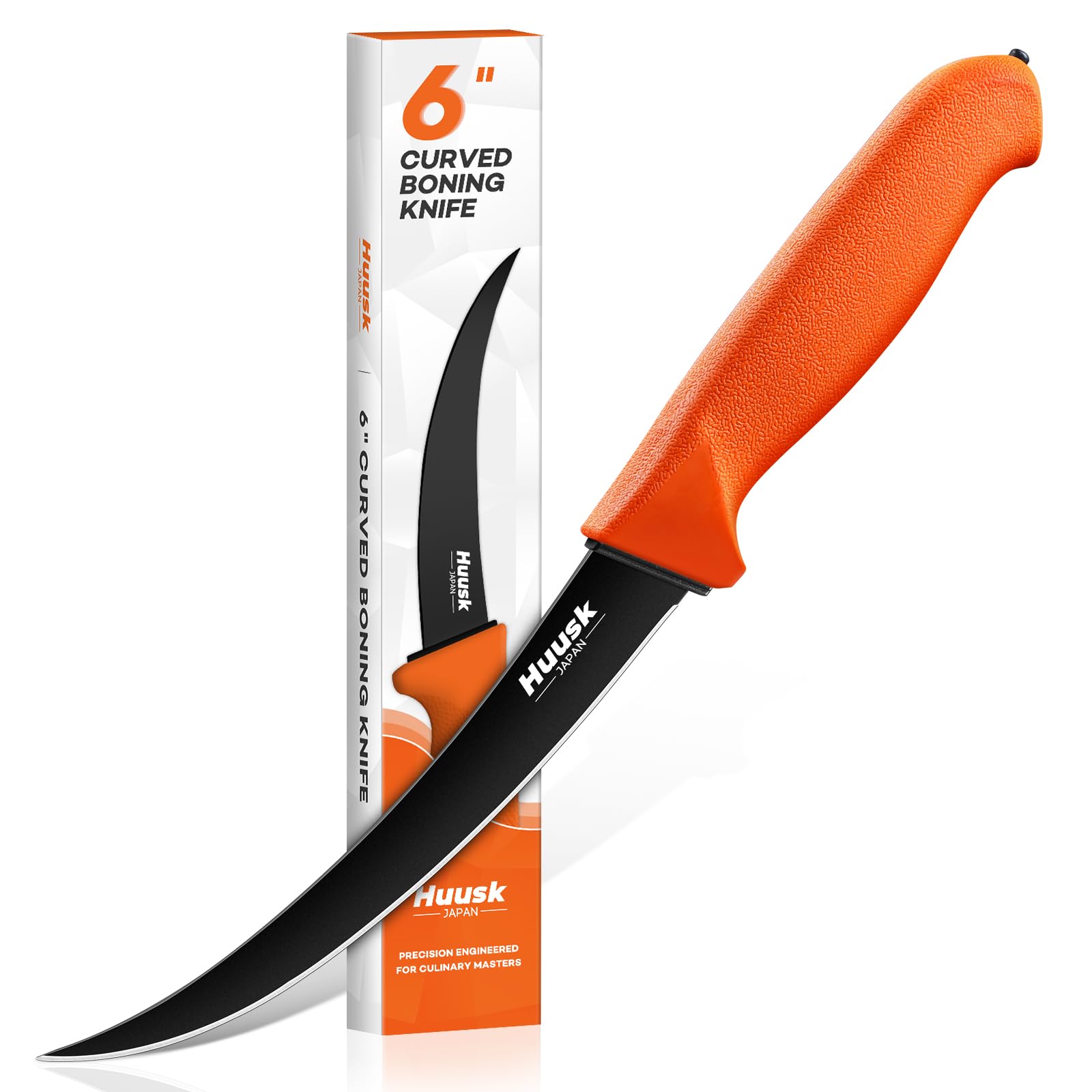
Huusk Curved Boning Knife
 Save
SaveWe recommend this knife for hunters who want a sharp, easy-to-see tool for trimming and deboning game.
Key Pros
- Curved blade gives us good control around joints and silver skin
- Bright orange handle remains easy to find outdoors
- Textured grip feels steady when our hands get wet or greasy
Key Cons
- The strong curve may feel unusual at first
- Plastic handle feels less refined than premium options
- No blade cover or storage case comes included
We found the 6.5-inch curved blade useful for separating meat from bones and trimming connective tissue. Its shape helped us follow the contours of cuts without using much force, though it took some practice to adjust to the pronounced curve.
The blade arrived very sharp and made clean cuts through meat and silver skin. The stainless steel construction and titanium coating should help with corrosion, but we would still wash and dry it promptly after processing game.
The orange handle stood out on a workbench and would be helpful in low light or outdoor settings. Its textured surface gave us a secure hold, although the plastic construction did not feel as substantial as a heavier professional knife.
At a 4.7-star rating from 93 customer reviews, this Huusk model offers a practical balance of sharpness, visibility, and price. We would choose it for field dressing and home meat preparation, but we would pair it with a protective sheath for safer storage.
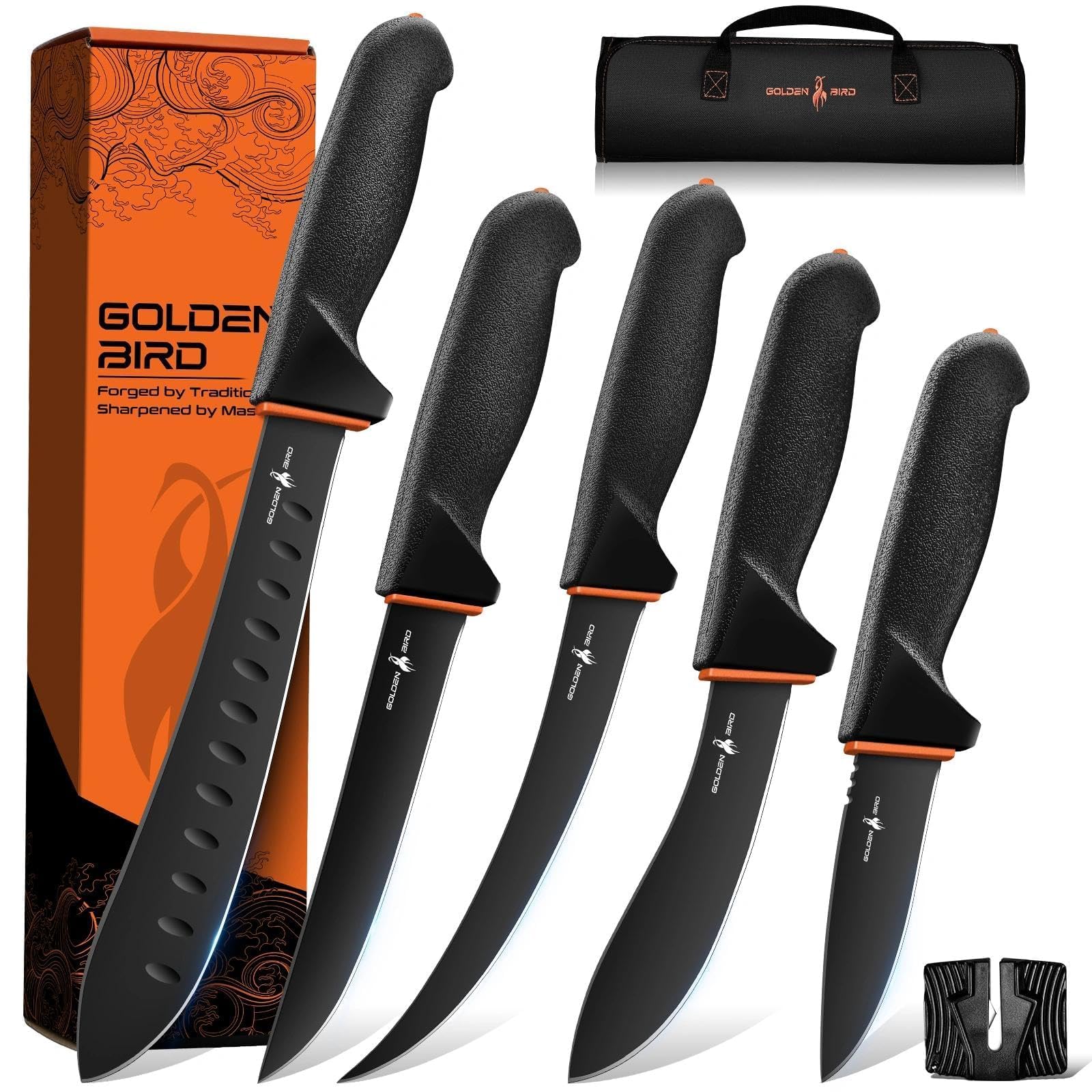
Golden Bird Butcher Knife Set
 Save
SaveWe recommend this set for hunters who want several sharp, portable knives for field dressing, trimming, and skinning.
Key Pros
- Includes boning, skinning, and meat-cutting knives
- Comfortable handles provide steady control
- Roll bag keeps the set organized
Key Cons
- Some blades may flex during heavy cutting
- One handle may squeak during use
- The built-in sharpener has limited usefulness
We found the boning knife effective for removing silver skin and working around joints. Its sharp stainless steel blade handled meat cleanly, while the shaped handle stayed comfortable during longer trimming tasks.
The set includes useful blade styles for different stages of processing. We could move from skinning to trimming without switching to unrelated tools, which made the work more efficient.
The roll bag also helped keep the knives together for transport. However, the thinner blades felt less suitable for forcing through dense beef or pork. We would use a separate heavy knife for tough cuts and reserve this set for controlled processing work.
OUTDOOR EDGE ErgoMax Knife Set
 Save
SaveWe recommend this set for hunters who want several sharp, comfortable knives for field dressing and breaking down big game.
Key Pros
- Comfortable rubberized handles provide a steady grip.
- Six knives cover boning, skinning, caping, and butchering tasks.
- The case keeps the set organized and includes sharpening tools.
Key Cons
- The full set takes more space than a single boning knife.
- The included sharpener may need practice for consistent results.
- The 8-inch blade can feel long for detailed work in tight areas.
We found the handles comfortable during longer cutting sessions. Their textured rubber surface helped us keep control when our hands became wet or greasy, while the light design reduced strain.
The set includes useful blade styles for processing deer, elk, and other large game. We used the boning knife for separating meat from joints and found the plain edge easy to guide around bones.
The blades arrived sharp and handled routine cutting well. The black coating also helps protect the steel, but we still recommend washing and drying each knife soon after use.
Storage is another strong point. The clear-lid case keeps the knives, sharpener, and other pieces together, making transport easier than carrying loose tools. For hunters who process game regularly, this set offers good coverage without requiring several separate purchases.
Mercer Culinary 6-Inch Curved Boning Knife
 Save
SaveWe recommend this knife for hunters and home cooks who want a sharp, affordable blade for trimming and separating meat from bone.
Key Pros
- Curved blade gives us a useful angle around joints and bones
- Comfortable handle stays secure during wet, messy work
- High-carbon steel holds an edge well and sharpens easily
Key Cons
- Six inches may feel long for smaller cuts
- White handle can show stains from spices and meat juices
- Hand washing takes extra care
While trimming meat, we found the curved blade helpful around ribs, joints, and uneven cuts. Its light feel made it easy to guide through chicken, fish, ham, and larger game without adding much hand strain.
The handle has textured areas that helped us keep control when wearing gloves. The blade arrived very sharp and handled fat and sinew cleanly, though we would still hone it during a long butchering session.
This knife works best when we wash and dry it by hand after use. The six-inch length offers useful reach for big game, but hunters who prefer tight control may want a shorter boning knife.
Victorinox Wood 6-Inch Boning Knife
 Save
SaveWe recommend this knife for hunters who want a sharp, agile blade for trimming and deboning big game.
Key Pros
- Curved blade offers precise control around joints and bone
- Wood handle feels comfortable and balanced
- Sharp edge handles sinew, fat, and smaller cuts with ease
Key Cons
- Wood handle needs careful cleaning and drying
- Narrow blade is not suited to cutting through heavy bones
- Short length may feel limiting on large cuts
We found the narrow, curved blade easy to guide when trimming deer and separating meat from joints. Its semi-stiff build gave us enough control for detailed work without feeling too flexible.
The blade arrived very sharp and stayed effective through extended processing. We used it for removing sinew, trimming fat, and breaking down smaller sections, but we avoided forcing it through bones.
The wooden handle added a comfortable grip and gave the knife a balanced feel. It also requires more care than a plastic handle, so we washed and dried it by hand after each use.
At about six inches, this knife works best for controlled trimming rather than large, heavy cuts. Hunters who want a dependable boning knife for deer and similar game should find it a practical choice.
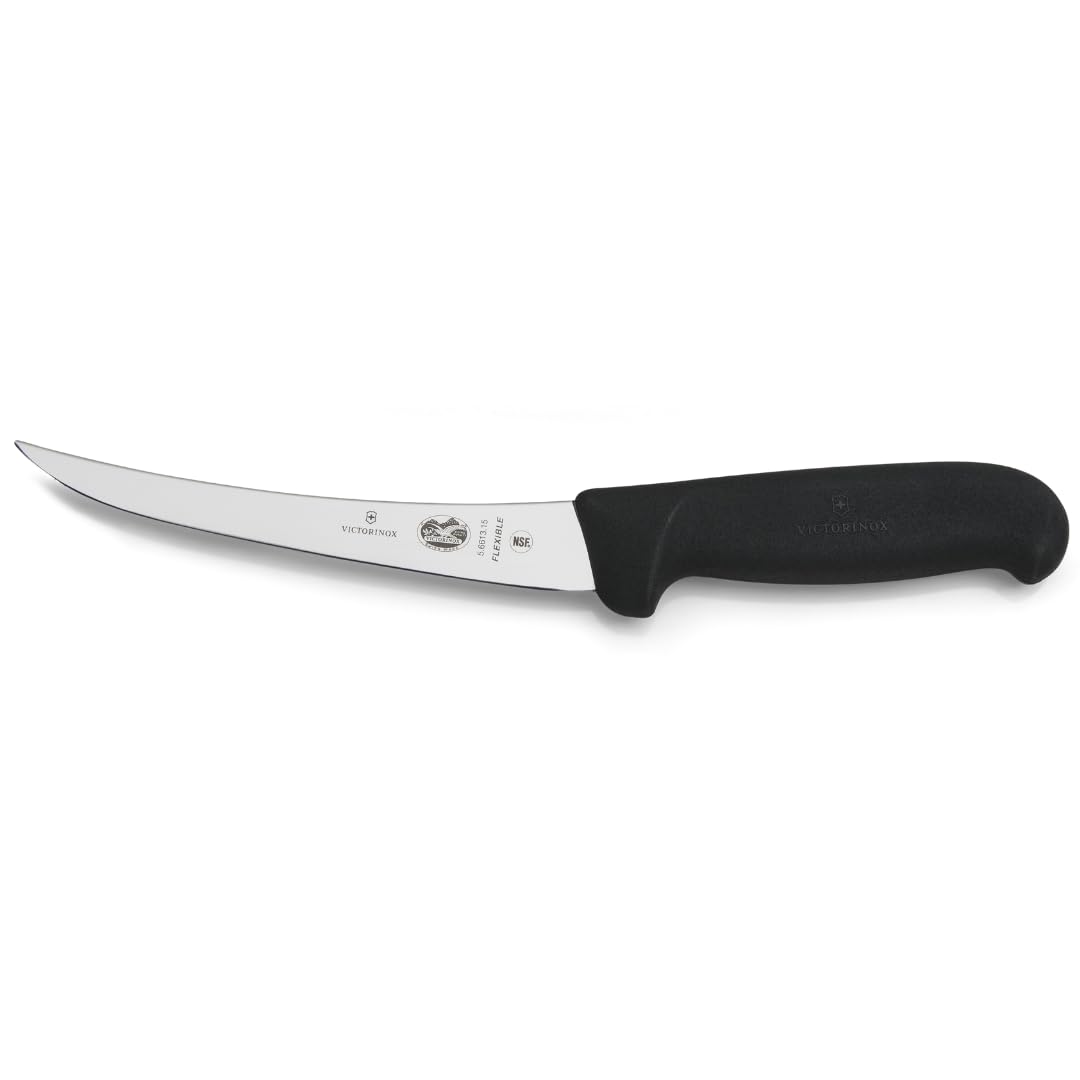
Victorinox Fibrox Pro Boning Knife
 Save
SaveWe recommend this knife for hunters who want a light, flexible blade that handles careful cuts around bone.
Key Pros
- Flexible curved blade improves control around joints
- Textured handle stays secure when wet or greasy
- Sharp, lightweight design reduces hand strain
Key Cons
- Six-inch blade may feel short for large animals
- Flexible steel needs careful handling near thick bone
- No storage sheath comes included
We found the curved blade easy to guide along ribs, joints, and thin sections of meat. Its flexibility helped us make clean cuts without removing more meat than needed, which makes it useful for deer, elk, and smaller game.
The Fibrox handle felt secure during long trimming sessions. Even with wet hands, we could maintain control without gripping too tightly. The low weight also made repeated cuts less tiring.
This knife arrives very sharp and holds its edge well with normal care. We would avoid twisting it against hard bone, since the flexible blade works best with controlled slicing rather than force.
The main limitation is the six-inch length. It gives us good precision, but hunters working on very large animals may prefer a longer, stiffer boning knife for heavier sections. A sheath would also make field storage safer.
HOSHANHO 9-Inch Fillet Knife
 Save
SaveWe recommend this knife for hunters who want a sharp, lightweight blade for trimming and deboning smaller cuts of big game.
Key Pros
- Very sharp edge for clean trimming
- Comfortable pakkawood handle
- Light, flexible blade offers good control
Key Cons
- Nine inches may feel long for detailed work
- Flexible steel may not suit heavy joint work
- Pakkawood needs careful cleaning and drying
We found the thin blade useful when working around bones, silver skin, and narrow sections of meat. Its sharp edge made smooth cuts with little wasted meat, while the light build helped us maintain control during longer trimming sessions.
The handle felt secure without adding much weight. Its shape worked well with both standard and pinch grips, though hunters with larger hands may prefer a thicker handle.
This knife handles fish and general meat trimming well, but it is not a replacement for a sturdy cleaver or heavy boning knife. We would choose it for precision work on venison, elk, and similar game rather than cutting through joints or hard bone.
Victorinox Fibrox Pro Boning Knife
 Save
SaveWe recommend this knife for hunters who want a light, sharp tool for controlled work around bones, joints, and silver skin.
Key Pros
- Sharp curved blade supports precise cuts
- Textured handle stays secure during wet work
- Light design reduces hand fatigue
Key Cons
- Six-inch blade may feel short for large cuts
- Thin edge needs careful handling
- Dishwasher cleaning can dull the edge over time
We found the curved, semi-stiff blade easy to guide while separating meat from bone. It handled venison and pork trimming well, especially when removing membrane and silver skin without taking too much usable meat.
The Fibrox handle gave us a steady grip during messy processing. Its light weight also made repeated cuts more comfortable, though hunters who prefer a heavier knife may find it less substantial.
The blade arrived very sharp and held its edge through normal boning work. We would hand-wash and dry it after use, then touch up the edge with a steel or sharpener when needed. The six-inch length works well for most game processing but may feel limiting on larger sections.
Victorinox Fibrox Pro 6-Inch Boning Knife
 Save
SaveWe recommend this knife for hunters who want a sharp, well-balanced boning tool with a semi-stiff blade for controlled cuts.
Key Pros
- Sharp blade that holds its edge well
- Comfortable, secure handle
- Light and easy to control
Key Cons
- The blade may feel too stiff for flexible cutting
- No sheath comes included
- The handle may feel basic to some users
We found the 6-inch curved blade easy to guide around joints and along bones while processing deer. Its semi-stiff build gave us useful control when trimming larger cuts without feeling overly heavy in the hand.
The Fibrox Pro handle stayed comfortable during longer sessions and provided a steady grip. The knife also worked well for trimming brisket and pork, making it useful beyond field dressing and game processing.
The blade arrived very sharp and kept its edge through repeated cutting. We did need to hone it during extended use, and the lack of a protective sheath makes storage less convenient. Still, its light weight, reliable grip, and strong cutting performance make it a practical choice for big game processing.
Buying Guide
We should choose a big game boning knife based on the animal size, cutting tasks, and field conditions. A blade that removes meat cleanly should also feel controlled during long processing sessions.
| Feature | What to look for |
|---|---|
| Blade length | Choose a shorter blade for precise work and a longer blade for larger cuts. |
| Blade shape | A curved blade follows bone well, while a straighter blade supports trimming and slicing. |
| Steel | Look for steel that holds an edge and resists rust. Stainless steel suits wet field conditions. |
| Flexibility | Flexible blades help separate meat from bone. Stiffer blades provide more control for heavy cuts. |
| Handle | Select a handle with a secure grip, even when wet or cold. A finger guard can improve control. |
| Sheath | A durable sheath protects the blade and helps us carry it safely. |
We should check the knife’s balance before buying. The handle should not feel too heavy, and the blade should move smoothly without requiring excess force.
Ease of care also matters. A knife that cleans quickly, dries fully, and sharpens without difficulty will suit repeated use. We should confirm that the blade and handle can withstand regular washing without trapping dirt or moisture.
For field use, we should consider weight, sheath security, and grip texture. For home processing, blade control and cleaning convenience may matter more than compact size.
Editor’s Choice
We choose the Victorinox Fibrox Pro 6-Inch Curved Boning Knife for most big-game hunters. Its curved, flexible blade follows joints and connective tissue, while the textured Fibrox handle gives us a secure grip when our hands are wet or cold.
The stainless steel blade offers good edge retention and resists corrosion with regular care. Its 6-inch length provides enough reach for elk, deer, and similar game without feeling difficult to control.
| Feature | Details |
|---|---|
| Blade length | 6 inches |
| Blade style | Curved and flexible |
| Handle | Textured, non-slip Fibrox |
| Best for | Precise trimming and boning |
We should wash and dry the knife after each use, then store it in a sheath or knife roll. Sharpening the edge regularly helps maintain clean cuts and reduces the need for force.
Conclusion
We should choose a big game boning knife based on blade control, edge retention, comfort, and ease of cleaning. A strong, flexible blade helps us separate meat from bone while reducing waste.
We also need to match the knife to our hunting needs. A compact knife works well for field dressing, while a longer blade may suit larger animals and detailed processing at camp.
Key features to prioritize:
- High-quality stainless steel
- A secure, non-slip handle
- A protective sheath
- Easy sharpening and maintenance
- A blade length suited to our game
The best choice balances cutting performance with safe handling. When we keep the blade sharp, clean the knife after use, and store it in its sheath, we can rely on it for repeated field work.
FAQs
What blade length works best for big game?
We usually recommend a 4- to 6-inch blade. This range gives us enough control for careful cuts while still handling thicker hide and tissue.
Should we choose a fixed blade or folding knife?
A fixed blade is often the better choice for field dressing big game. It is easier to clean and generally provides more stability. A folding knife can save space, but we must clean its hinge carefully.
What blade shape should we look for?
We should consider a drop-point or narrow trailing-point blade. A drop point offers control for general boning, while a narrow blade helps us work around joints and connective tissue.
Is a flexible blade necessary?
Some flex can help us follow bones and remove meat cleanly. However, too much flex reduces control. We should choose a blade with moderate flexibility for large animals.
What handle features matter most?
We should look for a secure, textured handle that remains comfortable when wet or cold. A pronounced guard can help protect our fingers during detailed cuts.
How do we maintain a boning knife?
We should wash and dry the knife soon after use, then apply a light coat of food-safe oil if needed. We should sharpen the blade regularly and store it in a protective sheath.