How to Oil a Teak Cutting Board: A Complete Care Guide
Quick Answer
To oil a teak cutting board, wash it gently, let it dry completely, and apply a thin layer of food-grade mineral oil. Coat every surface, allow the oil to absorb for several hours or overnight, and wipe away any excess. Repeat about once a month or when the wood looks dry. For general guidance, see the University of Maine’s cutting board care recommendations.
Six Quick Steps
- Clean the board: Remove food residue with mild dish soap and warm water.
- Dry completely: Wipe the surface and stand the board upright to air-dry.
- Choose the oil: Use food-grade mineral oil intended for cutting boards.
- Cover all surfaces: Apply a thin, even coat to both faces and every edge.
- Allow absorption: Leave the board for several hours or overnight.
- Remove excess: Buff with a clean cloth until the surface feels smooth rather than greasy.
Important: Avoid olive oil, ordinary vegetable oil, and non-food-safe wood finishes.
A beautiful teak cutting board can make everyday food preparation more enjoyable. However, even durable teak needs proper care to maintain its appearance and useful life.
In this guide, I’ll explain how to oil a teak cutting board, which products make sense, and how to recognize when the wood needs attention.
Why Should You Oil a Teak Cutting Board?
Oiling a teak cutting board helps limit moisture absorption, reduces surface dryness, and maintains the wood’s natural appearance. It also makes routine cleaning easier by helping water bead on the surface instead of soaking in immediately.
Teak contains naturally occurring oils and has a reputation for moisture resistance. However, those properties don’t eliminate the need for maintenance on a frequently washed cutting surface.
What Makes Teak Different From Other Woods?
Teak is a tropical hardwood valued for its durability and distinctive golden-brown grain. Its natural extractives help explain why it performs well in many moisture-exposed applications.
A teak cutting board still experiences regular contact with water, food, detergents, and knife blades. Over time, its surface can look lighter, feel rougher, or absorb water faster.
- Natural moisture resistance: Teak is relatively resistant to water exposure, but it isn’t waterproof.
- Attractive grain: Proper conditioning can deepen the wood’s appearance.
- Hardwearing construction: A sound teak board can withstand repeated kitchen use when maintained correctly.
- Maintenance needs: Washing and drying practices remain important, regardless of the wood species.
What Happens When Teak Becomes Too Dry?
A neglected cutting board may develop a dull finish, raised grain, or small surface checks. Changes in humidity can also cause the board to expand and contract.
Oil helps reduce abrupt moisture changes, but it cannot repair serious structural damage.
- The surface appears pale or unusually dull.
- Water soaks in quickly instead of forming small beads.
- The wood feels dry or slightly rough.
- Some areas appear noticeably lighter than others.
- The board needs more frequent conditioning after repeated washing.
My practical recommendation: Watch how the board behaves after cleaning rather than following a rigid calendar alone.
What Is the Best Oil for a Teak Cutting Board?
For most unfinished or previously mineral-oiled teak cutting boards, food-grade mineral oil is the simplest choice. It is odorless, relatively inexpensive, and resistant to becoming rancid.
Choose a product clearly labeled for food-contact surfaces. Avoid assuming that every oil sold for furniture or outdoor teak is suitable for a kitchen cutting board.
Food-Grade Mineral Oil
Food-grade mineral oil is a refined oil commonly used to maintain wooden cutting boards and butcher blocks. It penetrates exposed wood surfaces without forming a hard varnish-like film.
For routine care, I favor a plain mineral oil because it requires little preparation. It also avoids the spoilage concerns associated with many cooking oils.
Mineral Oil and Beeswax Conditioner
A board conditioner combines an oil with wax, often beeswax. The oil conditions the wood while the wax leaves a thin moisture-resistant surface coating.
This makes conditioner a useful optional second step after oiling. It should not replace cleaning, drying, or sensible board storage.
Can You Use Coconut Oil?
Some cutting board products use specially refined or fractionated coconut oil. However, ordinary coconut cooking oil is not my first choice for a maintenance routine.
Its properties depend on processing and formulation. A dedicated food-contact conditioner or plain mineral oil offers a more predictable option.
Which Oils Should You Avoid?
- Olive oil: It can oxidize, develop unpleasant odors, and leave residue.
- Vegetable or canola oil: Common cooking oils may become sticky or rancid.
- Outdoor teak oil: Products for patio furniture may contain solvents or additives unsuitable for food preparation.
- Motor or machine oil: These products do not belong on food-contact surfaces.
- Unverified wood finishes: Never assume a furniture polish is appropriate for a cutting board.
Teak Cutting Board Oil Comparison
 Save
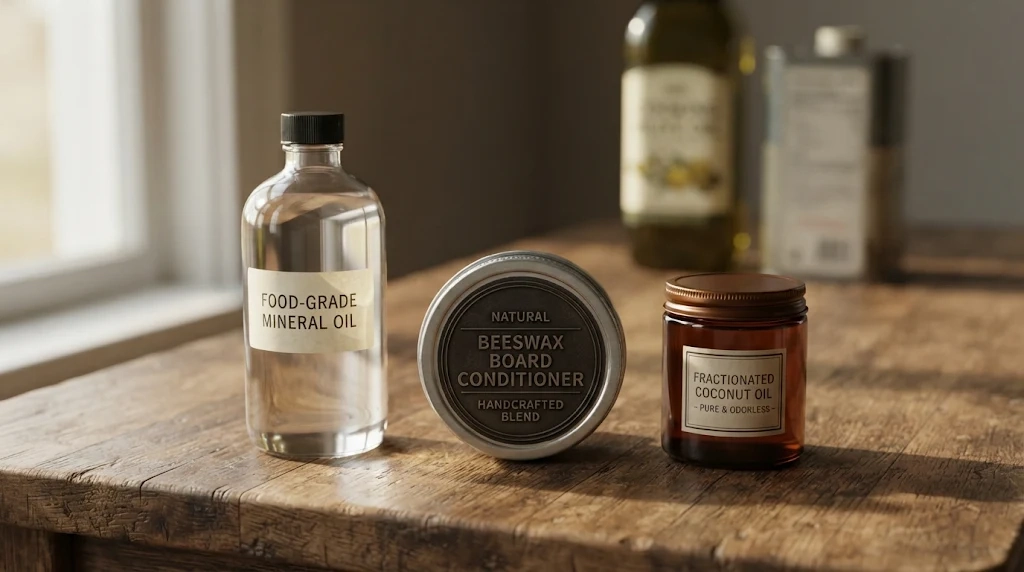
The right treatment depends on the board’s existing finish and how much maintenance you want to perform. The comparison below focuses on common options for kitchen use.
| Oil or Finish | Food-Contact Suitability | Main Benefit | Recommendation |
|---|---|---|---|
| Food-grade mineral oil | Suitable when labeled appropriately | Simple, odorless conditioning | Best routine choice |
| Mineral oil and beeswax | Suitable when formulated for cutting boards | Added surface moisture resistance | Excellent optional finish |
| Fractionated coconut oil | Depends on product formulation | Alternative conditioning ingredient | Use a dedicated food-safe product |
| Olive or vegetable oil | Edible, but unsuitable for routine board care | No compelling advantage | Avoid |
| Outdoor teak oil | Not established without specific labeling | Furniture finishing | Do not use unless expressly approved for food contact |
How to Oil a Teak Cutting Board Step by Step
 Save
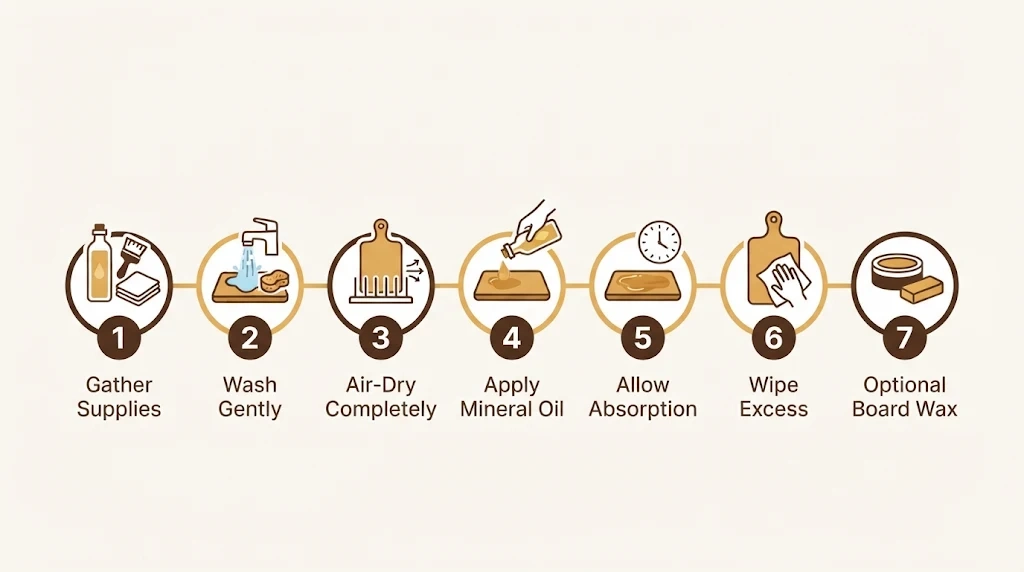
Oiling a teak cutting board involves seven manageable steps. Most of your time goes toward letting the wood dry and absorb the treatment.
Step 1: Gather Your Supplies
Prepare everything before beginning so you can apply the treatment evenly. You don’t need specialized woodworking equipment.
- Food-grade mineral oil
- Clean, lint-free cotton cloth or paper towels
- Mild dish soap
- Soft sponge or dishcloth
- Clean drying towel
- Optional food-safe board wax
- A clean, protected work surface
Step 2: Wash the Cutting Board
Wash both sides with warm water, mild dish soap, and a soft sponge. Pay attention to juice grooves, corners, and areas around handles.
Rinse away the soap without leaving the board submerged. Never put a teak cutting board in the dishwasher unless its manufacturer explicitly permits it.
Step 3: Let the Board Dry Completely
Pat every surface dry with a clean towel. Then stand the board on its edge so air can circulate around both large faces.
Allow sufficient drying time for the board’s thickness and room humidity. Oiling a damp board may trap moisture and interfere with even absorption.
Helpful tip: Washing your board in the evening and oiling it the next day can simplify the drying process.
Step 4: Apply a Thin Layer of Mineral Oil
Pour a small amount of mineral oil onto a clean cloth. Spread it evenly across the board, following the direction of the grain where practical.
Start with a thin coat and add more only where the wood absorbs it quickly. There is no need to flood the surface.
- Cover the main cutting face.
- Turn the board over and treat the underside.
- Condition all four edges.
- Reach into any grooves or handle openings.
- Give visibly dry areas a little extra attention.
Step 5: Allow the Oil to Absorb
Let the treated board rest for several hours, or overnight if the product directions allow. The exact absorption time depends on the oil, wood condition, and application amount.
A particularly dry board may absorb the first coat unevenly. If necessary, apply another light layer after the previous application has settled.
Step 6: Wipe Away Excess Oil
Buff the entire board with a clean, dry cloth. The finished surface should feel conditioned, not wet or slippery.
Continue wiping if you notice oil collecting in grooves or along the edges. Leaving excess mineral oil on the surface can make the board unnecessarily greasy.
Step 7: Add Board Wax if Desired
A food-safe wax conditioner can provide an additional moisture-resistant layer. Follow its label instructions and apply it only after the mineral oil treatment.
Use a small amount and polish thoroughly. Let the board settle before returning it to food preparation.
How Much Oil Does a Teak Cutting Board Need?
There is no universal measurement because boards vary in size, thickness, finish, and dryness. The goal is complete, even coverage without pooling.
For an average household board, begin with a small amount on your cloth. Add more gradually rather than pouring a large quantity directly onto the wood.
- Small board: Start with a light application across both faces and edges.
- Large board: Work in sections to maintain an even coat.
- Very dry board: Consider another thin coat after the first has absorbed.
- Recently conditioned board: A minimal refresh may be enough.
A board should not continue releasing noticeable oil when handled. If it does, give it another thorough wipe before use.
How Often Should You Oil a Teak Cutting Board?
Oiling about once a month is a useful starting point for a regularly used teak cutting board. However, cleaning frequency and environmental conditions matter more than the date alone.
As of 2026, many established cutting board care recommendations continue to use monthly conditioning as a general guideline. Always prioritize the care instructions for your particular board.
| Usage Pattern | Suggested Inspection | Conditioning Approach |
|---|---|---|
| Daily food preparation | Weekly | Oil when dry, often around monthly |
| Several uses per week | Every 2–4 weeks | Condition as needed |
| Occasional use | Monthly | Oil when appearance or absorption changes |
| Dry indoor conditions | More frequently | Adjust to signs of dryness |
These are practical inspection intervals, not mandatory schedules. An already well-conditioned board may need less frequent treatment.
How Can You Tell Whether Your Teak Board Needs Oil?
 Save
A change in color and water absorption often signals that the board needs attention. Checking these signs takes only a moment.
Try the Water-Drop Check
Place a few drops of clean water on a dry board. Observe whether they bead briefly or begin soaking into the surface quickly.
Rapid absorption can suggest that conditioning would help. However, this simple check doesn’t measure sanitation or prove that the wood has structural damage.
Inspect the Surface
- Uneven coloring: Dry areas may look lighter than surrounding wood.
- Rough texture: Raised grain can make the board feel less smooth.
- Fast moisture absorption: Water no longer beads as readily.
- Visible splitting: Cracks require inspection rather than more oil alone.
Do not use mineral oil to disguise deep cracks or contaminated grooves. Replace a board when damage prevents thorough cleaning.
Common Mistakes When Oiling Teak Cutting Boards
Most maintenance problems come from poor cleaning, unsuitable products, or excess moisture. Avoiding these mistakes is often more useful than applying oil more frequently.
1. Using Oil Made for Outdoor Teak Furniture
Outdoor teak treatments may include solvents, drying agents, or other additives. A product designed for patio furniture is not automatically safe for direct food contact.
Check the label before applying any treatment. If the manufacturer doesn’t clearly approve food-contact use, choose something else.
2. Applying Oil Before the Wood Dries
A damp board can develop uneven conditioning results. Moisture left inside cracks or joints also creates maintenance concerns.
Dry the board thoroughly after washing and before adding oil.
3. Ignoring the Underside
Only treating the top leaves the other surfaces without the same conditioning. This can contribute to uneven moisture behavior over time.
Oil both broad faces and all edges. Pay special attention to exposed end grain.
4. Adding Too Much Oil
More oil doesn’t automatically mean better protection. Heavy application may leave a greasy film that attracts dust and feels unpleasant.
Apply thin coats and wipe excess thoroughly.
5. Treating Oil as a Sanitizer
Mineral oil is a maintenance product, not a substitute for washing or sanitizing. It does not make a dirty board safe for the next ingredient.
Follow appropriate food-safety practices, including the USDA’s guidance on preventing cutting board cross-contamination.
How Do You Clean a Teak Cutting Board After Oiling?
Clean your teak cutting board after every food preparation session. Gentle, prompt cleaning helps protect both the wood and the food you prepare.
- Remove visible food scraps.
- Wash with warm water and mild dish soap.
- Rinse thoroughly without soaking.
- Dry immediately with a clean towel.
- Stand upright to finish air-drying.
- Store in a clean, dry, well-ventilated area.
For additional cleaning recommendations, see Consumer Reports’ cutting board care guide.
Should You Use Separate Boards for Raw Meat?
Yes, separate boards help reduce cross-contamination between raw animal products and ready-to-eat foods. This is especially useful when preparing meat and fresh vegetables in the same cooking session.
Always wash and, when appropriate, sanitize cutting boards between different food tasks. Replace boards with cracks or grooves that cannot be cleaned adequately.
Can You Restore a Dry or Rough Teak Cutting Board?
A dry but structurally sound teak board may improve after thorough cleaning and careful conditioning. However, oil alone will not remove scratches, flatten warping, or repair separated joints.
Restoring a Dry Surface
- Inspect the board for deep cracks or loose joints.
- Wash away food residue.
- Let the wood dry completely.
- Apply a thin layer of food-grade mineral oil.
- Allow absorption and repeat only if needed.
- Buff away excess oil.
What About Sanding?
Minor raised grain or superficial scratches may sometimes be corrected through careful sanding. Yet sanding removes material and may change the surface or damage a factory finish.
Follow the manufacturer’s instructions before refinishing. If a board has serious cracks or unsafe grooves, replacement is generally the better choice.
Recommended Oils and Conditioners for Teak Cutting Boards
If you’re choosing a maintenance product, these established options are worth considering. Each serves a different purpose, from basic conditioning to optional wax protection.
The star scores below are editorial suitability estimates for the described uses, not verified customer review averages or hands-on test results.
🏆 Best Simple Oil
Howard Cutting Board Oil
★★★★★ 4.8/5 editorial
Howard Cutting Board Oil uses food-grade mineral oil designed for wooden food-preparation surfaces. Its straightforward formula makes it my first recommendation for routine teak board conditioning, without requiring a separate blending step.
🪵 Best Routine Care Alternative
John Boos Mystery Oil
★★★★☆ 4.6/5 editorial
John Boos recommends Mystery Oil for maintaining its wooden cutting boards and butcher blocks. It’s a practical alternative for readers who prefer an established board-care system with accompanying maintenance guidance.
✨ Best Optional Wax Finish
Howard Butcher Block Conditioner
★★★★☆ 4.5/5 editorial
Howard Butcher Block Conditioner combines mineral oil with beeswax and carnauba wax. I recommend considering it as a finishing step after oiling when you want a wax-conditioned surface and additional moisture resistance.
Frequently Asked Questions
Can You Use Mineral Oil on a Teak Cutting Board?
Yes. Food-grade mineral oil is suitable for many unfinished or previously mineral-oiled teak cutting boards. It helps reduce dryness and moisture absorption without becoming rancid. Follow the manufacturer’s care instructions if your board has a specialized or factory-applied finish.
Does Teak Need Oiling if It Contains Natural Oils?
Yes, routine maintenance may still be useful. Although teak naturally contains oils and extractives, washing and everyday use affect the exposed surface. Apply a food-safe conditioner when the board looks dry or absorbs water quickly, rather than relying on the wood’s natural properties alone.
How Long Should Mineral Oil Stay on a Cutting Board?
Many cutting board care instructions recommend allowing several hours or overnight for absorption. Some products specify shorter minimum times. Follow the product label, then wipe away excess until the board no longer feels greasy. The surface should be ready for normal handling before food preparation.
Can You Use Olive Oil on a Teak Cutting Board?
Olive oil is edible, but it isn’t recommended for routine cutting board conditioning. It can oxidize, develop unpleasant odors, or leave a sticky residue over time. Food-grade mineral oil is a more dependable choice because it does not become rancid in the same way.
Should You Oil Both Sides of a Teak Cutting Board?
Yes. Apply a thin layer to both broad faces, the edges, and exposed end grain. Covering all sides helps maintain more consistent surface conditioning. After application, allow enough absorption time and remove excess oil before placing the board back into regular kitchen use.
Final Thoughts: Keep Your Teak Cutting Board in Good Condition
Learning how to oil a teak cutting board is simple, and regular care can help preserve its attractive grain and everyday usefulness. The most important habits are gentle cleaning, complete drying, and occasional conditioning with an appropriate food-safe product.
Start with food-grade mineral oil, treat every surface, and remove excess before use. Inspect your board regularly, and remember that oil never replaces cleaning or repairs serious damage.
My final tip: Make board inspection part of your kitchen cleaning routine. A few minutes of maintenance can help keep your teak cutting board ready for many meals ahead.

