Can HDPE Be Used as a Cutting Board? Safety, Benefits, and Drawbacks
Quick Answer
Yes, HDPE can be used as a cutting board. Food-contact-grade high-density polyethylene is a practical, nonporous material for preparing vegetables, meat, poultry, and seafood. Choose a board specifically manufactured for food preparation, follow the manufacturer’s cleaning instructions, and replace it when knife grooves become difficult to clean. The FDA’s food-contact guidance explains why the material’s intended use and composition matter.
Why HDPE Works for Cutting Boards
- Food-contact suitability: Properly manufactured food-grade HDPE is suitable for direct food preparation.
- Low water absorption: Its nonporous structure makes routine cleaning straightforward.
- Knife-friendly surface: It generally offers more cutting-surface give than glass or stone.
- Practical maintenance: Many commercial HDPE boards are dishwasher-safe.
- Important limitation: Deep scratches, warping, and heat exposure can shorten a board’s useful life.
Before You Buy
- Check the label: Look for food-contact suitability and clear manufacturer specifications.
- Inspect the board: Avoid unknown recycled plastic, damaged surfaces, and unverified industrial sheets.
HDPE cutting boards are common in professional kitchens, but that doesn’t mean every HDPE sheet belongs beside your kitchen knives. The difference comes down to food-contact suitability, cleaning, and ongoing maintenance.
I’m Michael, and in this guide I’ll explain what makes HDPE useful, where it falls short, and how to choose a suitable board. I’ll also compare it with wood, polypropylene, and other popular cutting surfaces.
What Is an HDPE Cutting Board?
 Save
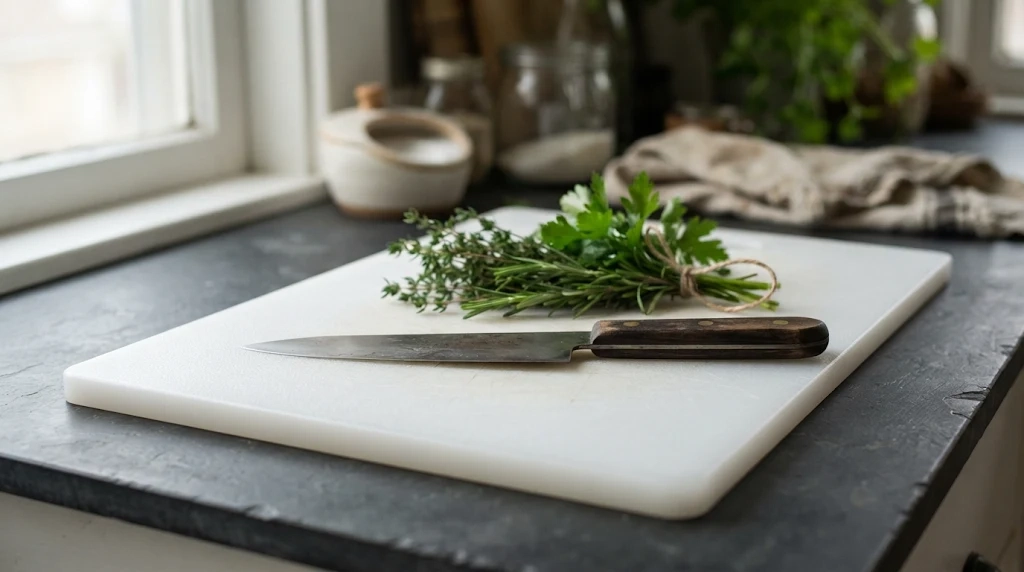
An HDPE cutting board is a food preparation surface made from high-density polyethylene, a durable thermoplastic polymer. The material has a relatively dense structure, low moisture absorption, and good resistance to many everyday cleaning conditions.
HDPE belongs to the polyethylene family of plastics. Manufacturers use it for products ranging from containers to commercial kitchen equipment.
How Does HDPE Work as a Cutting Surface?
HDPE provides a firm surface with enough give for ordinary slicing and chopping. Unlike glass or ceramic, it generally doesn’t create the same extremely hard contact against a knife edge.
That flexibility comes with a trade-off. Sharp knives gradually leave marks on the plastic surface.
- Surface texture: Usually smooth or lightly textured for food preparation.
- Moisture resistance: Resists absorbing water and food juices.
- Impact resistance: Suitable for regular chopping without the brittle behavior of glass.
- Cleaning options: Many models support dishwasher cleaning when permitted by the manufacturer.
- Wear behavior: Develops cuts and scratches that require monitoring.
One detail deserves attention: the HDPE resin alone doesn’t establish the safety of the finished board. Additives, colorants, manufacturing conditions, and intended food-contact use also matter.
Is HDPE Safe for Cutting Boards?
Yes, properly manufactured food-contact-grade HDPE is suitable for cutting boards. However, a generic sheet labeled HDPE isn’t automatically approved for direct food contact.
The important distinction is between a verified food preparation product and an unidentified industrial material. I would always check the manufacturer’s specifications before using an unfamiliar sheet for food.
What Makes HDPE Food-Safe?
A food-contact material must be appropriate for its intended use. In the United States, relevant substances are subject to FDA food-contact requirements.
Food-contact suitability involves more than the name of the polymer. The finished material’s composition and permitted conditions of use also matter.
- Verified material: The manufacturer identifies the board as suitable for food preparation.
- Appropriate additives: Colorants and other ingredients are suitable for their intended food-contact use.
- Clean manufacturing: The product hasn’t been contaminated by unsuitable chemicals or processing conditions.
- Clear instructions: The supplier specifies cleaning, temperature, and maintenance limits.
For regulatory background, review the FDA’s explanation of food-contact material requirements.
Is HDPE Plastic Toxic When Cutting Food?
Food-grade HDPE isn’t inherently toxic simply because a knife touches it. However, physical wear can produce tiny plastic particles, and the long-term implications of microplastic exposure remain an active research topic.
Don’t assume a food-safe material can never shed particles. Keep the surface in good condition and replace excessively damaged boards.
Does HDPE Harbor Bacteria?
HDPE’s nonporous surface is relatively easy to wash, but nonporous doesn’t mean bacteria-proof. Food residue and moisture can remain in scratches, especially when cleaning is inadequate.
The USDA recommends replacing cutting boards when they become excessively worn or develop hard-to-clean grooves. This advice applies to plastic and wooden boards alike.
What Are the Benefits of HDPE Cutting Boards?
HDPE offers several practical advantages for home and commercial food preparation. Its strongest features are easy maintenance, moisture resistance, and everyday usability.
1. HDPE Resists Water Absorption
HDPE doesn’t readily soak up water or meat juices. This makes it convenient for handling foods that release substantial moisture during preparation.
Its low absorption also simplifies washing. You still need to remove food residue and dry the board thoroughly.
2. It Is Relatively Gentle on Knives
HDPE is generally more forgiving than glass, ceramic, or natural stone. That makes it a practical choice for common kitchen knives.
The trade-off is visible wear. The board may develop cutting marks as the knife repeatedly contacts the surface.
3. It Can Be Easy to Clean
Many food-grade HDPE boards tolerate thorough washing with dish soap and warm or hot water. Some commercial models also carry dishwasher-safe labeling.
Always verify the manufacturer’s instructions. Dishwasher compatibility depends on the particular board’s design and construction.
4. It Is Available in Multiple Sizes and Colors
Commercial HDPE boards come in various thicknesses and dimensions. Color-coded options help separate food preparation tasks.
- Red: Commonly assigned to raw red meat.
- Yellow: Commonly assigned to raw poultry.
- Blue: Commonly assigned to seafood.
- Green: Commonly assigned to fruits and vegetables.
- White: Often assigned to bakery items or general preparation.
These are common kitchen conventions, not universal rules. What matters most is using a consistent separation system.
5. HDPE Needs Little Special Maintenance
Unlike many wooden cutting boards, HDPE generally doesn’t require mineral oil or conditioning wax. Routine washing, drying, and surface inspection are the main maintenance tasks.
That simplicity makes it attractive for busy kitchens. It also suits cooks who prefer low-maintenance equipment.
What Are the Disadvantages of HDPE Cutting Boards?
HDPE isn’t perfect, and its disadvantages deserve consideration before buying. Its major weaknesses are surface wear, heat sensitivity, and potential plastic particle shedding.
- Knife scratches: Repeated cutting gradually creates grooves.
- Heat sensitivity: Hot cookware may deform or damage the surface.
- Plastic shedding: Knife contact can release small particles.
- Appearance: Some cooks prefer the natural look of wood.
- Movement: Boards without gripping feet may slide on smooth countertops.
- Replacement: Heavily worn boards eventually need replacement.
Can HDPE Cutting Boards Warp?
Yes, HDPE cutting boards can warp when exposed to excessive heat or uneven temperatures. Thin boards may be especially vulnerable to changes in shape.
Avoid placing hot pots, pans, or baking trays directly onto an HDPE board. Follow the manufacturer’s specified temperature limits.
Do HDPE Boards Scratch Easily?
HDPE boards develop knife marks during regular use. The rate of wear depends on knife sharpness, cutting technique, pressure, and the board itself.
Light surface marks aren’t necessarily a reason for immediate replacement. Deep grooves that trap food and resist cleaning are more concerning.
HDPE vs. Wood vs. Polypropylene Cutting Boards
 Save
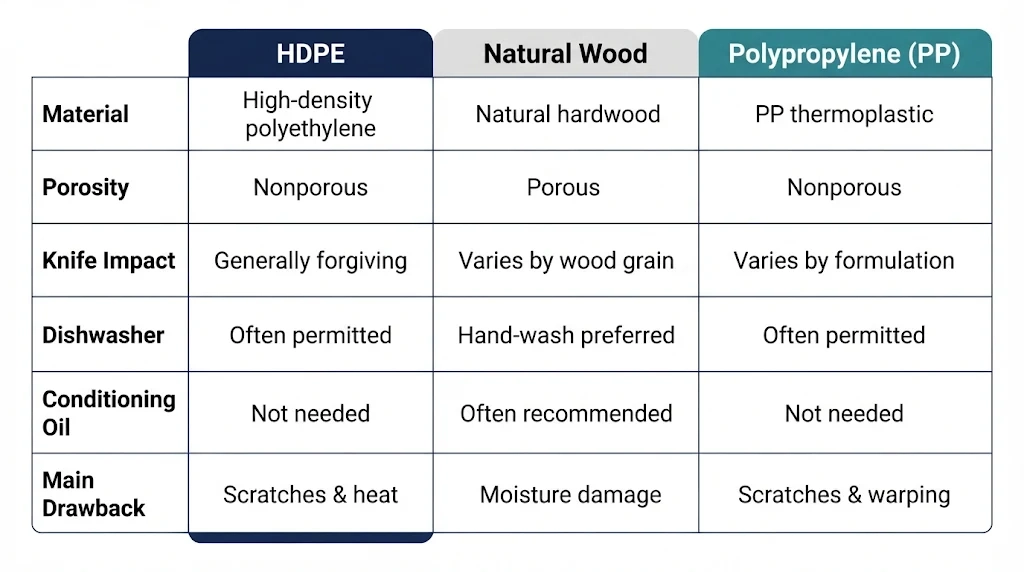
HDPE, wood, and polypropylene can all make useful cutting boards. The best option depends on maintenance preferences, food preparation habits, and surface condition.
| Feature | HDPE | Wood | Polypropylene |
|---|---|---|---|
| Material | High-density polyethylene | Natural hardwood | PP thermoplastic |
| Porosity | Nonporous | Porous | Nonporous |
| Knife impact | Generally forgiving | Varies by wood and grain | Varies by formulation |
| Dishwasher | Often permitted | Usually hand-wash preferred | Often permitted |
| Conditioning oil | Not needed | Often recommended | Not needed |
| Main drawback | Scratches and heat damage | Moisture-related damage | Scratches and possible warping |
Is HDPE Better Than Wood?
HDPE is usually more convenient for cooks who want straightforward cleaning and no oiling routine. Wood offers a different cutting feel and can remain useful for years with proper maintenance.
Neither material is automatically safer in every situation. Cleanliness, food separation, and replacement of damaged surfaces matter more than choosing one material universally.
Is HDPE Better Than Polypropylene?
Both HDPE and polypropylene can be suitable for cutting boards when manufactured for food contact. Their cutting feel, heat tolerance, and durability vary with the product’s formulation and thickness.
I would compare the specific boards rather than assume one plastic always wins. Look for reliable food-contact labeling, stability, and cleaning instructions.
Can You Use HDPE for Raw Meat and Poultry?
Yes, food-grade HDPE can be used for raw meat, poultry, and seafood. Its washable, nonporous surface makes it convenient for these tasks.
However, proper separation remains essential. Raw animal foods can carry pathogens that shouldn’t reach ready-to-eat ingredients.
How to Prevent Cross-Contamination
- Use a dedicated board for raw meat, poultry, and seafood.
- Keep a separate clean board for fruits, vegetables, bread, and cooked foods.
- Wash the board after preparing each food item.
- Sanitize it when appropriate, especially after handling raw animal products.
- Allow the board to dry fully before storage.
The USDA’s cross-contamination recommendations support using separate cutting surfaces for raw animal foods and ready-to-eat ingredients.
How Do You Clean an HDPE Cutting Board Properly?
Clean an HDPE cutting board after each use with dish soap and warm or hot water. Scrub away visible food debris, rinse completely, and allow it to dry.
For extra protection after handling raw animal products, use a suitable food-contact sanitizing method. Don’t rely on a quick rinse alone.
Step-by-Step Cleaning Instructions
- Remove food debris: Scrape away scraps and loose residue.
- Wash the surface: Use dish detergent, warm or hot water, and a clean brush or sponge.
- Clean both sides: Pay attention to the edges and handles.
- Rinse thoroughly: Remove soap and loosened debris.
- Sanitize when necessary: Follow a suitable food-contact sanitizer’s label directions.
- Dry completely: Store upright or in a rack with airflow.
How Do You Sanitize an HDPE Cutting Board?
The USDA describes a household sanitizing solution made with one tablespoon of unscented liquid chlorine bleach per gallon of water. Apply it to the cleaned board, allow several minutes of contact, rinse thoroughly, and air-dry.
Use ordinary unscented bleach appropriate for disinfecting food-contact surfaces. Never mix bleach with ammonia, vinegar, or other cleaning products.
For additional guidance, see the University of Maine’s cutting board care recommendations. Always follow the instructions for the exact sanitizing product you’re using.
Can HDPE Cutting Boards Go in the Dishwasher?
Many commercial HDPE cutting boards are dishwasher-safe. However, dishwasher compatibility isn’t guaranteed for every HDPE sheet or cutting board.
Check the product label before machine washing. If the manufacturer doesn’t permit dishwasher use, wash the board by hand.
Can You Make Your Own Cutting Board From an HDPE Sheet?
Yes, a suitable food-contact-grade HDPE sheet can be fabricated into a cutting board. The finished piece must have smooth edges, an appropriate surface, and no contamination from fabrication.
Don’t use an unknown sheet merely because its seller calls it HDPE. Material traceability matters when a surface directly touches food.
What Thickness Is Best for an HDPE Cutting Board?
A thickness around half an inch is a practical starting point for many home and commercial cutting boards. Thicker options can provide additional rigidity but may increase weight and storage demands.
- 1/4 inch: A thinner option for lighter tasks, provided the product is sufficiently stable.
- 1/2 inch: A common general-purpose thickness for commercial boards.
- 3/4 inch: A substantial board for heavier everyday preparation.
- 1 inch: A thicker work surface for users who prioritize rigidity.
Actual stability depends on more than thickness. Board size, surface support, and manufacturing quality also influence performance.
What Should You Check Before Cutting an HDPE Sheet?
- Confirm that the exact sheet is intended for direct food contact.
- Verify its resin, colorants, and any relevant additives with the supplier.
- Avoid previously used industrial materials with unknown exposure history.
- Use appropriate tools and safety precautions during fabrication.
- Smooth sharp corners and edges without leaving loose plastic fragments.
- Clean the finished board thoroughly before preparing food.
For most home cooks, buying a purpose-made board is simpler than fabricating one. It also makes manufacturer cleaning instructions easier to verify.
How Long Does an HDPE Cutting Board Last?
There’s no universal replacement schedule for an HDPE cutting board. Its usable life depends on cutting frequency, knife technique, cleaning habits, and the condition of its surface.
A lightly used board may remain serviceable much longer than one used continuously in a commercial kitchen. Inspect the surface regularly instead of relying on a fixed number of months.
When Should You Replace an HDPE Cutting Board?
 Save
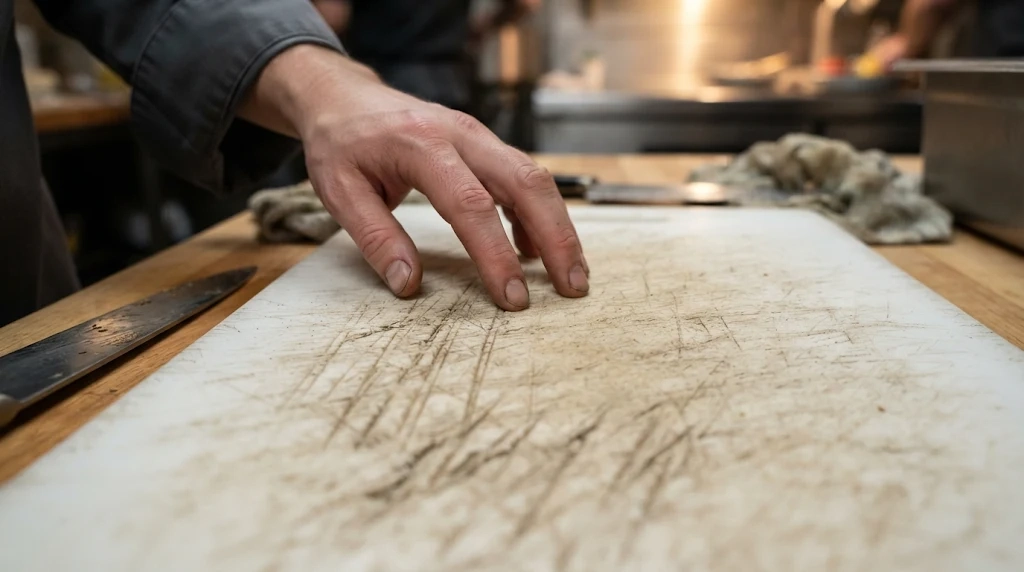
- Deep grooves: Knife cuts trap food and are difficult to clean.
- Persistent damage: The surface becomes excessively worn or uneven.
- Warping: The board no longer rests securely on the countertop.
- Cracks: Structural damage creates hard-to-clean areas.
- Surface shedding: Visible loose plastic or damaged edges appear.
My practical recommendation is to inspect the most frequently used cutting area first. It’s usually more informative than judging a board by its age alone.
What Should You Look for When Buying an HDPE Cutting Board?
The best HDPE cutting board is one that suits your kitchen and can be maintained safely. Material quality matters, but shape and stability influence everyday use.
Six Important Buying Factors
- Food-contact documentation: Choose products explicitly designed for food preparation.
- Board dimensions: Allow enough room for ingredients and knife movement.
- Thickness: Match rigidity and weight to your cooking habits.
- Countertop stability: Look for gripping feet or other anti-slip features.
- Cleaning instructions: Verify dishwasher compatibility if that’s important to you.
- Replacement availability: Consider products that are easy to replace when worn.
For reference, a 12-by-18-inch board provides 216 square inches of cutting surface. That’s a useful footprint for many everyday chopping tasks.
Recommended HDPE and Commercial Plastic Cutting Boards
If you’re ready to choose a board, these commercially available options are worth comparing. The models below serve different preparation needs, and their ratings are editorial suitability assessments, not verified customer-review averages.
Affiliate disclosure: As an Amazon Associate, we may earn from qualifying purchases. Product availability and prices may change.
🏆 Best Everyday Commercial Option
Winco CBWT-1218 Cutting Board
★★★★☆ 4.5/5 editorial fit
This commercial plastic board measures 12 by 18 inches and is half an inch thick. Winco identifies it as NSF-certified, dishwasher-safe, and made from high-density plastic material. It’s my first option to consider when a roomy, uncomplicated cutting surface is the priority.
🍽️ Best for Large Prep Areas
Winco CBWT-1824 Cutting Board
★★★★☆ 4.4/5 editorial fit
The 18-by-24-inch, half-inch-thick version provides considerably more workspace. I’d consider this size for batch vegetable preparation or a spacious commercial workstation, provided the counter has enough room.
Frequently Asked Questions About HDPE Cutting Boards
Is HDPE a Good Material for Cutting Boards?
Yes. Food-contact-grade HDPE is a good material for cutting boards because it resists water absorption, offers a practical cutting surface, and is relatively easy to clean. Its main disadvantages are knife scratches and sensitivity to excessive heat. Choose a purpose-made board and replace it when damage makes cleaning difficult.
Can You Cut Raw Chicken on an HDPE Board?
Yes, food-grade HDPE cutting boards can be used for raw chicken. Use a separate board for vegetables and ready-to-eat foods to reduce cross-contamination. After preparing poultry, wash the board thoroughly and sanitize it using an appropriate food-contact method before storing or reusing it.
Is HDPE Better Than Bamboo for Cutting Boards?
HDPE is generally easier to maintain because it doesn’t require conditioning oil and many boards tolerate dishwasher cleaning. Bamboo offers a natural appearance and a firmer cutting feel. Neither material eliminates the need for cleaning, and both should be replaced when their surfaces become excessively damaged.
Can You Put Hot Food on an HDPE Cutting Board?
Ordinary warm foods can generally be handled on a suitable HDPE cutting board, but very hot cookware may deform the plastic. Don’t use the board as a trivet for hot pans or baking trays. Follow the manufacturer’s temperature guidance, especially when using unfamiliar products.
Are All HDPE Sheets Food-Safe?
No. HDPE describes the polymer, not the complete food-contact status of every finished sheet. Additives, previous use, processing, and intended application can affect suitability. For kitchen use, select a product identified by its manufacturer as appropriate for direct contact with food.
Final Verdict: Should You Use HDPE as a Cutting Board?
Yes, HDPE is a sensible choice when you want a durable, low-maintenance cutting board for everyday food preparation. Food-contact suitability, proper cleaning, and surface condition are the factors that matter most.
I would choose a purpose-made food-grade board rather than an unknown plastic sheet. For many kitchens, a stable half-inch-thick model offers a practical balance of cutting space and handling.
Pair your HDPE board with a separate preparation surface for ready-to-eat foods if you regularly handle raw meat. Wash it after use, keep it dry, and replace it before deep grooves become a cleaning problem.
Bottom line: HDPE can absolutely be used as a cutting board, provided the finished product is food-contact suitable and properly maintained.

