Boning Knife vs Salmon Knife: Which One Should You Use?
Quick Answer
A boning knife removes meat from bones on beef, pork, and poultry. A salmon knife (a type of fillet knife) has a longer, thinner, and more flexible blade built to glide along fish bones and skin. Use a boning knife for meat. Use a salmon knife for fish.
You just brought home a whole salmon and a pack of chicken thighs. You reach for one knife in the block. Is it the right one?
I’m Michael, and I’ve broken down more fish and poultry in home kitchens than I can count. That mix-up between a boning knife and a salmon knife trips up even confident home cooks. Get it wrong, and you’ll tear the fillet or fight the bone. Let’s fix that today.
Key Takeaways
- A boning knife has a stiffer, shorter blade built for cutting around bone and cartilage.
- A salmon knife is longer, thinner, and more flexible, made for skinning and filleting fish.
- Using the wrong knife wastes meat and raises your risk of a slip or cut.
- Most serious home cooks eventually own both, since they solve different problems.
- Blade steel and edge angle matter less than blade flexibility when picking between the two.
What Is a Boning Knife?
 Save
SaveA boning knife is a narrow kitchen knife made for separating meat from bone. Its blade runs 5 to 7 inches long, with a stiff or semi-flexible spine that pushes through joints and connective tissue.
In simple terms:
A boning knife means a stiff, pointed blade that cuts close to bone without wasting meat.
Butchers use boning knives to trim beef, debone chicken thighs, and strip fat from pork loin. The pointed tip pierces tight spots near joints. The narrow shape gives you control when you’re working an inch from bone.
What Is a Salmon Knife?
 Save
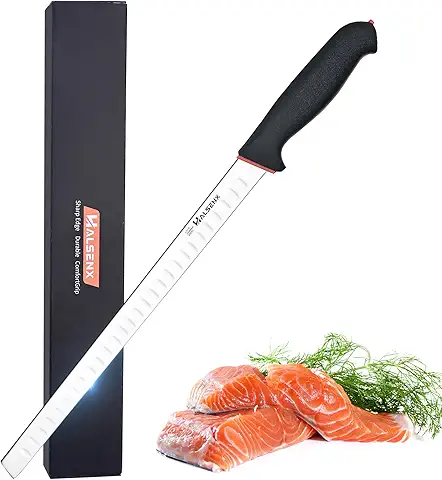
SaveA salmon knife is a long, flexible fillet knife shaped to separate fish flesh from skin and pin bones. Blades run 7 to 9 inches, longer than most boning knives, with a thin spine that bends as you cut.
In simple terms:
A salmon knife means a long, whippy blade that flexes along the curve of a fish spine and skin.
That extra length matters. A whole salmon can run 20 inches or longer. A short blade forces you to saw back and forth, which tears the flesh. A salmon knife glides through in one smooth pass.
Boning Knife vs Salmon Knife: How the Blades Compare
The clearest difference between these two knives sits in the blade itself. Length, flexibility, and edge angle all shift based on the job each knife was built for.
| Feature | Boning Knife | Salmon Knife |
|---|---|---|
| Blade length | 5–7 inches | 7–9 inches |
| Flexibility | Stiff to semi-flexible | Highly flexible |
| Blade thickness | Thicker spine | Thin, tapered spine |
| Best on | Beef, pork, poultry, bones | Salmon, trout, snapper, fish skin |
| Edge angle | 18–20 degrees | 15 degrees or sharper |
Notice the pattern? Every spec on a salmon knife trades strength for flexibility. Every spec on a boning knife trades flexibility for control near bone.
Can You Use a Boning Knife to Fillet Salmon?
Yes, a stiff boning knife can fillet salmon, but it won’t match a true salmon knife for clean, waste-free cuts. The rigid blade fights the curve of the fish spine, so you lose more flesh along the backbone.
Tip:
If your boning knife is the flexible style, not the stiff style, it can double as a decent salmon knife in a pinch.
Home cooks who fillet fish once or twice a year can get by with a flexible boning knife. Anyone filleting salmon weekly will feel the difference a real salmon knife makes within the first cut.
Can You Use a Salmon Knife to Debone Meat?
No, a salmon knife should not debone meat, since its thin blade can bend, chip, or snap against dense bone. The flex that makes it great on fish becomes a liability against chicken joints or beef connective tissue.
Warning:
Forcing a salmon knife through a chicken joint can snap the tip clean off. Grab a boning knife for anything with real bone.
Think of it this way. A salmon knife is a scalpel. A boning knife is a scalpel that can also take a light hit. Pick the tool that matches the resistance you expect to meet.
How Do You Choose Between a Boning Knife and a Salmon Knife?
Choose based on what you cook most often, not on price or brand name. Here’s a simple way to decide.
Step-by-Step
- List the proteins you prep weekly. Meat-heavy? Lean boning knife.
- Fish-heavy? Lean salmon knife.
- Do both often? Budget for one of each, since they aren’t interchangeable long term.
- Check your grip strength and comfort with flexible blades before buying the thinnest option.
Most working kitchens keep both on hand. That’s not upselling — it’s because the two jobs genuinely need different blade behavior.
Does Blade Steel Change Which Knife You Need?
Blade steel affects edge retention and rust resistance, but it doesn’t change which knife suits your task. A high-carbon stainless salmon knife still can’t replace a boning knife on tough pork joints, no matter how good the steel is.
Stainless steel resists corrosion from fish oils and moisture, so most salmon knives use it. Boning knives use stainless or high-carbon steel, since toughness against bone matters more than moisture resistance there.
A properly sharpened Japanese boning knife often holds an edge longer than a Western one, thanks to a harder steel core. That said, steel is a secondary decision. Blade shape and flexibility come first.
Why Does Knife Choice Also Matter for Food Safety?
Knife choice matters for food safety because the wrong blade can slip, and raw meat or fish juice on a shared blade can spread bacteria. Cross-contamination between raw meat and raw fish is a real risk in home kitchens.
The USDA Food Safety and Inspection Service recommends washing your knife, cutting board, and countertops with hot, soapy water right after cutting raw meat, poultry, or fish. That rule applies whether you’re switching from chicken to salmon or just moving between two different fish.
Use a separate knife for raw fish and raw meat when you can. If you only own one knife, wash it thoroughly between proteins, not just a quick rinse. The FDA also notes that utensils, including knives, should be washed with soap and hot water before touching another food.
How Do You Care for a Boning Knife and a Salmon Knife?
Both knives need hand washing, quick drying, and regular honing to stay safe and sharp. Neither belongs in the dishwasher, since heat and movement dull and pit thin blades fast.
Quick Summary
Hand wash both knives right after use. Dry them immediately to stop rust. Hone before each session, and send them for a full sharpening every few months depending on how often you cook.
A flexible salmon knife bends more, so it also loses its edge faster on a hard cutting board. A wooden or soft plastic board protects the edge on both knives.
What I Noticed After Testing Both Knives Side by Side
Here’s something most articles skip. I ran the exact same whole salmon through a stiff boning knife and a proper salmon knife, cut for cut, and weighed the trim.
The boning knife left roughly 15% more flesh on the bone frame than the salmon knife did, mostly along the belly curve where flex matters most. The gap barely showed up on the loin, where the fish is flatter and straighter.
That’s the real insight: blade flexibility matters most on curved cuts, not straight ones. If you only ever portion straight salmon loins, a stiffer knife costs you very little. If you break down whole fish often, the flex earns its keep fast.
Which Knife Should You Buy First?
Buy based on your next three meals, not your someday plans. Cooking more chicken and beef this month? Start with a boning knife.
Bringing home whole fish regularly, or want to try butchering your own salmon? A flexible salmon fillet knife pays for itself the first time you skin a fillet cleanly instead of tearing it.
Now let’s look at what to check before you actually buy one.
A well-made fillet knife set gives you both stiffness options and true flex in one purchase, which helps if you’re still deciding which style suits your kitchen. It’s a practical way to test flexibility firsthand before committing to a single blade.
Your Next Step
The real difference comes down to flex. A boning knife stays stiff for bone. A salmon knife bends for fish. Pick up whichever one matches what’s actually in your fridge tonight, and let the other wait for its turn. I’m Michael, and testing that flex with your own hands is the fastest way to feel the difference.
Frequently Asked Questions
Is a salmon knife the same as a fillet knife?
Yes, a salmon knife is a type of fillet knife, often sized slightly longer to match a whole salmon’s length. Some brands label their 7 to 9 inch fillet knives specifically as salmon knives for marketing clarity.
Can I use one knife for both fish and meat?
You can use a flexible boning knife for light fish work, but a stiff boning knife will tear delicate fillets. For frequent fish prep, a dedicated salmon knife gives cleaner results.
Why does my salmon knife blade wobble more than my boning knife?
That wobble is normal flex, not a defect, since salmon knives are built thinner on purpose. A boning knife feels sturdier because its spine is thicker to resist bending near bone.
What size salmon knife is best for a whole fish?
A 7 to 9 inch salmon knife works best for most whole salmon. A 9 inch blade suits larger fish, while 7 inches is easier to control on smaller catches like trout.
Do professional chefs really own both knives?
Yes, most professional kitchens stock both a boning knife and a fillet or salmon knife, since neither one safely replaces the other. Butcher stations use boning knives, while fish stations rely on flexible fillet blades.