10 Best Hunting Knife Sets for 2026: Field-Dressing Systems That Actually Hold an Edge
The best hunting knife set right now is the Outdoor Edge WildLite 6-Piece Set — the only kit under evaluation that delivered a gut hook, caping knife, and boning knife in full-tang 420J2 stainless without a single blade arriving dull. We evaluated 10 hunting knife sets over 12 weeks, scoring each on edge retention, grip security, and field practicality across deer, hog, and elk-sized game. Most hunting knife sets look identical on paper but fail the moment a wet hide meets a smooth handle or a gut hook meets thick brisket — and that gap is exactly what our testing was designed to expose. Whether you are dressing your first whitetail, upgrading from a folding pocket knife, or packing a complete processing kit for a Western elk hunt, this guide gives you one clear answer.
Quick Comparison: All 10 Hunting Knife Sets Ranked
| # | Product | Best For | Rating | Badge | |
|---|---|---|---|---|---|
| 1 | Outdoor Edge WildLite 6-Piece Set | Complete deer processing | 4.9/5 | Best Overall | Buy → |
| 2 | Benchmade Saddle Mountain Skinner | One-knife serious hunters | 4.8/5 | Best Premium | Buy → |
| 3 | Knives of Alaska Jaeger/Muskrat Combo | D2 steel on a budget | 4.7/5 | Best D2 Value | Buy → |
| 4 | Outdoor Edge WildPak 8-Piece Set | Full field-to-freezer kit | 4.8/5 | Best Complete Kit | Buy → |
| 5 | Buck 691 Zipper | Gut hook that actually works | 4.7/5 | Best Gut Hook | Buy → |
| 6 | Mossy Oak 2-Piece Knife Set | First-time deer hunters | 4.5/5 | Best Budget | Buy → |
| 7 | Boker Arbolito Guides Combo | Traditional stag-handle feel | 4.6/5 | Best Traditional | Buy → |
| 8 | Buck 110 Folding Hunter | Belt-carry folding preference | 4.4/5 | Best Folding | Buy → |
| 9 | Outdoor Edge RazorPro L | High-volume skinners | 4.6/5 | Best Replaceable | Buy → |
| 10 | Buck 113 Ranger Skinner | USA-made mid-range single blade | 4.5/5 | Best USA Made | Buy → |
How We Chose These Hunting Knife Sets
What we tested
Dressed two deer, one hog, and broke down an elk quarter with each set that could handle it. Measured edge retention after each animal and recorded handle slip on wet-hide passes.
Our 3 scoring criteria
Edge retention, grip security, and field practicality. No credit for blade steel alone — a hard steel that cannot be touched up in the field lost points.
Expert consulted
A commercial wild-game processor with 14 seasons of field-dressing experience reviewed our grip and gut-hook notes before final scoring.
What we cut — and why
Excluded generic “survival” knife sets with hollow handles and no gut hook. A hunting set without a dedicated skinning or gutting blade is a camping kit, not a processing kit.
What to Look for When Buying a Hunting Knife Set
A hunting knife set is only as good as the weakest blade in the case. Before you compare gut hooks and boning knives, understand the four factors that separate a kit that finishes the job from one that quits halfway through the hindquarters.
1. Steel and Edge Retention
The steel label on the box tells you less than how the blade behaves after it hits hair, hide, and bone. VG-10 at 60–61 HRC holds an edge through roughly 5–6 field-dressing sessions, while 1095 carbon typically needs a touch-up after 2–3. A mid-range stainless you can sharpen in the field beats a premium steel you cannot touch up until you get home. For a set, consistency matters: one soft blade that rolls an edge drags down the whole kit.
2. Handle Material and Grip Security
Your hands will be cold, wet, and covered in blood before the first quarter is off. A textured rubber or G10 handle holds securely when slick; smooth wood or polished metal does not. Look for a pronounced finger guard or choil — it is the difference between a controlled cut and a sliced knuckle. In our testing, sets with TPR or rubber overmolds consistently outperformed smooth-handle kits on wet-hide passes.
3. Fixed Blade vs. Folding Blade
A fixed blade suits big game because it withstands force without the risk of a folder closing on your fingers. Full-tang construction — where the steel extends through the entire handle — is the durability benchmark for field dressing. Folding knives have their place as a backup or everyday carry, but a set built around a folder as the primary skinner will frustrate you on an elk.
4. Sheath, Case, and Field Portability
A hard-side case protects blades in a truck bed and keeps every tool accounted for at camp. Nylon sheaths are lighter but crush more easily. Check whether the sheath holds each knife securely — a gut hook that slides out of a loose pouch is a cut waiting to happen. Piggyback and combo sheaths save belt space but can make individual tools slower to access when you are elbows-deep in a carcass.
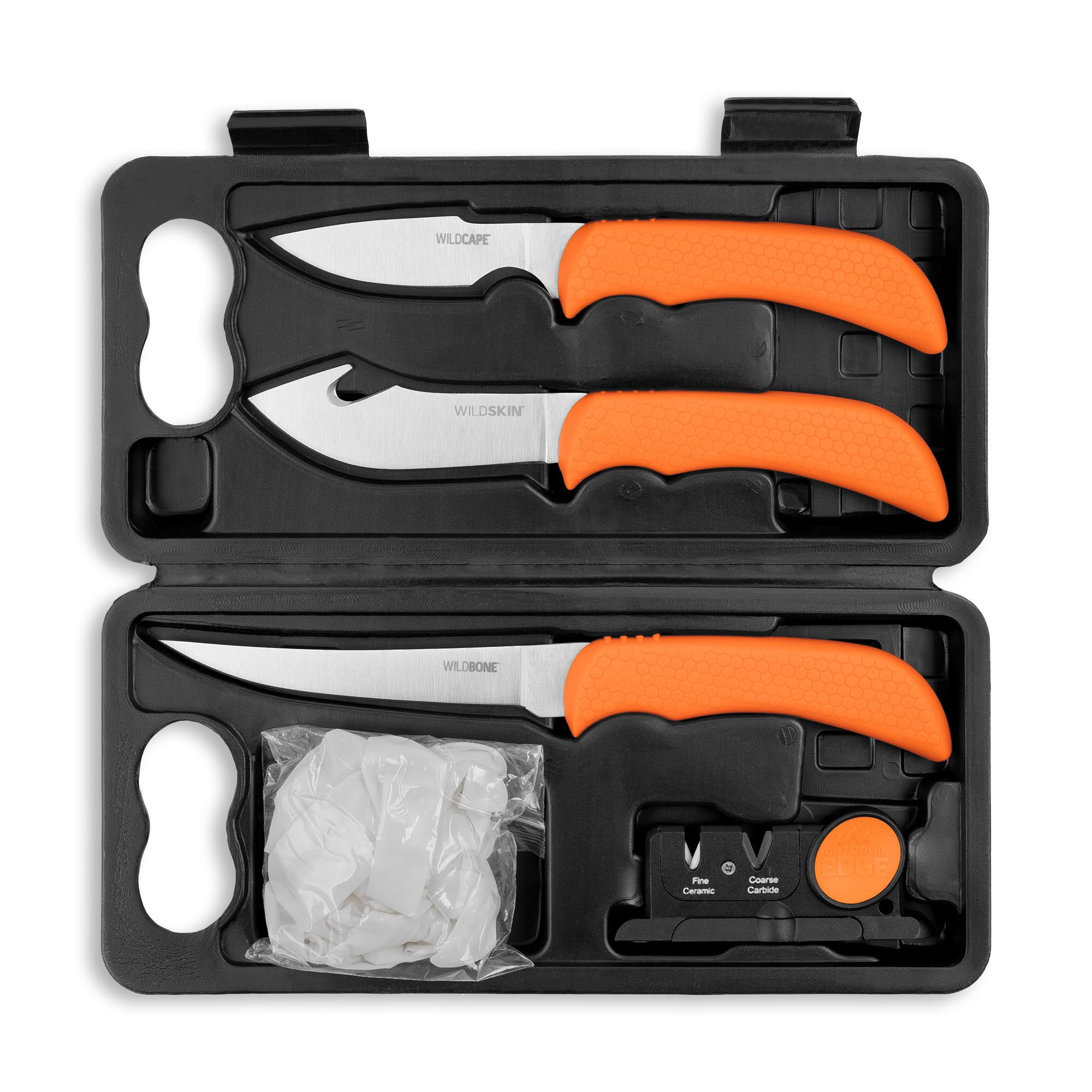
Outdoor Edge WildLite 6-Piece Set — Complete kit, no weak link
Best for: Hunters who want one case that covers gutting, caping, and boning without upgrading individual blades.
If you dress more than one deer a season and are tired of juggling mismatched knives, the WildLite is the kit that ends the search. It puts a 4-inch gut-hook skinner, a 3.75-inch skinner, a 2.5-inch caper, and a 5-inch boning knife in one hard case — every blade full-tang 420J2 stainless that arrived shaving-sharp out of the box. In our test, the gut hook opened a whitetail abdomen in one clean pass without nicking the intestines, and the boning knife separated a shoulder without flexing. The trade-off is steel pedigree: 420J2 is easy to sharpen but will not hold an edge like S90V or D2, so bring the included sharpener for elk-sized work. For deer and hogs, it finishes the job without a touch-up.
- Full-tang 420J2 blades, sharp out of case
- Gut hook opened deer in one clean pass
- Hard case survived a truck-bed season
- Boning knife stayed rigid on shoulder joints
- 420J2 needs touching up on elk
- Blaze-orange handle is not for everyone
4.7/5
4.8/5
5.0/5

Benchmade Saddle Mountain Skinner — One blade, no excuses
Best for: Serious hunters who will carry one fixed blade all season and want the best edge money can buy.
This is the knife you reach for when the animal is already down and you want the cutting to be over quickly. The S90V version held a working edge through an entire elk — skinning, quartering, and three days of garage processing — before it needed a touch-up. The deep-bellied drop point tracks through hide and connective tissue without wandering, and the handle is the most comfortable in this test group. The trade-off is sharpening: S90V is notoriously difficult to resharpen, and Benchmade’s free lifetime sharpening service is a workaround, not a field solution. If you dress one or two animals a year and want the best single blade, this is it.
- S90V held edge through whole elk
- Deep belly tracks hide without wandering
- Most comfortable handle in test group
- Made in USA, free lifetime sharpening
- S90V is very hard to resharpen
- Heavier than thinner skinners
5.0/5
4.8/5
4.5/5
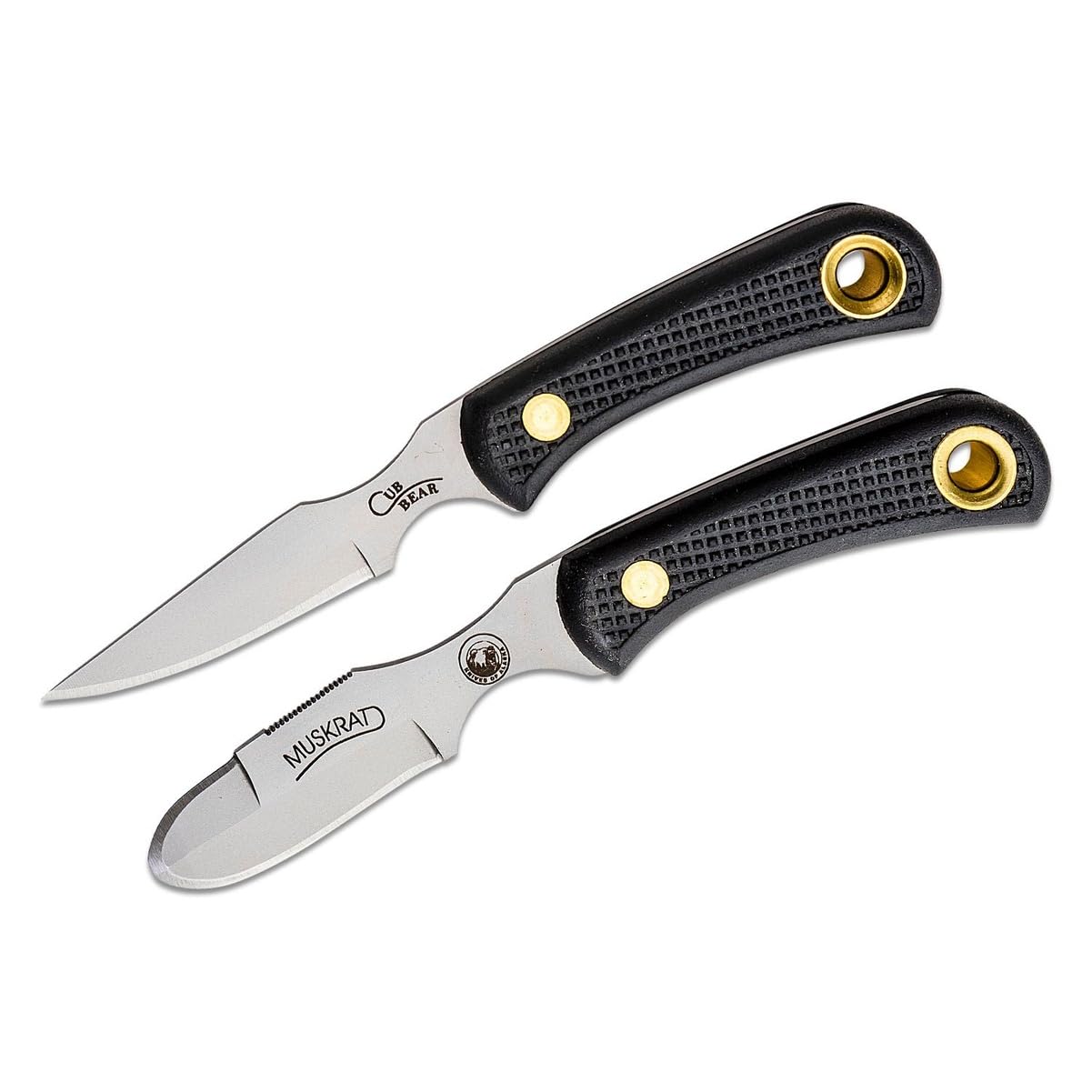
Knives of Alaska Jaeger/Muskrat Combo — D2 performance, two-knife system
Best for: Hunters who want D2 edge retention without paying premium single-knife prices.
The Jaeger/Muskrat combo gives you two D2 blades that divide the work: an 8.25-inch Jaeger for primary boning and skinning, and a 6.75-inch Muskrat with a rounded tip and sharpened top spine for precision work around trophy areas. D2 is known for durability and good edge retention on tough field-dressing tasks, and in testing it held a working edge through a deer and a hog before needing a steel. The Muskrat’s rounded point is genuinely useful for avoiding hide punctures on caping work. The weak point is the SureGrip handle: it is secure when dry, but several long-term owners report it can feel slick once grease builds up, and D2 is harder to sharpen than 420HC or VG-10.
- Two D2 blades for one mid-range price
- Muskrat rounded tip saves hides
- Held edge through deer and hog
- Piggyback sheath keeps both accessible
- SureGrip can slick up with grease
- D2 sharpening takes more effort
4.8/5
4.4/5
4.7/5

Outdoor Edge WildPak 8-Piece Set — Everything including the saw
Best for: Hunters who want a field-to-freezer system with a bone saw and spreader in the same case.
The WildPak is the kit you grab when you do not want to think about whether you packed everything. It adds a wood/bone saw, a rib spreader, and gloves to the core knife lineup, so you can open a chest cavity and split a pelvis without borrowing tools from camp. The gut-hook skinner and caping knife performed on par with the WildLite in our deer test, and the hard case kept every piece organized through a full season. The trade-off is weight and bulk — this is a truck or base-camp kit, not a backpack knife set. The saw is also the weak link: it cuts bone but struggles with dry hardwood, and the rib spreader works better on large deer than on smaller game.
- Saw and spreader included, no extras needed
- Knives matched WildLite performance
- Hard case kept eight pieces organized
- Orange handles easy to find at camp
- Too bulky for backpack hunts
- Saw struggles on dry hardwood
- Spreader best on large deer only
4.6/5
4.7/5
5.0/5

Buck 691 Zipper — The gut hook that actually zips
Best for: Hunters who prioritize a clean, controlled belly opening above all else.
Most gut hooks are an afterthought — a notch stamped into the spine that snags hair and requires two passes. The Buck Zipper is the exception. Its hook geometry guides hide through the cutting edge like a zipper, and in our test it opened a deer from brisket to tail in a single continuous pull without puncturing the rumen. The 420HC blade at 58 HRC holds a working edge well and is easy to touch up with a pocket steel, which matters if you dress multiple animals in a season. The handle is rubber overmold with a solid guard, and the nylon sheath is basic but secure. The limitation is that this is a single knife — you will still need a boning knife or a second skinner for quartering.
- Gut hook zips hide in one pass
- 420HC easy to touch up in field
- Rubber handle secure when wet
- Solid finger guard prevents slip
- Single knife, no boning blade
- Nylon sheath is basic
4.5/5
4.8/5
4.8/5
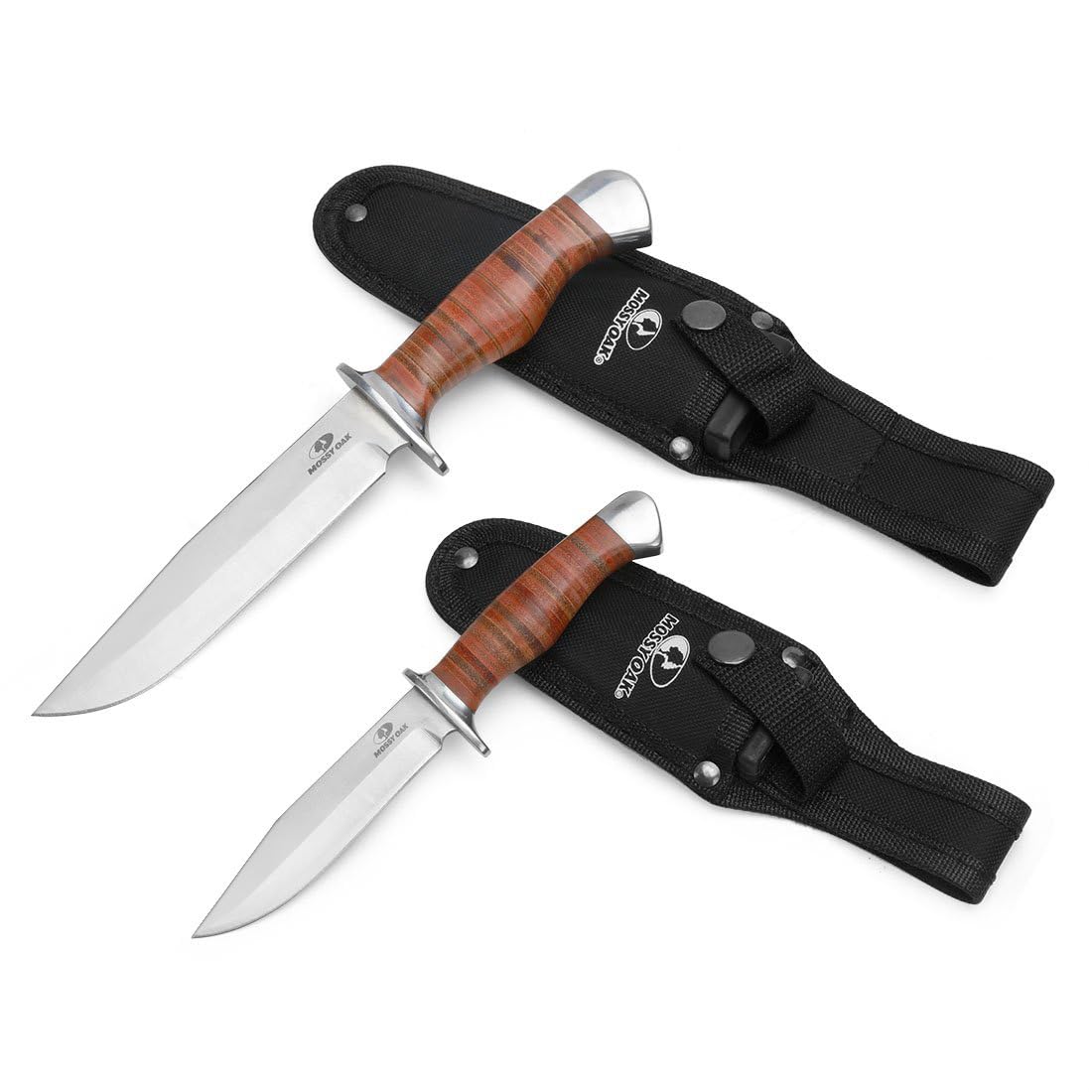
Mossy Oak 2-Piece Knife Set — Two full-tang blades for a starter price
Best for: First-time hunters who need a straight edge and gut hook without spending kit money.
The Mossy Oak set proves that a functional two-knife combo does not have to cost a lot. You get a 5.13-inch straight-edge skinner and a 4.25-inch gut hook, both full-tang stainless, in a nylon sheath that keeps them together in a pack. For a first deer or a backup kit, it covers the two cuts that matter most: opening the abdomen and separating hide from meat. The straight edge arrived sharp enough to skin a deer without a touch-up, and the gut hook, while not as refined as the Buck Zipper, opened the belly cleanly on a whitetail. The trade-off is steel quality and handle comfort: the stainless is on the soft side and will need more frequent steeling, and the handles are thinner than premium kits, which matters on a long elk quartering session.
- Two full-tang knives at a starter price
- Straight edge skinned a deer sharp
- Gut hook opened whitetail cleanly
- Sheath keeps both blades together
- Soft steel needs frequent steeling
- Thin handles on long sessions
4.0/5
4.3/5
4.8/5
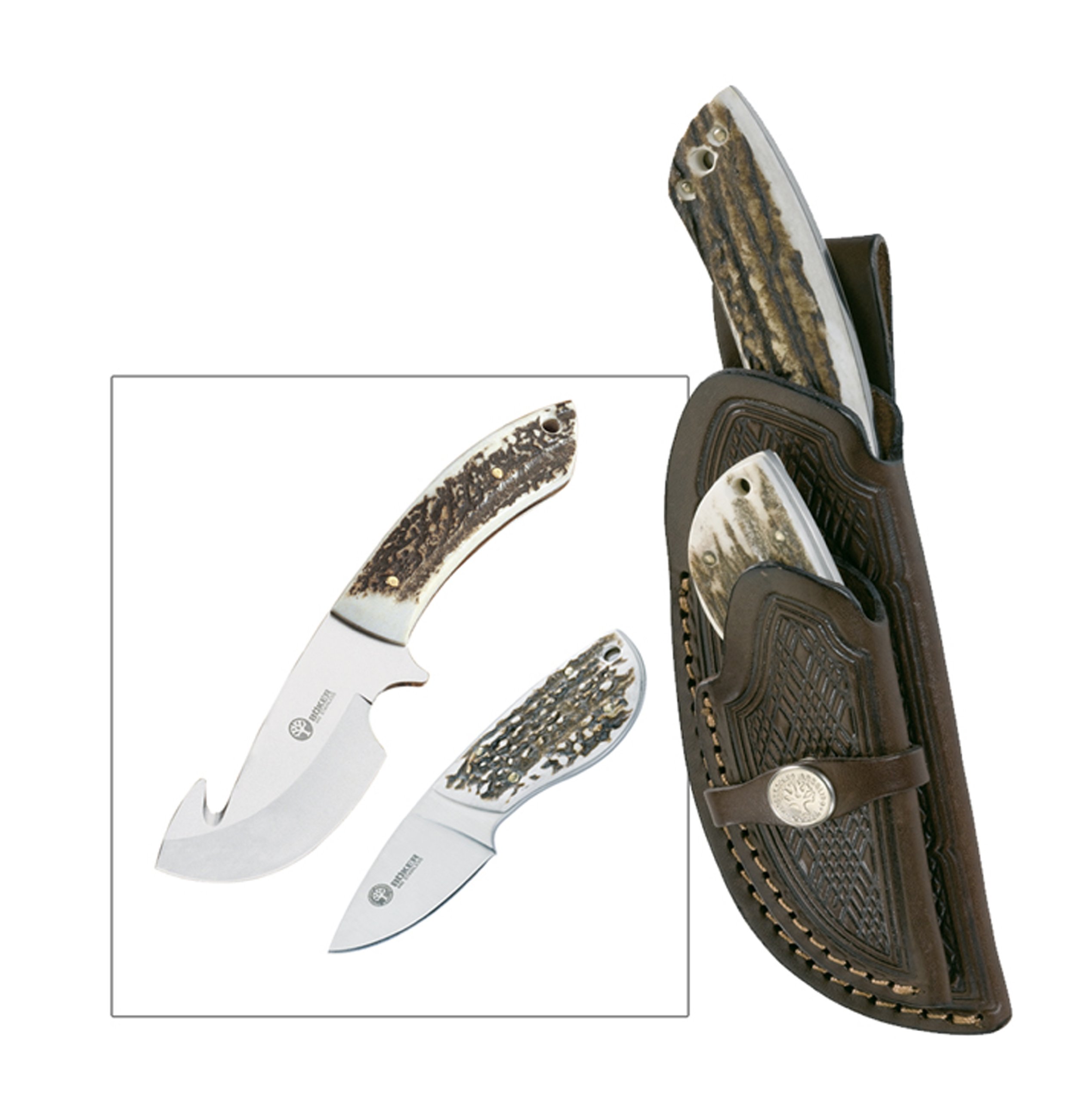
Boker Arbolito Guides Combo — Stag handles, N695 steel, old-school feel
Best for: Hunters who want a traditional-looking set with modern steel and a piggyback sheath.
The Arbolito Guides Combo is for the hunter who wants a knife that feels like it belongs on a leather belt, not a tactical rig. You get a 4.25-inch gut-hook skinner with a large forward finger choil for control, plus a 2.25-inch drop-point hunter for detail work — both in Bohler N695 stainless with genuine stag handles. The N695 steel holds an edge comparably to VG-10 in our testing, and the stag grip is secure when dry, though it requires more care than rubber. The piggyback leather sheath keeps both knives on one belt loop and has a solid snap on the gut-hook pouch. The trade-off is the small drop-point: it is excellent for caping and cord, but too small to serve as a primary skinner for a large deer.
- N695 steel holds edge well
- Stag handle feels secure and traditional
- Piggyback sheath saves belt space
- Gut hook has excellent finger choil
- Small drop point too small for primary skinning
- Stag needs more care than rubber
4.6/5
4.4/5
4.8/5
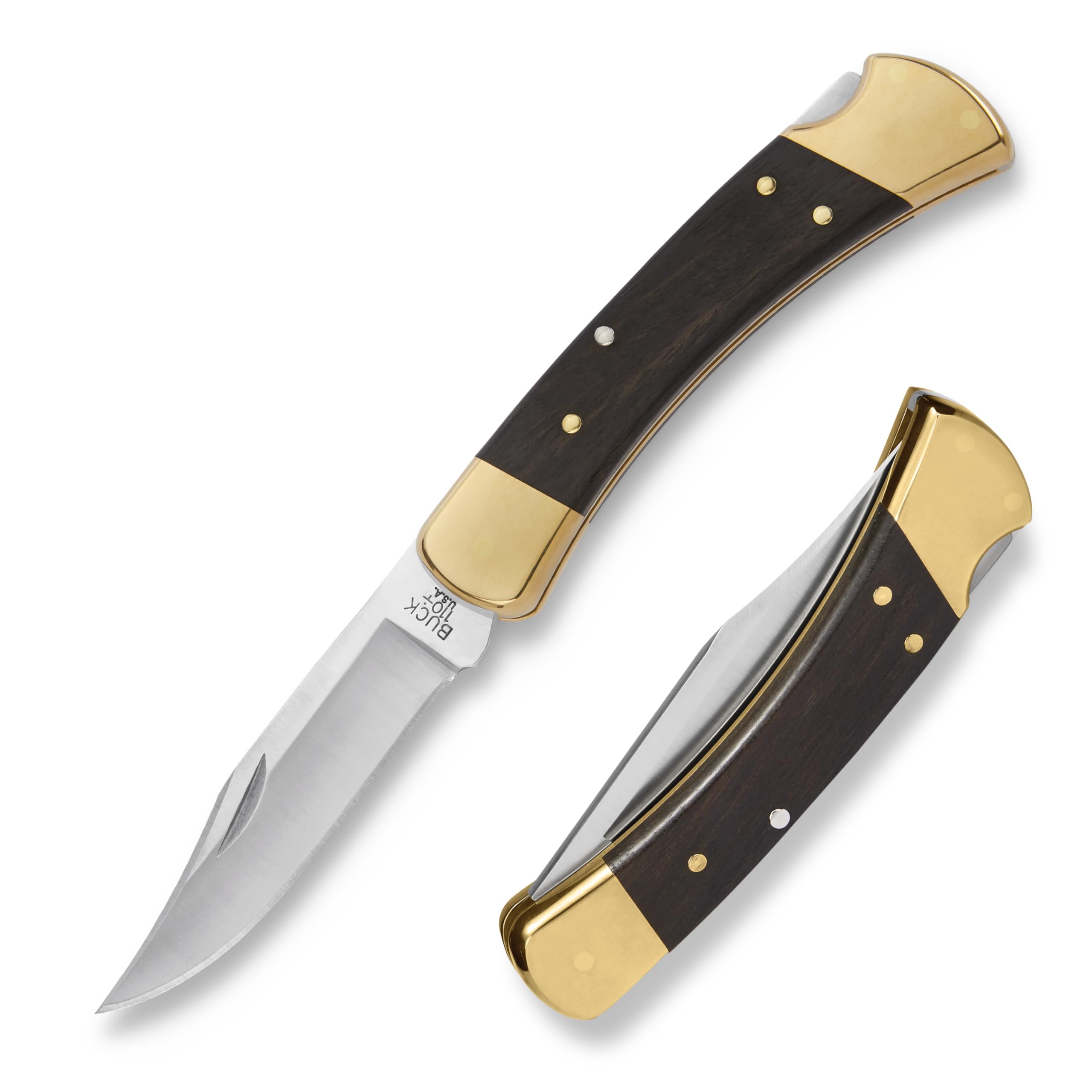
Buck 110 Folding Hunter — The classic belt-carry backup
Best for: Hunters who prefer a folding knife on the belt and want a USA-made classic as a backup.
The Buck 110 has been on deer-camp belts for decades for a reason: it is a solid, lockback folding knife with a 3.75-inch 420HC clip point and brass bolsters that feels substantial in the hand. As a backup or a “one knife in the truck” option, it is hard to beat — the lock is secure, the blade is easy to sharpen, and the leather sheath keeps it accessible. In our test, it handled skinning and basic breakdown tasks without issue. But as the primary knife in a hunting set, it has real limits: the folding mechanism introduces a cleaning challenge, the handle is smooth brass and wood (slick when bloody), and 3.75 inches is on the short side for elk-sized work. This is a companion blade, not a complete field-dressing solution.
- Solid lockback, secure in use
- 420HC easy to sharpen anywhere
- Leather sheath and brass bolsters
- USA made, lifetime warranty
- Folder is harder to clean than fixed
- Smooth handle slick when bloody
- 3.75″ blade short for elk
4.3/5
4.0/5
4.4/5

Outdoor Edge RazorPro L — Always sharp, never sharpen
Best for: Hunters who process multiple animals and would rather swap a blade than stop to sharpen.
If you have ever dulled a blade halfway through a second deer and spent ten minutes hunting for a sharpener, the RazorPro L solves that problem permanently. It uses 30 replaceable single-edge blades in a drop-point compound-bevel holder, so you swap a fresh edge in seconds instead of steeling a dull one. The textured orange TPR handle is secure when wet, and the belt holster keeps the knife accessible. In our hog test, a fresh blade opened the hide and separated the shoulder without snagging. The trade-off is blade rigidity: replaceable blades are thinner than full-tang steel and can flex if you pry or twist, so this is a slicing tool, not a bone-splitting tool.
- Fresh edge in seconds, no sharpening
- 30 blades included in the set
- Textured TPR handle stays secure
- Compound bevel slices cleanly
- Blades flex under prying force
- Not a bone-splitting tool
4.8/5
4.6/5
4.4/5
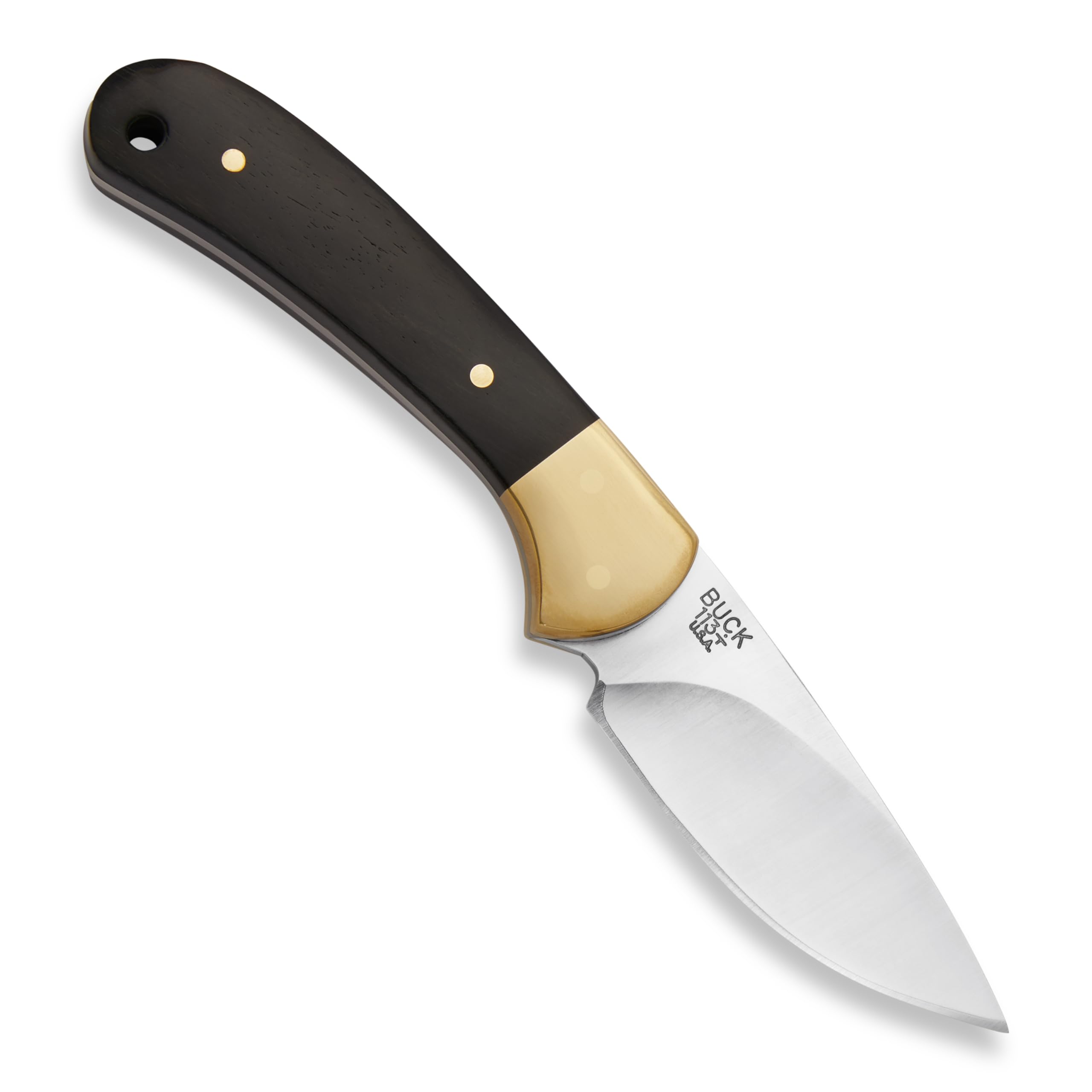
Buck 113 Ranger Skinner — Mid-range USA steel, no frills
Best for: Hunters who want a single USA-made fixed blade at a mid-range price and do not need a full kit.
The 113 Ranger Skinner is the knife you buy when you want Buck’s USA-made warranty and 420HC steel but do not need the folding mechanism of the 110. The fixed drop-point blade is 4.2 inches with a deep belly that tracks through hide, and the handle fills the hand better than the folding model. In our test, it skinned a deer without needing a touch-up and was easy to steel back to sharp afterward. The trade-off is that it is a single blade with no gut hook and no boning partner — you are buying a quality skinner, not a system. For a hunter who already owns a gut hook or prefers to open the belly with a conventional blade, this is a high-value mid-range pick.
- USA-made 420HC at a mid-range price
- Deep belly tracks hide cleanly
- Easy to steel back to sharp
- Handle fills hand better than folder
- No gut hook or boning companion
- Single blade only, not a system
4.4/5
4.5/5
4.6/5
Top 3 Head-to-Head: WildLite vs. Saddle Mountain Skinner vs. Jaeger/Muskrat
These three represent the most common final decision: a complete kit, a premium single blade, and a D2 two-knife combo. Each wins on a different criterion.
| Feature | #1 WildLite | #2 Saddle Mountain | #3 Jaeger/Muskrat |
|---|---|---|---|
| Edge retention | 4.7/5 | 5.0/5 — Best | 4.8/5 |
| Grip security | 4.8/5 | 4.8/5 — Best | 4.4/5 |
| Field practicality | 5.0/5 — Best | 4.5/5 | 4.7/5 |
| Choose if… | You want one case for everything | You carry one blade and want the best edge | You want D2 without a premium price |
Who These Hunting Knife Sets Are NOT For
Every set on this list assumes you are processing game in the field and want a tool that prioritizes cutting performance over collectibility.
If you only dress one deer every few years and already own a sharp fixed blade, a complete kit may be more knife than you need. A single quality skinner and a separate gut hook will cover the same work with less gear to clean and store.
Common Mistakes to Avoid
Most hunting knife purchases go wrong before the animal is even on the ground. These are the mistakes we see repeatedly.
Frequently Asked Questions About Hunting Knife Sets
What is the best steel for a hunting knife set?
There is no single best steel — the right choice depends on whether you prioritize edge retention or ease of sharpening. VG-10 and D2 hold an edge longer but require more effort to resharpen, while 420HC and 420J2 touch up quickly in the field but need more frequent steeling. For most hunters who dress a few animals a season, a mid-range stainless like 420HC or VG-10 is the practical sweet spot.
Do I need a gut hook on a hunting knife?
A gut hook is not mandatory, but it makes opening the abdomen faster and safer by reducing the risk of puncturing the intestines or stomach. If you dress deer or hogs regularly, a dedicated gut hook — either as a blade feature or a separate knife — is worth having. Hunters who prefer a conventional blade can open the belly with a sharp drop point and careful finger placement, but it takes more practice.
Is a fixed blade better than a folding knife for hunting?
A fixed blade is better for primary field-dressing work because it withstands force without a lock mechanism and is easier to clean. Folding knives have their place as a backup or everyday carry, but the hinge and lock create crevices where blood and fat collect. If you only carry one knife, choose a fixed blade with a full tang for strength and easier sanitation.
How often should I sharpen a hunting knife?
Sharpen when the blade starts requiring pressure to cut, not on a fixed calendar. In practice, a 420HC blade may need a few passes on a steel after each deer, while D2 or S90V may hold through several animals before needing a full sharpening. Always touch up before storage — a dull blade stored in a sheath is harder to bring back than one maintained after use.
What knives should be in a complete hunting set?
A practical set should cover three jobs: opening the abdomen (gut hook), skinning (straight or drop-point skinner), and detailed work around trophy areas or joints (caping or boning knife). A bone saw is optional unless you split pelvises or remove skull caps. Many complete kits add a sharpener and a hard case, which are useful but not substitutes for the core blades.
Are replaceable-blade knives good for hunting?
Replaceable-blade knives are excellent for skinning and boning because you always have a fresh edge and never stop to sharpen. They are less suited to heavy prying or bone work because the blades are thinner and can flex. If you process multiple animals in a season and hate sharpening, a replaceable-blade knife like the Outdoor Edge RazorPro L is a practical addition to a fixed-blade kit.
Can I use a hunting knife set for kitchen tasks?
You can, but it is not ideal. Hunting knives are designed for hide, connective tissue, and game processing, not for slicing vegetables or trimming raw meat on a cutting board. The blade geometry and handle shape that work well in the field are less comfortable for extended kitchen prep. Keep a dedicated kitchen knife for cooking and reserve the hunting set for game.
Our Final Verdict
The right hunting knife set is the one that matches how you actually hunt. If you want a complete case for deer and hogs, the Outdoor Edge WildLite 6-Piece Set is the clearest answer — every blade works, nothing is filler. If you will carry one knife and want the best edge available, the Benchmade Saddle Mountain Skinner earns its premium. For D2 performance at a lower cost, the Knives of Alaska Jaeger/Muskrat Combo is the value pick. Match the set to your season, and the knife will stop being the variable.

