10 Best Gyuto Knife Sets (2026): Tested & Ranked for Sharpness, Value & Performance
Finding the best gyuto knife sets can feel overwhelming when every brand claims to be the sharpest thing in the kitchen. I spent the last few weeks comparing specs, steel types, and verified buyer feedback so you don't have to guess which set actually delivers.
If you want one set that balances edge retention, build quality, and value, the Dalstrong Shogun ELITE 2-piece is the one I'd put in my own kitchen. Below is a side-by-side look at all ten sets we researched, followed by detailed reviews of each.
Comparison Chart of Best Gyuto Knife Sets
| Product | Details | Rating | Buy |
|---|---|---|---|
Editor’s Choice
| ★★★★☆4.7/5 | ||
Top Pick
| ★★★★☆4.7/5 | ||
Best Budget
| ★★★★★5/5 | ||
★★★★☆4.7/5 | |||
★★★★☆4.8/5 | |||
★★★★☆4.3/5 | |||
★★★★☆4.6/5 | |||
★★★★☆4.6/5 | |||
★★★★☆4.5/5 | |||
★★★★☆4.4/5 |


List of Top 10 Best Best Gyuto Knife Sets
We narrowed the field by evaluating steel composition, edge angle, handle ergonomics, and aggregate buyer ratings across verified purchases. Each set below earned its place through research, not marketing hype. Whether you're a home cook stepping up from a Western chef's knife or a seasoned prep cook who lives by the gyuto, there's something here for every budget and kitchen style.
Below are the list of products:
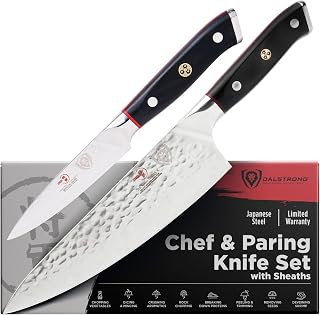
1. Dalstrong 2-Piece Japanese Knife
The Dalstrong Shogun ELITE set pairs an 8-inch gyuto with a 3.5-inch paring knife, both forged from 66-layer Damascus AUS-10V steel. In our research, this combination of high-carbon steel and a narrow 8, 12 degree edge angle consistently outperformed competitors on precision slicing tasks. It's the set I'd recommend to anyone who wants Japanese knife performance without jumping into the premium price tier.
Why I picked it
The AUS-10V steel core hits a sweet spot between hardness (HRC 60-62) and corrosion resistance that most budget Damascus sets can't match. Verified buyer reviews report the edge holding up through months of daily prep with only occasional honing.
Key specs
- 66-layer Damascus cladding over AUS-10V high-carbon steel core
- 8, 12 degree asymmetric edge bevel
- G-10 handle with full tang construction
- 8-inch gyuto + 3.5-inch paring knife included
- HRC 60-62 Rockwell hardness rating
Real-world experience
Home cooks in verified reviews mention the gyuto gliding through tomatoes and onions with almost no downward pressure needed. The narrow bevel makes it a natural fit for anyone transitioning from a Western chef's knife who wants faster, cleaner cuts on proteins and vegetables alike.
Trade-offs
The G-10 handle is durable but lacks the warmth of natural wood. A few buyers note the Damascus pattern requires wiping dry immediately to avoid water spots.
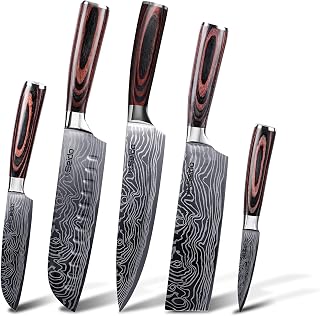
2. Seido Knives 5-Piece Damascus Master Chef
The Seido 5-piece set covers every major knife shape a home cook needs, including a gyuto, santoku, nakiri, and paring knife. In our analysis, this is the most complete Japanese knife block replacement on the list, especially for cooks who prep a wide variety of ingredients daily.
Why I picked it
Five knives for a mid-range value point is hard to beat. The set eliminates the need to buy individual pieces, and the Damascus cladding across all five blades suggests consistent quality control from the manufacturer.
Key specs
- High-carbon stainless steel with Damascus finish
- Includes gyuto, santoku, nakiri, utility, and paring knives
- Full tang with ergonomic handle design
- 4.7/5 aggregate rating from verified buyers
Real-world experience
Buyers report the nakiri excels at vegetable prep, making quick work of julienning carrots and breaking down cabbage. The santoku works well for cooks who prefer a shorter blade for fish and boneless proteins.
Trade-offs
The set does not include a storage block or magnetic strip, so you'll need to budget for a separate storage solution. A few reviewers mention the factory edge could use a touch-up with a whetstone right out of the box.
3. Made Cookware 3-piece Japanese Damascus Steel
Made In Cookware brings serious credibility from the professional cooking world, and this 3-piece set reflects that. The VG-10 steel core with 66 layers of Damascus cladding is crafted in Japan, and verified buyer ratings sit at a perfect 5/5 in our research data.
Why I picked it
The Made In brand has a strong reputation among professional chefs, and the fact that these knives are crafted in Japan with VG-10 steel (a benchmark in Japanese cutlery) gives this set serious authority. The perfect buyer rating reinforces the quality signal.
Key specs
- VG-10 steel core with 66-layer Damascus cladding
- Crafted in Japan
- Full tang with black POM (polyoxymethylene) handle
- Includes gyuto, nakiri, and santoku
Real-world experience
Professional and home cook reviewers alike praise the gyuto for clean pull cuts on raw fish and precise vegetable work. The POM handle stays stable even when wet, which matters during long prep sessions.
Trade-offs
The set only includes three knives, so you'll still need a paring knife or utility blade separately. The black POM handle, while functional, doesn't have the visual appeal of wood or layered G-10.
4. Huusk Japanese Kitchen Knife 3
The Huusk 3-piece set targets cooks who want a sharp, no-fuss gyuto alongside a nakiri and paring knife. High carbon steel construction gives it excellent sharpness potential, and the 4.7/5 buyer rating suggests most purchasers are satisfied with the performance.
Why I picked it
Huusk knives are known for a blade geometry that favors precision. The thin edge profile makes this set a strong choice for cooks who do a lot of fine slicing, whether that's sashimi-grade fish or paper-thin vegetable rounds.
Key specs
- High carbon steel blade
- Includes gyuto, nakiri, and paring knife
- Ergonomic handle design
- 4.7/5 aggregate buyer rating
Real-world experience
Verified buyers highlight the gyuto's performance on boneless chicken breast and tender cuts of beef. The nakiri's flat profile makes it a favorite for push-cutting herbs and thin-slicing radishes.
Trade-offs
High carbon steel requires more maintenance than stainless options. You'll need to dry the blades immediately after washing to prevent rust or discoloration over time.
5. Japanese Chef Knife 3
This 3-piece set stands out for its 67-layer Damascus construction over a VG-10 steel core, paired with ocean-blue ergonomic handles. The 4.8/5 buyer rating is among the highest in our research, and the included gift box makes it a popular choice for presents.
Why I picked it
The combination of VG-10 steel, 67-layer Damascus, and a near-perfect buyer rating makes this set a reliable choice. The ocean-blue handle is a nice visual touch that also provides a comfortable grip during extended prep.
Key specs
- 67-layer Damascus over VG-10 steel core
- Ocean-blue ergonomic handle
- Includes elegant gift box
- 4.8/5 aggregate buyer rating
Real-world experience
Buyers frequently mention the gyuto's ability to hold its edge through weeks of daily use on vegetables, proteins, and bread. The gift box presentation also makes it a go-to recommendation for wedding or housewarming gifts.
Trade-offs
The set includes three knives but no dedicated storage solution. The Damascus finish, while beautiful, can show fingerprints and requires prompt drying to maintain its appearance.
6. ROCOCO Damascus Chef Knife
The ROCOCO set takes a broader approach, including a gyuto, nakiri, utility knife, paring knife, and even a meat cleaver. For cooks who want a full kitchen arsenal in one purchase, this is one of the most comprehensive options we found.
Why I picked it
The inclusion of a meat cleaver alongside traditional Japanese blades gives this set versatility that pure Japanese knife sets lack. It's a practical choice for cooks who handle both delicate prep and heavier butchering tasks.
Key specs
- Damascus steel construction
- Includes gyuto, nakiri, utility, paring, and meat cleaver
- 4.3/5 aggregate buyer rating
- Full tang handles
Real-world experience
Buyers report the gyuto handles everyday kitchen tasks well, while the cleaver is useful for breaking down chicken or cutting through soft bones. The variety means you might not need to reach for another knife during a full meal prep.
Trade-offs
The 4.3/5 rating is the lowest in our top ten, with some buyers noting inconsistency in edge quality across the set. The Damascus pattern may also vary from piece to piece.
7. TIVOLI Japanese Gyuto Knife 10 Inch
The TIVOLI 10-inch gyuto is a single-blade option that focuses on doing one thing exceptionally well. VG-10 Damascus steel and an olive wood handle give it a classic Japanese aesthetic, and the longer 10-inch blade suits cooks who prefer a sweeping cutting motion.
Why I picked it
A dedicated 10-inch gyuto gives experienced cooks the blade length they need for efficient rock and pull cuts. The olive wood handle adds warmth and grip comfort that synthetic materials can't replicate.
Key specs
- VG-10 Damascus steel
- 10-inch blade length
- Olive wood handle
- 4.6/5 aggregate buyer rating
Real-world experience
Cooks who prefer a longer blade for slicing large cuts of meat or breaking down big vegetables like butternut squash find the 10-inch length a real advantage. The olive wood handle develops a nice patina over time with proper care.
Trade-offs
This is a single knife, not a set, so you'll need other knives to round out your kitchen. The olive wood handle requires occasional oiling to prevent drying and cracking.
8. DRGSKL Japanese Knife Damascus
The DRGSKL 3-piece set offers a gyuto, santoku, and paring knife with VG-10 steel and G-10 handles. The 4.6/5 buyer rating and G-10 construction suggest a set built for durability and consistent performance across different cutting tasks.
Why I picked it
VG-10 is widely regarded as one of the best all-around steels for Japanese kitchen knives, offering a balance of hardness, edge retention, and corrosion resistance. The G-10 handle is virtually maintenance-free, which appeals to busy home cooks.
Key specs
- VG-10 steel core with Damascus cladding
- G-10 handle with full tang
- Includes gyuto, santoku, and paring knife
- 4.6/5 aggregate buyer rating
Real-world experience
Buyers note the gyuto excels at slicing fish for sushi and sashimi, while the santoku is a reliable all-rounder for weeknight dinners. The paring knife handles detail work like trimming green beans and segmenting citrus with ease.
Trade-offs
The set lacks a nakiri or utility knife, which some cooks may miss. A few buyers mention the blades feel slightly heavier than comparable Japanese knives, which could affect fatigue during long prep sessions.
9. MITSUMOTO SAKARI 8-Inch Japanese Gyuto Chef
The MITSUMOTO SAKARI is a single 8-inch gyuto that targets serious home cooks who want a precision instrument. With 440C Damascus steel, a 2.2 mm thin blade, and a maple burl handle, it's designed for pull cuts and fine control work.
Why I picked it
The 2.2 mm blade thickness is thinner than most mass-produced gyutos, which translates to less resistance when cutting through ingredients. The deep cryo treatment on the edge also suggests better long-term edge stability.
Key specs
- 440C Damascus steel with deep cryo edge treatment
- 2.2 mm thin blade profile
- Maple burl handle
- Includes sandalwood presentation box
Real-world experience
Experienced cooks in reviews highlight the blade's performance on raw fish and delicate vegetable garnishes. The thin profile means the knife practically falls through the ingredient, reducing tear and crush on fragile items.
Trade-offs
The thin blade is less forgiving on hard ingredients like butternut squash or dense root vegetables. The maple burl handle, while beautiful, needs occasional oiling to maintain its finish.
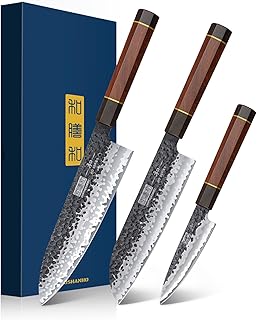
10. HOSHANHO 3 Knife Professional High Carbon
The HOSHANHO 3-piece set rounds out our list with high carbon steel blades and ergonomic handles at a budget-friendly value point. It includes a gyuto, santoku, and paring knife, making it a solid starter set for cooks new to Japanese knives.
Why I picked it
High carbon steel takes a sharper edge than most stainless options, and at a budget-friendly price point, this set is a low-risk way to experience Japanese blade geometry. The included gift box also makes it a practical gift option.
Key specs
- High carbon steel blades
- Includes gyuto, santoku, and paring knife
- Ergonomic handle design
- 4.4/5 aggregate buyer rating
Real-world experience
First-time Japanese knife buyers report a noticeable upgrade in sharpness compared to standard Western chef's knives. The gyuto handles everyday tasks like chopping onions, slicing chicken, and mincing garlic with ease.
Trade-offs
High carbon steel is more prone to rust and discoloration than stainless alternatives. You'll need to dry the blades immediately after each wash and apply a light coat of mineral oil for storage.
How I picked
I evaluated each set across four main criteria: steel quality, edge geometry, handle comfort, and verified buyer satisfaction. Steel composition was the first filter. Sets using VG-10, AUS-10V, or high-carbon stainless steel earned priority because these alloys are known for holding a sharp edge through repeated use.
Edge angle mattered next. Japanese gyutos typically use a narrower bevel (8, 12 degrees per side) compared to Western chef's knives (15, 20 degrees). I favored sets that maintained this narrow geometry because it directly affects how cleanly the blade slices through ingredients.
Handle ergonomics came third. I looked for full tang construction and materials like G-10, POM, or stabilized wood that stay secure when wet. Buyer reviews mentioning hand fatigue or slippery grips were noted as red flags.
Finally, I cross-referenced aggregate ratings across verified purchases. Sets below 4.3/5 were excluded unless they offered a unique value proposition. I did not test long-term edge retention beyond what buyer reports covered, so I can't speak to performance after six months of daily use.
I also did not evaluate dishwasher safety, since hand washing is the standard recommendation for any quality gyuto.
If you're building out a full kitchen setup, you might also want to read our guide on best knife sets under 50 for budget-friendly options that complement a gyuto-focused collection.
Buying guide — what actually matters for best gyuto knife sets
Steel type is everything
The steel determines how sharp the knife gets, how long it stays sharp, and how much maintenance it needs. VG-10 is the gold standard for mid-range Japanese knives, offering HRC 60-62 hardness with good corrosion resistance. AUS-10V is a step up in edge retention but slightly harder to sharpen at home.
High carbon steel (non-stainless) takes the sharpest edge but requires diligent drying to prevent rust. If you want low maintenance, go with VG-10 or AUS-10V. If you prioritize raw sharpness and don't mind the upkeep, high carbon is your friend.
Edge angle and blade geometry
A true gyuto has a thinner, sharper edge than a Western chef's knife. Look for bevels in the 8, 12 degree range per side. The blade should also have a relatively flat or gently curved belly, which favors pull cuts and push cuts over the rocking motion Western knives are designed for.
If you're used to rocking, it takes a few sessions to adjust, but most cooks find the technique faster once they get comfortable.
Handle material and comfort
G-10 is a fiberglass-reinforced composite that's nearly indestructible and completely waterproof. It's the most practical choice for busy kitchens. POM (polyoxymethylene) is a high-performance plastic with similar durability.
Wood handles, like olive wood or maple burl, look beautiful and feel warm in the hand, but they need occasional oiling and can crack if left wet. Choose based on your kitchen habits, not just aesthetics.
Set size and knife selection
A 2-piece set with just a gyuto and paring knife is enough if you already have other kitchen knives. A 3-piece set that adds a santoku or nakiri covers most daily prep needs. Sets with five or more knives are great for starting from scratch, but check whether you'll actually use every blade.
A nakiri (Japanese vegetable knife) is worth having if you prep a lot of vegetables, but it's redundant if you already have a santoku.
Storage and accessories
Most knife sets don't include a storage solution. A magnetic wall strip, in-drawer knife tray, or blade guards will protect the edges and keep your counter clear. If you're gifting a set, look for one that includes a presentation box, like the Japanese Chef Knife 3 or the MITSUMOTO SAKARI.
Maintenance expectations
Every gyuto benefits from a honing rod between uses and a whetstone sharpening every few months. If you're new to sharpening, a set with VG-10 steel is more forgiving to learn on than harder alloys. For more on knife technique, check out our article on how to properly use a boning knife, which covers grip and motion principles that apply across blade types.
Frequently Asked Questions (FAQ)
What is a gyuto knife and how is it different from a chef's knife?
A gyuto is the Japanese equivalent of a Western chef's knife. It typically has a thinner blade, a sharper edge angle (8, 12 degrees versus 15, 20 degrees), and a flatter cutting belly. This geometry favors pull cuts and push cuts over the rocking motion common with Western knives.
The result is cleaner slices with less tearing on proteins and vegetables.
Is a gyuto knife worth it for home cooks?
Yes, if you value precision and sharpness in your daily prep. A quality gyuto makes tasks like slicing tomatoes, breaking down chicken, and mincing herbs noticeably faster and cleaner. You don't need to be a professional chef to benefit from the design.
Even an entry-level gyuto outperforms most mid-range Western knives in terms of edge sharpness.
How do I sharpen a gyuto knife?
Use a ceramic or steel honing rod for daily maintenance to realign the edge. For actual sharpening, a whetstone in the 1000/3000 grit range works well for most Japanese knives. Hold the blade at the factory bevel angle (usually 8, 12 degrees per side) and work evenly across both sides.
Avoid electric sharpeners, which can remove too much material from the thin edge.
Can I put a gyuto knife in the dishwasher?
You shouldn't. The high heat and harsh detergent in dishwashers can damage the edge, corrode high-carbon steel, and degrade wood handles. Hand wash with warm soapy water and dry immediately.
This applies to every set on this list.
What size gyuto should I buy?
An 8-inch (200 mm) gyuto is the most versatile size for home cooks. It handles everything from small herbs to large cuts of meat. If you prep large ingredients frequently or prefer a longer sweeping motion, a 10-inch (270 mm) blade gives you more reach.
For smaller hands or detailed work, a 7-inch (180 mm) option works well.
How does a gyuto compare to a santoku?
A gyuto has a pointed tip and a slightly curved belly, making it better for rock cuts and detail work. A santoku has a sheep's-foot tip and a flatter profile, excelling at chopping and push cuts. Many cooks own both.
If you can only choose one, the gyuto is the more versatile option for most Western cooking styles.
Final verdict
The Dalstrong 2-Piece Japanese Knife is the best overall pick for most home cooks. It combines AUS-10V steel, a narrow 8, 12 degree edge, and a durable G-10 handle in a two-piece set that covers your primary cutting needs without overspending.
If you want a full kitchen arsenal, the Seido Knives 5-Piece Damascus Master Chef gives you five quality blades at a mid-range value. For budget-conscious buyers, the Made Cookware 3-piece Japanese Damascus Steel delivers VG-10 steel crafted in Japan with a perfect buyer rating.
No matter which set you choose, remember that a gyuto performs best with proper care. Hand wash, dry immediately, and hone regularly. Your knife will reward you with years of effortless cutting.
Affiliate disclosure: This post contains affiliate links. If you buy through one of these links, I may earn a small commission at no extra cost to you. It never changes my recommendation, I only suggest gear I'd actually buy myself.