What Is the Best Cutting Board for Fruits and Vegetables?
Quick Answer
The best cutting board for fruits and vegetables is a large, smooth hardwood board made from maple or walnut. It provides a stable chopping surface, treats knife edges gently, and handles everyday produce preparation. A dishwasher-safe, food-grade plastic board is the better option when easy cleaning matters most. Both choices can be safe when properly maintained, as supported by the FDA’s produce safety guidance.
Best Choices by Kitchen Need
- Best overall: Maple or walnut hardwood for daily vegetable chopping and fruit slicing.
- Best easy-clean: Food-grade HDPE plastic with a dishwasher-safe design.
- Best for knife care: End-grain hardwood or suitable soft rubber.
- Best affordable option: A sturdy plastic board with nonslip grips.
- Best everyday size: Approximately 18 × 12 inches for comfortable food preparation.
Important Food-Safety Tip
- Prevent cross-contamination: Keep a dedicated cutting board for fresh produce and another for raw meat, poultry, and seafood.
Choosing a cutting board sounds simple until you compare wood, plastic, bamboo, rubber, and composite materials. Each handles fruits and vegetables differently, especially when moisture, knife sharpness, and cleaning are involved.
My practical approach is to prioritize stability, cleanability, and enough space for comfortable knife work. This guide explains which cutting board materials make sense, what features matter, and how to keep your preparation surface safe.
In This Guide
- Which Cutting Board Is Best for Fruits and Vegetables?
- Wood vs. Plastic vs. Bamboo vs. Rubber
- What Size and Features Should You Choose?
- Which Board Works Best for Different Fruits and Vegetables?
- How Do You Clean and Maintain a Produce Cutting Board?
- How Do You Choose the Right Cutting Board for Your Kitchen?
- Frequently Asked Questions
Which Cutting Board Is Best for Fruits and Vegetables?
For most home cooks, a hardwood cutting board offers the best combination of chopping comfort, stability, durability, and knife friendliness. Maple and walnut are especially practical choices for preparing fresh produce.
However, hardwood is not automatically the best solution for every kitchen. A lightweight plastic board may suit someone who regularly chops juicy fruit and prefers dishwasher cleanup.
1. Maple Hardwood: Best Overall for Everyday Produce
Maple provides a firm but relatively forgiving cutting surface. It works well for chopping onions, slicing carrots, cutting cucumbers, and preparing leafy vegetables.
A good maple board offers several useful advantages:
- Stable surface: A substantial board stays relatively steady during repetitive chopping.
- Knife-friendly feel: Wood provides more give than glass, stone, or metal.
- Long-term usability: Quality hardwood can remain useful with regular cleaning and care.
- Versatility: A broad surface handles both small ingredients and large vegetables.
- Repair potential: Some solid wooden boards can be resurfaced when the manufacturer permits it.
An edge-grain maple board is often the most sensible starting point. It generally costs less than a comparable end-grain model and requires less investment.
Choose a board with a smooth finish, secure construction, and enough surface area for your usual meals. Avoid rough boards, obvious cracks, or questionable coatings.
2. Walnut Hardwood: Best for a Premium Cutting Surface
Walnut is another attractive hardwood option for vegetables and fruit. Its darker appearance also makes it appealing as a serving surface.
Walnut is generally softer than hard maple, which can provide a comfortable feel under a knife. However, the exact performance depends on the board’s construction and finish.
It is a worthwhile choice when you want:
- A handsome board that can remain on the countertop.
- A comfortable surface for repeated vegetable preparation.
- A substantial board that stays steady during chopping.
- A wooden board suitable for both preparation and presentation.
Like maple, walnut requires washing and thorough drying after use. Do not assume its dark color makes stains or food residue less important.
3. Food-Grade Plastic: Best for Easy Cleaning
A well-made food-grade plastic cutting board is ideal when convenience matters more than appearance. High-density polyethylene, commonly called HDPE, is a familiar material in kitchen cutting boards.
Plastic is nonporous, lightweight, and often dishwasher-safe. That makes it particularly convenient when cutting tomatoes, citrus fruit, berries, or other moist produce.
Look for these features:
- Clear food-contact suitability from the manufacturer.
- Dishwasher compatibility stated in the care instructions.
- Rubberized grips or another reliable nonslip design.
- Enough thickness to avoid excessive flexing.
- A smooth cutting surface without deep damage.
Plastic is not maintenance-free. Repeated cutting creates grooves, and heavily damaged boards eventually need replacement.
4. Soft Rubber: Best for Frequent Knife Work
Specialized rubber cutting boards can feel particularly comfortable during repetitive chopping. Their relatively forgiving surfaces can be useful for preserving knife edges.
They are worth considering if you prepare vegetables frequently or use high-quality kitchen knives. However, some rubber boards are heavy, expensive, or unsuitable for dishwashers.
Check the manufacturer’s material and care instructions before purchasing. Rubber boards vary considerably in firmness and construction.
Section Takeaway: A quality maple board is the strongest all-around starting point for produce preparation. Choose dishwasher-safe plastic when simple cleanup and low maintenance are your main priorities.
Wood vs. Plastic vs. Bamboo vs. Rubber: Which Material Is Better?
 Save
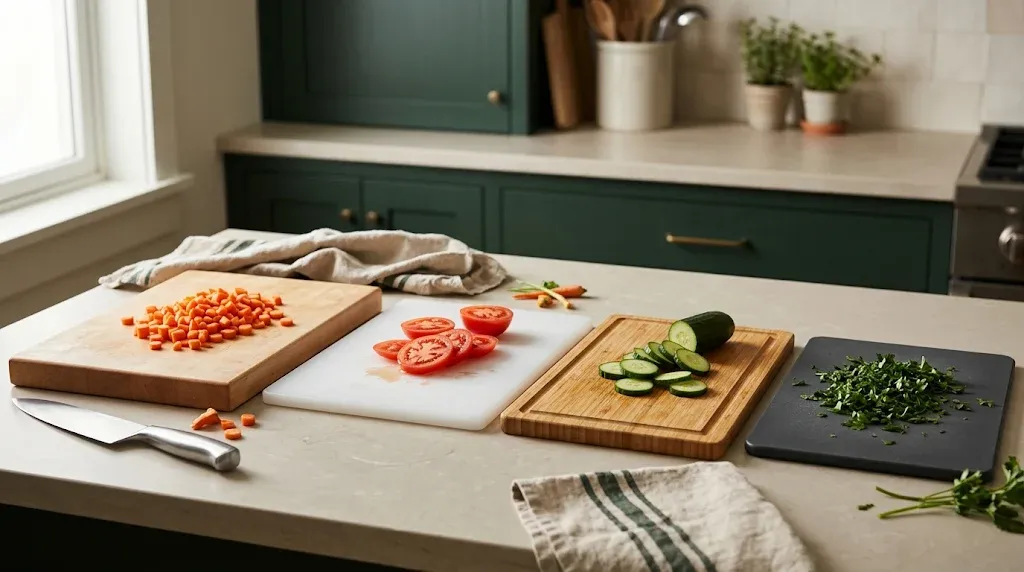
Cutting board materials behave differently under a knife. The right choice depends on how you balance cleaning, chopping comfort, durability, and maintenance.
According to the University of Maine Cooperative Extension’s cutting board guidance, wood, plastic, bamboo, and other surfaces have different cleaning and knife-care trade-offs.
Cutting Board Material Comparison
| Material | Best Use | Main Advantage | Main Drawback | Typical Care |
|---|---|---|---|---|
| Hardwood | Daily fruit and vegetable preparation | Comfortable, knife-friendly surface | Requires drying and occasional conditioning | Hand-wash and dry |
| HDPE Plastic | Juicy fruit and quick preparation | Easy cleaning and lightweight design | Develops knife grooves | Dishwasher if approved |
| Bamboo | Light vegetable preparation | Firm surface and relatively low weight | Hardness may increase knife wear | Usually hand-wash |
| Soft Rubber | Frequent chopping and fine knife work | Forgiving cutting feel | Often heavy or expensive | Follow maker’s instructions |
| Paper Composite | Everyday general-purpose preparation | Thin and convenient construction | Knife feel varies by product | Check dishwasher rating |
| Glass, Stone, or Metal | Serving rather than routine chopping | Nonporous surfaces | Very hard on knife edges | Varies by material |
Is Wood or Plastic Better for Vegetables?
Wood is generally preferable when chopping comfort and knife care matter most. Plastic wins when quick washing, portability, and dishwasher convenience take priority.
Neither material guarantees food safety by itself. Cleanliness, surface condition, and separation from raw animal products matter much more than appearance.
Is Bamboo a Good Choice for Cutting Vegetables?
Bamboo can work for fruits and vegetables, especially when you prefer a lightweight board. Its firmness also makes it relatively resistant to visible indentation.
However, bamboo is often harder than common knife-friendly hardwoods. Some cooks find that repeated chopping on bamboo is less comfortable for delicate knife edges.
Inspect bamboo boards for cracks, separation, and damaged adhesive joints. Follow the manufacturer’s washing instructions rather than soaking the board.
Should You Use Glass, Stainless Steel, or Titanium Cutting Boards?
These materials are generally poor choices for routine knife work. Their hard surfaces provide little cushioning when the blade contacts the board.
A glass or stone surface may be easy to wipe clean, but that convenience comes with a trade-off. Knife edges can become dull or damaged faster on very hard materials.
Use these surfaces primarily for serving or tasks that do not involve repeated chopping. Choose wood, suitable rubber, or food-grade plastic for regular cutting.
Section Takeaway: Material choice is a trade-off, not a contest with one universal winner. Hardwood favors knife comfort, while dishwasher-safe plastic favors cleaning convenience.
What Size and Features Should You Choose for a Produce Cutting Board?
A cutting board should provide enough room to chop without pushing food toward the edges. It also needs to fit your countertop, sink, and storage area.
A board that is too small makes preparation frustrating. An oversized board may become difficult to wash or lift.
What Is the Best Cutting Board Size for Vegetables?
For many home kitchens, approximately 18 × 12 inches is a practical everyday size. It provides working space for a chef’s knife, chopped ingredients, and whole vegetables.
Use the following dimensions as shopping guidelines rather than strict requirements:
- Small, 10 × 8 inches: Good for lemons, strawberries, garlic, and quick garnishes.
- Medium, 14 × 10 inches: Suitable for simple meal preparation and smaller counters.
- Large, 18 × 12 inches: A practical general-purpose size for daily vegetable chopping.
- Extra-large, 20 × 15 inches: Helpful for meal preparation involving several ingredients.
Measure your available counter space before shopping. Leave enough room around the board for safe knife movement.
How Thick Should a Cutting Board Be?
Thickness influences stability, weight, and storage. It does not automatically determine quality.
For wooden boards, approximately 3/4 to 1 1/2 inches can offer a useful balance for home preparation. Thick butcher-block designs may be heavier than necessary for occasional fruit slicing.
Plastic boards often use thinner construction. Choose one rigid enough to avoid bending or shifting while cutting.
Are Juice Grooves Necessary for Fruits and Vegetables?
A juice groove is a shallow channel that catches liquid near the board’s perimeter. It can be helpful for watermelon, pineapple, tomatoes, oranges, and other juicy produce.
However, a groove occupies space that could otherwise hold chopped ingredients. For onions, herbs, carrots, and similar vegetables, a flat surface is often more convenient.
A reversible board with one flat side and one grooved side offers useful flexibility. Clean both sides thoroughly after use.
Which Extra Features Actually Matter?
Prioritize practical construction instead of decorative features. These details can improve everyday preparation:
- Nonslip support: Helps keep the board steady while chopping.
- Smooth surface: Makes cleaning easier and reduces places where debris can collect.
- Rounded edges: Improve handling and reduce sharp corners.
- Easy lifting: Side grips or handles simplify carrying.
- Reversible design: Provides two usable preparation surfaces.
- Manageable weight: Makes washing and storing the board less awkward.
If a board slides, place a clean damp towel or suitable nonslip mat underneath it. Never continue chopping on an unstable surface.
Section Takeaway: Choose a board around 18 × 12 inches when space allows. Prioritize stability, a usable flat surface, and easy cleaning over unnecessary features.
Which Cutting Board Works Best for Different Fruits and Vegetables?
 Save
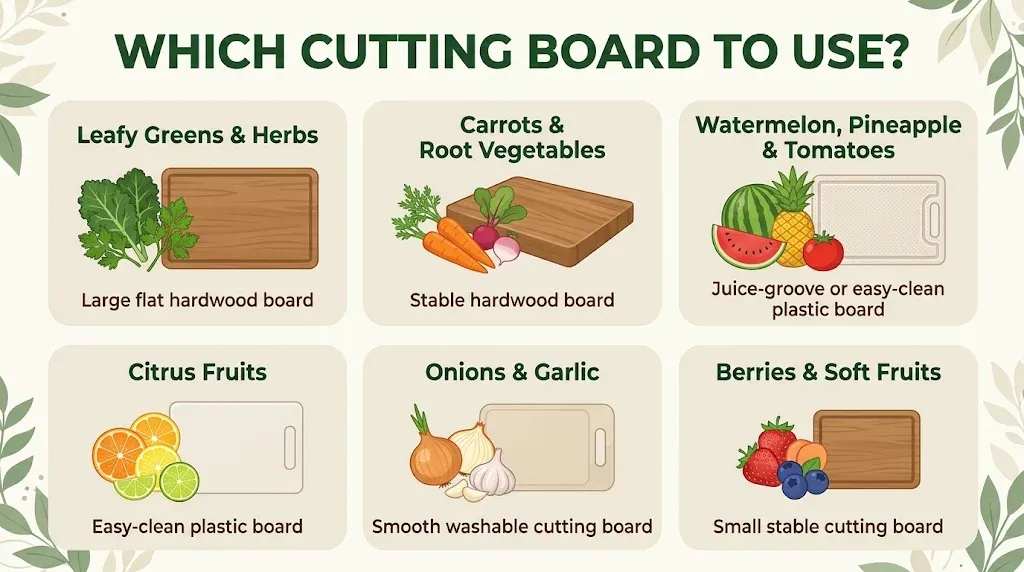
Different ingredients place different demands on a cutting surface. Moisture, size, texture, and cutting technique all influence which board feels most practical.
Matching the board to your usual ingredients can make preparation more comfortable. You do not need a separate board for every fruit or vegetable.
Best Cutting Board for Leafy Greens and Fresh Herbs
A large, flat hardwood board works particularly well for spinach, lettuce, parsley, cilantro, and other greens. It provides room for gathering and chopping delicate ingredients.
Choose a flat surface without a deep perimeter groove. This makes it easier to collect finely chopped herbs using an appropriate scraper.
Use a bench scraper rather than dragging the sharp edge of your knife sideways across the board. Sideways scraping can be unnecessarily hard on a fine knife edge.
Best Cutting Board for Carrots, Potatoes, and Root Vegetables
Firm vegetables benefit from a stable cutting board that resists movement. A substantial maple or walnut board is a strong option.
Hard ingredients can roll or shift as you cut them. Create a stable flat side when appropriate before continuing with smaller cuts.
Useful preparation habits include:
- Choose a board with enough room for the whole vegetable.
- Keep the surface stable during downward knife pressure.
- Move peelings away from your active cutting area.
- Use a sharp knife suited to the vegetable’s size and firmness.
Best Cutting Board for Watermelon, Pineapple, and Tomatoes
Juicy fruits can release enough liquid to make the countertop messy. A board with a suitable juice groove can help contain some of that moisture.
Dishwasher-safe plastic is particularly convenient for these tasks. It is easy to carry to the sink after cutting sticky or acidic fruit.
Large fruit requires more surface area than small produce. Make sure the whole fruit and knife can remain securely within the work area.
Best Cutting Board for Citrus Fruits
Plastic boards are convenient when slicing lemons, limes, oranges, and grapefruit. Their nonporous surfaces simplify cleanup after acidic juices contact the board.
Wood is also suitable for citrus when washed and dried promptly. Do not leave juice sitting on a wooden surface for long periods.
If you prepare citrus frequently, a small dedicated plastic board can reduce the need to wash a larger wooden board.
Best Cutting Board for Onions and Garlic
Onions and garlic leave strong aromas on cutting surfaces. Both plastic and hardwood can work, provided they are cleaned after preparation.
A smooth board is easier to clean than one with deep scratches. Wash the board before switching from aromatic vegetables to fruit that will be eaten raw.
Best Cutting Board for Berries and Soft Fruits
Strawberries and other delicate fruits rarely require a heavy butcher-block board. A small, stable plastic or wooden board generally provides enough room.
Use a clean knife and a gentle cutting motion. Heavy downward force can crush soft fruit unnecessarily.
Section Takeaway: Flat hardwood boards work especially well for general vegetable chopping. Plastic boards with easy-clean surfaces are practical for juicy, sticky, or acidic fruit.
How Do You Clean and Maintain a Cutting Board Used for Fruits and Vegetables?
 Save
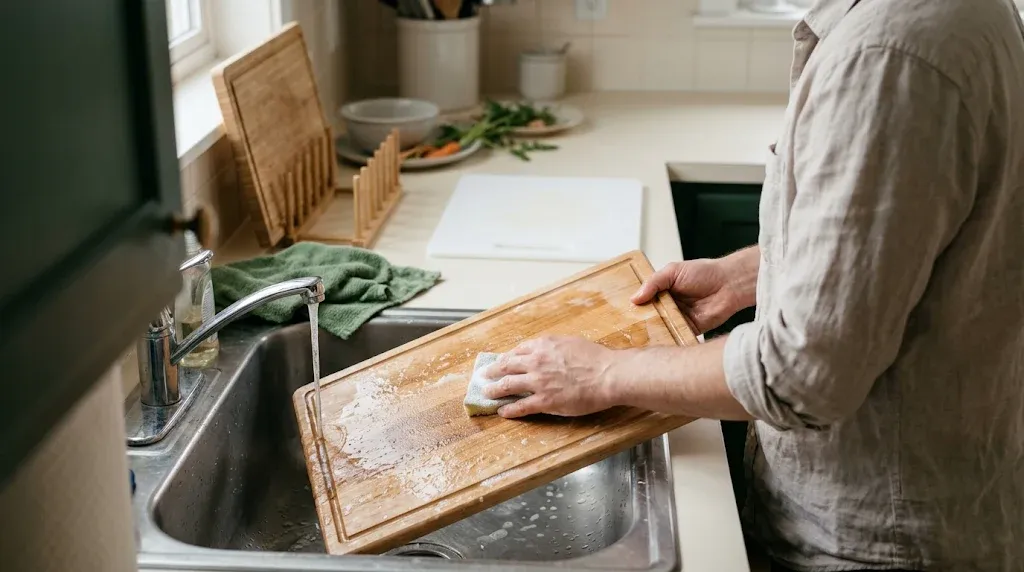
Proper cleaning is essential regardless of cutting board material. A premium wooden board can become unhygienic when neglected, while an inexpensive plastic board can remain useful when cared for correctly.
As the CDC’s food-safety recommendations explain, clean utensils and separate preparation areas help prevent harmful cross-contamination.
How Should You Clean a Wooden Cutting Board?
Wash a wooden board after food preparation and dry it thoroughly. Prolonged moisture exposure can contribute to swelling, warping, and cracking.
Follow these everyday cleaning steps:
- Remove vegetable scraps and other food residue.
- Wash the surface with warm or hot water and dish soap.
- Scrub the cutting surface, edges, and any grooves.
- Rinse thoroughly with clean water.
- Dry with a clean towel.
- Allow the board to finish drying in a position with good airflow.
Do not leave wooden boards soaking in the sink. Avoid the dishwasher unless the manufacturer specifically approves that cleaning method.
How Should You Clean a Plastic Cutting Board?
Plastic cutting boards can usually be washed with dish soap and water. Many models can also go in a dishwasher, although the manufacturer’s instructions should decide.
Pay particular attention to knife marks and perimeter grooves. Food residue can remain trapped in these areas even when the board looks generally clean.
Inspect the board regularly for warping, cracking, and excessive surface damage. Replace it when proper cleaning becomes difficult.
Should You Oil a Wooden Cutting Board?
Many unfinished or oil-finished wooden boards benefit from periodic conditioning. Follow the board maker’s instructions and use a product intended for food-contact wooden surfaces.
Food-grade mineral oil is a common choice. Some manufacturers also recommend a suitable board wax or conditioner.
Use a clean cloth to spread a thin, even layer. Allow the product to absorb according to its directions, then remove excess residue.
Avoid substituting ordinary cooking oils without checking the manufacturer’s guidance. Some can oxidize and develop unpleasant odors over time.
Can You Use the Same Cutting Board for Vegetables and Raw Meat?
Using separate boards is the safer and simpler routine. Raw meat, poultry, and seafood can transfer harmful microorganisms to produce that may be eaten without cooking.
The USDA’s cutting board guidance also emphasizes cleaning, sanitizing when appropriate, and replacing heavily worn surfaces.
A practical kitchen setup uses:
- Produce board: Fresh fruit, vegetables, herbs, and other ready-to-eat foods.
- Raw-protein board: Uncooked meat, poultry, and seafood.
If you must share a board, clean and sanitize it appropriately between tasks. Never cut ready-to-eat produce on a raw-meat surface without proper cleaning.
Should You Wash Fruits and Vegetables Before Cutting Them?
Yes. Rinse fresh produce under running water before peeling or cutting, including fruits with rinds you do not plan to eat.
Scrub firm produce, such as melons or cucumbers, with a clean produce brush when appropriate. Do not use dish soap or household cleaning chemicals to wash fruits and vegetables.
When Should You Replace a Cutting Board?
Replace a board when damage prevents effective cleaning or creates an unstable cutting surface. Deep grooves, severe warping, cracks, or separating joints are important warning signs.
Look for:
- Deep knife cuts that trap debris.
- Persistent odors after proper cleaning.
- Cracks that collect moisture or food particles.
- Warping that causes movement on the counter.
- Splitting or separation between joined sections.
A wooden board with superficial wear may sometimes be professionally or carefully resurfaced. A badly damaged plastic board is generally better replaced.
Section Takeaway: Keep your produce board clean, dry, smooth, and separate from raw-meat preparation. Replace any cutting surface that can no longer be cleaned effectively.
How Do You Choose the Right Cutting Board for Your Kitchen?
The best purchase depends on your cooking habits, counter space, and willingness to maintain the material. Price alone does not indicate how well a board will work for fruits and vegetables.
Before buying, consider how often you chop, which ingredients you prepare, and how you prefer to clean your equipment.
What Should You Check Before Buying?
Use this checklist when comparing cutting boards:
- Food-contact material: Choose a board clearly intended for food preparation.
- Size: Select enough space for your largest common ingredients.
- Stability: Avoid boards that slide or wobble.
- Surface condition: Look for a smooth, well-finished cutting area.
- Knife compatibility: Avoid excessively hard materials for routine chopping.
- Cleaning method: Confirm whether the board requires hand-washing.
- Weight: Make sure you can comfortably lift and wash it.
- Construction: Inspect wooden joints, edges, and surface finish.
Is an Expensive Cutting Board Worth It?
A premium cutting board can be worth buying when you prepare food daily. Better construction, larger dimensions, and comfortable cutting characteristics may justify the expense.
However, a costly board is not automatically safer or easier to use. A practical, well-maintained plastic board may suit your routine better.
Spend extra on features that solve real problems. Stability and usable surface area often matter more than decorative patterns.
Should You Choose Edge-Grain or End-Grain Wood?
Edge-grain boards expose the long side grain of wood strips on the cutting surface. They commonly offer a practical combination of durability, stability, and cost.
End-grain boards expose the ends of wood fibers. They can provide a forgiving cutting feel, but often cost more and require a more substantial construction.
For most occasional or everyday vegetable preparation, edge-grain hardwood is a sensible choice. End-grain is worth considering for frequent knife work and a larger budget.
Does a Home Kitchen Need More Than One Cutting Board?
Two boards are a useful minimum for kitchens that prepare both fresh produce and raw animal products. A third, smaller board can make quick fruit preparation more convenient.
The American Cleaning Institute’s cutting board advice also recommends separating raw meat preparation from fruit and vegetable work.
Consider this simple arrangement:
- Large hardwood board: Main vegetable chopping and meal preparation.
- Dishwasher-safe plastic board: Raw meat, poultry, and seafood preparation.
- Small produce-only board: Quick fruit slicing and garnishes, if desired.
Keep the boards clearly distinguishable to reduce accidental mix-ups. Color coding or dedicated storage positions can help.
What Common Buying Mistakes Should You Avoid?
Several avoidable mistakes can make an otherwise attractive cutting board frustrating to use:
- Buying a board too small for normal meal preparation.
- Choosing glass or metal for frequent chopping.
- Ignoring how easily a lightweight board slides.
- Assuming every plastic board is dishwasher-safe.
- Purchasing a heavy wooden board without considering cleaning and storage.
- Ignoring cracks, poor finishing, or questionable food-contact materials.
- Using one unwashed board for raw meat and ready-to-eat produce.
In 2026, shoppers have more material choices than ever, but the fundamentals remain the same. A safe, stable, cleanable surface is more important than marketing claims.
Section Takeaway: Buy for your actual kitchen routine, not appearance alone. A dependable hardwood board paired with a separate dishwasher-safe plastic board is a practical long-term setup.
Frequently Asked Questions
1. What is the healthiest cutting board for vegetables?
A smooth, food-safe wooden or plastic cutting board can both be suitable for vegetables. Proper washing, thorough drying, and separation from raw meat are more important than declaring one material universally healthier. Replace boards when cracks or deep grooves prevent effective cleaning.
2. Is wood or plastic better for cutting fruit?
Plastic is convenient for juicy fruits because many models are dishwasher-safe and easy to handle. Hardwood works well too, especially when you want a stable, knife-friendly surface. Wash and dry either material after use, particularly when preparing sticky or acidic fruit.
3. Is bamboo safe for cutting fruits and vegetables?
Yes, a properly manufactured food-contact bamboo cutting board can be suitable for produce. Its relatively firm surface is useful for everyday preparation, although it may be harder on knives than some hardwood boards. Clean it according to the manufacturer’s directions.
4. What cutting board is best for keeping knives sharp?
A quality end-grain hardwood board or suitable soft rubber board is generally a good choice for knife-edge care. These materials offer a more forgiving cutting feel than glass, stone, or metal. The specific material, surface hardness, and knife technique all influence edge wear.
5. Do wooden cutting boards absorb fruit juice?
Wood is porous and can absorb some moisture, particularly when its protective finish is worn. Clean a wooden board promptly after cutting juicy produce, then dry it thoroughly. Proper maintenance helps protect the board from excessive moisture exposure and potential damage.
6. Are plastic cutting boards safer than wooden boards?
Plastic is often easier to clean because it is nonporous, but that does not make every plastic board automatically safer. Both materials require proper washing and maintenance. Deep scratches, poor cleaning habits, and cross-contamination can create problems on either surface.
7. What size cutting board is best for everyday cooking?
Approximately 18 × 12 inches is a useful general-purpose size for many home cooks. It provides room to cut vegetables while keeping prepared ingredients nearby. Smaller kitchens may benefit from a 14 × 10-inch board, provided it remains stable and offers enough working space.
Final Verdict: Which Cutting Board Should You Buy?
For most kitchens, I recommend starting with a well-made maple or walnut hardwood cutting board around 18 × 12 inches. It offers a comfortable cutting surface, good stability, and enough working room for routine fruit and vegetable preparation.
If you value dishwasher convenience, choose a sturdy food-grade plastic board instead. For the most flexible setup, use a hardwood produce board alongside a separate dishwasher-safe plastic board for raw meat preparation.
The best cutting board is the one you can use safely, clean thoroughly, and maintain consistently.
Before purchasing, measure your countertop, confirm the manufacturer’s care instructions, and choose a board that matches your daily food preparation needs.

